Poached eggs are truly a special dish with their lovely creamy texture and wonderful delicate flavour. The low-fat cooking method used to prepare these eggs can be a little difficult to get right at first, but after a few tries your poached eggs will be cooked to perfection!

A few things to keep in mind.
1. It is very important to use really fresh eggs.
2. You have to check the consistency of the egg after 3-5 minutes of cooking time in order to get a soft but cooked egg. Remember to keep an eye on the clock because it is quite easy to overcook the egg.
3. If you cook more than one egg at a time use a large pan filled with plenty of water and just drop 4-5 eggs in it (quite quickly) without stirring the water. Just remember to remove each egg with the slotted spoon in the same sequence in which you added them into the water, so that they cook evenly.
4. You can add a few drops of white wine vinegar to the simmering water before cooking the egg…. The vinegar will make the egg white a little firmer and this will help the cooking process, however this step is totally optional. I like the natural softness and flavour of the egg, therefore I tend not to use vinegar.
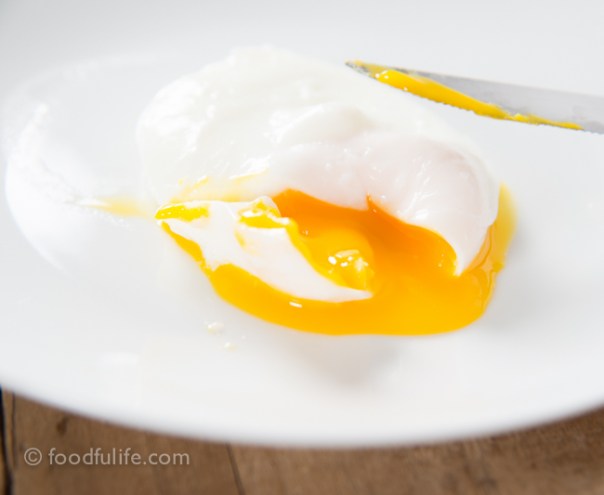
Poached eggs are great served with salmon, steamed vegetables, beans and toast. You can be really creative with this preparation and add a poached egg to a pizza, a baked potatoes, a creamy soup or a bruschetta!
I hope you enjoy this how-to recipe and have some fun with it! X
How to poach an egg.
Preparation time: 10 minutes
Cooking time 3-5 minutes
What you need.
1 egg
1 medium pan, filled with water
a slotted spoon
kitchen paper
a tablespoon
a ramekin
a pinch of sea salt
Method.
1. Simmer the water gently over a medium heat and add some sea salt crystals.
2. Carefully crack the egg into a ramekin.

3. Using a tablespoon, make a whirlpool in the water by stirring quite quickly for a few seconds.
4. Drop (with one quick movement) the egg into the center of the whirlpool. Now let the egg poach without stirring.

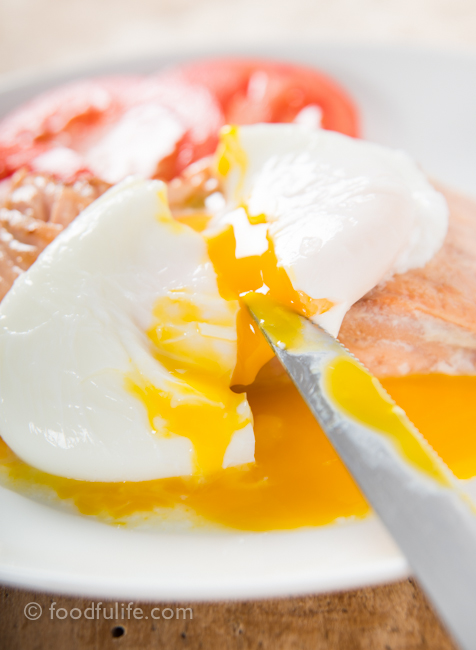
5. After a few minutes, check the consistency of the egg (it should be soft and with the egg white slightly firmer around the edges). When the egg is ready drain it with a slotted spoon. I usually place the egg and the slotted spoon on a strainer for a minute, in order to allow the excess water to drain completely.

6. Serve your poached eggs straight away.








 Foodfulife