Category Archives: Pescetarian

Mom’s Amazing Salted Cod Recipe

First of all, I shall introduce this recipe explaining that salted and dried cod (Baccalà and Stoccafisso) are both very popular in Genoa, where I live. We use them in many traditional dishes, although they are widely used in several countries, I know. Both these cod require some care in the process, but they are very healthy and versatile.

This weekend I had the great pleasure to try a lovely salted-cod recipe, prepared by my mother, who was extremely enthusiastic about it.  It is indeed a delicious dish, full of flavour but also quite delicate, despite the fact that salted cod usually has quite a strong and distinctive taste; so we decided to publish it on Foodfulife. I must admit, I am so excited to share one of my mom’s wonderful recipes with you this week!!!!!
Tips.

1. Salted cod is cod preserved in salt. The salt used to preserve the fish should have been completely removed when you buy it, however, it’s better to check the fish. You can always remove the excess salt by soaking the cod in water overnight ( in the fridge), before preparing the recipe.

2. Use two large frying pans, wide enough to contains all the fish, which will be moved from one pan to the other during the cooking process. Always lay the fish skin-side down, to avoid breaking it.

3. If you wish, you can replace salted cod with swordfish and monkfish, all of these fish are well suited for this recipe.

DSC_6529

Mom’ s Baccalà With Tasty Tomato Sauce

Preparation 10 minutes

Cooking 20 minutes

Ingredients

4 tablespoons extra virgin olive oil for the sauce and extra oil (also use extra virgin olive oil) for frying the fish

1/2 medium size red onion, finally chopped

1 clove of garlic, finely crushed

1 tablespoon fresh chopped parsley

1 anchovy

800 g (28.2 oz) salted cod

1 tablespoon salted capers

5 pickled green olives

5 pickled black olives

1/2 tablespoon of tomato paste

2 cups Italian passata (Italian tomato puree in glass jars)

Flour for dusting

Salt and pepper to taste (salt only if necessary)

Method

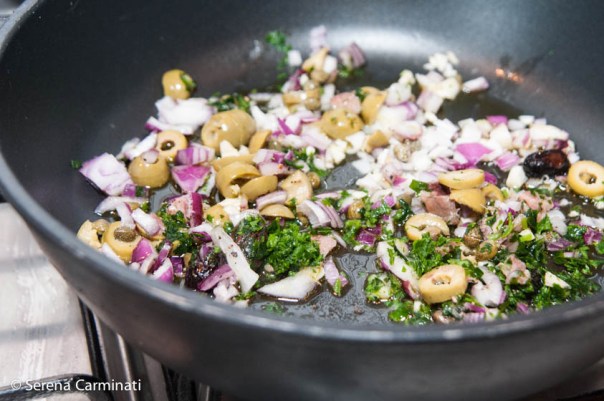
1. Fry the onion, parsley and anchovy in 4 tablespoons of extra virgin olive oil. When the onion is almost golden add the garlic. After a few minutes, add the capers and all the olives with tomato paste and the passata, stir well and lower the heat.
DSC_6510

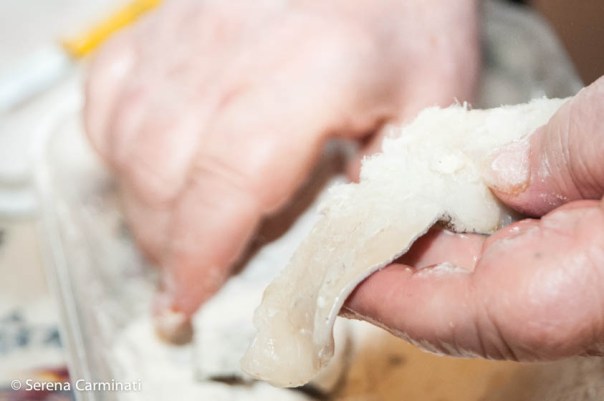
2. Separately, cut the salted cod into thick slices (leave the skin on) and remove the bones.
DSC_6535

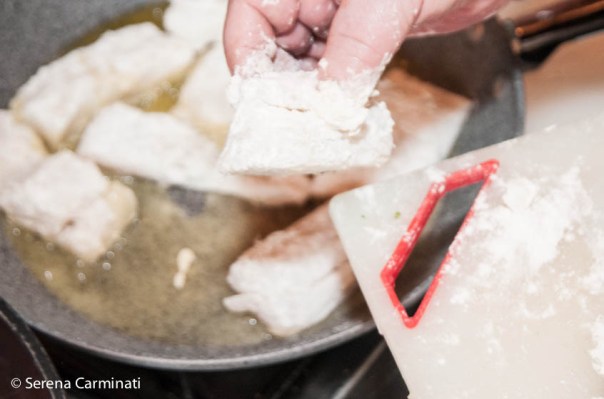
3. Flour the pieces of cod and then fry them in a large pan with plenty of extra virgin olive oil until golden.
DSC_6555

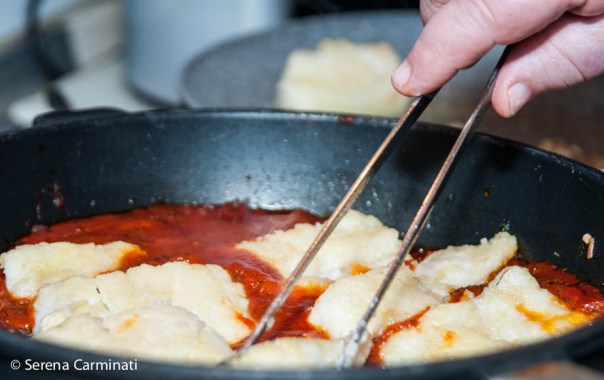
4. Using a pair of kitchen tongs, place the fried fish in tomato sauce (prepared in step 1) and then cook for about 10 minutes. While cooking, season the top of the fish using a spoon (during this process do not flip the fish, to avoid breaking it).
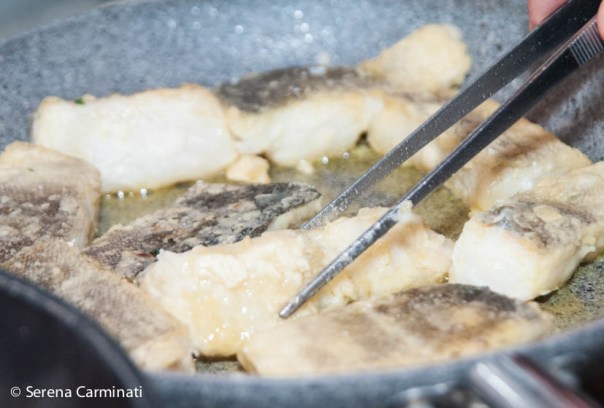
DSC_6564

DSC_6571

DSC_6579-2

5. Turn off the heat and season with salt and pepper (salt only if necessary). Cover with a lid, let it sit for a few minutes and then serve.

DSC_6585-2

The cod was served with a huge salad and some amazing wholemeal bread, made with a lot of tasty seeds! Lovely!!!

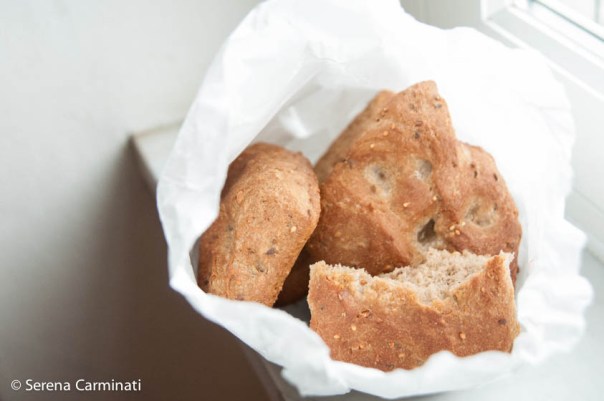
DSC_6604

DSC_6609

I only wish I took better photographs for this recipe…But I didn’t have the proper equipment with me and It wasn’t easy to work with my mother cooking/complaining in the kitchen…Believe me!!!  🙂 When she cooks she gets really nervous! :-)))

DSC_6592

Baccalà al sugo saporito della mamma.

Preparazione 10 minuti

Cottura 20 minuti

Ingredienti

4 cucchiai di olio d’oliva per la salsa e extra olio (sempre olio extra vergine d’oliva) per friggere

1/2 cipolla rossa, tritata finemente

1 spicchio d’aglio tritato

1 cucchiaio di prezzemolo fresco tritato

1 acciuga sott’olio

800 g di baccalà

1 cucchiaio di capperi sotto sale

5 olive verdi

5 olive nere

1/2 cucchiaio di concentrato di pomodoro

1 bicchiere grande di passata di pomodoro

Farina q.b. per infarinare

Sale e pepe q. b. (sale solo se è necessario)

Preparazione.

1. Fate soffriggere la cipolla, il prezzemolo e l’acciuga con 4 cucchiai d’olio extra vergine d’oliva. Poco dopo aggiungete anche l’aglio (giusto per non farlo bruciare). Dopo qualche minuto, unite al soffritto i capperi, tutte le olive, il concentrato di pomodoro e la passata. Mescolate bene il sugo e abbassate il fuoco.

2. A parte, tagliate il baccalà a tranci (con la pelle) e levate le lische.

3. Infarinate i pezzi di baccalà e fateli friggere in padella con abbondante olio extra vergine d’oliva. Lasciate dorare.

4. Usando delle pinze da cucina, mettete tutto il pesce nel sugo saporito al pomodoro che abbiamo preparato, appoggiandolo delicatamente dalla parte della pelle.  Fate cuocere ancora per qualche minuto, non girando il pesce per evitare di romperlo (condite aiutandovi con un cucchiaio).

5. Spegnete il fuoco e aggiungete il sale e il pepe (il sale solo se necessario). Lasciate riposare per qualche minuto e poi servite.
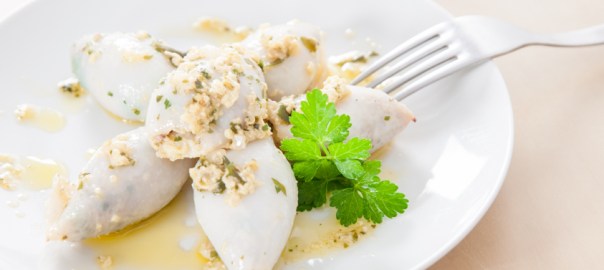
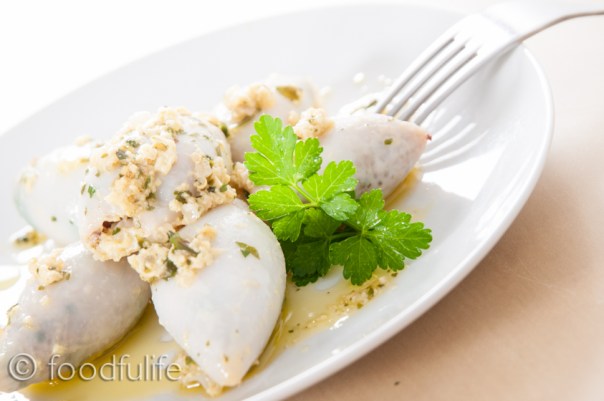
Special Stuffed Calamari (Quinoa Recipe)

DSC_4810

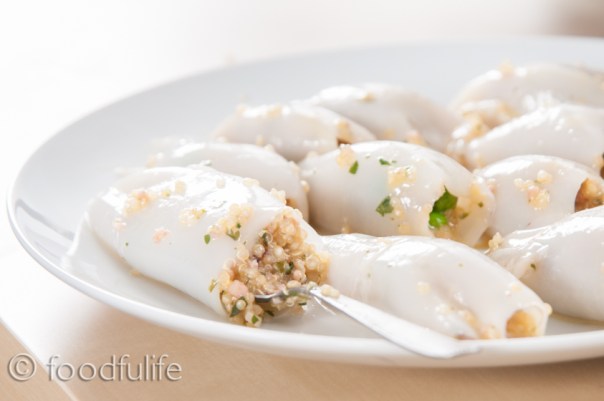
Stuffed calamari (calamari ripieni) is a very popular dish in Italy. Normally, the recipe is made with bread stuffing and some variation on the other ingredients. This time, we are going to prepare a quinoa stuffing with peas, anchovies and garlic. It is a wonderful starter and a great main meal served with vegetables. It might seem a little complex to prepare, but it’s such a delicious full-flavoured dish that it’s worth a try!

Tip. Calamari ( squid) should be fresh and properly cleaned before you start the preparation. It’s very important not to over cook the seafood, because calamari can become very chewy and unpleasant to eat. If that happens continue to cook them until they become tender again (in this case, remember to add more wine and some vegetable or fish stock).

DSC_4813

 Stuffed Calamari (quinoa recipe)

Ingredients 

for 3 servings

Preparation: 40 minutes

400g (14.1 oz) cleaned calamari (squid)

1 clove of garlic

2 tablespoons extra virgin olive oil

1 splash of white wine (non-acidic)

salt and pepper to taste

For the filling

50 g (1.76 oz) quinoa (uncooked)

3 tablespoons extra virgin olive oil

2 cloves of garlic

2 anchovies

3 tablespoons finely chopped fresh parsley

20 g (0.7 oz) of frozen peas

1 egg

30 g (1.05 oz) grated Parmesan cheese

White wine (good quality)

Salt and pepper to taste

 Method

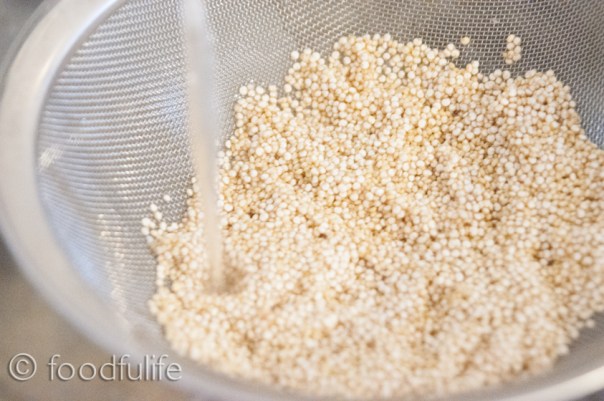
1. Wash the quinoa, using a strainer under running water, for a few minutes (to remove the natural bitter taste).

DSC_4725

2 . Cook for 15 minutes in 200 ml (6.76 us oz fl, 0.35 uk pt) of water, then cover with a lid and set aside.

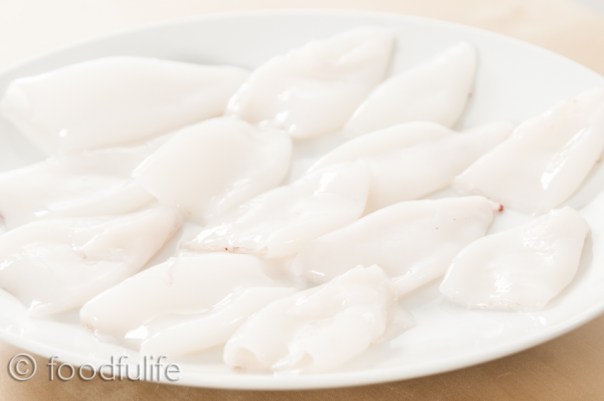
3.  Separate the tentacles from the top of the body of the calamari. Finely chop the tentacles.

DSC_4746

DSC_4747

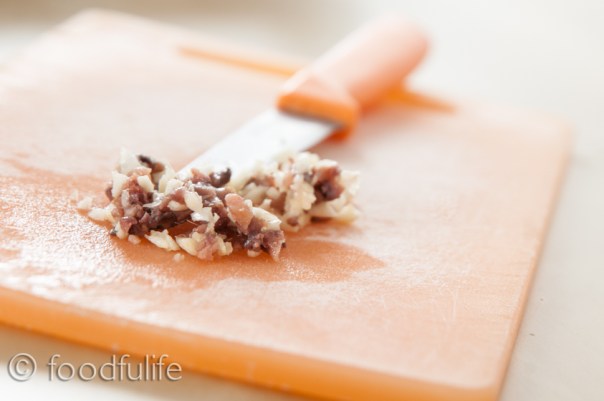
4. Chop two cloves of garlic and two anchovies and gently fry them over a low heat with three tablespoons of extra virgin olive oil.

DSC_4756

5. Add the chopped tentacles with the peas and (after a couple of minutes) drizzle with a little bit of white wine.

DSC_4760

DSC_4766

6. Add the quinoa with two tablespoons of parsley, then stir and after a few minutes turn off the heat.

DSC_4770

7. Combine the ingredients with an egg, the Parmesan cheese, some salt and pepper and mix well. Stuff the calamari using a teaspoon (and your fingers) or a piping bag ( fill only 2/3 to avoid braking the calamari during the cooking time) . Seal the calamari with toothpicks.

DSC_4772

DSC_4774

DSC_4783

DSC_4795

8. Put the calamari in a frying pan with two tablespoons of extra virgin olive oil, a chopped clove of garlic, a splash of white wine and season with salt and pepper. Cook for 10 minutes at a medium heat,  after 5 minutes add a tablespoon of parsley and stir. Serve warm.

DSC_4803

DSC_4811

Calamari ripieni con quinoa.

 Ingredienti

per 3 persone

400 g di calamari puliti (senza dente)

1 spicchio d’aglio

2 cucchiai di olio extra vergine d’oliva

1 spruzzata di vino bianco (non acido)

sale e pepe q b

 Per il ripieno

50 g quinoa (cruda)

3 cucchiai di olio extra vergine d’oliva

2 spicchi d’aglio

3 cucchiai di prezzemolo (tritato finemente)

20 g di piselli surgelati

Sale e pepe q b

1 uova

30 g Parmigiano Reggiano grattugiato

vino bianco (non acido) q b

2 acciughe sott’ olio (alici)

 Preparazione

1. Lavate la quinoa, utilizzando un colino sotto l’acqua del rubinetto, per qualche minuto (questa operazione serve a togliere il sapore amaro della quinoa).

2. Fate bollire per 15 minuti in 200 ml d’acqua, poi spegnete il fuoco, coprite con un coperchio e mettete da parte.

3. Usando un coltello, separate i tentacoli dalle tasche dei calamari. Tritate finemente i tentacoli.

4. Tritate e fate soffriggere a fuoco basso due spicchi d’aglio e due acciughe con tre cucchiai di olio extra vergine d’oliva.

5. Aggiungete i tentacoli tritati con i piselli e annaffiate con un po’ di buon vino. Fate ritirare a fuoco lento.

6. Aggiungete la quinoa con due cucchiai di prezzemolo, mescolando per qualche minuto e poi spegnete il fuoco.

7. Unite agli ingredienti un uovo, del parmigiano, sale, pepe e mescolate bene. Riempite i calamari usando un cucchiaino o la saccapoche (riempite solo 2/3, per evitare che si rompano durante la cottura). Chiudete con degli stuzzicadenti.

8. Mettete i calamari in una padella con due cucchiai d’olio, uno spicchio d’aglio tritato, uno spruzzo di vino bianco e un po’ di sale e pepe. Fate cuocere per 10 minuti a fuoco medio, aggiungendo un cucchiaio di prezzemolo dopo 5 minuti. Spegnete e servite.

Steamed Salmon with Rocket and Oranges.

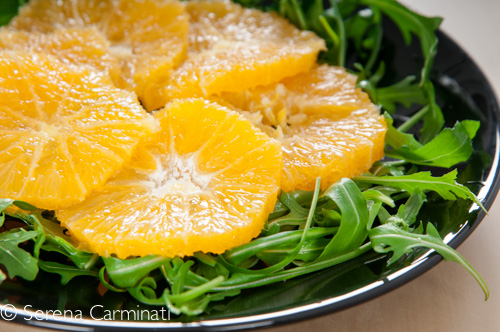
This week we are going to prepare a light salad with salmon, oranges and rocket leaves. I love the way in which the buttery texture of salmon and the freshness of oranges work together, I think it’s a perfect match! There isn’t much I can say about it, you just have to try it!!! I added a few rocket leaves because the pungent and slightly bitter flavour of this lovely herb creates a pleasant contrast with the other ingredients, which balance the recipe nicely.

This dish is a real feel-good booster and is packed with health benefits! Salmon is considered an extremely healthy food due to the high content of protein, omega-3 fatty acid and B 6 and B 12 vitamins; while rocket not only contains plenty of vitamins but is also rich in iron… So, if you often have iron-deficiency problems like me, or you simply like healthy food (same as me, anyway!), you have plenty of reasons to enjoy this dish!

Steamed salmon with rocket, oranges and walnuts.

Preparation time: 15 minutes

Ingredients

for 2 servings

2 salmon steaks (250 g / 8.81 oz)

2 large oranges

50 g (1.76 oz) rocket (arugula), washed and cleaned

30 g (1.05 oz) walnuts, unshelled

extra virgin olive oil

salt and pepper to taste

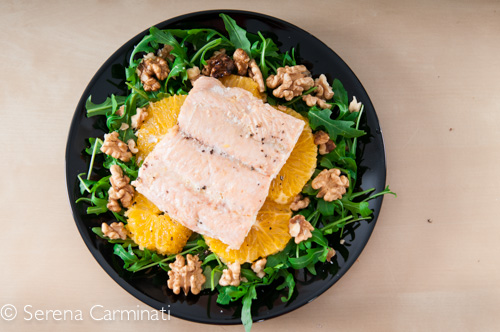
Steamed salmon with rocket and oranges (front view, rocket or arugula with oranges)

Preparation method

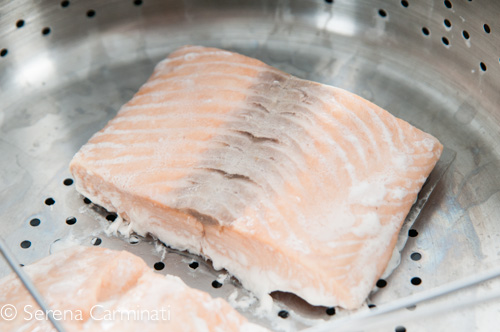
1. Steam the salmon steaks for about 6-8 minutes.

Step 1. Steam the salmon for a few minutes.

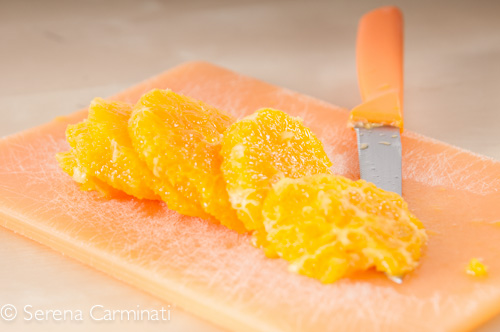
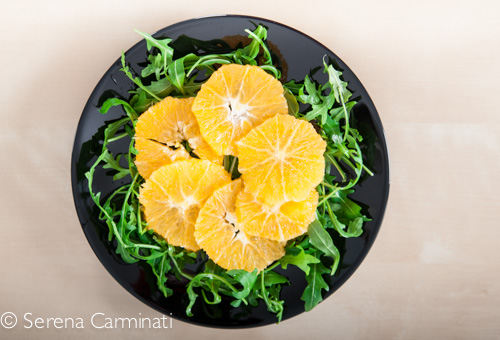
2. With a sharp knife, peel the oranges, completely removing the white part. Then cut them into thin slices.

Step 2. Peel and cut the oranges .

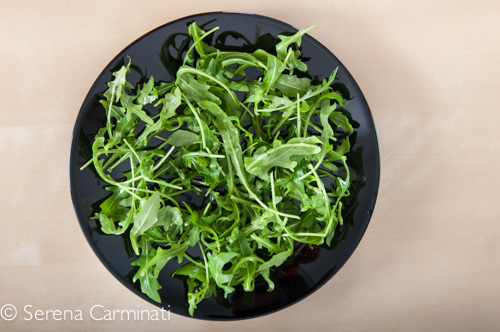
3. Arrange the rocket leaves on the plate, place the slices of orange on top with the salmon in the middle.

Step 3. Arrange the rocket (or arugula),the oranges and the salmon on the plate.

Step 3. Arrange the rocket (or arugula),the oranges and the salmon on the plate.

4. Sprinkle the walnuts on the ingredients, drizzle with extra virgin olive oil and season with some salt and plenty of black pepper.
Step 4. Sprinkle the walnuts, drizzle with olive oil and season with salt and pepper.

Enjoy your meal!

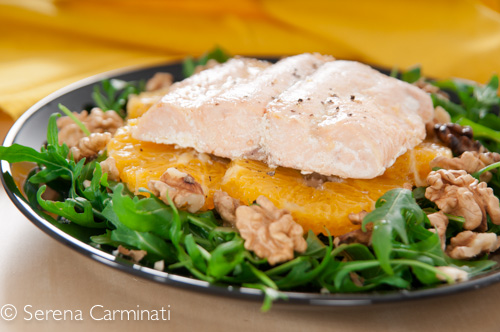
 Steamed salmon with rocket and oranges (front view, close up)
Salmone con arance e rucola (cottura a vapore).

Preparazione: 15 minutes

 Ingredienti

per 2 persone

2 filetti di salmone (250 g)

2 arance grosse

50 g rucola, lavata e pulita

30 g di noci, senza guscio

olio extra vergine d’oliva

sale e pepe q b

Preparazione.

1. Cuocete a vapore i due filetti di salmone per 6-8 minuti.

2. Con un coltello molto affilato, sbucciate due arance togliendo completamente anche la parte bianca.

3. Sistemate le foglie di rucola sulla base del piatto, ricoprite con le fette d’arancia e appoggiate al centro il filetto di salmone.

4. Distribuite le noci sopra gli ingredienti, condite con olio extra vergine d’oliva, un po’ di sale e pepe in abbondanza.

Buon appetito!

Spring onion stuffed focaccia bread.

My grandmother used to prepare this recipe for family dinners and celebrations. I remember eating a lot of this focaccia bread at every dinner we had. Of course, as usual, I made my own version using wholemeal flour and less anchovies and olives than in the original recipe. Anyway, it’s delicious and quite a versatile dish that you can have as a main vegan or vegetarian dish, or as a side dish with other courses. 
I am very happy to share this recipe here, its flavour takes me back to some good memories.
DSC_1623

Ingredients

500 g (17.6 oz) of well risen pizza dough (I made mine with 1/3 wholemeal flour, 1/3 wholemeal spelt flour, 1/3 sourdough, water and salt) . Also see the post on how to make pizza dough with yeast for the recipe.

500 g ( 17.6 oz) spring onions

4-5 anchovies in oil

50 g (1.76 oz) pitted green olives 

extra virgin olive oil 

salt to taste

1. Divide the dough into two equal parts. Take one part and shape a disk slightly larger than 30 cm in diameter.

2. Take an oven pan (28 cm in diameter), grease with plenty of olive oil and roll out the dough.

3. Peel and slice the spring onions, including the tender green part. Fry the onions with plenty of olive oil over low heat, until they are tender.

DSC_1631

DSC_1634

4. Cut the olives, chop the anchovies and place all the ingredients evenly on the dough.

DSC_1641

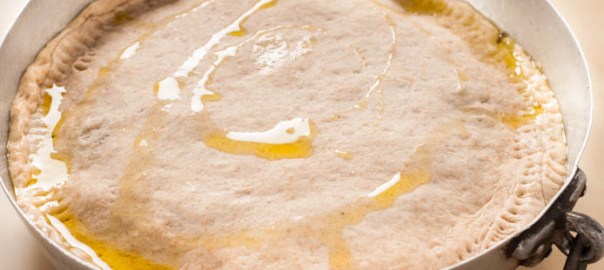
5. Make another disk with the remaining dough, in order to cover and seal the focaccia, then let it rise for an hour.

DSC_1649

6. Season with some salt and a little bit of oil, then bake at 200 ° C (392° F) for 20 minutes.

DSC_1666

Focaccia integrale ripiena con cipollotti e olive.
Ingredienti

500 g di pasta da pane ben lievitata (ho fatto la mia usando 1/3 di farina integrale, 1/3 di farina di farro, 1/3 di pasta madre, acqua e sale)

500 g di cipollotti

4-5 acciughe sott’olio

50 g di olive verdi snocciolate

olio extra vergine d’oliva e sale qb

1. Dividete la pasta in due parti uguali. Prendete una parte dell’impasto e formate un disco leggermente più grande di 30 cm di diametro.

2. Prendete una teglia da forno (di 28 cm di diametro), ungete con abbondante olio d’oliva e stendere la pasta.

3. Sbucciare e affettare i cipollotti, compresa la parte verde più tenera. Fate soffriggere con abbondante olio d’oliva a fuoco basso.

4. Tagliare le olive e tritate le acciughe. Stendete tutti gli ingredienti in modo uniforme sulla pasta.

5. Formate un disco con la pasta rimasta per coprire e sigillare la focaccia. Lasciate lievitare per circa un’ora.

6. Condite con un po’ di sale e olio, quindi infornare a 200 ° C per 20 minuti.

Spaghetti with prawns and trumpet gourds

Today’s recipe is suitable for a special occasion like a romantic dinner (remember to halve the ingredients in this case) or an elegant meal. For this recipe I used italian trumpet gourds because, being very sweet, delicate and with a creamy, almost avocado-like texture, they work really well with the prawns in this dish.  If you can’t find any gourds you can use some zucchini / courgettes instead.

DSC_0141

Ingredients

Serves 4

3 medium-sized spring onions

1 sachet of saffron

1 large clove of garlic

a bunch of parsley

a bunch of tarragon

200 g (7 oz) trumpet gourds of Albenga , still green, with delicate skin (you can use zucchini / courgettes if you can’t find the gourds)

200 g (7 oz) prawns (washed and cleaned)

200 g (7 oz) spaghetti

2 tablespoons single cream

2 glasses of good white wine 

3 tablespoons extra virgin olive oil

salt and pepper to taste

DSC_0106

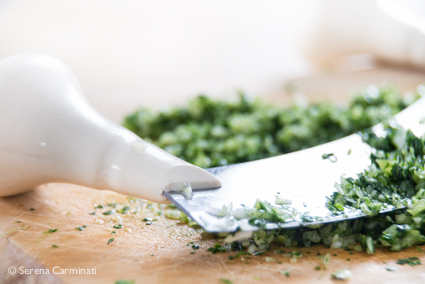
Finely chop the herbs with the spring onions and garlic.

DSC_0111

Fry the chopped ingredients in a large pan with plenty of olive oil.

DSC_0118

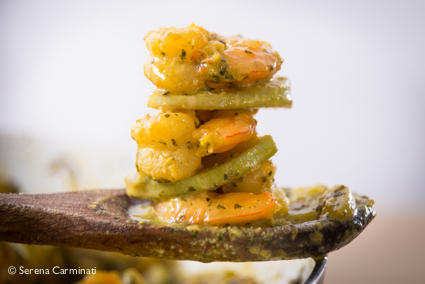
Add the gourds (cut into very thin slices). Cook, adding a little bit of water if necessary, until the grounds are tender.

DSC_0125

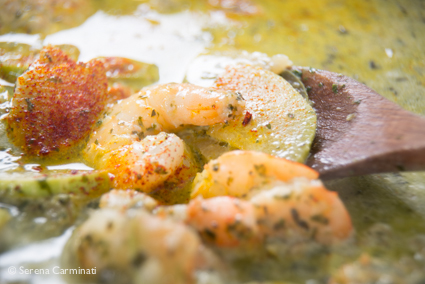
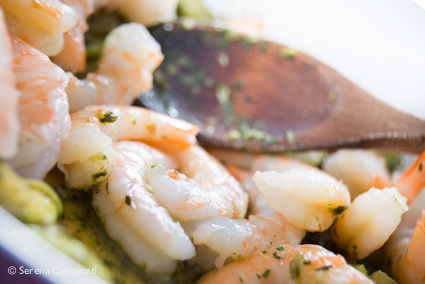
Season with salt and pepper. At this point, add the prawns with the white wine.

DSC_0131

Meanwhile, in a large pan boil the pasta with a little bit of sea salt. Now, add the cream and saffron to the prawns and cook over medium heat until most of the excess liquid evaporates (bearing in mind that the sauce has to be very creamy, almost liquid).

DSC_0135

Once ready, drain the pasta and toss it directly in the frying pan with the sauce.

DSC_0170

Spaghetti con gamberi e zucchine trombetta.

Ingredienti

per 4 persone

3 cipollotti di media grandezza

1 bustina di zafferano

1 spicchio d’aglio grande

un mazzetto di prezzemolo

un mazzetto di dragoncello

200 g di zucchine trombetta

200 g di code di gambero lavate e pulite

200 g di spaghetti

2 cucchiai di panna da cucina

2 bicchieri di vino bianco buono

3 cucchiai di olio extra vergine di oliva

sale e pepe q b

Tritate finemente i cipollotti con l’aglio e le erbe. Mettete a soffriggere gli ingredienti appena tritati in una padella grande con abbondante olio d’oliva. Nel frattempo, fate bollire l’acqua per la pasta con un po’ di sale grosso. Aggiungete al soffritto le zucchine trombetta tagliate a spicchi molto sottili. Fate rosolare bene, poi annaffiate con un po’ d’acqua. Aggiungete sale e pepe a piacere e continuate a cuocere finché le zucche saranno tenere. A questo punto,  aggiungete i gamberi e il vino bianco. A parte, buttate la pasta. Unite la panna e lo zafferano ai gamberi, facendo evaporare a fuoco medio il liquido in eccesso, tenendo presente che il condimento dovrà rimanere molto cremoso, quasi liquido.

Una volta pronto il condimento, scolate la pasta e conditela direttamente in padella.