Category Archives: High-fibre Food

Special Chocolate Chip Cookies For Grown-Ups!

Perfect served with a cup of coffee or tea, with just a little sugar and an intense dark chocolate flavour, these cookies are definitely for grown-ups! You can prepare this recipe for the kids, but I would recommend using a less bitter chocolate and adding a few extra teaspoons of sugar to dough. High in fiber and nutrients, with chocolate and hazelnuts these biscuits are delicious moments that melt in your mouth!

DSC_4378

Spelt chocolate chip cookies 

Ingredients
for 12-13 cookies

115 g (4 oz) butter

170 g (5.9 oz) wholemeal (wholewheat) spelt flour)

30 g (1 oz) corn starch

80g (2.8 oz) dark chocolate (with 70% cocoa solids), chopped

30 g (1 oz) hazelnuts toasted and ground (some grossly)

2 tablespoons honey

2 teaspoons brown sugar

1 teaspoon baking powder vanilla

2 tablespoons yogurt

a pinch of salt

Method.

1. Toast the hazelnuts in the oven at 170° C (338°F) for 10 minutes. Remove the skin by rubbing with a cloth, let cool and then grind the hazelnuts using a food processor. In a bowl mix the butter with honey and sugar.

DSC_4308

2. Aside, sift the flour with corn starch and baking powder. Combine the two mixtures and add the chocolate, the ground hazelnuts, a pinch of salt and yogurt.

DSC_4320

DSC_4327

DSC_4335

3. Work the mixture well until you have a compact dough.

DSC_4342

4. Put the dough in the refrigerator for 1 hour. Grease two large baking trays, shape the dough into little balls (4-5 cm ) and place them quite far apart from one another.

DSC_4349

5. Squeeze the dough gently with your fingers, in order to shape the cookies.

DSC_4357

6. Bake at 170 ° C (338° F) for 12-15 minutes. Place the cookies to cool on a rack.

DSC_4448

Cookies di farina di farro con cioccolato e nocciole.

Ingredienti

per 12-13 biscotti

115 g di burro

170 g di farina di farro integrale

30 g di amido di mais

80 g di cioccolato fondente al 70% tagliato a pezzettini

30 g di nocciole tostate e tritate (alcune anche grossolanamente)

2 cucchiai di miele

2 cucchiaini di zucchero di canna

1 cucchiaino di lievito per dolci vanigliato

2 cucchiai di yogurt

un pizzico di sale

Preparazione.

1. Tostate le nocciole in forno a 170° per 10 minuti, poi strofinate le nocciole (ancora calde) con un panno per togliere la pellicina. Lasciate raffreddare e tritate finemente con il tritatutto.

2. In una terrina mescolate il burro con il miele e lo zucchero.

3. A parte, setacciate e mescolate la farina con l’amido di mais e il lievito per dolci. Unite la farina al composto di burro, poi aggiungete anche il cioccolato a pezzetti, le nocciole tritate, lo yogurt e un pizzico di sale.

4. Lavorate bene, poi fate riposare in frigorifero per 1 ora.

5. Formate delle palline uguali con l’impasto (4-5 cm di diametro per pallina) e mettetele su due teglie unte, lasciando un po’ di spazio.

6. Schiacciate leggermente la pasta con le dita per dare la forma ai biscotti.

7. Infornate a 170° per 12-15 minuti, quindi i biscotti a raffreddare su una griglia.

How to make perfect bread.

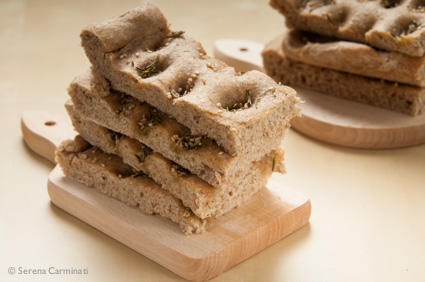
Focaccia bread with rosemary and whole sesame seeds.
DSC_2885

Ingredients

300 g (10.5 oz) wholemeal flour ( organic is better)

200 g (7 oz) plain flour, (organic is better)

167 g (5.8 oz) sourdough (or 16 g yeast)

10 g salt (for the dough) and some more to add over the focaccia bread

A few sprigs of fresh rosemary

10 g sesame seeds (1 tablespoon)

half a teaspoon honey olive oil and water as needed

Bread dough.

To prepare a good homemade bread you need to choose the ingredients carefully.

There are many different flours to choose from, and not all necessarily reflect what labels say. Most wholemeal flour you find in shops, for example, is often nothing more than plain flour with added bran, therefore it’s always best to get informed and buy good quality products, possibly organic, to have good cooking results.

Making a good bread dough is essential, it is very versatile and it can be used in many recipes to add fragrance and flavour to your dishes. I often use good quality wholemeal flour in my dough, as it is rich in fiber, vitamins and minerals and contains fewer calories than plain flour dough.

Starter dough.
DSC_2846

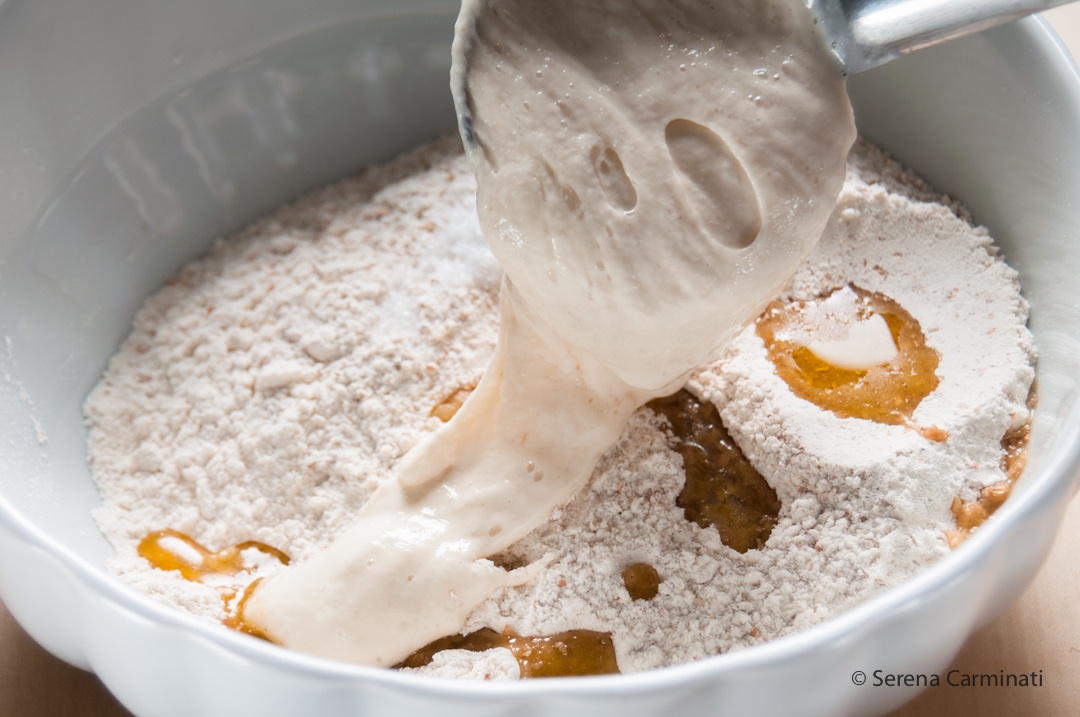
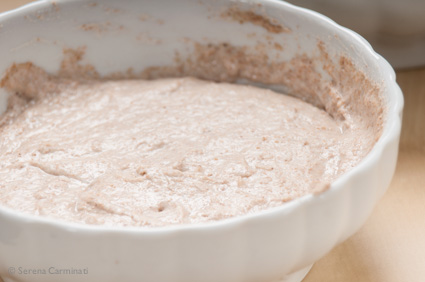
The best way to strengthen and optimize the leavening and fermentation activity in bread dough is to create a starter dough ( or bread starter). We begin by adding the sourdough (167 g) to some flour (1/4 of the dose indicated in the recipe, 125 g, 4.4 oz), just a little bit of honey, and enough water to create a moist and soft dough. Cover and set the dough in a warm place to rise, until it has doubled in volume.This process will make your bread dough rise perfectly, after adding all the ingredients.

It’s also possible to make a starter dough using yeast, but time and dosage differ slightly. Use 16 g of yeast ( following the doses indicated in the recipe above) plus 2 tablespoons flour, very little honey, then cover and let it rise for 1 hour.

How to make sourdough from the start : https://foodfulife.wordpress.com/2013/01/02/how-to-make-na…east-sourdough/

Making the dough.

Mix the two flours in a large bowl. Pour the flour on a working surface (or use a large bowl) and make a well in the centre. Add salt and water to the flour mixture. Mix everything and add the starter dough.

DSC_2851

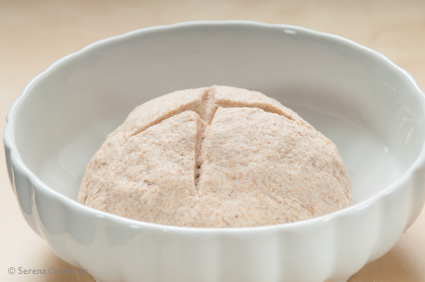
Form a soft dough, adding water or extra flour if needed. The dough should be smooth and elastic. Shape into a round ball and slash the surface in a cross pattern.

DSC_2852

Place the dough to rise in a warm place (rising time may vary depending on the ingredients you use). If you use natural yeast, your dough might take 3-6 hours to rise, or maybe less if you made a starter dough , my advice, however, is to always wait for the dough to double in volume.

DSC_2859

Once risen, you can shape your dough into the desired form, and use it in many recipes.

Focaccia bread with rosemary and whole sesame seeds.

DSC_2868

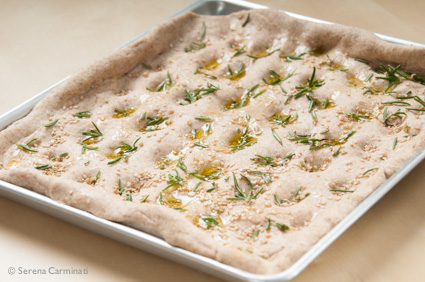
With the help of a rolling pin, roll out the bread dough until you have a thick layer and place it on a lightly greased rectangular baking tray (mine is a 28cm x 24 cm ).Stretch the dough layer to cover completely the baking tray. With your fingers, press lightly on the surface of the dough to create little wells, taking care not to break it.

DSC_2865

Place in a warm place and let rise for 20 minutes. Brush your bread with olive oil and water,then sprinkle evenly with fresh rosemary leaves, sesame seeds and salt.

DSC_2866

Bake at 180° C (356 °F) for 20 to 30 minutes. Cut and serve.

DSC_2876

Focaccia integrale con rosmarino e semi di sesamo.

Ingredienti

300 g di farina integrale

200 g di farina 00 biologica

167 g di lievito madre (oppure 16 g di lievito di birra)

10 g di sale (per l’impasto) e un po’ in più da aggiungere sopra la focaccia

Qualche rametto di rosmarino fresco

10 g di semi di sesamo (un cucchiaio)

mezzo cucchiaino di miele

olio d’oliva e acqua q b

Pasta da pane: impasto base.

Per preparare un ottimo pane fatto in casa è necessario scegliere gli ingredienti con cura. Esistono svariate farine e non tutte rispecchiano necessariamente ciò che indicano le etichette. La farina integrale che trovate in commercio, per esempio, spesso non è altro che farina bianca con dell’aggiunta di crusca, quindi e’ sempre meglio informarsi e comprare prodotti possibilmente biologici e di buona qualità, per avere buoni risultati in cucina.

Un buon impasto per il pane è importante perché può essere utilizzato in molte ricette, arricchendo i piatti con gusto e fragranza.  L’impasto integrale, in particolare, è ricco di fibra, un po’ meno calorico e contiene più vitamine e minerali di quello fatto con la farina bianca.

Qualche link utile sulla farina integrale:

http://www.corriere.it/salute/nutrizione/10_febbraio_28/pane-integrale-vantaggi_ed0992cc-2422-11df-826d-00144f02aabe.shtml

http://blog.greenme.it/naturomania/alimentazione-naturale-attenti-alla-farina-integrale/

Il lievitino, o panetto di lievito.

Il modo migliore per rinforzare e ottimizzare la lievitazione e la fermentazione nell’impasto, è quello di creare un lievitino, o panetto di lievito. Si procede aggiungendo al lievito madre (in questo caso 167 g) una parte della farina (1/4 della dose indicata nella ricetta) ,pochissimo miele (o zucchero, che useremo per nutrire il lievito), e acqua necessaria per creare un panetto umido e morbido. Coprite e mettete il panetto in un posto caldo finché non sarà raddoppiato di volume. Questa operazione farà lievitare perfettamente il vostro impasto, una volta aggiunti tutti gli ingredienti.

Naturalmente il lievitino si fa anche con il lievito di birra, ma le dosi e i tempi variano leggermente. A 16 g di lievito di birra, sbriciolato e sciolto in un po’ d’acqua (seguendo sempre le dosi indicate sopra), si aggiungono 2 cucchiai di farina, poco miele e si lascia riposare per 1 oretta circa al caldo. A questo link troverete tutto il procedimento per fare il lievito madre: https://foodfulife.wordpress.com/2013/01/02/how-to-make-na…east-sourdough/

Impasto e procedura.

Unite le farine e disponetele a fontana su un piano da lavoro (o in una ciotola grande), aggiungete il sale e l’acqua tiepida necessaria ad amalgamare il tutto, senza bagnarlo troppo. A questo punto aggiungete il panetto di lievito e lavorate energicamente fino a creare un impasto liscio e omogeneo. Formate una palla e incidete una croce sulla superficie. L’impasto ora è pronto per essere coperto e messo in un luogo caldo a lievitare. I tempi di lievitazione variano a seconda degli ingredienti usati. La lievitazione con il lievito madre può variare dalle 3 alle 6 ore, magari meno se usate il lievitino, il mio consiglio, comunque, è di aspettare sempre che l’impasto sia raddoppiato di volume prima di utilizzarlo. Una volta lievitato, potete dare al vostro impasto le forme desiderate o sbizzarrirvi con le vostre ricette.

Preparazione della focaccia integrale con rosmarino e semi di sesamo.

Aiutandovi con il matterello, stendete la pasta da pane fino ad ottenere una sfoglia spessa più o meno un dito e  ponetela in una teglia rettangolare leggermente unta (io ne uso una delle dimensioni di 28cm x 24 cm). Stendetela ulteriormente, in modo da ricoprire perfettamente la superficie della teglia. Con le dita premete leggermente sull’impasto per creare delle rientranze, facendo attenzione però a non romperlo. Lasciate lievitare per 20 minuti. A questo punto, spargete uniformemente le foglie di rosmarino fresco con i semi di sesamo e il sale sulla focaccia. Spennellate con un po’ di olio d’oliva e un po’ d’acqua, e infornate a 180° per 20- 30 minuti. Tagliate e servite.

More than just another pizza!

DSC_7881

A pizza for all occasions. A great dish, full of flavor but also healthy as it contains whole grain fibers and vitamins. Personally, I prefer the flavor and texture of different flours mixed together, compared to plain white flour, I think it’s a matter of habit. With experience, I realized that by gradually increasing the use of whole grains and vegetables in the preparation of traditional dishes you can have a healthier diet without having to give up taste or tradition.

Pizza with three flours and vegetables.

100 g wholemeal flour (3.5 oz)

100 g (3.5 oz) whole spelt flour (but use 150 g [5.2 oz] spelt flour if you use yeast instead of sourdough)

100 g durum wheat semolina flour (all organic if possible) 3.5 oz

1 teaspoon of salt

1 tablespoon extra virgin olive oil

2 medium size tomatoes

1/2 medium size bell pepper

1/3 small onion (optional)

a bunch of fresh marjoram or a tablespoon of dried marjoram

ground pepper to taste

100 g of sourdough (3.5 oz) or 5 g yeast dissolved in a little water.

(the dose of yeast may vary depending on the humidity and the quality of the product)

1/2 squeezed mozzarella cheese

1/2 glass of water approximately for the dough

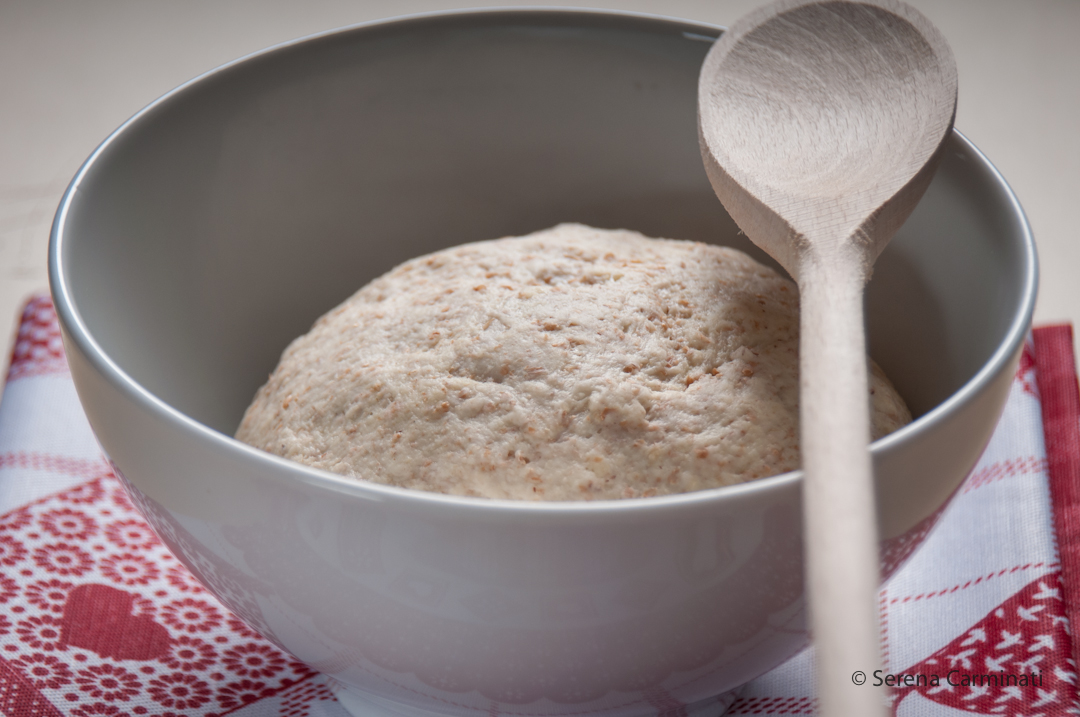
Prepare the dough by combining the three flours, salt, olive oil and sourdough (or yeast).

Mix all the ingredients together and knead to form a soft and smooth dough ( add some flour if the dough is too wet and a little more water if is too dry). Let the dough rise in a bowl with a wet cloth on top for 6 hours if you use sourdough or for an hour if you use yeast.

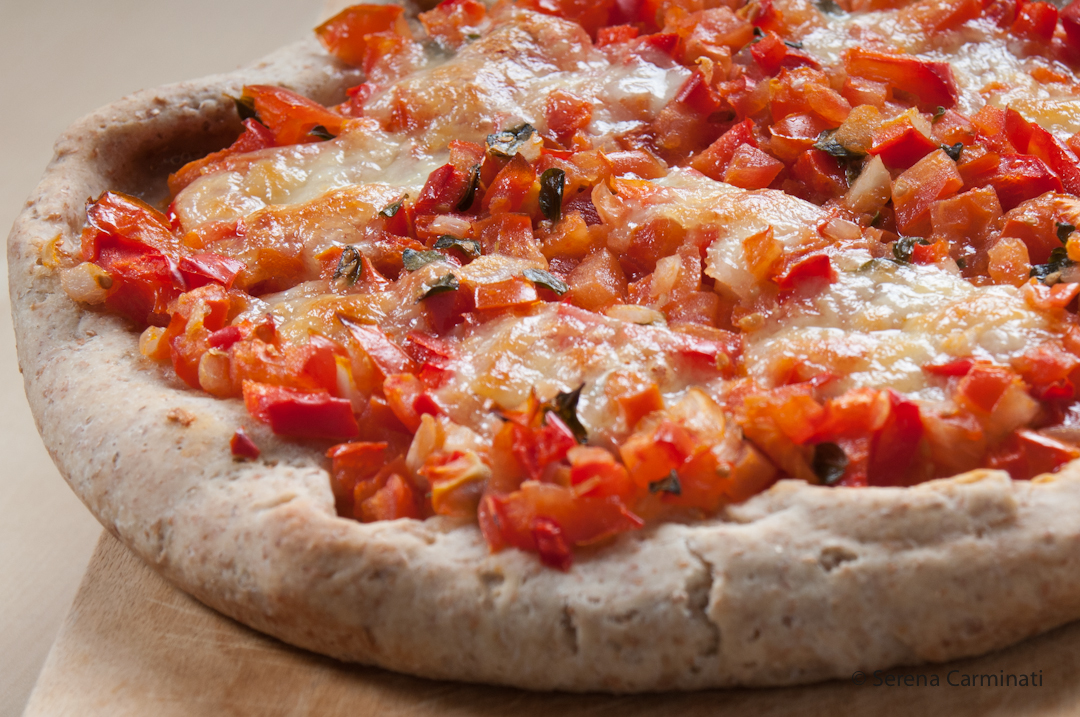
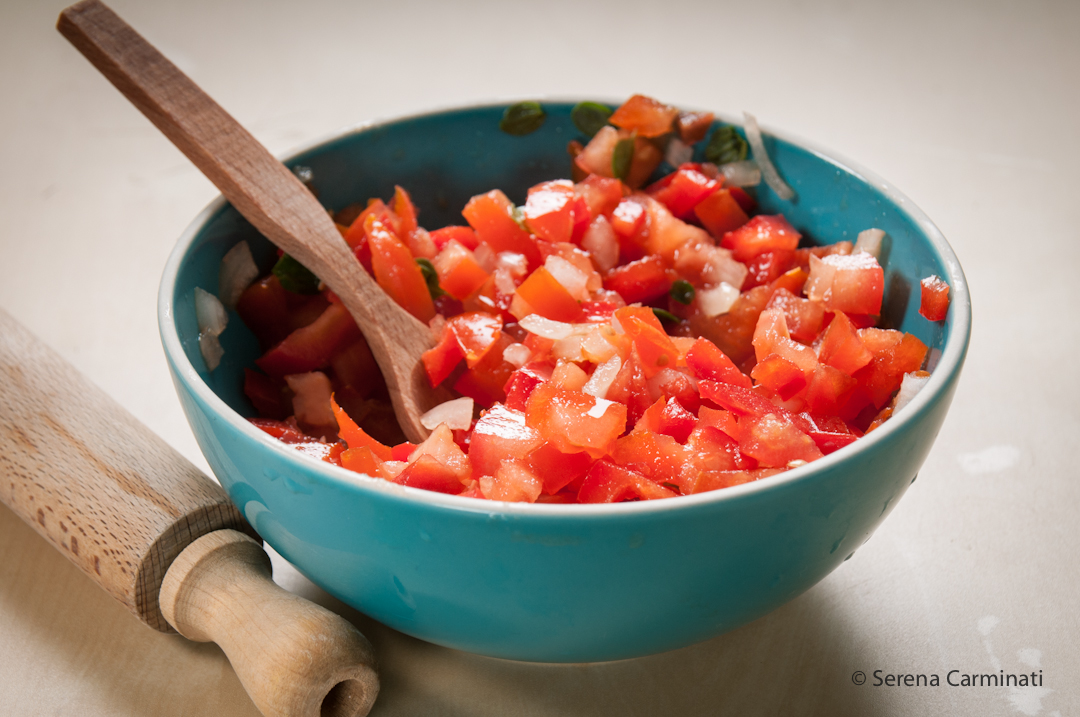
Cut the vegetables, place them in a bowl and drizzle with some olive oil, a pinch of salt and some marjoram.

When the dough is ready roll it out with a rolling pin, pour a little oil evenly over the bottom of a round baking tray and roll out the dough until the baking tray is completely covered.

Place the vegetables on top of the dough and add some mozzarella cheese.

Bake for 20-30 minutes at 180 ° C (356°).

Sprinkle the pizza with some ground pepper and serve it hot.

Una pizza ideale per tutte le occasioni. Un ottimo piatto unico, ricco di sapore ma anche sano, perché contiene fibre e vitamine. Ho elaborato questa ricetta perché personalmente preferisco il sapore e la consistenza delle farine miste, rispetto alla farina bianca, credo sia una questione di abitudine. Con l’esperienza, ho capito che incrementando gradualmente l’uso di farine integrali e verdure nella preparazione di alcuni piatti tipici si può avere una dieta più varia e sana, senza dover necessariamente rinunciare a gusto o tradizione.

Pizza alle tre farine con peperoni e maggiorana.

100 g di farina di integrale

100 g di farina di farro (usate 150 g.di farina di farro se usate il lievito di birra)

100 g di farina di semola di grano duro (tutte possibilmente bio)

1 cucchiaino scarso di sale fino

1 cucchiaio di olio extravergine di oliva

2 pomodori di medie dimensioni

1/2 peperone rosso di medie dimensioni

1/3 di cipolla piccola (facoltativo)

un mazzetto di maggiorana fresca o un cucchiaio di maggiorana secca

pepe macinato a piacere

100 g di lievito madre o 5 g di lievito di birra sciolto in un po’ d’acqua.

(la dose di lievito madre può variare a seconda dell’umidità e della qualità del prodotto, meglio comunque abbondare)

1/2 mozzarella ben strizzata

1/2  bicchiere d’acqua circa per l’impasto

Preparate l’impasto unendo le tre farine, il sale,  l’olio e il lievito. Mescolate tutti gli ingredienti, impastate fino a formare una pasta morbida e omogenea, aggiungendo un po’ di farina se l’impasto è troppo umido e un po’ più d’acqua se il risultato è  troppo asciutto. Lasciate lievitare l’impasto in una terrina con sopra uno straccio umido per sei ore se avete usato il lievito madre o per un’ ora se avete usato il lievito di birra.

Tagliate le verdure, riponetele in una scodella e conditele con un filo d’olio, un pizzico di sale e la maggiorana. Quando l’impasto sarà ben lievitato stendetelo con un mattarello, versate un po’ d’olio uniformemente sul fondo di una teglia rotonda e stendetevi l’impasto fino a coprirlo completamente.

Versate le verdure sopra l’impasto e aggiungete la mozzarella.

Infornate a forno caldo per 20-30 minuti a 180°.

Spolverate la pizza con del pepe macinato e servitela calda.

Buon appetito!