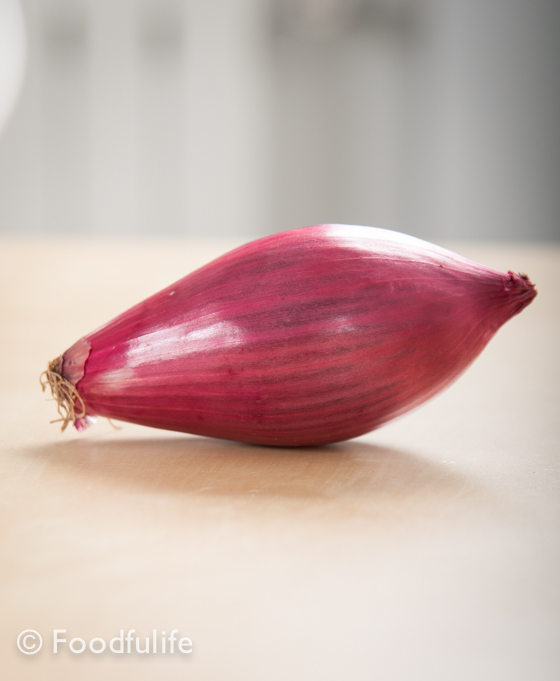
Category Archives: High-fibre Food

Traditional Recipe: Sicilian Almond Biscuits With Candied Cherries (Pasticcini Alle Mandorle)

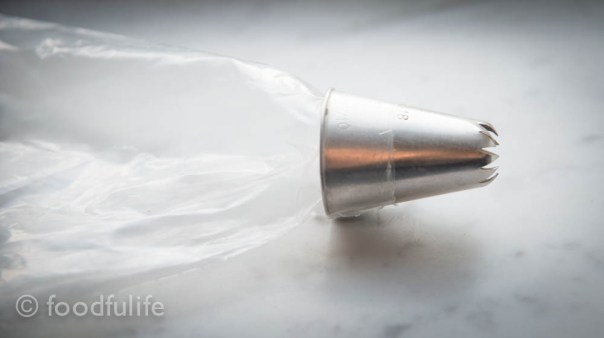
These Sicilian biscuits (or small pastries) are gluten-free, dairy-free, delicious and very easy to prepare! It is better to use a piping bag to shape the biscuits, but if you don’t have one, you can roll out the dough with your hands to make small balls and then press them with your fingers, to obtain a cookie-like shape.

DSC_1945

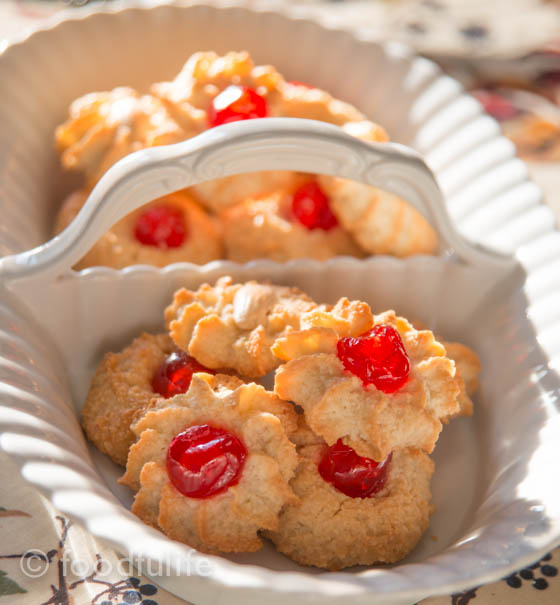
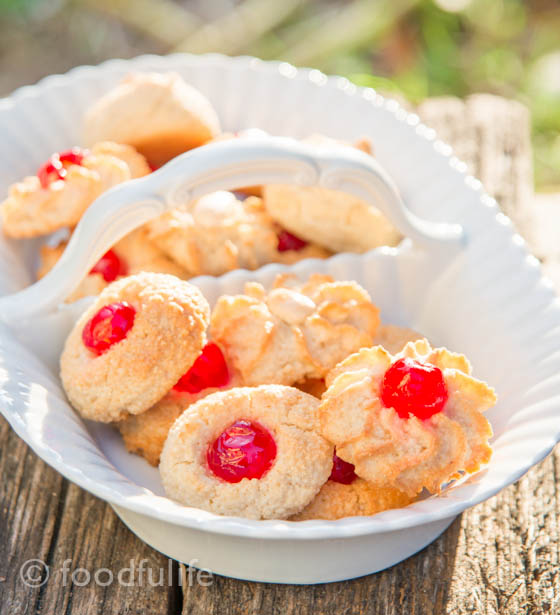
The dough needs, at least, 30 minutes of resting time, however they will taste even better if you leave them to rest in the fridge overnight. Traditionally, we garnish these biscuits with candied cherries or almonds, so if you want you can use both. Here I prepared some of these delicious pastries with my mother, I hope you enjoy the recipe!

DSC_1930

Biscuits with almonds and candied cherries.

Preparation and cooking time: 25 minutes + resting time

Difficulty: Easy

Ingredients

For two oven trays

3 egg whites

80 g sugar

200 g almonds, shelled and finely chopped

candied cherries

a few drops of almond flavouring, or some orange zest (optional)

DSC_1904

Method.

1. Grind the almonds with the sugar, using a food processor.

DSC_1900

2. Combine the egg whites with the almond mixture and the flavourings, then put the dough in the refrigerator for at least 30 minutes.

DSC_1902

DSC_1905

3. Using a piping bag, shape the biscuits and then garnish with candied cherries.

DSC_1907

DSC_1912

DSC_1921

DSC_1924

4. Bake at 180 ° C (356° F) until golden.

DSC_1937

DSC_1942

DSC_1947

DSC_1982

Dolcetti alle mandorle con ciliegie candite.

Preparazione e cottura: 25 minutes + il riposo

Difficoltà : Facile

Ingredienti

Per 2 teglie rettangolari di media grandezza.

3 chiari d’uova

80 g di zucchero

200 g di mandorle sgusciate e tritate finemente

ciliegie candite q. b.

1 qualche goccia di aroma di mandorle, oppure una scorretta di arancia tritata (facoltativo)

Preparazione.

1. Tritate finemente le mandorle con lo zucchero.

2. Mescolate i chiari d’uova con le mandorle tritate, lo zucchero e gli aromi. Mettete il composto a riposare in frigorifero per almeno 30 minuti.

3. Usando il sac à poche, date la forma ai pasticcini (oppure formate delle palline e schiacciatele leggermente con le dita).

4. Guarnite i pasticcini con le ciliegie candite, poi infornate a 180° C fino ad ottenere dei dolcetti dorati.

DSC_1972

DSC_1985

Quick And Easy Recipe: Sautéed Carrots

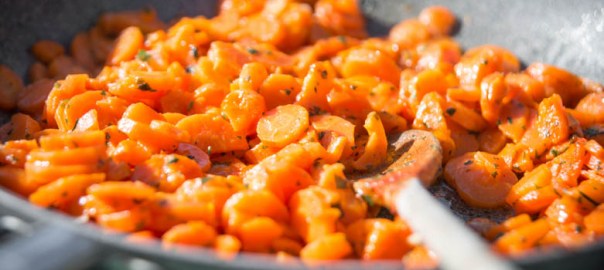
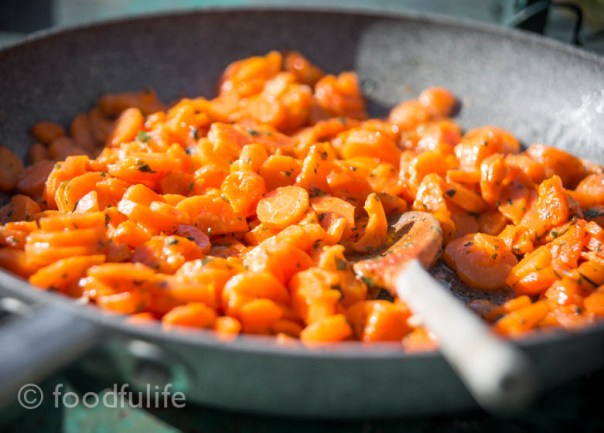
This is an easy and extremely delicious carrot recipe! You can add the quantity of extra virgin olive oil and butter you desire, or you can have a healthy dish with just a little extra virgin olive oil in it. You can adapt this recipe according to your taste.

Sautéed Carrots

Preparation time: 5 minutes

Cooking time: 15-20 minutes

Ingredients

For 6 servings

1 kg carrots, washed and peeled

2 garlic cloves, chopped

4-5 tablespoons extra virgin olive oil

2 tablespoons finely chopped parsley

salt to taste

a little bit of butter (optional)

Method.

1. Steam the carrots until a little bit tender.

2. Slice the carrots and then sauté (for 5-10 minutes) with the extra virgin olive oil, a little bit of butter (optional), the chopped garlic and parsley.

3. Add some salt and serve.

sautéed carrots

Carote saltate in padella.

Temo di preparazione: 5 minuti

Tempo di cottura: 15-20 minuti

Ingredienti

Per 6 porzioni

1 kg di carote, già pulite

2 spicchi d’aglio (tritati)

4-5 cucchiai di olio extra vergine di oliva

2 cucchiai di prezzemolo tritato

sale q. b.

un po’ di burro (facoltativo)

Preparazione.

1. Cuocete a vapore le carote, fino a renderle più tenere.

2. Tagliare le carote e poi fatele rosolare (per 5-10 minuti) con l’olio extra vergine di oliva, un po’ di burro (facoltativo), l’aglio e il prezzemolo.

3. Aggiungete un po’ di sale e servite.

Focaccia Rustica Alle Cipolle (Rustic Onion Focaccia)

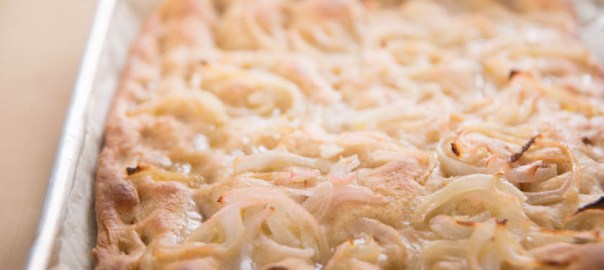
This is another popular version of the Focaccia Alla Genovese. This onion focaccia comes from a traditional recipe, but here I am making my own adaptation, using different flours and not just plain flour (we use plain flour in the traditional recipe).

In fact, for this recipe I am preparing a dough mixing plain flour, semolina flour and spelt flour in equal parts.  It is quite a rustic focaccia, with the addition of the onions that keep the focaccia nicely moist and sweet. It is definitely something to try…

DSC_1563

Focaccia rustica con le cipolle (onion focaccia).

Ingredients

for a medium sized oven tray

150 g plain unbleached flour

150 g whole spelt flour

150 g semolina (durum wheat) flour

14 g yeast

8 g salt (and a pinch of salt to put on top)

extra virgin olive oil

1/2 a glass of water (a small glass!!)

1 large onion, finely sliced

Method.

1. Mix the yeast with some warm water, than add two tablespoons of spelt flour (take two tablespoons from the 150 g of spelt flour mentioned in the ingredient list). Create a starter and let it rise until it doubles in volume.

Note. You can use yeast or make a starter using 50 g of semisolid sourdough (I used plain flour sourdough), a pinch of barley malt, a little bit of water and 100 g of spelt flour). If you are going to use sourdough, let the starter rise over night and then follow the recipe, starting from step 2.

2. Mix the remaining flour, arrange it on a working board (or a table) and create a well in the centre. Add 8 g of salt with a little bit of warm water and combine the ingredients to create a soft dough. Add the starter and work well.

3. Let rise until the dough has doubled in volume.

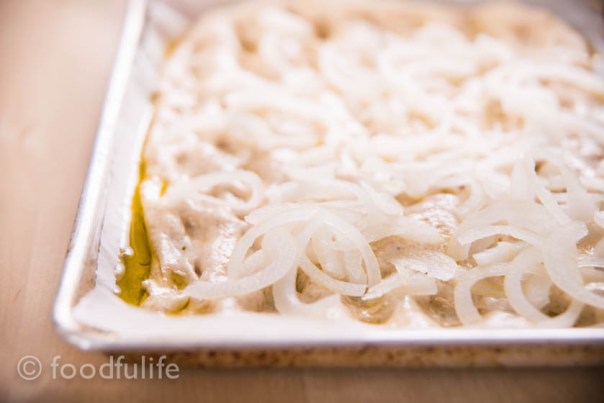
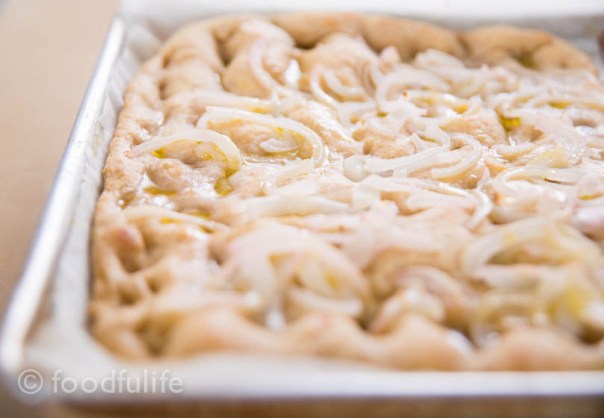
4. Roll out the dough on a baking tray,previously greased with plenty of extra virgin olive oil and let rise for an hour. When the dough has risen, pressed with your fingers to create regular indents on the surface.

DSC_1546

5. Top with the onion slices, add a little bit of salt and drizzle with extra virgin olive oil.

DSC_1560

6. Bake at 200° C (392°F) until the focaccia is slightly golden. Remove the focaccia from the oven and pour half a glass of water on the surface. Bake again until golden-brown and crisp.

DSC_1570

DSC_1573

DSC_1577

DSC_1581

also see the focaccia alla genovese recipe.

Focaccia rustica con le cipolle.

Ingredienti

per una teglia da forno di media grandezza

150 g di farina 00

150 g di farina di farro integrale

150g di semola rimacinata di grano duro

14 g di lievito di birra

8 g di sale fino (e un pizzico di sale in più, da aggiungere alla fine)

olio extra vergine di oliva q.b.

Mezzo bicchiere d’acqua (un bicchiere piccolo!)

1 cipolla grande, tagliata a fettine sottili

Preparazione.

1. Sciogliete il lievito di birra in poca acqua (tiepida) e aggiungete due cucchiai di farina di farro (prendete i due cucchiai di farina di farro dai 150 g indicati negli ingredienti). Create un panetto e lasciate raddoppiare di volume.

Nota. In questa ricetta è possibile utilizzare il lievito di birra oppure il lievito madre. Se utilizzate il lievito madre, fate un lievitino con 50 g di pasta madre semisolida (io ho usato lievito madre a base di farina 00), un pizzico di malto d’orzo, un po’ d’acqua e 100 g di farina integrale di farro). Lasciare lievitare tutta la notte e poi seguite la ricetta, a partire dal secondo passaggio.

2. Mischiate bene le farine rimaste e disponetele su una spianatoia (oppure su un tavolo). Aggiungete 8 g di sale con un po’ d’acqua tiepida e lavorate fino a creare un impasto morbido. Aggiungete anche il panetto di lievito e lavorate bene.

3. Lasciate lievitare in un luogo riparato, fino a quando l’impasto sarà raddoppiato di volume.

4. Stendete la pasta su una teglia (precedentemente unta con abbondante olio extra vergine d’oliva) e lasciate lievitare per un’oretta. Quando la pasta sarà nuovamente lievitata, pressate con le dita la superficie per creare delle fossette.

5. Ricoprite la focaccia con le fette di cipolla, aggiungete ancora un po’ di sale e irrorate con abbondante olio extra vergine d’oliva.

6. Infornate a 200°, fino a quando la focaccia sarà leggermente dorata. Togliete la focaccia dal forno e versate mezzo bicchiere d’acqua sulla parte superiore, poi infornate nuovamente, fino ad ottenere una focaccia ben dorata e croccante.

Da vedere anche la ricetta della focaccia alla genovese 

Traditional Recipe: Pesto Alla Genovese

DSC_0320

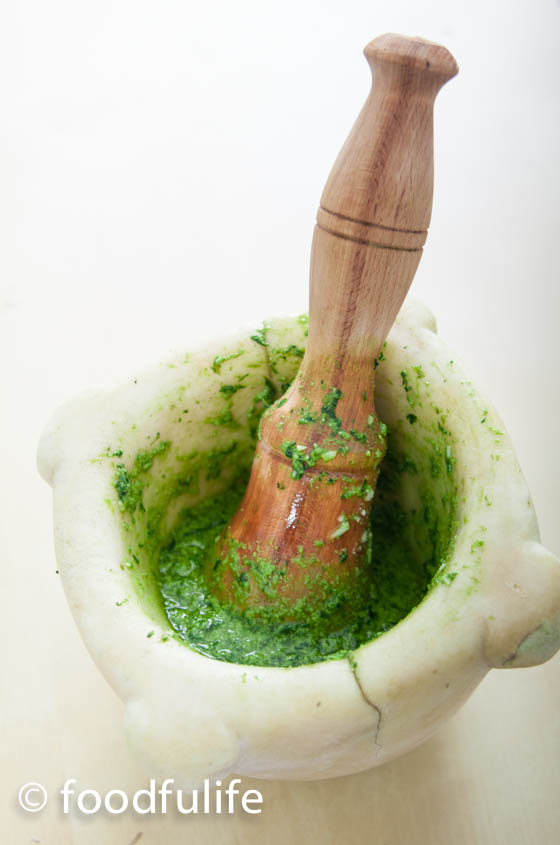
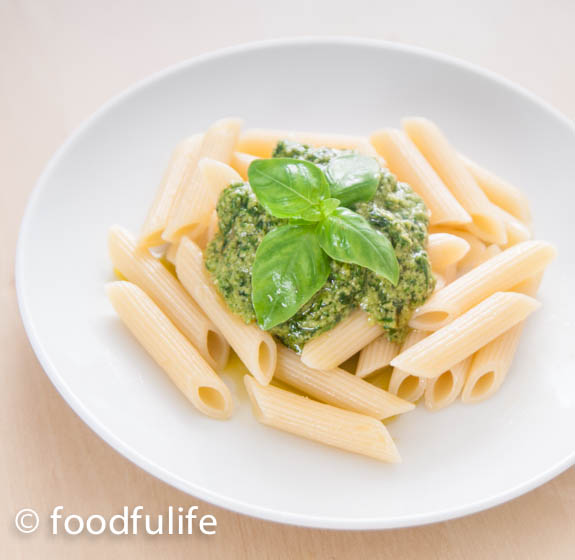
Pesto is a well known basil sauce originating in Genoa. This delicious sauce is traditionally served with various kinds of pasta such as trofie, lasagne and gnocchi or used to enrich dishes like vegetables soups and even pizzas! Countless variations already exist, but the best pesto is made with only basil and extra virgin olive oil from Liguria, because they are very aromatic and really make a difference when it comes to flavour. During the preparation method, we use a mortar because it is a slow and gentle process that doesn’t alter the quality and flavour of the ingredients.

Having said that, you can make a wonderful pesto using a blender and any of your local ingredients….so give it a go!!I promise, you won’t be disappointed!

Today we will see how to prepare a delicious pesto using either a mortar or a blender…You choose! 🙂

DSC_0412

Tips.

1. In the traditional recipe we only use well-aged Parmesan and Pecorino. Both these cheeses are quite salty, therefore it is better to use only a few crystals of salt in the recipe and taste the sauce when it’s ready; you can always add the salt later, if needed.

2. It is possible to dilute the pesto with water, in order to obtain a creamier sauce. I usually mix a couple of tablespoons of hot water with the sauce, just before mixing it with the pasta. Then stir vigorously with a spoon and add the pasta.

3. To preserve the pesto, put the sauce in a jar and cover with plenty of extra virgin olive oil, then seal well with a lid and put it in the fridge. The sauce will last up to 5 days, if properly preserved.

DSC_0346

Pesto alla Genovese.

for 2 serving

40 leaves of fresh basil, washed and dried

1 clove of garlic

3 tablespoons of well-aged Parmesan cheese, grated

1 tablespoon of aged Pecorino cheese, grated (you can add more Parmesan if you don’t find the Pecorino)

1 tbsp of pine nuts

6 tablespoons of extra virgin olive or more, if needed

sea salt crystals to taste

Method 1 (traditional method with a mortar)

1. Using a mortar, crush the garlic with only a couple of salt crystals.

DSC_0333

2. Remove the stems and gradually add all the basil leaves with a couple of salt crystals at a time. Move the pestle in circular motion and firmly crush all the leaves, adding more as you go along.

DSC_0359

3. Add the pine nuts and the grated cheeses, then continue mixing the ingredients with a gentile circular motion.

DSC_0365

4. Add the extra virgin olive oil and mix until you get a creamy pesto.

DSC_0408

DSC_0390

Method 2 ((with an immersion blender or food processor)

This is definitely a quicker method, however, you have to be a little bit careful in order to avoid burning the basil leaves using the blender. You can easily avoid this, by adding some cold water (it has to be really cold) to prevent the blade from heating up and spoiling the basil.

1. Put all the ingredients in a tall container and add only 3 tablespoons of extra virgin olive oil.  Start blending and add 2 tablespoons of really cold water.

DSC_0463

2. Blend everything for a few minutes, then add the rest of the extra virgin olive oil and continue blending until you get a nice creamy pesto.

DSC_0472

DSC_0478

DSC_0481

See also the arugula pesto recipe.

DSC_0427

DSC_0429

DSC_0432

Pesto alla genovese.

Per due persone

1 spicchio d’aglio

40 foglie di basilico, lavate e asciugate

1 cucchiaio di pinoli

3 cucchiai di parmigiano ben stagionato e grattugiato

1 cucchiaio di pecorino sardo stagionato e grattugiato

Olio extra vergine d’oliva q. b.

sale grosso q. b.

Metodo 1 (con il mortaio)

Nota. Una volta aggiunto il basilico, il pestello va mosso in senso rotatorio per non rovinare le foglie. Il basilico deve mantenere il suo colore verde vivo.

1. Usando un mortaio, pestate l’aglio con due cristalli di sale grosso (useremo poco sale perché i formaggi utilizzati nella ricetta sono già salati).

2. Togliete i gambi e aggiungete gradualmente le foglie di basilico con qualche cristallo di sale. Muovete il pestello in senso rotatorio e pestate tutte le foglie.

3. Aggiungete i pinoli con i formaggi grattugiati e continuate ad amalgamare gli ingredienti con il pestello.

4. Aggiungete l’olio a filo, fino ad ottenere un battuto cremoso.

Metodo 2 ((con il frullatore ad immersione)

Per fare il pesto in modo pratico e veloce, si può utilizzare il frullatore ad immersione con un contenitore alto e stretto. Prima di tritare tutti gli ingredienti è importante aggiungere un paio di cucchiai d’acqua ghiacciata, per evitare che la lama del frullatore si scaldi e quindi rovini il basilico.

1. Mettete il basilico, i pinoli e i formaggi nel contenitore con 3 cucchiai d’olio extra vergine d’oliva e 2 cucchiai d’acqua ghiacciata.

2. Tritate per qualche minuto, poi aggiungete altro olio e tritate fino ad ottenere un pesto cremoso.

Nota.

Per ottenere un pesto ancora più cremoso, si può aggiungere un po’ d’acqua di cottura della pasta al condimento.

Vedi anche la ricetta per il pesto di rucola.

Quick And Easy: Chestnut Salad With Apples And Escarole

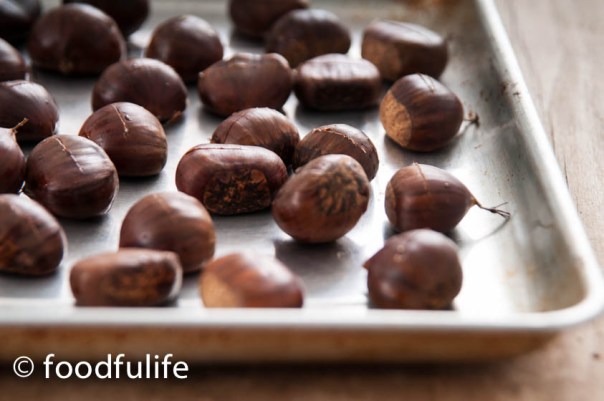
This week, as promised, I start a series of recipes dedicated to chestnuts. Chestnuts are a wonderful and versatile ingredient, full of fibre, nutrients and vitamins. Basically, they are carbohydrates, but they also contains some good proteins and are gluten-free. These fruits are usually roasted or boiled, sometimes used to enrich salads, stews or soups. Chestnuts flour is also quite popular, often used to make tasty breads and various desserts. Candied chestnuts are also an amazing ingredient when it comes to making desserts, but they are usually quite expensive.

DSC_9980

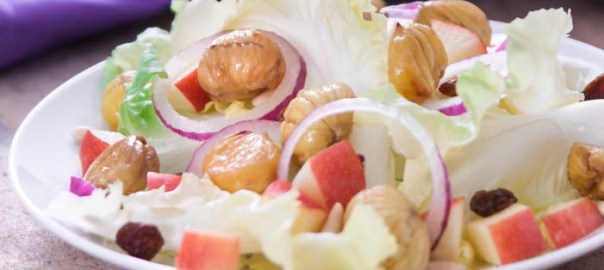
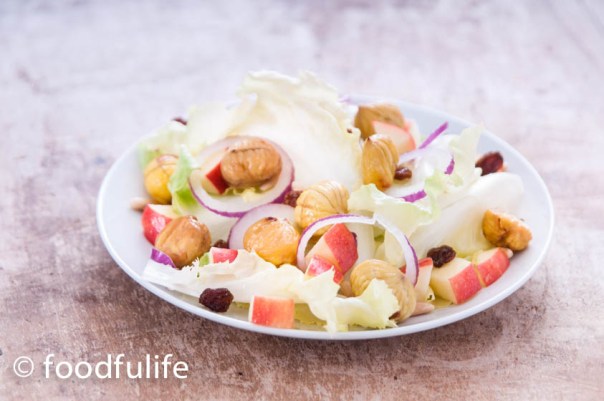
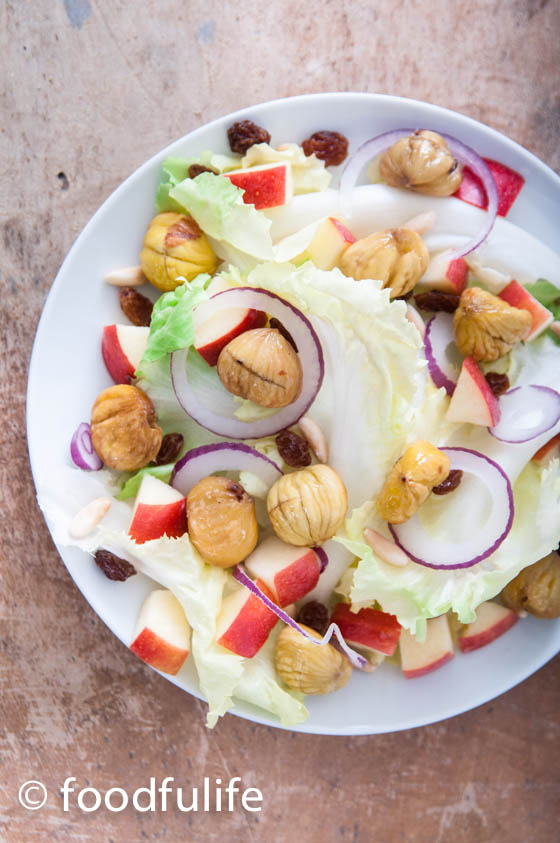
Today I am publishing a salad with crunchy roasted chestnuts, escarole, pine nuts and apples, packed with vitamins (B1, B2, C etc…) and minerals, to boost the immune system with plenty of flavour and texture!

DSC_0092

Salad with roasted chestnuts, escarole and apples.

Ingredients 

For 4 people

400 g of roasted chestnuts (or boiled, if you prefer) see How to make amazing roasted chestnuts

160 g of escarole or curly-leaved endive, washed and dried

1/2 red onion (optional)

30 g of raisins

40 g pine nuts

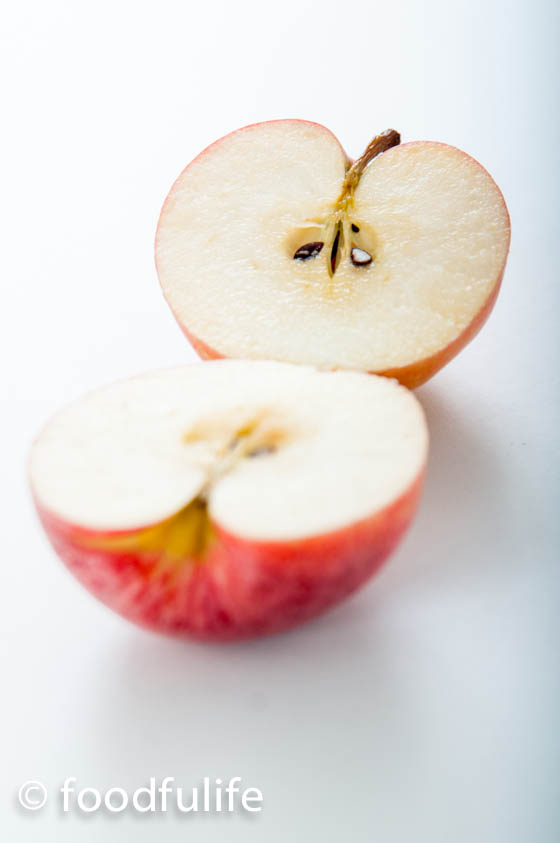
2 gala apples, washed and dried

3 tablespoons extra virgin olive oil

the juice of half a lemon

salt and pepper to taste

DSC_0015

DSC_0023

Method.

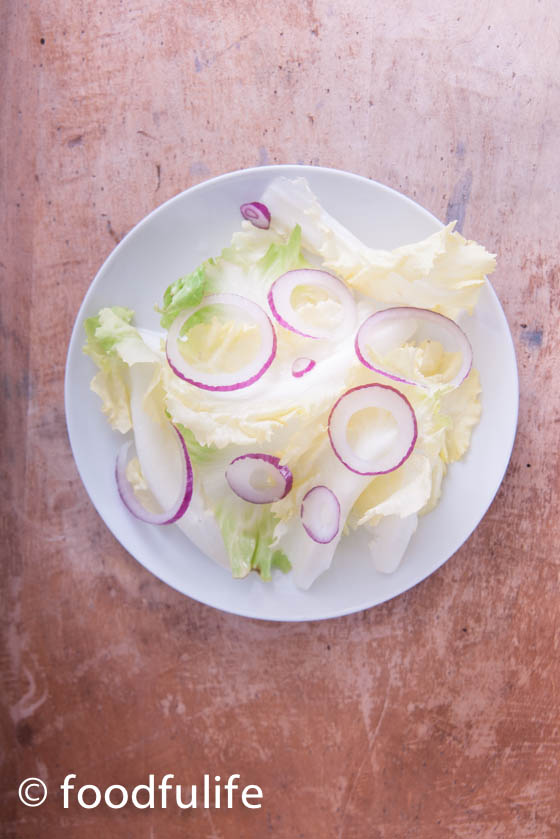
1. Cut the apples and the escarole leaves. Peel and slice the onion then put it in a cup and fill the cup with water. Leave the onion in the water for 30 minutes and then drain (this operation will make the onion sweeter).

DSC_0149

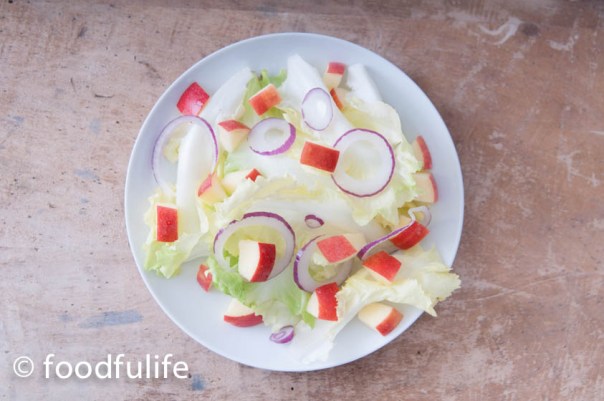
2. Arrange the escarole leaves on the plates, then add the chopped apples with the raisins, the onion and the pine nuts (divide into 4 servings).

DSC_0163

DSC_0165

3. Peal the roasted chestnuts then  add them to the salad.

DSC_0218

4. Season with 3 tablespoons of extra virgin olive oil, a few drops of lemon juice, salt and pepper.

DSC_0223

DSC_0190

DSC_0174

Insalata di caldarroste, scarola e mele.

Ingredienti

Per 4 persone

400 g di caldarroste (oppure castagne bollite),

per fare le caldarroste seguite questo link:  Come preparare ottime caldarroste a casa

160 g di indivia scarola (oppure indivia riccia) , lavata e asciugata

1/2 cipolla rossa (facoltativo)

30 g di uvetta

40 g di pinoli

2 mele gala, lavate e asciugate

3 cucchiai di olio extravergine d’oliva

il succo di mezzo limone

sale e pepe q. b.

Preparazione.

1. Tagliate le mele e le foglie di scarola. Sbucciate e affettate le cipolle.  Mettete le cipolle a mollo in acqua per 30 minuti (per renderle più dolci), poi scolate.

2. Dividendo in quattro porzioni, sistemate prima le foglie di scarola e poi aggiungete i pezzetti di mele, l’uvetta, la cipolla e i pinoli.

3. Sbucciate le caldarroste e aggiungetele all’insalata.

4. Condite con olio extra vergine d’oliva, qualche goccia di succo di limone, sale e pepe.

DSC_0215

How To Make Amazing Roasted Chestnuts In Your Own Home!

This is the right season to enjoy some crunchy roasted chestnuts! Golden and crunchy, roasted chestnuts are simply delicious!! When my brother and I were kids, my father used to make some roasted chestnuts before bed time….We loved it!

DSC_0128

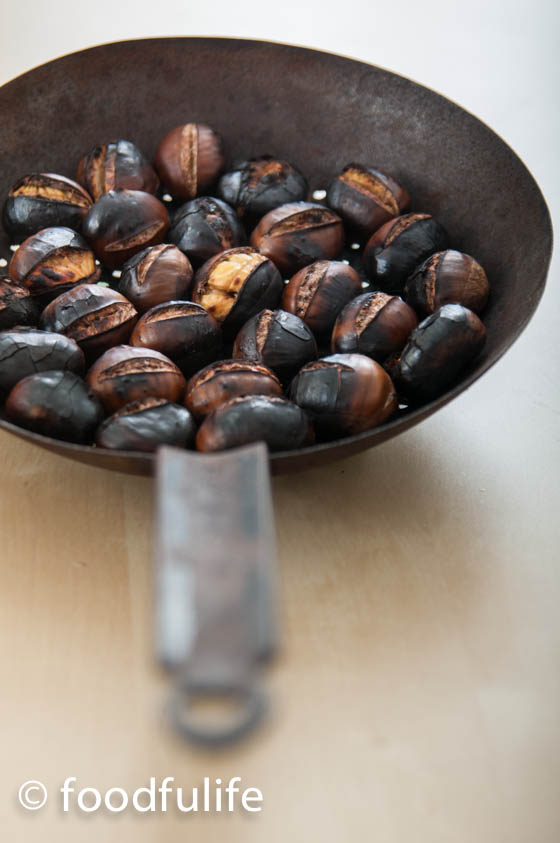
In this post I’ll share the method to prepare amazing roasted chestnuts directly on the stove, just like my father used to do, but make sure you follow the instructions and you protect yourself with the proper equipment, in order to avoid disasters! :-). If you carefully follow all the steps this method is fairly easy and safe.

DSC_0132

Tip. During the cooking time keep away from the fire as much as possible and wear oven gloves for extra safety.

How to make roasted chestnuts 

Preparation time: 5 minutes

Cooking time:15-20 minutes

Ingredients

500 g of fresh chestnuts

just a small splash good quality white wine (avoid putting the bottle close to the fire when you cook and use it)

What you need.

a gas stove

a frying pan with holes to cook chestnuts (you can buy it or you can make your own, by piercing an old frying pan with a large nail, using a hammer)

a long stainless steel kitchen utensil (don’t use anything with plastic or wood)

Good oven gloves

Preparation.

1. Check, wash and dry the chestnuts.

DSC_0096

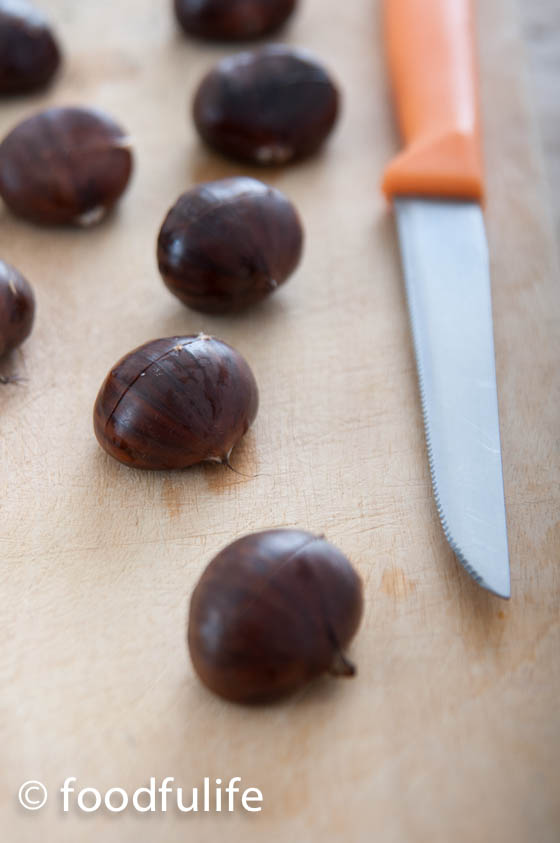
2. Using a sharp knife, cut the chestnuts one by one, making a 2cm long incision on the round side (make an X or 1 long cut horizontally, either way it should be fine!).

DSC_0098

DSC_0106

This operation is necessary to release the steam from the nuts while they are cooking and it will also make them easier to peel (If you skip this step the chestnuts will explode during the cooking process, so make sure you cut them properly).

Cooking Method (on the stove).

1. Put the pierced pan with the chestnuts directly on the gas stove over a moderate-high heat. Stir constantly with a long stainless steel kitchen utensil.

2. Roast the chestnuts for about 10 minutes, then add a small splash of white wine (try to keep yourself and the bottle of wine away from the heat, while you do that) and continue to roast and stir for at least 5 more minutes.

DSC_0136

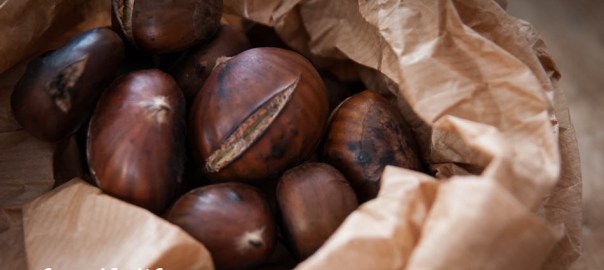
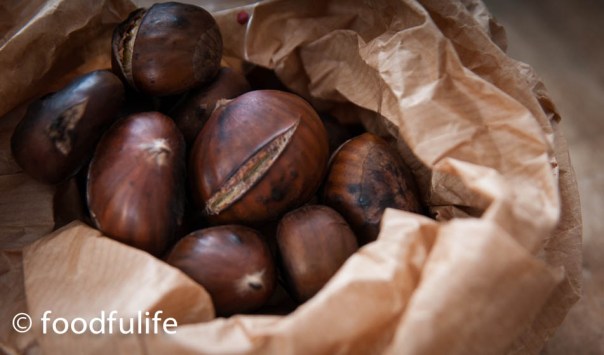
3. Turn off the eat and put the chestnuts in a brown paper bag for a few minutes (this will keep them hot and moist). Peel the chestnuts while they are still hot, because once they are cool they become much more difficult to peel.

DSC_0139

Tip. You can bake the chestnuts at 220° C (428° F) for about 20 minutes, instead of cooking them on the stove top; it’s probably a safer cooking method…However, I prefer the method above, because the chestnuts are much tastier and crunchier, when cooked directly over the flame!

DSC_0108

Roasted chestnuts with roasting pan.

Come preparare ottime caldarroste a casa.

In questo articolo vedremo insieme come preparare delle ottime caldarroste, cotte direttamente sul fornello, proprio come mio padre era solito fare, quando io e mio fratello eravamo bambini.

Seguite attentamente le istruzioni indicate e vedrete che questo è un metodo abbastanza semplice e sicuro.

Nota. Durante la cottura delle caldarroste, per quanto possibile, cercate di stare lontano dal fuoco e indossate dei guanti da forno per protezione.

Preparazione delle caldarroste.

Tempo di preparazione: 5 minuti

Tempo di cottura: 15-20 minuti

Ingredienti

500 g di castagne fresche

un dito di vino bianco di buona qualità (fate attenzione a non avvicinare troppo la bottiglia di vino al fuoco)

L’attrezzatura

un fornello a gas

una padella forata per caldarroste (potete farne una voi forando più volte una vecchia padella, con un chiodo grosso e un martello).

un cucchiaio grande di acciaio con manico lungo (non utilizzate plastica o legno)

guanti da forno

Preparazione.

1. Controllate, lavate e asciugate le castagne.

2. Utilizzando un coltello molto affilato, tagliate le castagne, una ad una, facendo un’ incisione di circa 2 cm sulla parte bombata. Questa operazione è necessaria per fare evaporare l’acqua dai frutti durante la cottura, se no le castagne col calore possono esplodere.

Metodo di cottura (sul fornello)

1. Mettete la padella forata, con le castagne, direttamente sul fornello a fuoco medio. Mescolate spesso, utilizzando un grosso cucchiaio di acciaio con il manico lungo.

2. Fate arrostire le castagne per circa 10 minuti, quindi insaporite con una piccola spruzzata di vino bianco (cercate di tenere la bottiglia di vino lontana dal fuoco). Continuate a cuocere le castagne per almeno altri 5 minuti.

3. Spegnete il fuoco e mettere le castagne in un sacchetto di carta per alcuni minuti (serve a mantenerle calde e umide). Sbucciate le castagne mentre sono ancora calde perché, una volta raffreddate, sbucciarle diventa molto più difficile.

Nota. È possibile cuocere le castagne nel forno a 220 °  C per circa 20 minuti, invece di utilizzare il fornello. Io preferisco cuocerle direttamente sulla fiamma perché, in questo modo, le castagne risultano molto più croccanti e saporite

Quick And Easy: Prawn Salad With Rocket And Pomegranate

Last but not least, today I am publishing a wonderful prawn salad with rocket leaves and lots of pomegranate seeds. Extremely easy to make and perfectly balanced, this dish is real treat!!!

It will definitely become a classic at my dinner parties!

DSC_8122

DSC_8107

Prawn salad with rocket and pomegranate.

350 g prawns tails

125 g rocket (arugula)

2 spring onions, washed and finely sliced (only the tender part)

half bulb of fennel, washed and finely sliced

2 stalks of celery, washed and finely sliced (only the tender part)

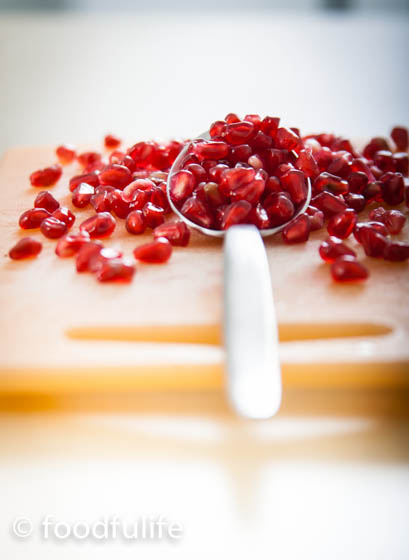
the seeds of a pomegranate

for the lime citronette

the juice of 1/2 a lime

4 tablespoons of extra virgin olive oil

salt and pepper to taste

DSC_8117

Method.

1. Peel and devein the prawns, then poach in water for a few minutes.

2. Drain the prawns and let cool.

3. Place the arugula, the fennel, the spring onions and the celery in the plates, then add the prawns and garnish with plenty of pomegranate seeds.

4. Make the lime citronette. Mix 4 tablespoons of extra virgin olive oil with the juice of half a lime, then season with salt and pepper.

5. Pour the lime dressing over the salad and serve.

Also see Rice Flour Chocolate Cookies With Pomegranate and Light Sabayon With Pomegranate And Pistachios

DSC_8068

DSC_8072

DSC_8101

Insalata di gamberi con rucola e melagrana.

350 g di code di gambero

125 g di rucola

2 cipollotti, lavati e tagliati finemente (solo la parte tenera)

2 gambi di sedano, lavati e tagliati finemente (solo la parte tenera)

1/2 finocchio, lavato e tagliato finemente

i chicchi di una melagrana

Per la citronette di lime

il succo di mezzo lime

4 cucchiai di olio extra vergine d’oliva

sale pepe q. b.

Preparazione.

1. Sgusciate i gamberi e togliete il budellino. Fate bollire i gamberi per qualche minuto.

2. Scolate i crostacei e fateli raffreddare.

3. Mettete i gamberi con la rucola, i chicchi di melagrana, il finocchio e i cipollotti nei piatti.

4. A parte, preparate la citronette di lime. Mescolate 4 cucchiai di olio extra vergine d’oliva con il succo di mezzo lime, sale e pepe.

5. Condite l’insalata di gamberi con la citronette di lime e servite.

DSC_8148

Light Sabayon With Pomegranate And Pistachios

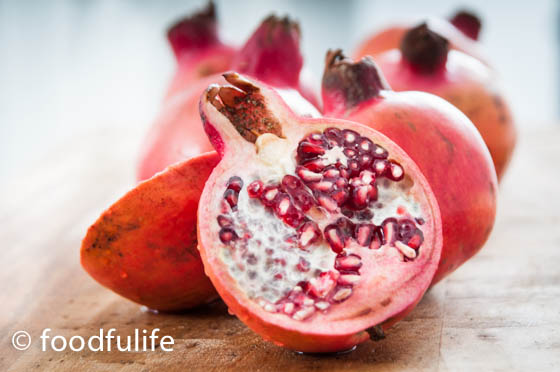
Autumn has finally arrived and soon Foodfulife will turn two years old! Yep, two years ago I decided to start this incredible journey and Foodfulife is still going strong! To celebrate I will dedicate three recipes to the pomegranate, a wonderful fruit that contains important nutriments that can help us to boost our immune system during this season.

DSC_7944

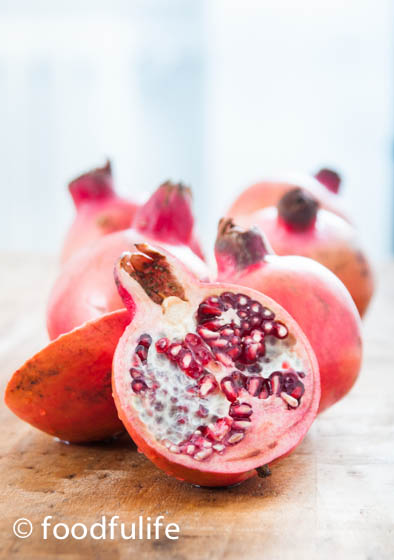
Pomegranate is rich in vitamins A, B, C; it contains minerals including potassium and phosphorus, sodium, magnesium, iron and important antioxidants such as flavonoids and phytoestrogens. It has anti-aging, anti-oxidising and anti-cancerous proprieties and it may be effective in reducing the risk of heart related diseases.
Pomegranate is also a very versatile fruit to use in recipes; its delicate flavour is sweet and slightly sour and it can be used in sweet as well as savoury dishes.

DSC_7853

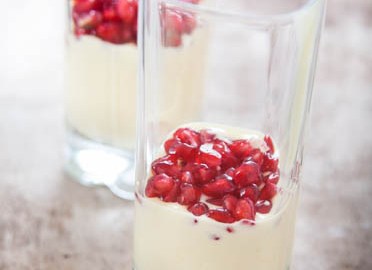
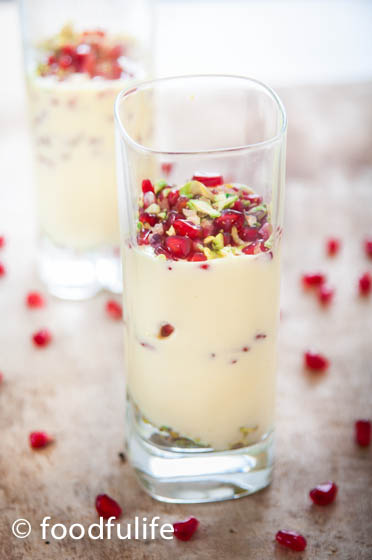
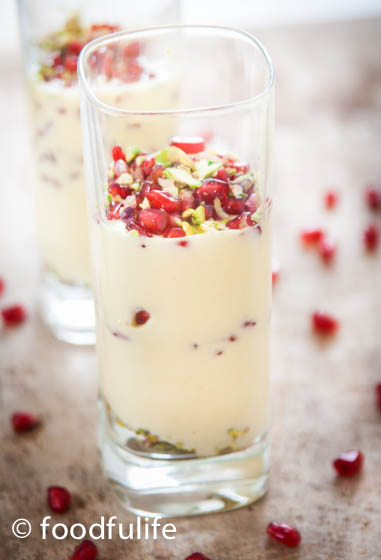
Today I am sharing an easy recipe with a light orange sabayon, crunchy pistachios and lots of pomegranates seeds. This is a deliciously creamy dessert with an interesting texture and lots of flavour!

DSC_7828

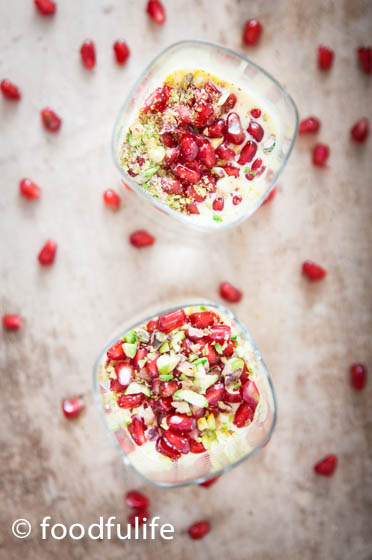
Light sabayon with pomegranates and pistachios.

For 4 glasses

the seeds from 2 pomegranates

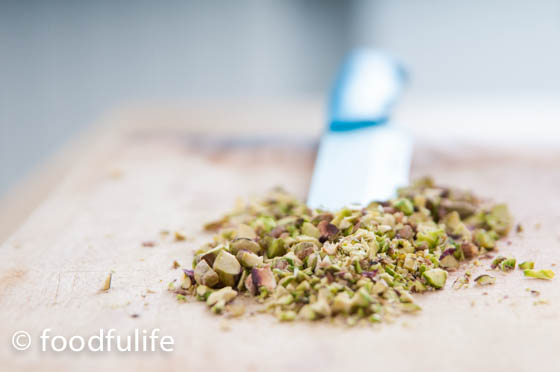
40 g toasted pistachio nuts (toasted in the oven for about 10 minutes )

340 g greek yogurt

for the sabayon

6 egg yolks

130 g of brown sugar

1 tablespoon orange liqueur

DSC_7875

Method.

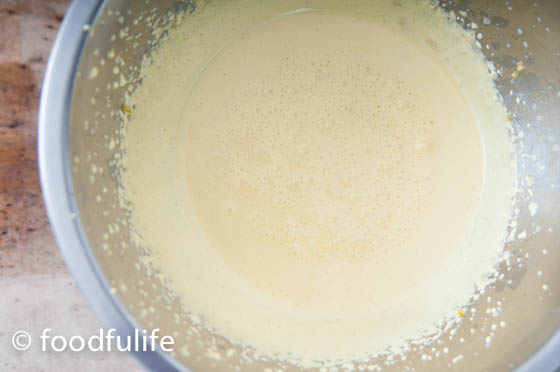
1. In a stainless steel bowl, combine the eggs with the sugar.

2. Place the bowl over a bain-marie (with very hot water, but not boiling) over a very low heat, then whisk the mixture.

3. Add a tablespoon of orange liqueur, whisk for a few more minutes, then turn off the heat and set aside to cool.

DSC_7886

4. Once the sabayon has cooled, mix gently with the yogurt.

5. Separately, chop the pistachios.

DSC_7865

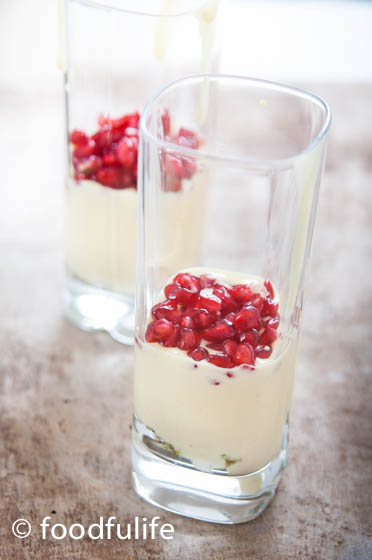
6. Take 4 tall glasses and fill with a layer of pistachios, then alternate a layer of pomegranate seeds with one of sabayon and another of the pomegranate seeds. Finish with a layer of sabayon and garnish with pomegranate and pistachios.

DSC_7878

DSC_7907

DSC_7938

7. Place in the fridge to cool and serve.

DSC_7940

also see Rice Flour Chocolate Cookies With Pomegranate and Prawn Salad With Rocket And Pomegranate.

Zabaione allo yogurt con melagrana e pistacchi.

Per 4 bicchieri

2 melegrane

40 g di pistacchi (tostati al forno per 10 minuti)

340 g di yogurt greco

per lo zabaione

6 tuorli d’uova

130 g di zucchero di canna

1 cucchiaio di liquore all’arancia

DSC_7855

Preparazione.

1. In una ciotola di metallo, unite lo zucchero alle uova.

2. Mettete la ciotola a bagnomaria (a fuoco basso, con acqua molto calda che non deve bollire) e montate le uova fino ad ottenere una crema soffice.

3. Aggiungete un cucchiaio di liquore all’arancia, poi montate per qualche minuto e spegnete il fuoco. Lasciate raffreddare, mescolando di tanto in tanto.

4. Una volta raffreddato, unite lo zabaione allo yogurt.

5. A parte, tritate grossolanamente i pistacchi.

6. Prendete 4 bicchieri alti e ricoprite la base con uno strato di pistacchi, poi alternate uno strato di chicchi di melagrana con uno di crema, poi aggiungete altro melagrana e terminate con la crema. Guarnite con chicchi di melagrana e pistacchi.

7. Mettete nel frigo a raffreddare e poi servite.

Vedi anche Biscotti Di Farina Di Riso Al Cioccolato Con Melagrana e Insalata Con Gamberi E Rucola

DSC_7951

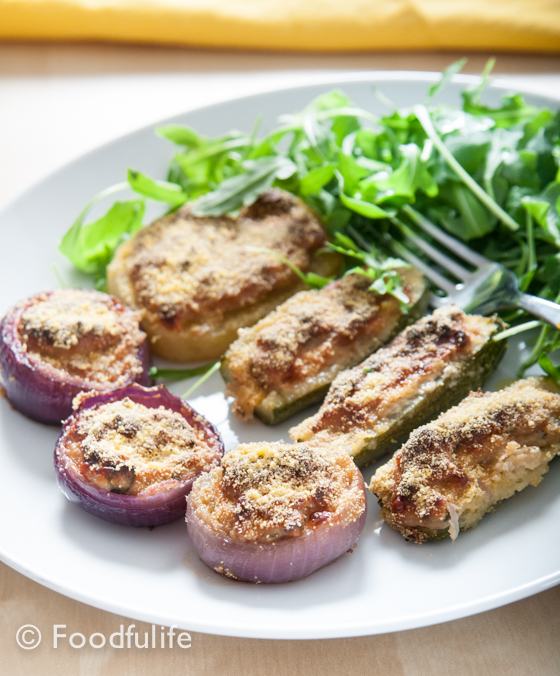
Stuffed Vegetables (Gluten-Free and Vegetarian)

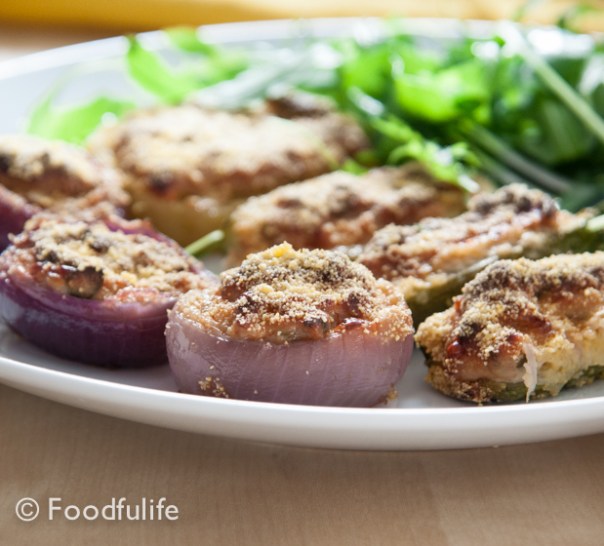
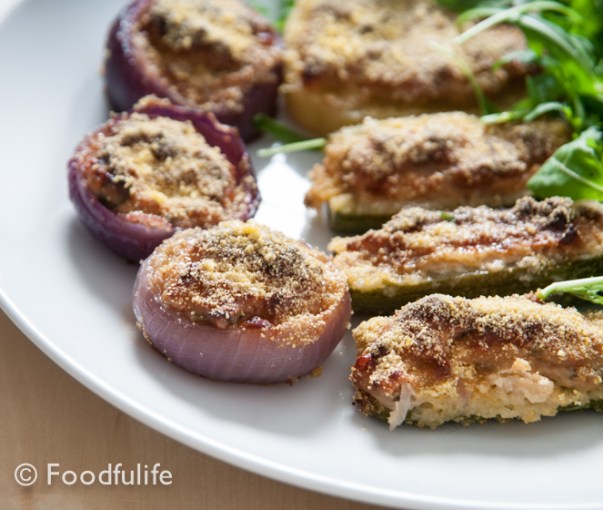
Stuffed vegetables (gluten-free and vegetarian)_ Verdure ripiene vegetariane, senza glutine.

Stuffed vegetables are a typical genoese dish, which requires quite a long preparation and cooking time, but it’s worth it! In this case, I adapted my mom’s recipe to create a gluten-free, vegetarian dish, using ricotta, plenty of fresh marjoram (which is also in the traditional recipe) and some gluten-free breadcrumbs. These stuffed vegetables are incredibly tasty, soft in the middle and crunchy on the outside; a wonderful Sunday meal to share with family and friends!

My advice is to make plenty, keep them in the fridge and eat them the next day, they taste even better!

DSC_7725

Stuffed vegetables without meat and gluten-free.

Cooking time: 1 hour 15 minutes

Preparation time: 30 minutes

difficulty: medium

Ingredients

for 1 medium-large tray of stuffed vegetables

2 medium potatoes

4 medium-large zucchini (to be divided into 8 pieces)

2 onions, plus 1 small onion to sauté

1 clove of garlic

1 egg

50 g grated Parmesan cheese

125 g ricotta

3 full tablespoons of fresh marjoram, chopped

5 tablespoons of extra virgin olive oil

some gluten-free bread crumbs to sprinkle on top and 2 tablespoons to add to the stuffing (or you can use pre-cooked polenta)

salt and pepper to taste

Method.

1. Steam all vegetables, until they are cooked but still crunchy.

2. Slice the potatoes, then place the smallest slices in a bowl and set aside for the stuffing.

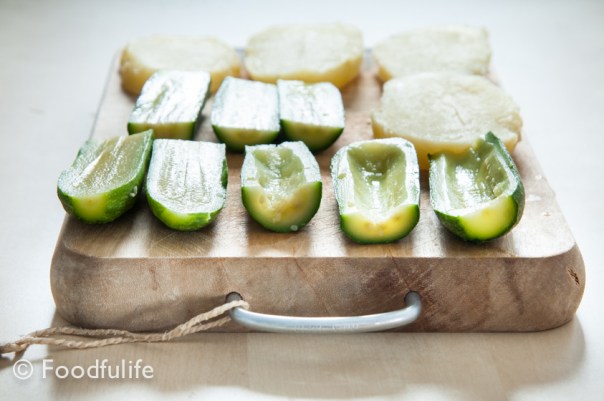
3. Using a spoon and a knife, scoop out the central part of the zucchini and cut the onions in half (from the centre, not from the roots). Remove the central and the outer layers of onions, then put them in the bowl with the rest of the vegetables for the stuffing.

DSC_7641

DSC_7627

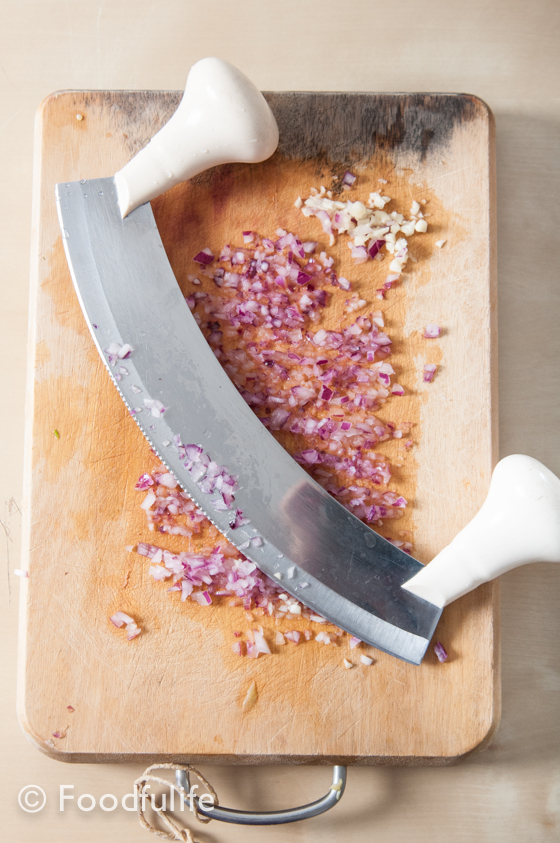
4. In a frying pan, sauté the onion with a clove of garlic, both finely chopped (add the garlic after a few minutes, to prevent burning).
DSC_7651

5. Remove the excess water, then using a food processor, puree all the vegetables for the stuffing. Fry over a medium heat, stirring well, until the mixture gets a little bit drier.

DSC_7654

6. In a food processor, mix the ricotta with the Parmesan cheese, 2 tablespoons of gluten-free bread crumbs, the marjoram and an egg. In a large bowl, add the vegetables puree to the ricotta mixture, then mix and season with salt and pepper.

DSC_7659

DSC_7660

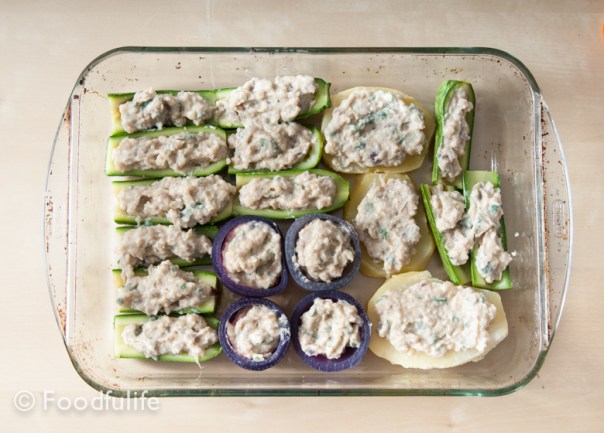
7. Grease a baking tray with 2 tablespoons of extra virgin olive oil, then place the vegetables onto the tray and fill them with the stuffing.

DSC_7630

DSC_7673

8. Sprinkle some gluten-free bread crumbs on top, season with a little more extra virgin olive oil and bake at 200 ° C (392° F), until the vegetables are well coloured (about 30-40 minutes).
DSC_7735

DSC_7728

Verdure ripiene senza carne e senza glutine.

Cottura: 1 ora e 15 minuti

Preparazione: 30 minuti

Difficoltà media

Ingredienti

per 1 teglia medio-grande

2 patate di media grandezza

4 zucchini medio-grossi (da dividere in 8 pezzi)

2 cipolle , più 1 cipolla per il soffritto da mettere da perte

1 spicchio d’aglio

1 uova

50 g di parmigiano grattugiato

125 g di ricotta

3 cucchiai abbondanti di maggiorana fresca e tritata

5 cucchiai d’olio extravergine d’oliva

pangrattato senza glutine q. b. (oppure potete usare della polenta istantanea)

sale e pepe q. b.

Preparazione.

1. Fate cuocere a vapore tutte le verdure e toglietele dal fuoco ancora sode.

2. Tagliate le patate a fette, poi mettete le fette piccole e rotte in un contenitore per il ripieno.

3. Tagliate gli zucchini e scavate la polpa usando un cucchiaino e un coltello. Tagliate le cipolle a metà (non dalle radici ma dal centro), poi prendete la parte centrale e lo strato esterno delle cipolle e metteteli, con la polpa degli zucchini, nel contenitore per il ripieno.

4. In una padella, fate soffriggere 1 cipolla e uno spicchio d’aglio, entrambi tritati finemente (aggiungete l’aglio qualche minuto dopo, per evitare che si bruci).

5. Strizzate bene le verdure del ripieno per togliere l’acqua in eccesso, poi frullate e aggiungete al soffritto. Fate asciugare a fuoco medio e mescolando bene.

6. A parte, frullate la ricotta con il parmigiano, la maggiorana, due cucchiai di pangrattato senza glutine e un uovo. In una terrina grande, unite il purea di verdure passata in padella al composto di ricotta, poi mescolate e insaporite con sale e pepe.

7. Ungete una teglia con 2 cucchiai di olio extravergine d’oliva, disponetevi le verdure tagliate a metà, poi riempitele con il ripieno e spolverate con abbondante pangrattato senza glutine.

8. Condite con un filo d’olio e infornate a 200°C, finché le verdure saranno ben colorate (30-40 minuti).
DSC_7714

Barley And Shrimp Salad In Red Cabbage Leaves

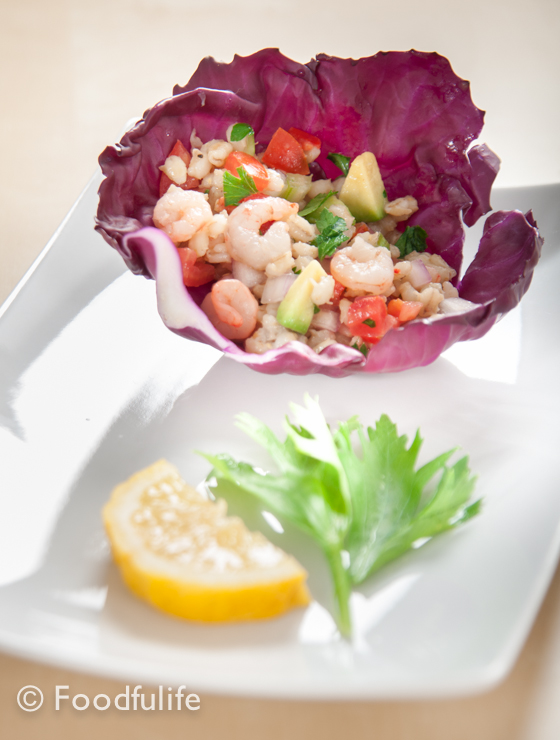
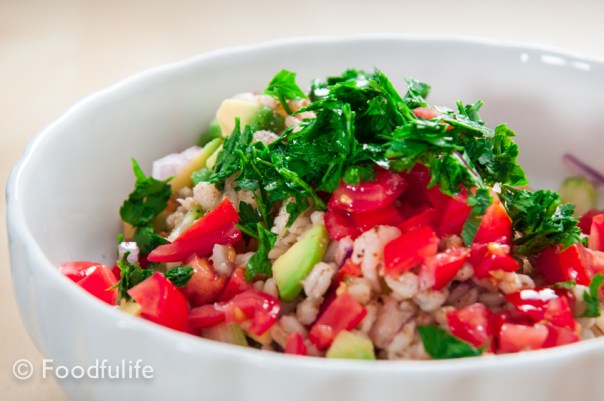
Barley is a cereal that has been used in dishes for thousands of years. It’s a wonderful and versatile ingredient: it can be used in salads and soups or cooked like a risotto. Today we are going to make a light barley salad with lots of fresh vegetables and shrimps! This colourful salad could be a great side dish for a barbecue or a buffet, but could also be served on its own as a light meal.

DSC_0799

DSC_0727

Tips.

1. Pearl barley does not need soaking before cooking, it is simply boiled like rice.

2. Wash the barley under running water for a few minutes before cooking it, to remove its natural bitter taste.

3. For this recipe I am using a red Tropea’s onion, a delicious onion variety, available in Italy. If you don’t find it, you can use shallots instead. Shallots and Tropea’s onions are perfect for this recipe because they are naturally sweet and have a pleasant delicate flavour.

DSC_0720

Barley and shrimp salad in red cabbage leaves.

5 – 6 red cabbage leaves (medium size)

90 g pearl barley

250 g frozen shrimps

1/2 sweet red Tropea’s onion (or shallots)

1/2 celery stalk, finely chopped

7-8 cherry tomatoes

1 large avocado

the juice of half a lemon

2 tablespoons of fresh parsley, finely chopped

salt and pepper to taste

vegetable broth

DSC_0666

Method.

1. Cook the pearl barley in vegetable broth (I used an organic stock), for 40 minutes (the cooking time will vary depending on the variety of barley).

DSC_0704

2. Boil some water in a sauce pan, then turn off the heat and poach the shrimps for 3-4 minutes. Drain and set aside.

DSC_0711

3. Wash and dry the cabbage leaves. Peel and slice the onion and avocado, then set aside. Wash, dry and cut the celery and tomatoes.

DSC_0697

DSC_0756

4. Mix all the vegetables (including the chopped parsley) with the cooked barley and shrimps. Serve the salad in cabbage leaves and season with salt, pepper and lemon juice.

DSC_0765

DSC_0787

DSC_0810

Cestini di insalata d’orzo e gamberetti.

5-6 foglie di cavolo rosso

250 g gamberetti surgelati

1/2 cipolla rossa di Tropea (oppure lo scalogno)

1/2 gambo di sedano

7-8 pomodorini ciliegia

1 avocado grande

il succo di mezzo limone

2 cucchiai di prezzemolo fresco, tritato finemente

sale e pepe q. b.

brodo vegetale (uso del brodo fatto con del dado biologico)

Preparazione.

1. Fate cuocere l’orzo perlato nel brodo per 40 minuti (il tempo di cottura può variare a seconda della qualità di orzo).

2. Fate bollire una pentola piena d’acqua, poi spegnete il fuoco e immergetevi i gamberetti per 3-4 minuti. Scolate e mettete da parte.
3. Lavate e asciugate le foglie di cavolo. Pelate e tagliate le cipolle e l’avocado. Lavate, asciugate e tagliate a cubetti il sedano e i pomodorini.

4. Mescolate tutte le verdure (compreso il prezzemolo) con l’orzo e i gamberetti. Servite l’insalata nelle foglie di cavolo e condite con sale, pepe e il succo di limone.

DSC_0806