Tag Archives: Vegetables

Coming soon…

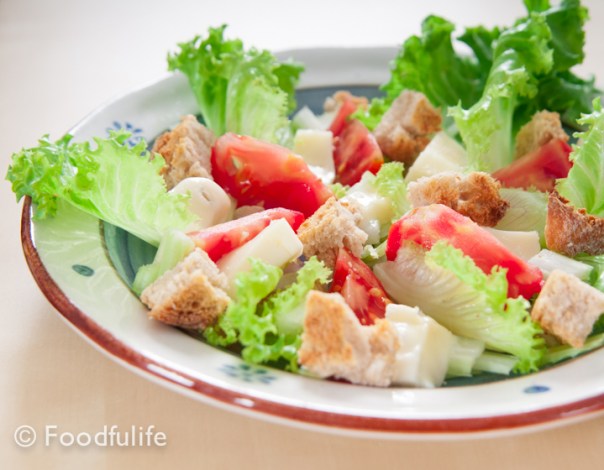
Mixed salad with shrimps

A healthy recipe, for a change! 🙂

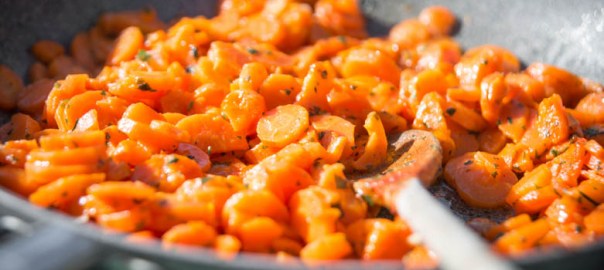
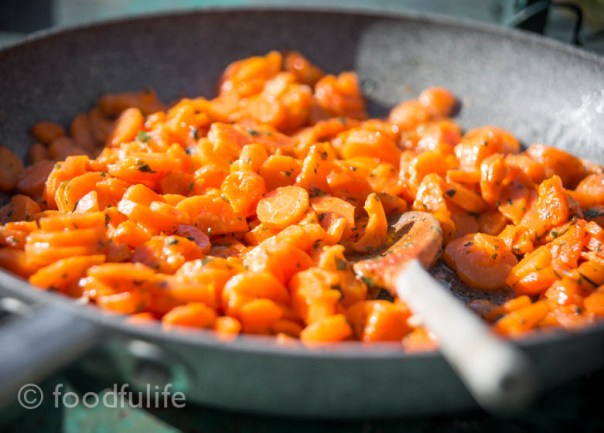
Quick And Easy Recipe: Sautéed Carrots

This is an easy and extremely delicious carrot recipe! You can add the quantity of extra virgin olive oil and butter you desire, or you can have a healthy dish with just a little extra virgin olive oil in it. You can adapt this recipe according to your taste.

Sautéed Carrots

Preparation time: 5 minutes

Cooking time: 15-20 minutes

Ingredients

For 6 servings

1 kg carrots, washed and peeled

2 garlic cloves, chopped

4-5 tablespoons extra virgin olive oil

2 tablespoons finely chopped parsley

salt to taste

a little bit of butter (optional)

Method.

1. Steam the carrots until a little bit tender.

2. Slice the carrots and then sauté (for 5-10 minutes) with the extra virgin olive oil, a little bit of butter (optional), the chopped garlic and parsley.

3. Add some salt and serve.

sautéed carrots

Carote saltate in padella.

Temo di preparazione: 5 minuti

Tempo di cottura: 15-20 minuti

Ingredienti

Per 6 porzioni

1 kg di carote, già pulite

2 spicchi d’aglio (tritati)

4-5 cucchiai di olio extra vergine di oliva

2 cucchiai di prezzemolo tritato

sale q. b.

un po’ di burro (facoltativo)

Preparazione.

1. Cuocete a vapore le carote, fino a renderle più tenere.

2. Tagliare le carote e poi fatele rosolare (per 5-10 minuti) con l’olio extra vergine di oliva, un po’ di burro (facoltativo), l’aglio e il prezzemolo.

3. Aggiungete un po’ di sale e servite.

Traditional Recipe: Pesto Alla Genovese

DSC_0320

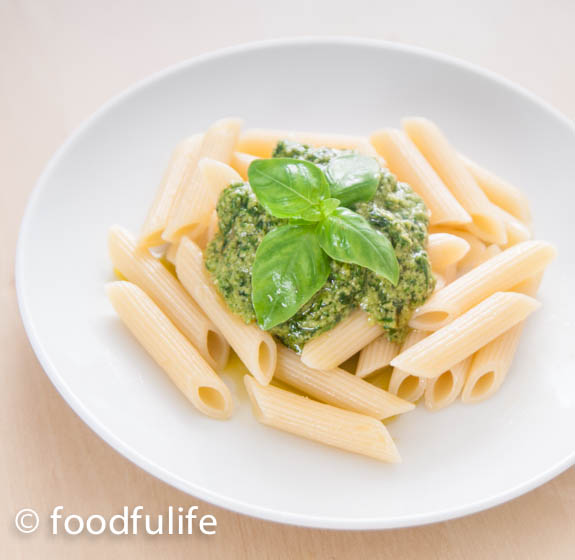
Pesto is a well known basil sauce originating in Genoa. This delicious sauce is traditionally served with various kinds of pasta such as trofie, lasagne and gnocchi or used to enrich dishes like vegetables soups and even pizzas! Countless variations already exist, but the best pesto is made with only basil and extra virgin olive oil from Liguria, because they are very aromatic and really make a difference when it comes to flavour. During the preparation method, we use a mortar because it is a slow and gentle process that doesn’t alter the quality and flavour of the ingredients.

Having said that, you can make a wonderful pesto using a blender and any of your local ingredients….so give it a go!!I promise, you won’t be disappointed!

Today we will see how to prepare a delicious pesto using either a mortar or a blender…You choose! 🙂

DSC_0412

Tips.

1. In the traditional recipe we only use well-aged Parmesan and Pecorino. Both these cheeses are quite salty, therefore it is better to use only a few crystals of salt in the recipe and taste the sauce when it’s ready; you can always add the salt later, if needed.

2. It is possible to dilute the pesto with water, in order to obtain a creamier sauce. I usually mix a couple of tablespoons of hot water with the sauce, just before mixing it with the pasta. Then stir vigorously with a spoon and add the pasta.

3. To preserve the pesto, put the sauce in a jar and cover with plenty of extra virgin olive oil, then seal well with a lid and put it in the fridge. The sauce will last up to 5 days, if properly preserved.

DSC_0346

Pesto alla Genovese.

for 2 serving

40 leaves of fresh basil, washed and dried

1 clove of garlic

3 tablespoons of well-aged Parmesan cheese, grated

1 tablespoon of aged Pecorino cheese, grated (you can add more Parmesan if you don’t find the Pecorino)

1 tbsp of pine nuts

6 tablespoons of extra virgin olive or more, if needed

sea salt crystals to taste

Method 1 (traditional method with a mortar)

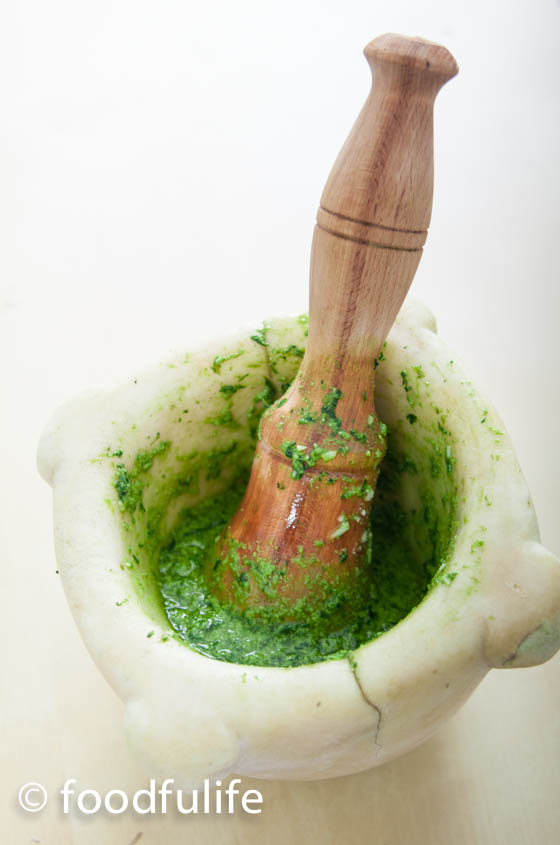
1. Using a mortar, crush the garlic with only a couple of salt crystals.

DSC_0333

2. Remove the stems and gradually add all the basil leaves with a couple of salt crystals at a time. Move the pestle in circular motion and firmly crush all the leaves, adding more as you go along.

DSC_0359

3. Add the pine nuts and the grated cheeses, then continue mixing the ingredients with a gentile circular motion.

DSC_0365

4. Add the extra virgin olive oil and mix until you get a creamy pesto.

DSC_0408

DSC_0390

Method 2 ((with an immersion blender or food processor)

This is definitely a quicker method, however, you have to be a little bit careful in order to avoid burning the basil leaves using the blender. You can easily avoid this, by adding some cold water (it has to be really cold) to prevent the blade from heating up and spoiling the basil.

1. Put all the ingredients in a tall container and add only 3 tablespoons of extra virgin olive oil.  Start blending and add 2 tablespoons of really cold water.

DSC_0463

2. Blend everything for a few minutes, then add the rest of the extra virgin olive oil and continue blending until you get a nice creamy pesto.

DSC_0472

DSC_0478

DSC_0481

See also the arugula pesto recipe.

DSC_0427

DSC_0429

DSC_0432

Pesto alla genovese.

Per due persone

1 spicchio d’aglio

40 foglie di basilico, lavate e asciugate

1 cucchiaio di pinoli

3 cucchiai di parmigiano ben stagionato e grattugiato

1 cucchiaio di pecorino sardo stagionato e grattugiato

Olio extra vergine d’oliva q. b.

sale grosso q. b.

Metodo 1 (con il mortaio)

Nota. Una volta aggiunto il basilico, il pestello va mosso in senso rotatorio per non rovinare le foglie. Il basilico deve mantenere il suo colore verde vivo.

1. Usando un mortaio, pestate l’aglio con due cristalli di sale grosso (useremo poco sale perché i formaggi utilizzati nella ricetta sono già salati).

2. Togliete i gambi e aggiungete gradualmente le foglie di basilico con qualche cristallo di sale. Muovete il pestello in senso rotatorio e pestate tutte le foglie.

3. Aggiungete i pinoli con i formaggi grattugiati e continuate ad amalgamare gli ingredienti con il pestello.

4. Aggiungete l’olio a filo, fino ad ottenere un battuto cremoso.

Metodo 2 ((con il frullatore ad immersione)

Per fare il pesto in modo pratico e veloce, si può utilizzare il frullatore ad immersione con un contenitore alto e stretto. Prima di tritare tutti gli ingredienti è importante aggiungere un paio di cucchiai d’acqua ghiacciata, per evitare che la lama del frullatore si scaldi e quindi rovini il basilico.

1. Mettete il basilico, i pinoli e i formaggi nel contenitore con 3 cucchiai d’olio extra vergine d’oliva e 2 cucchiai d’acqua ghiacciata.

2. Tritate per qualche minuto, poi aggiungete altro olio e tritate fino ad ottenere un pesto cremoso.

Nota.

Per ottenere un pesto ancora più cremoso, si può aggiungere un po’ d’acqua di cottura della pasta al condimento.

Vedi anche la ricetta per il pesto di rucola.

Stuffed Vegetables (Gluten-Free and Vegetarian)

Stuffed vegetables (gluten-free and vegetarian)_ Verdure ripiene vegetariane, senza glutine.

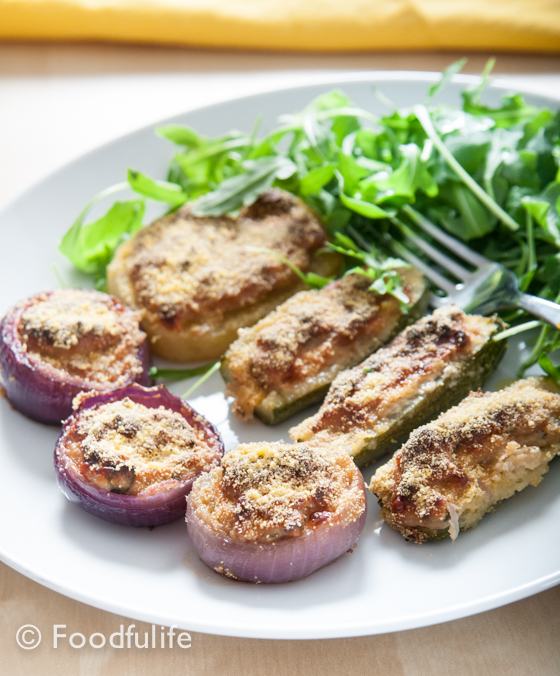
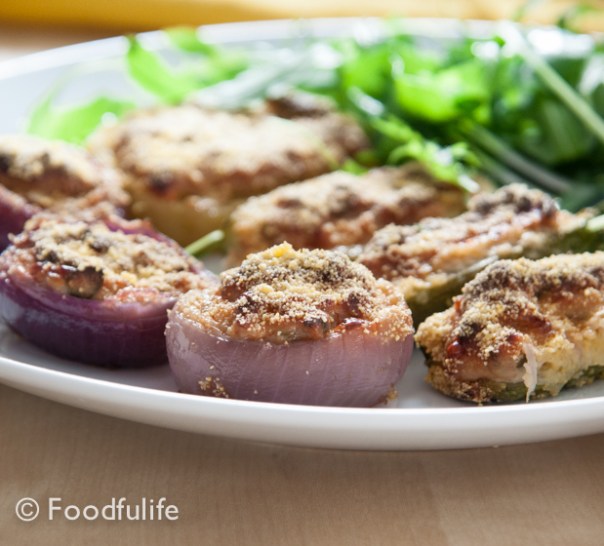
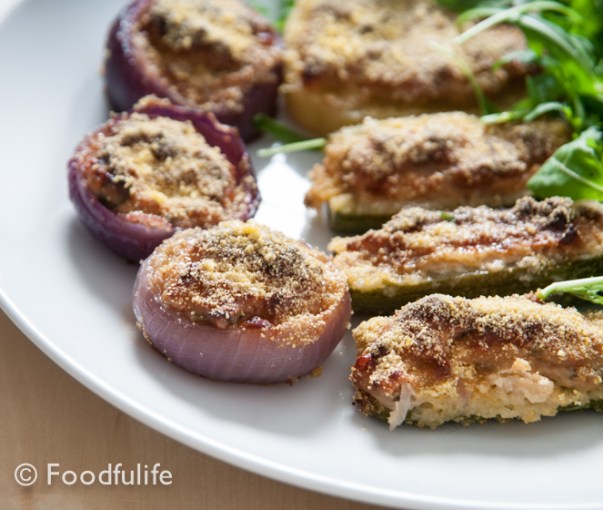
Stuffed vegetables are a typical genoese dish, which requires quite a long preparation and cooking time, but it’s worth it! In this case, I adapted my mom’s recipe to create a gluten-free, vegetarian dish, using ricotta, plenty of fresh marjoram (which is also in the traditional recipe) and some gluten-free breadcrumbs. These stuffed vegetables are incredibly tasty, soft in the middle and crunchy on the outside; a wonderful Sunday meal to share with family and friends!

My advice is to make plenty, keep them in the fridge and eat them the next day, they taste even better!

DSC_7725

Stuffed vegetables without meat and gluten-free.

Cooking time: 1 hour 15 minutes

Preparation time: 30 minutes

difficulty: medium

Ingredients

for 1 medium-large tray of stuffed vegetables

2 medium potatoes

4 medium-large zucchini (to be divided into 8 pieces)

2 onions, plus 1 small onion to sauté

1 clove of garlic

1 egg

50 g grated Parmesan cheese

125 g ricotta

3 full tablespoons of fresh marjoram, chopped

5 tablespoons of extra virgin olive oil

some gluten-free bread crumbs to sprinkle on top and 2 tablespoons to add to the stuffing (or you can use pre-cooked polenta)

salt and pepper to taste

Method.

1. Steam all vegetables, until they are cooked but still crunchy.

2. Slice the potatoes, then place the smallest slices in a bowl and set aside for the stuffing.

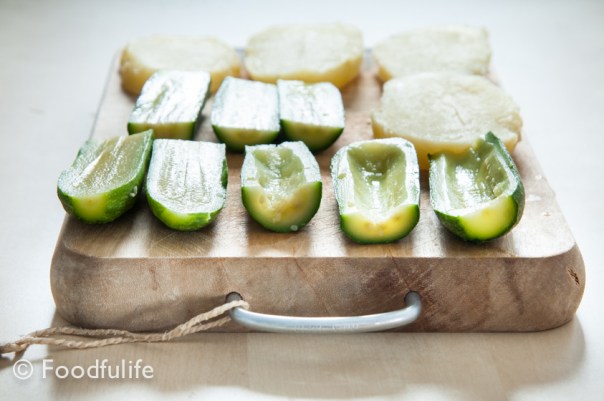
3. Using a spoon and a knife, scoop out the central part of the zucchini and cut the onions in half (from the centre, not from the roots). Remove the central and the outer layers of onions, then put them in the bowl with the rest of the vegetables for the stuffing.

DSC_7641

DSC_7627

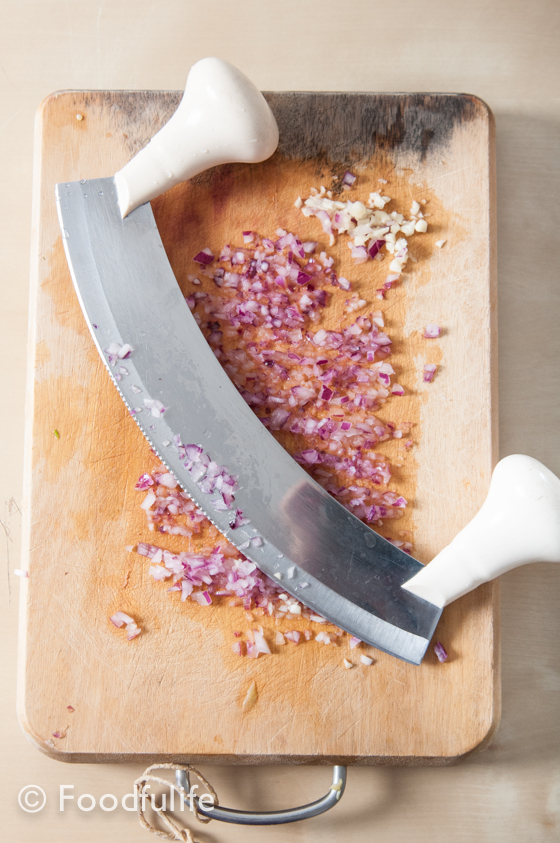
4. In a frying pan, sauté the onion with a clove of garlic, both finely chopped (add the garlic after a few minutes, to prevent burning).
DSC_7651

5. Remove the excess water, then using a food processor, puree all the vegetables for the stuffing. Fry over a medium heat, stirring well, until the mixture gets a little bit drier.

DSC_7654

6. In a food processor, mix the ricotta with the Parmesan cheese, 2 tablespoons of gluten-free bread crumbs, the marjoram and an egg. In a large bowl, add the vegetables puree to the ricotta mixture, then mix and season with salt and pepper.

DSC_7659

DSC_7660

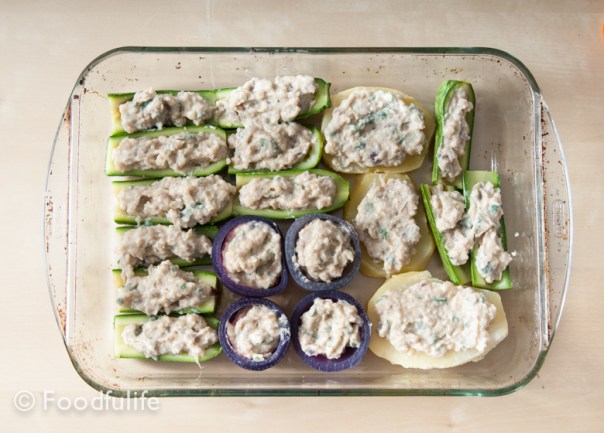
7. Grease a baking tray with 2 tablespoons of extra virgin olive oil, then place the vegetables onto the tray and fill them with the stuffing.

DSC_7630

DSC_7673

8. Sprinkle some gluten-free bread crumbs on top, season with a little more extra virgin olive oil and bake at 200 ° C (392° F), until the vegetables are well coloured (about 30-40 minutes).
DSC_7735

DSC_7728

Verdure ripiene senza carne e senza glutine.

Cottura: 1 ora e 15 minuti

Preparazione: 30 minuti

Difficoltà media

Ingredienti

per 1 teglia medio-grande

2 patate di media grandezza

4 zucchini medio-grossi (da dividere in 8 pezzi)

2 cipolle , più 1 cipolla per il soffritto da mettere da perte

1 spicchio d’aglio

1 uova

50 g di parmigiano grattugiato

125 g di ricotta

3 cucchiai abbondanti di maggiorana fresca e tritata

5 cucchiai d’olio extravergine d’oliva

pangrattato senza glutine q. b. (oppure potete usare della polenta istantanea)

sale e pepe q. b.

Preparazione.

1. Fate cuocere a vapore tutte le verdure e toglietele dal fuoco ancora sode.

2. Tagliate le patate a fette, poi mettete le fette piccole e rotte in un contenitore per il ripieno.

3. Tagliate gli zucchini e scavate la polpa usando un cucchiaino e un coltello. Tagliate le cipolle a metà (non dalle radici ma dal centro), poi prendete la parte centrale e lo strato esterno delle cipolle e metteteli, con la polpa degli zucchini, nel contenitore per il ripieno.

4. In una padella, fate soffriggere 1 cipolla e uno spicchio d’aglio, entrambi tritati finemente (aggiungete l’aglio qualche minuto dopo, per evitare che si bruci).

5. Strizzate bene le verdure del ripieno per togliere l’acqua in eccesso, poi frullate e aggiungete al soffritto. Fate asciugare a fuoco medio e mescolando bene.

6. A parte, frullate la ricotta con il parmigiano, la maggiorana, due cucchiai di pangrattato senza glutine e un uovo. In una terrina grande, unite il purea di verdure passata in padella al composto di ricotta, poi mescolate e insaporite con sale e pepe.

7. Ungete una teglia con 2 cucchiai di olio extravergine d’oliva, disponetevi le verdure tagliate a metà, poi riempitele con il ripieno e spolverate con abbondante pangrattato senza glutine.

8. Condite con un filo d’olio e infornate a 200°C, finché le verdure saranno ben colorate (30-40 minuti).
DSC_7714

Simple Things

DSC_0828

DSC_0854

DSC_0859

DSC_0864

DSC_0868

DSC_0871

DSC_0877

DSC_0895

DSC_0899

DSC_0825

Traditional Recipe: Baked Peppers Au Gratin

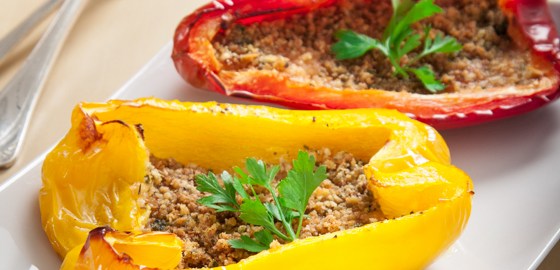
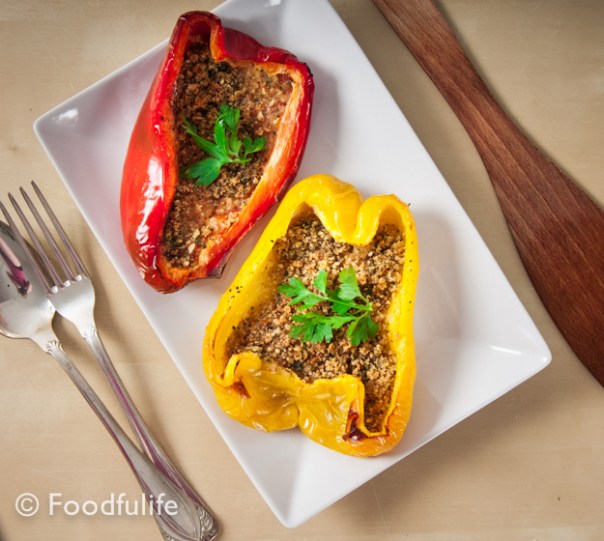
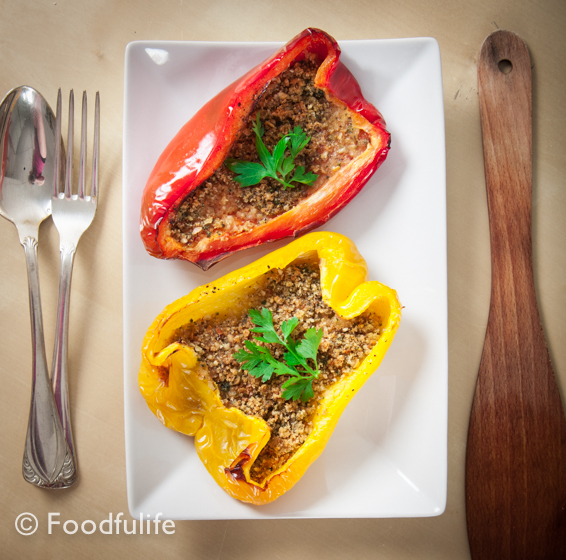
A great dish to serve if you have a large number of guests to feed, because it is so easy to prepare and cook. Baked Peppers Au Gratin are a wonderful appetiser and side, served with meat or seafood, but you can have them as a vegetarian meal, with a nice salad. You can prepare a gluten-free version of this Italian traditional dish using instant polenta, instead of bread crumbs. You can also make a vegan version without the cheese.

DSC_1181

Serve Peppers Au Gratin hot or cold, they are delicious either way! But in the summer I prefer this dish cold, straight from the fridge, because the peppers need some time to absorb all the different flavours.

This is the right season to eat fresh bell peppers and there are plenty of choices when it comes to great traditional recipes with this wonderful ingredient.
Here are some other recipes using bell peppers that I have published recently on Foodfulife:

La peperonata

Roasted Bell Peppers with Garlic Vinaigrette

DSC_1210

Baked Peppers Au Gratin.

Preparation time: 10 minutes

Cooking time: 40 minutes

6 servings

Easy

Ingredients

3 large bell peppers (red and yellow)

6 tablespoons breadcrumbs

80 g freshly grated Parmesan cheese

1 tablespoon of fresh parsley, finally chopped

1/2 a tablespoon of dried oregano

2-3 cloves of garlic, crushed and finally chopped

salt and pepper to taste

extra virgin olive oil

DSC_1087

Method.

1. In a small bowl, mix the herbs with the breadcrumbs, the grated cheese, the garlic and season with some salt and pepper.

DSC_1099

2. Wash and dry the bell peppers.

DSC_1041

DSC_1053

3. Using a knife, cut the peppers in half and remove the stem, the seeds and the white parts.

DSC_1071

4. Place the peppers onto an oven tray, previously greased with a couple of tablespoons of extra virgin olive oil. With a spoon, spread the breadcrumb mixture evenly onto the peppers.

DSC_1104

5. Bake in the oven at 200°C (392° F) , until the peppers are tender and the breadcrumb mixture becomes very crunchy.

DSC_1209

DSC_1194

DSC_1193

Peperoni Gratinati Al Forno.

Tempo di preparazione: 10 minuti

Tempo di cottura: 40 minuti

6 persone

Facile

Ingredienti

3 peperoni grandi (rosso e giallo)

6 cucchiai di pangrattato

80 g di Parmigiano Reggiano, grattugiato fresco

1 cucchiaio di prezzemolo fresco, tritato finemente

1/2 cucchiaio di origano secco

2-3 spicchi d’aglio, schiacciato e tritato finemente

sale e pepe

olio extra vergine di oliva

Preparazione.

1. In una terrina, mescolate il pan grattato con l’aglio, l’origano, il prezzemolo, il parmigiano e un pò di sale e pepe.

2. Lavate e asciugate bene i peperoni.

3. Con un coltello, tagliate e rimuovete la calotta superiore del peperone. Tagliate a metà gli ortaggi e rimuovete la parte interna, con i filamenti e i semi.

4. Disponete i peperoni sopra una teglia, unta con un filo d’olio. Riempite i peperoni con il composto di pangrattato e sapori, ma senza esagerare.

5. Condite con un po’ d’olio e infornate a 200° C. Quando i peperoni saranno morbidi e il ripieno croccante spegnete il fuoco.

Traditional Recipe: Roasted Bell Peppers With Garlic Vinaigrette

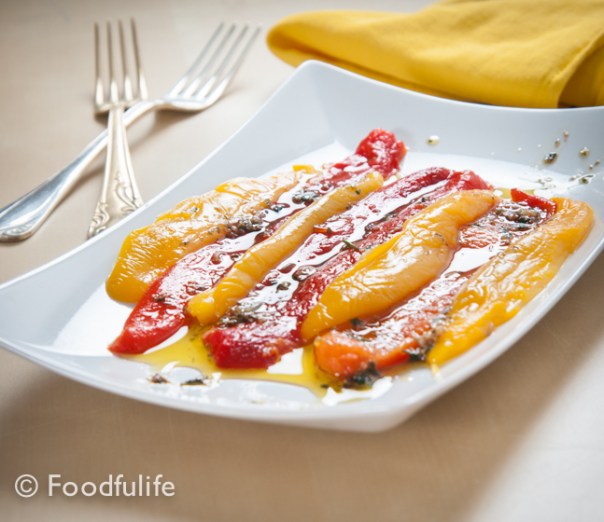
Bell peppers are delicious, rich in vitamin C and antioxidants and come in a variety of colours. In Italy we usually cook red and yellow peppers and we don’t use green peppers as much, because they are more acidic and bitter in taste. Bell peppers are usually roasted, fried, grilled or stewed with different ingredients. Today we are going to roast the peppers and season them with a light vinaigrette made with extra virgin olive oil, a splash of balsamic vinegar and enriched with fresh herbs and garlic.

Roasted peppers are a very simple but effective appetiser or side dish, I personally really like them and I could eat lots! If you prefer a more complex dish you can use them to make a sauce to complement or season pasta and meat dishes, or simply used them as a tasty ingredient in salads.

DSC_0574

Roasted bell peppers with garlic vinaigrette.

medium difficulty

Ingredients

for 4 people

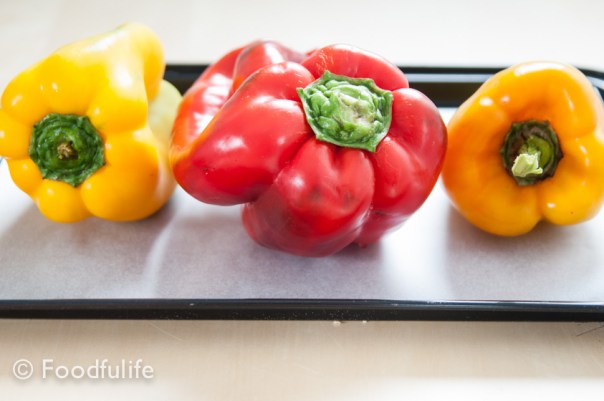
3 large bell peppers.

DSC_0545

For the garlic vinaigrette.

4 tablespoons of extra virgin olive oil

1 clove of garlic, crushed

1/2 tablespoon of dried oregano

1/2 tablespoon of finely chopped fresh parsley

1 tablespoon of good balsamic vinegar

salt and pepper to taste

Method.

1. Wash and dry the bell peppers.

DSC_0523

2. Roast the whole peppers in the oven at 200°C (392° F ) on a baking sheet (The cooking time will vary depending on the size and thickness of the peppers. When the skin starts darkening slightly and detaching from the flesh, the peppers are ready).

DSC_0531

3. Once the peppers are slightly soft, turn off the oven. Put the hot peppers in plastic bags (or an airtight container) and seal well (In this way, the steam will make removing the skin from the flesh mush easier).
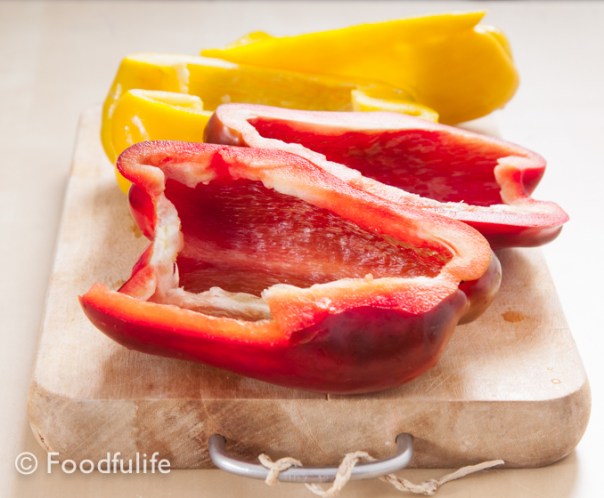
4. Let cool, then remove the pepper from the bag and throw away the water created from the steam. Remove the skin on each pepper, using a small sharp knife.

DSC_0538

5. Slice the peppers vertically into two, then remove and discard the stem and the seeds. Slice each pepper vertically into 8 pieces and serve cold with the garlic and herb vinaigrette.

DSC_0546

DSC_0579

For the vinaigrette.

Mix 4 tablespoons of extra virgin olive oil with the herbs, the garlic and some salt and pepper. Season and serve.

Tip. For extra flavour you can add half a tablespoon of anchovy paste to the sauce.

DSC_0543

DSC_0571

Peperoni arrosto con vinaigrette all’ aglio.

media difficoltà

Ingredienti

Per 4 persone

3 peperoni abbastanza grossi (rossi e gialli)

Per la vinaigrette all’ aglio

4 cucchiai di olio extra vergine di oliva

1 spicchio d’aglio, sbucciato e ben schiacciato

1/2 cucchiaio di origano essiccato

1/2 cucchiaio di prezzemolo fresco tritato

1 cucchiaio di aceto balsamico

sale e pepe q.b.

Preparazione.

1. Lavate bene i peperoni e asciugateli.

2. Mettete i peperoni interi a cuocere in forno a 200° C ( uso una teglia grande ricoperta da un foglio di carta da forno). Il tempo di cottura varierà a seconda della grandeza e dello spessore dei peperoni; quando la buccia si colorirà e si staccherà dalla polpa, i peperoni sono pronti.

3. Mettete i peperoni ancora caldi in un contenitore con il coperchio, poi chiudete bene e lasciate raffreddare (con questo metodo il vapore farà staccare con più facilità la buccia dalla polpa).

4. Aprite e buttate via l’acqua che si è formata per il vapore. Con un coltello, levate la buccia ai peperoni.

5. Tagliate a metà i peperoni e rimuovete la parte interna con i semi. Tagliate ancora i peperoni in verticale fino ad ottenere 6-8 fette lunghe per peperone.

Per la vinaigrette.

Mescolate l’olio extra vergine di oliva con le erbe, l’aglio, il sale e pepe. Condite i peperoni e servire.

Tip. Per insaporire ulteriormente si può aggiungere mezzo cucchiaio di pasta d’acciughe al condimento.

DSC_0588

Traditional Recipe: La Peperonata

DSC_8575

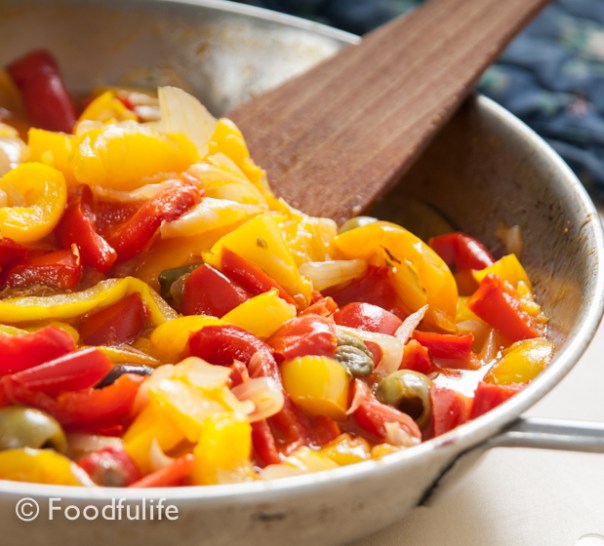
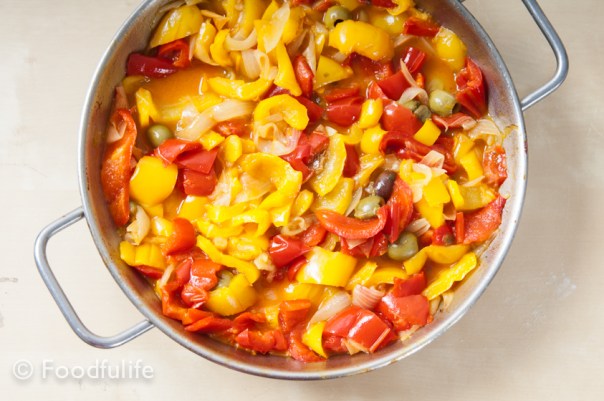
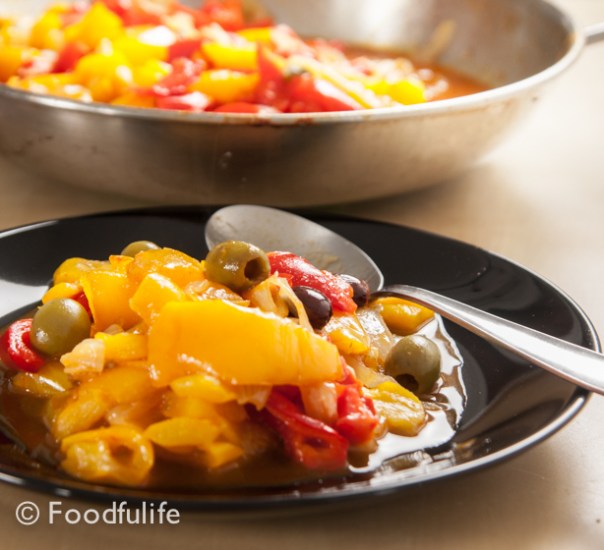
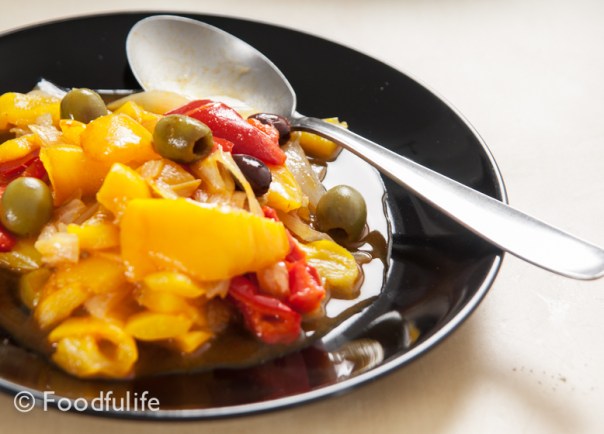
Peperonata is a delicious traditional Italian dish made with yellow and red bell peppers and a few other ingredients. It’s a dish full of character and flavour! It can be a great side dish and it can be a fantastic appetizer, when served with grilled rustic bread, like a bruschetta. The recipe I am publishing this week is my mother’ s peperonata. My mother made a few adaptations to the traditional recipe to achieve a creamier and very tasty dish. Nothing can beat my mother’ s peperonata! So sweet, flavourful and delicate at the same time; it really melts in the mouth!

DSC_8543

While cooking, the onions will melt creating a lovely creamy sauce which works perfectly with the rest of the ingredients. Give it a try, you’ll love it!

Tips. For extra flavour you can use Ketchup instead of tomato paste. The cooking time might vary for the thickness of the peppers.

DSC_8547

La Peperonata.

Ingredients

For 4-6 servings

Easy

Preparation and cooking time: 50 minutes

3 tablespoons extra virgin olive oil

2 large onions, chopped

4 bell peppers (2 yellow and 2 red)

1 tablespoon of capers (possibly in vinegar)

6 good quality pitted green olives

6 good quality pitted black olives

1/2 a tablespoon tomato paste (or tomato ketchup)

white wine (only if necessary)

a handful of pine nuts (optional)

salt and pepper to taste

Method.

1. Cut each pepper into 4 pieces and then slice them horizontally into slices (2 cm thick). Cut also the onions into thick slices.

DSC_8522

2. In a large frying pan, sauté the onion and the peppers with a clove of garlic in 3 tablespoons of extra virgin olive oil.

DSC_8524

DSC_8526

3. Add the capers, the olives​​ and the pine nuts.

DSC_8530

4. Add some tomato paste (or tomato ketchup), then cover and cook for 40 minutes over a low heat (add a little of white wine if it’s too dry). Let simmer until the peppers get really tender.

DSC_8535

5. Remove the lid and let most of the juices evaporate. Season with salt and pepper, then serve (you can serve the peperonata hot or cold).

DSC_8563

La Peperonata.

Ingredienti

Per 4-6 persone

Facile

Tempo di preparazione e cottura: 50 minuti

3 cucchiai d’olio extra vergine d’oliva

2 cipolle tagliate grosse

4 peperoni, due gialli e due rossi

1 cucchiaio di capperi sott’aceto

6 olive verdi

6 olive nere

1/2 cucchiaio di passata di pomodoro (oppure ketchup, per una peperonata più saporita)

vino bianco q. b. (facoltativo)

una manciata di pinoli (facoltativo)

sale e pepe q. b.

Preparazione.

1. Tagliate i peperoni in 4 pezzi e poi a strisce orizzontali. Affettate le cipolle grossolanamente.

2. In una padella grande, fate soffriggere la cipolla, i peperoni e uno spicchio d’aglio tagliato a metà.

3. Aggiungete ai peperoni un cucchiaio abbondante di capperi, 6 olive verdi, 6 olive nere e alcuni pinoli.

4. Aggiungete il concentrato di pomodoro, poi coprite e fate cuocere a fuoco lento per 40 minuti (se occorre aggiungete un po’ di vino bianco).

5. Quasi a fine cottura, levate il coperchio e fate ritirare un po’ il liquido. Aggiungete il pepe, il sale e servite.  La peperonata è ottima anche servita fredda.

DSC_8580

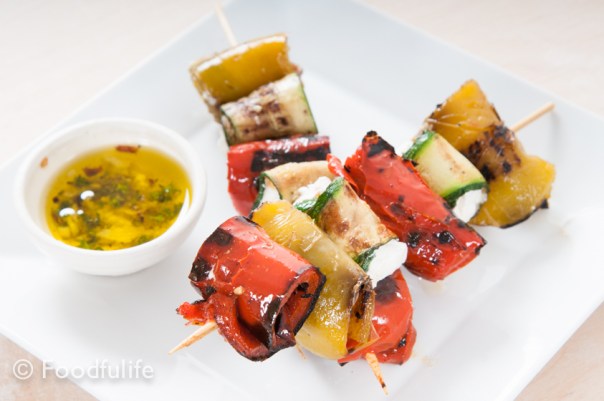
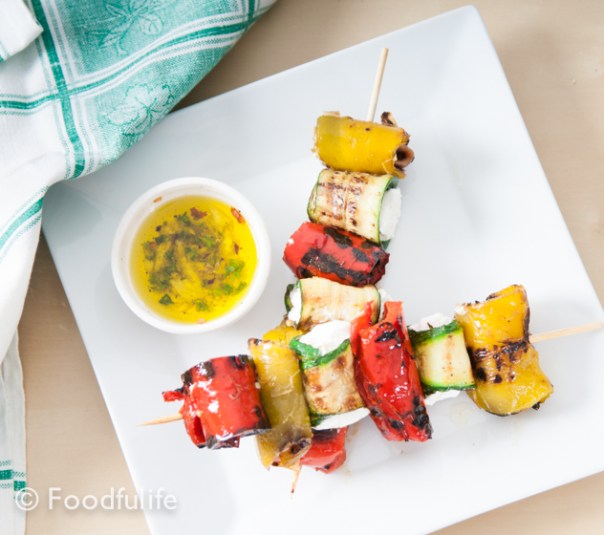
Delicious Summer Veggie Kebabs

Since the hot weather has finally arrived, it’s time to dust off the barbecue and eat plenty of fresh vegetables and delicious summer fruits! This time of the year we can be really creative with the dishes! Today we are going to prepare some fresh and light summer veggie kebabs and then, we are going to a party! It’s time to participate in Fiesta Friday, a lovely blog event hosted by my friend and talented blogger Angie, from the Novice Gardener, and co-hosted by other wonderful bloggers. This week, Fiesta Friday #21 is co-hosted by  Elaine@Foodbod and Julianna@Foodie On Board.

DSC_3367

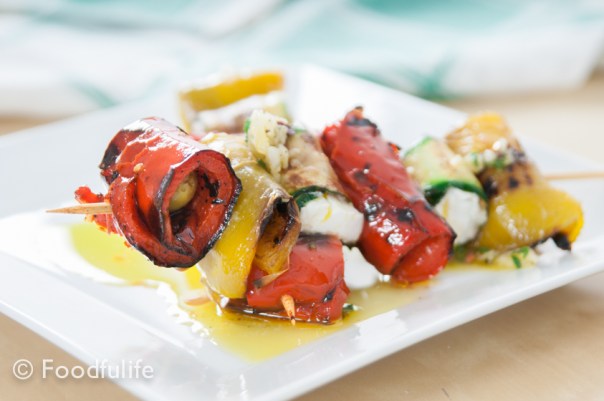
This is a lovely light recipe, fresh and full of mediterranean flavours! It could be served as an aperitif, a side dish or a delicious light meal…You choose!

Enjoy!

Tip. You can remove the the bell pepper skin after grilling the vegetables, if you wish.

I left it because it’s quicker.

DSC_3349

Summer Veggie Kebabs.

Ingredients

4 servings

1 red bell pepper

1 yellow bell pepper

1 small aubergine

2 courgettes

green picked olives

1 small fresh goat’s cheese (150 g)

anchovies

cherries tomatoes

8 wooden skewers

For the dressing

6 tablespoons of extra virgin olive oil

2 crushed clove of garlic

some dried or fresh origano

2 small fresh chillies, cut into slices

salt and bleck pepper to taste

DSC_3256

DSC_3257

Method.

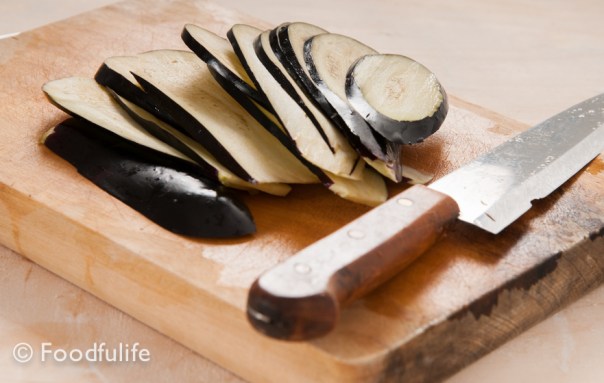
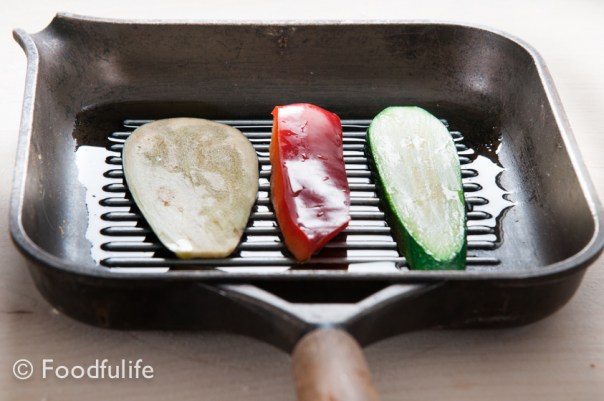
1. Wash the vegetables, cut them into thin slices and grill them on an electric grill or on a grill pan, previously greased with a little extra virgin olive oil.

DSC_3263

DSC_3268

DSC_3273

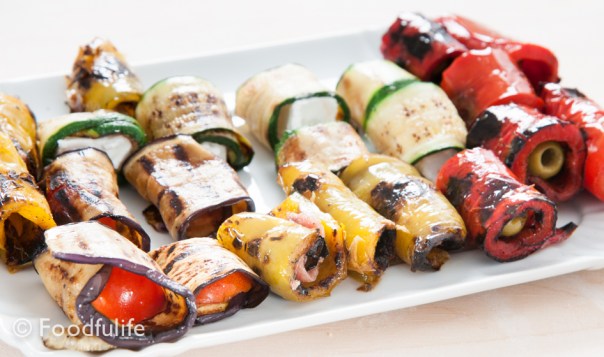
2. Roll the zucchini with the goat’s cheese in the center. Roll the yellow pepper with the anchovies and the red pepper with the olives in the center.

DSC_3275

DSC_3276

3. In a small bowl, mix the extra virgin olive oil and some dried origano with crushed garlic and chillies, salt and pepper.

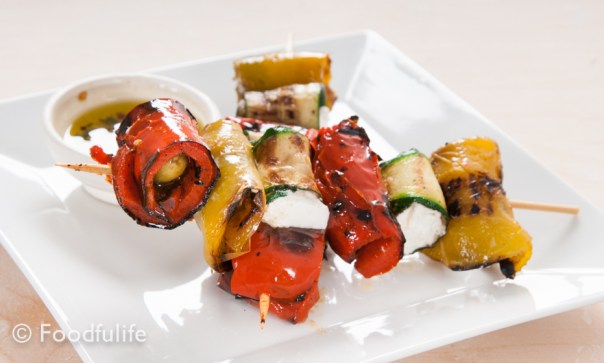
4. Pierce the stuffed vegetables with the wooden skewers and make 8 kebabs. Serve cold with some garlic-olive oil sauce on the side.

DSC_3282

DSC_3284

DSC_3329

DSC_3336

DSC_3369

Spiedini saporiti di verdure.

Ingredienti

Per 4 persone

1 peperone rosso

1 peperone giallo

1 melanzana

2 zucchine

olive verdi snocciolate

1 formaggio fresco di capra (150 g)

acciughe sott’olio

pomodorini ciliegia

8 stecchi di legno per gli spiedini

Per il condimento

6 cucchiai di olio extra vergine d’oliva

2 spicchi d’aglio (schiacciati e tagliati finemente)

un mazzetto di origano fresco o un cucchiaio di origano secco

2 peperoncini tagliati a fettine

sale e pepe q. b.

Preparazione.

1. Lavate e tagliate le verdure a fette. Fate grigliare tutte  le verdure su una bistecchiera (o una piastra elettrica), spennellata con abbondante olio extra vergine d’oliva.

2. Arrotolate gli zucchini con un pezzetto di formaggio di capra e le melanzane con mezzo pomodorino al centro. Arrotolate anche il peperone rosso con le olive e il peperone giallo con le acciughe.

3. A parte, mescolate 6 cucchiai di olio extra vergine d’oliva con l’origano, l’aglio schiacciato, il peperoncino a fettine, il sale e il pepe.

4. Infilzate le verdure con gli stecchi e create gli spiedini alternando i sapori. Servite gli spiedini freddi con l’olio aromatizzato.

Gorgonzola Salad With Rustic Bread.

This week we have been hit by a heat wave and the thermometer has risen dramatically! With this hot, sticky weather, I really feel like having a lot of raw fruits and veg, but I don’t want to compromise on creativity or flavours….So there isn’t anything like a tasty gorgonzola salad when it comes to freshness and flavour!

This salad is a light, complete meal, but also as a dish that stands somewhere between healthy and comfort food…You will love it! I kept it simple, but you can add toasted walnuts for extra flavour. Walnuts and gorgonzola work perfectly together! So many things can be prepared with these two wonderful ingredients.

But, of course, if you don’t like smelly cheeses, then this dish is definitely not for you! So, look away now!!! 🙂

DSC_3227

Gorgonzola Salad with Rustic Bread.

Ingredients

Preparation: 15 minutes

Easy

Serves 2

crispy lettuce leaves, washed and dried

2 hard-boiled eggs

2 stalks of celery, washed and cut into small cubes

2 large ripe tomatoes, washed and sliced

a few sliced of rustic bread

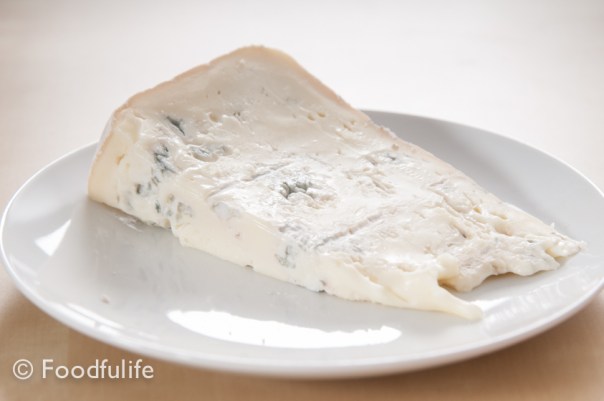
100 g (3.5 oz) gorgonzola cheese

5 tablespoons extra virgin olive oil

salt and pepper to taste

DSC_3201

DSC_3186

DSC_3199

Method.

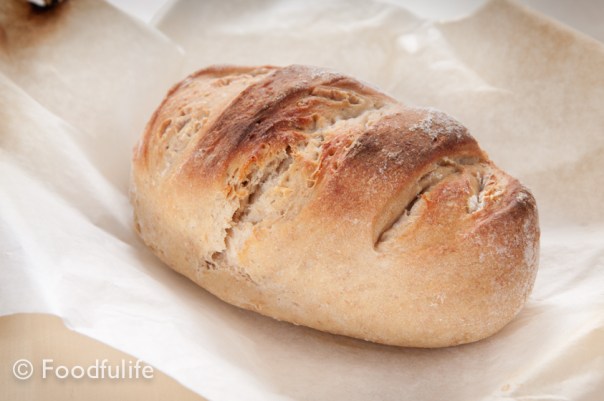
1. Bake the slices of bread in the oven (at 200 ° C , 392 °F), until very crispy.

2. Place the lettuce leaves, the sliced tomatoes, the celery and the gorgonzola on the plate (alternate all the ingredients).  Slice the eggs in half and place them in the center.

DSC_3206

DSC_3210

3. Add the bread (cut into small pieces) and season with extra virgin olive oil, salt and pepper.

DSC_3215

DSC_3216

DSC_3239

DSC_3249

DSC_3223

Insalata al gorgonzola.

Preparazione: 15 minuti

Facile

Per 2 persone

alcune foglie di insalata croccante (lavate e asciugate)

2 uova sode

2 gambi di sedano (lavati e tagliati a cubetti)

2 pomodori maturi (lavati e tagliati a fette)

alcune fette di pane rustico

100 g di gorgonzola

5 cucchiai di olio extra vergine d’oliva

sale e pepe q. b.

Preparazione.

1. Fate dorare le fette di pane in forno (a 200°C).

2. Appoggiate le foglie di insalata, le fette di pomodoro,  il sedano e il gorgonzola sul piatto, alternando tutti gli ingredienti. Tagliate le uova a metà e sistematele al centro.

3. Aggiungete il pane croccante (tagliato a cubetti piccoli) e condite tutto con abbondante olio extra vergine d’oliva, sale e pepe.

Nota. Aggiungete delle noci tostate per arricchire ulteriormente l’insalata.