Category Archives: Gluten-free

Stuffed Vegetables (Gluten-Free and Vegetarian)

Stuffed vegetables (gluten-free and vegetarian)_ Verdure ripiene vegetariane, senza glutine.

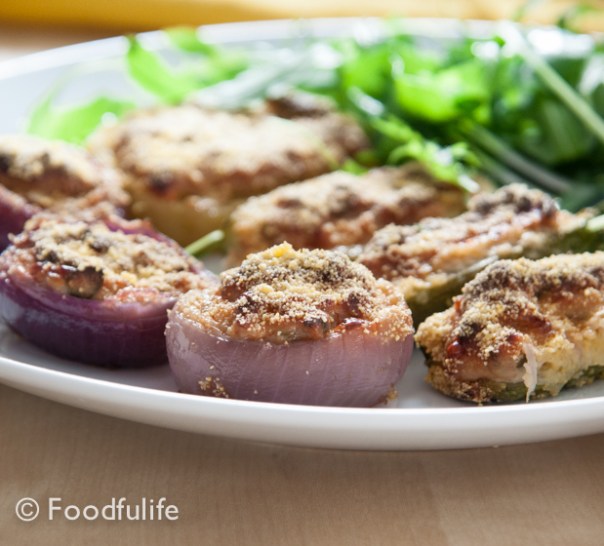
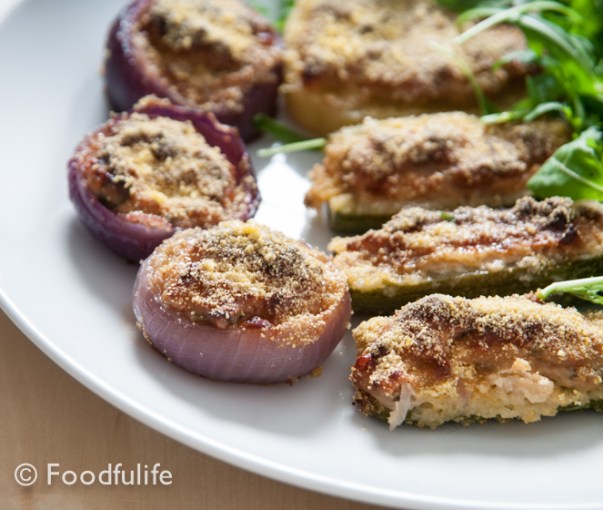
Stuffed vegetables are a typical genoese dish, which requires quite a long preparation and cooking time, but it’s worth it! In this case, I adapted my mom’s recipe to create a gluten-free, vegetarian dish, using ricotta, plenty of fresh marjoram (which is also in the traditional recipe) and some gluten-free breadcrumbs. These stuffed vegetables are incredibly tasty, soft in the middle and crunchy on the outside; a wonderful Sunday meal to share with family and friends!

My advice is to make plenty, keep them in the fridge and eat them the next day, they taste even better!

DSC_7725

Stuffed vegetables without meat and gluten-free.

Cooking time: 1 hour 15 minutes

Preparation time: 30 minutes

difficulty: medium

Ingredients

for 1 medium-large tray of stuffed vegetables

2 medium potatoes

4 medium-large zucchini (to be divided into 8 pieces)

2 onions, plus 1 small onion to sauté

1 clove of garlic

1 egg

50 g grated Parmesan cheese

125 g ricotta

3 full tablespoons of fresh marjoram, chopped

5 tablespoons of extra virgin olive oil

some gluten-free bread crumbs to sprinkle on top and 2 tablespoons to add to the stuffing (or you can use pre-cooked polenta)

salt and pepper to taste

Method.

1. Steam all vegetables, until they are cooked but still crunchy.

2. Slice the potatoes, then place the smallest slices in a bowl and set aside for the stuffing.

3. Using a spoon and a knife, scoop out the central part of the zucchini and cut the onions in half (from the centre, not from the roots). Remove the central and the outer layers of onions, then put them in the bowl with the rest of the vegetables for the stuffing.

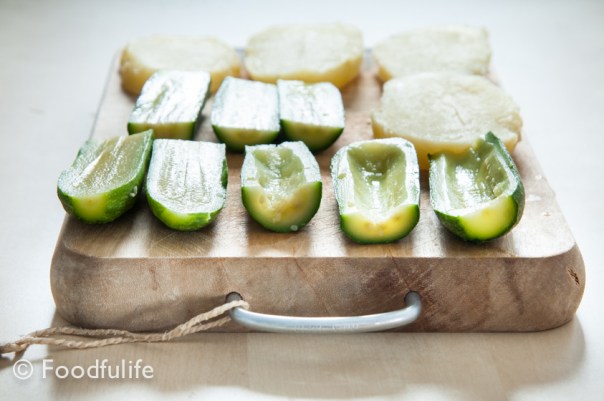
DSC_7641

DSC_7627

4. In a frying pan, sauté the onion with a clove of garlic, both finely chopped (add the garlic after a few minutes, to prevent burning).
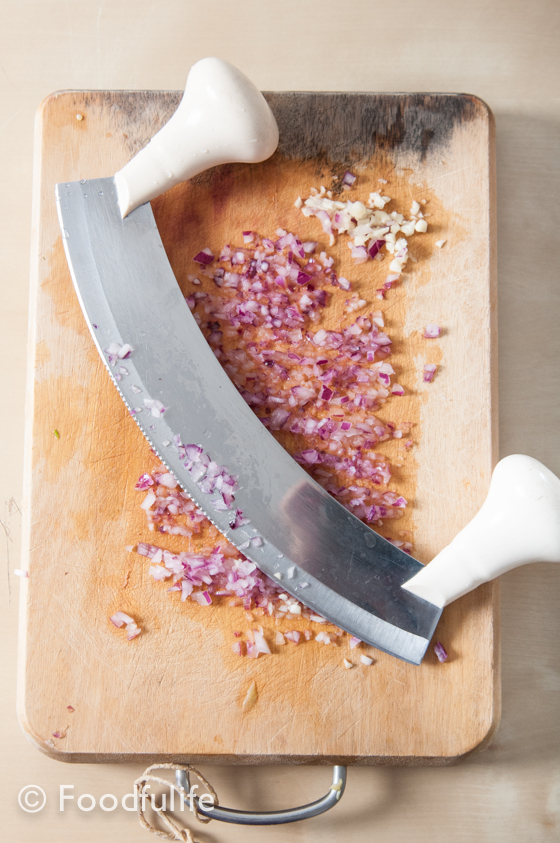
DSC_7651

5. Remove the excess water, then using a food processor, puree all the vegetables for the stuffing. Fry over a medium heat, stirring well, until the mixture gets a little bit drier.

DSC_7654

6. In a food processor, mix the ricotta with the Parmesan cheese, 2 tablespoons of gluten-free bread crumbs, the marjoram and an egg. In a large bowl, add the vegetables puree to the ricotta mixture, then mix and season with salt and pepper.

DSC_7659

DSC_7660

7. Grease a baking tray with 2 tablespoons of extra virgin olive oil, then place the vegetables onto the tray and fill them with the stuffing.

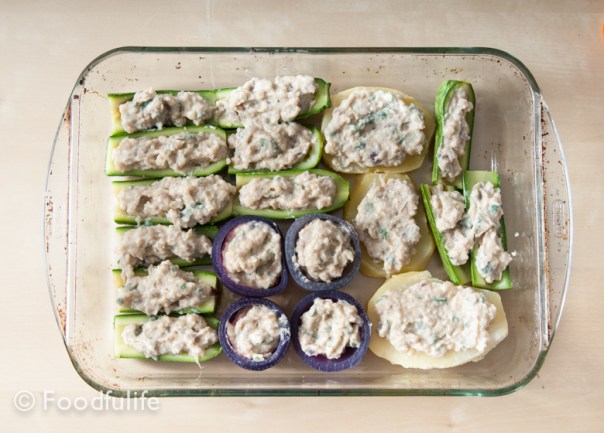
DSC_7630

DSC_7673

8. Sprinkle some gluten-free bread crumbs on top, season with a little more extra virgin olive oil and bake at 200 ° C (392° F), until the vegetables are well coloured (about 30-40 minutes).
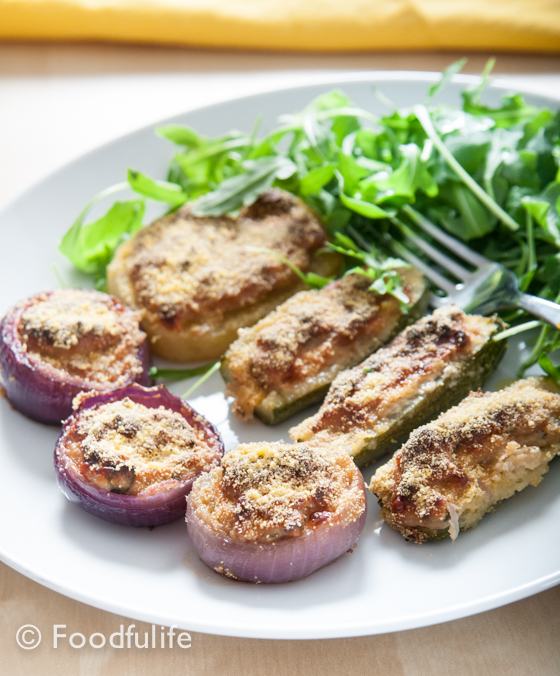
DSC_7735

DSC_7728

Verdure ripiene senza carne e senza glutine.

Cottura: 1 ora e 15 minuti

Preparazione: 30 minuti

Difficoltà media

Ingredienti

per 1 teglia medio-grande

2 patate di media grandezza

4 zucchini medio-grossi (da dividere in 8 pezzi)

2 cipolle , più 1 cipolla per il soffritto da mettere da perte

1 spicchio d’aglio

1 uova

50 g di parmigiano grattugiato

125 g di ricotta

3 cucchiai abbondanti di maggiorana fresca e tritata

5 cucchiai d’olio extravergine d’oliva

pangrattato senza glutine q. b. (oppure potete usare della polenta istantanea)

sale e pepe q. b.

Preparazione.

1. Fate cuocere a vapore tutte le verdure e toglietele dal fuoco ancora sode.

2. Tagliate le patate a fette, poi mettete le fette piccole e rotte in un contenitore per il ripieno.

3. Tagliate gli zucchini e scavate la polpa usando un cucchiaino e un coltello. Tagliate le cipolle a metà (non dalle radici ma dal centro), poi prendete la parte centrale e lo strato esterno delle cipolle e metteteli, con la polpa degli zucchini, nel contenitore per il ripieno.

4. In una padella, fate soffriggere 1 cipolla e uno spicchio d’aglio, entrambi tritati finemente (aggiungete l’aglio qualche minuto dopo, per evitare che si bruci).

5. Strizzate bene le verdure del ripieno per togliere l’acqua in eccesso, poi frullate e aggiungete al soffritto. Fate asciugare a fuoco medio e mescolando bene.

6. A parte, frullate la ricotta con il parmigiano, la maggiorana, due cucchiai di pangrattato senza glutine e un uovo. In una terrina grande, unite il purea di verdure passata in padella al composto di ricotta, poi mescolate e insaporite con sale e pepe.

7. Ungete una teglia con 2 cucchiai di olio extravergine d’oliva, disponetevi le verdure tagliate a metà, poi riempitele con il ripieno e spolverate con abbondante pangrattato senza glutine.

8. Condite con un filo d’olio e infornate a 200°C, finché le verdure saranno ben colorate (30-40 minuti).
DSC_7714

Traditional Recipe: Saffron Risotto

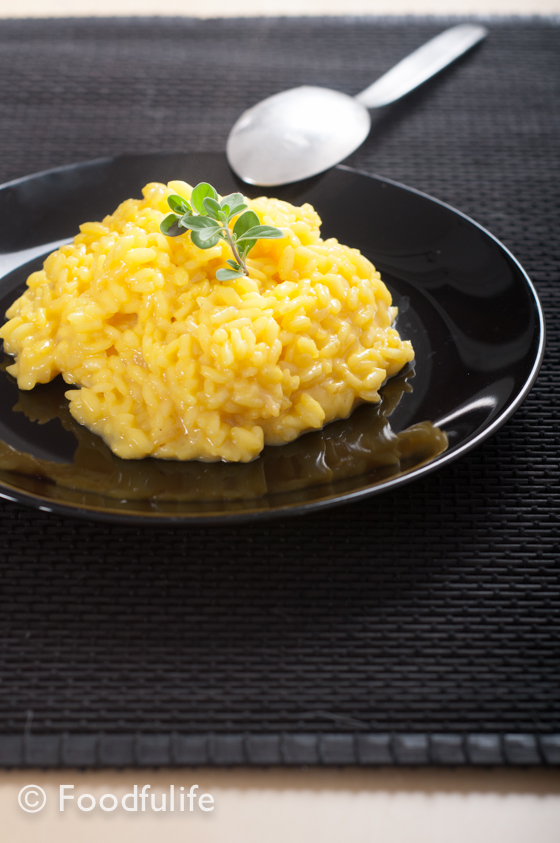
Saffron Risotto (Risotto Allo Zafferano) is a Lombard recipe, much appreciated in the North of Italy for its wonderful delicate flavour and also because is one of the simplest risotto recipes to make. This amazing risotto is usually served on its own, without meat or fish and it has a lovely saffron flavour, well complemented with the Parmesan cheese, which is added at the final stage of the recipe, like in most Italian risotto dishes.

DSC_0627

Saffron Risotto is often confused with Milanese Risotto (Risotto alla Milanese), another renowned Lombard recipe; in both these risottos we use saffron as a main ingredient but there are some differences in the ingredients.

Tips.

1. It is very important to only use good quality products, in order to make a delicious risotto.

2. Also see How To Make A Perfect Risotto

DSC_0660

Saffron Risotto (Risotto allo Zafferano) 

Medium difficulty

Preparation time: 5 minutes (not considering the broth)

Cooking time: 25-30 minutes

Ingredients

For 4 servings

350 g (12.3 oz) Carnaroli rice or Arborio rice

a pinch of saffron (enough to colour the rice of a bright yellow)

1 large onion, very finely chopped

1 glass of good white wine (not acidic, this is very important!)

150 g (5.3 oz)  freshly grated Grana Padano cheese

125 g (4.4 oz) good quality fresh butter

1 litre (33, 8 fl oz us) hot vegetable broth (see below)

For vegetable broth

1 large carrot

1 large onion

1 celery stalk (also use the leaves, if you have them)

salt and pepper to taste

Method.

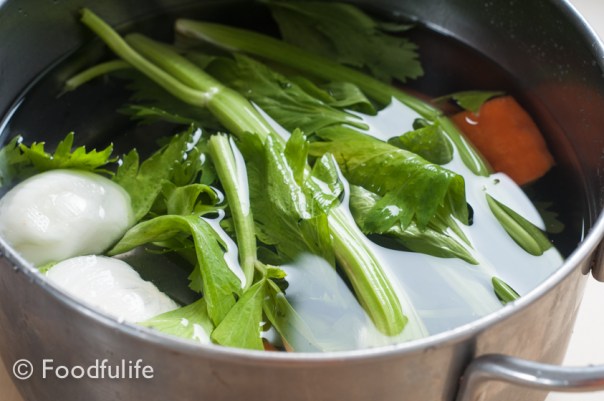
1. In a large pan, prepare the vegetable broth. Wash, clean and roughly chop the vegetables, then fill the pan with plenty of water and cook the vegetables until tender. Season with some fine sea salt (do not exceed), then sift the broth and remove the vegetables.

DSC_0600

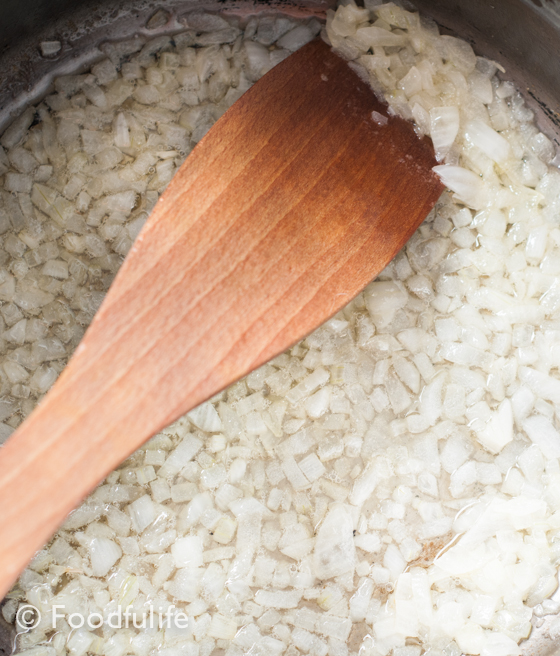
2. Sauté the onion in 80 g of butter, over a low heat for about 10-15 minutes.

DSC_0605

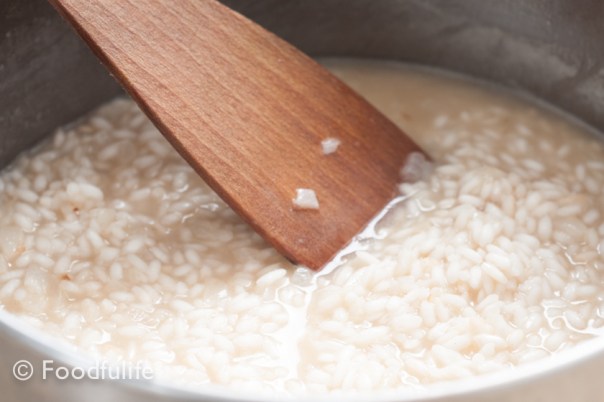
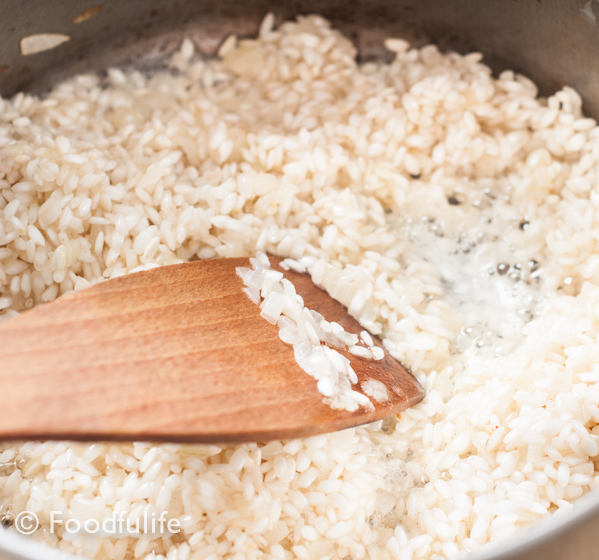
3. Add the rice and fry for a few minutes over a medium heat, then pour in a glass of white wine and stir. Shimmer until all the wine evaporates.

DSC_0609

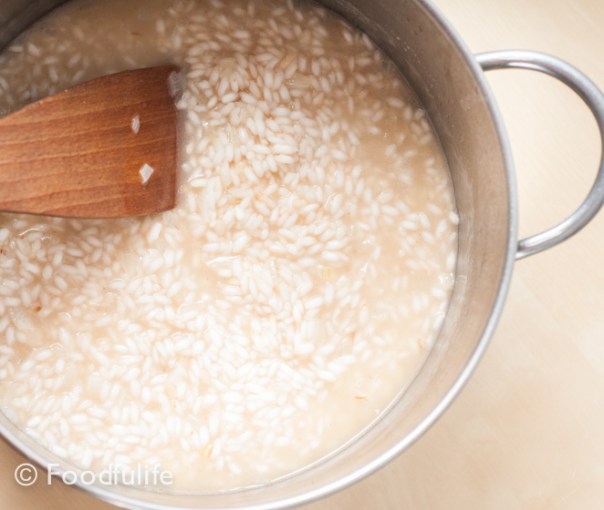
4. Lower the heat and add the hot broth (a little at a time), stirring constantly. Let the broth evaporate and continue adding the broth and stirring, until the rice is creamy and properly cooked. During the cooking time add the saffron (diluted in a little bit of warm vegetable broth).

DSC_0615

DSC_0620

5. Turn off the heat and add the finals ingredients to the risotto. Add the rest of the butter, 3-4 tablespoons of grated Grana Padano and season with salt and pepper ( taste it and season only if needed), then stir and cover with a lid. Let the risotto rest for a few minutes and serve.

DSC_0645

DSC_0639

DSC_0629


How To Make A Perfect Risotto

Risotto is one of the finest Italian dishes and is appreciated all over the world. There are endless variations. Each region has its own traditional risotto recipes made with seafood, meat or vegetables. Today we are going to explore the method to make a perfect risotto, the Italian way!

Four important steps.

To make a good risotto it is important to follow each recipe step by step. There are 4 basic steps in the preparation process of each risotto:

1. Sauté the onions

2. Fry the rice

3. Cook the risotto

4. Let the risotto rest

Today we are going to see each of these steps in depth.

DSC_0597

A few notes on the preparation process.

1. The preparation time and the ingredients will vary depending on the recipe.

2. During the whole process you have to constantly stir the risotto, therefore it’s important to prepare all the ingredients before you start cooking.

3. Don’t reheat the risotto because the rice will become chewy and dry. Prepare the risotto and serve it.

DSC_0594

Method.

1. Sauté the onions. Sauté the onions in butter over a very low heat, until they are very tender and almost transparent.

Notes. The onions have to dissolve in your mouth when you taste the risotto. You can replace the onions with shallots, spring onions or garlic, depending on the recipe.

DSC_0607

2. Fry the rice. When the onions are ready, add the rice and then fry it over a medium heat for a few minutes (stir constantly).

DSC_0608

3. Cook the risotto. After frying the rice, add the wine.  Once the wine flavour is absorbed and the alcohol evaporated, add the hot broth (usually a full ladle at a time) and cover the rice with it. Continue cooking and stirring. Once the liquid is almost completely absorbed, add more broth until you reach the ideal cooking consistency.

DSC_0602

Notes. Use hot broth, because a cold broth will lower the temperature and compromise the cooking process.

DSC_0613

4. Let the risotto rest. When the risotto is creamy and properly cooked, add the final ingredients (usually butter and cheese), stir well, cover with a lid and let the rice rest for a few minutes. Now the risotto is ready to be served.

Note. This will make the risotto very creamy and tasty.

Also see Traditional Recipe: Saffron Risotto

DSC_0639


Traditional Recipe: Torta Caprese

DSC_8662

As the name suggests, the Torta Caprese (Caprese cake) originally comes from Capri, a beautiful little island, near Naples.
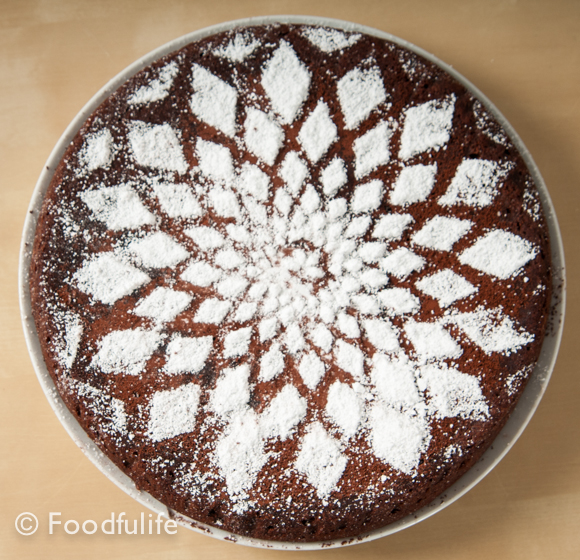
Dark brown, a little bit crunchy on the outside but soft and moist in the centre, this delicious and decadent chocolate cake is widely appreciated all over Italy. It is also an amazing gluten-free cake, because it doesn’t contain any flour; although, in some recipes a little bit of flour might be used to dust the baking tin.

DSC_8668

Tips.

1. The Torta Caprese is usually cooked in a large round baking tin (this is 26 cm wide) and shouldn’t be too thick.

2. This is a dark chocolate cake which suits better an adult taste, because it’s not very sweet. It is possible to adjust the recipe for the kids using a sweeter dark chocolate, adding 20 g of sugar to the ingredients and dusting with plenty of icing sugar.

DSC_8661

Torta Caprese.

For 8 servings

easy

Cooking time: 1 hour

Preparation time: 20 minutes

Ingredients

300 g (10.58 oz) almonds (without the skin)

170 g (5.99 oz) butter, softened

100 g (3.5 oz) brown sugar

45 g (1.5 oz) honey

200 g (7.05 oz) dark chocolate (70% cocoa solids)

4 eggs

icing sugar for garnish

cocoa powder to taste

a pinch of salt

Method

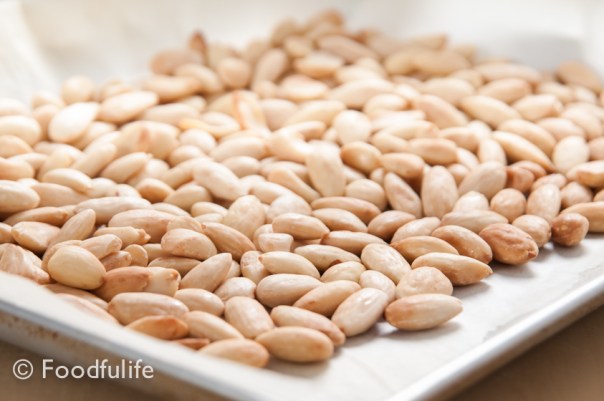
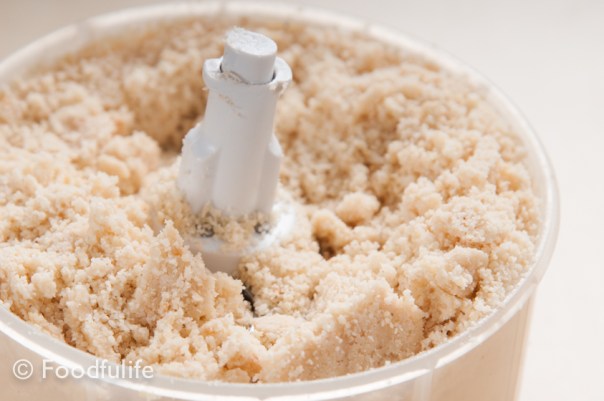
1. Toast the almonds in the oven for a few minutes at 180 ° C (356°F). Let cool then grind finely.

DSC_8583

DSC_8588

2. Cut and melt the chocolate in bain-marie for a few minutes.

DSC_8598

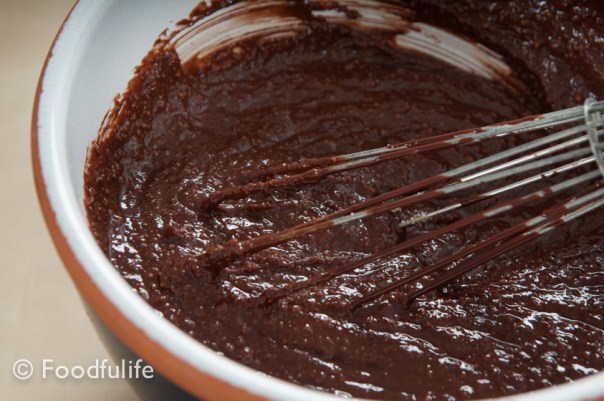
3. In a large bowl, mix the butter with 4 egg yolks, honey, the brown sugar and a pinch of salt. Then add the ground almonds with the chocolate and mix well.

DSC_8605

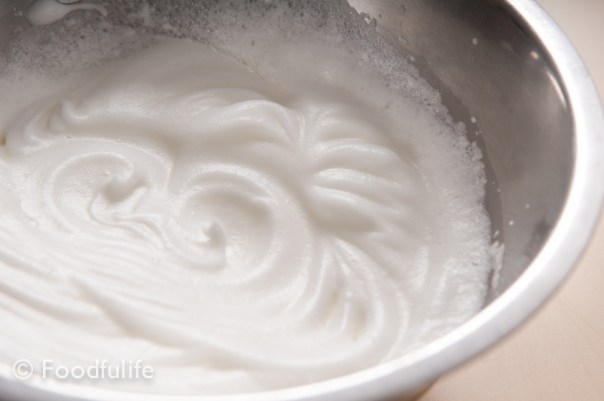
4. Separately, whip all the egg whites until stiff, then gently mix with the rest of the ingredients.

DSC_8594

DSC_8611

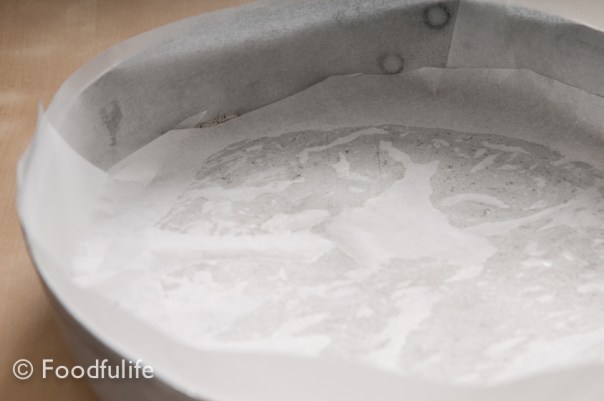
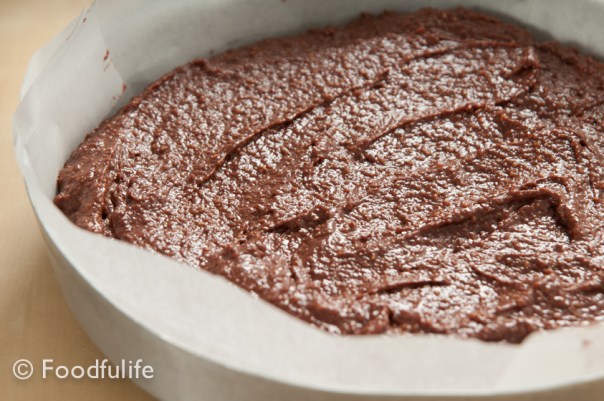
5. Grease with butter and line the base and sides of a large cake tin (I am using a tin 26 cm wide) with baking paper (roughly cut down to size). Then fill with the mixture and bake at 150 ° C (302°F) for about 1 hour.

DSC_8613

DSC_8627

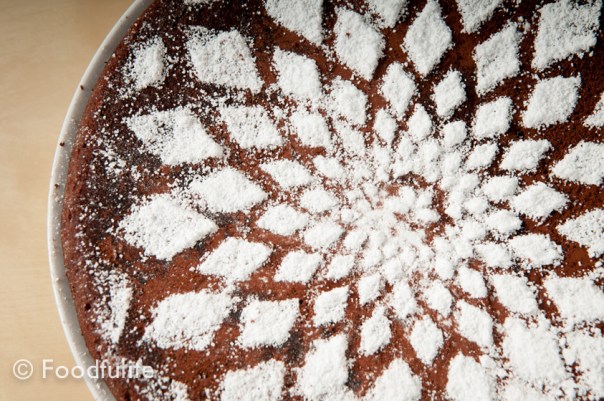
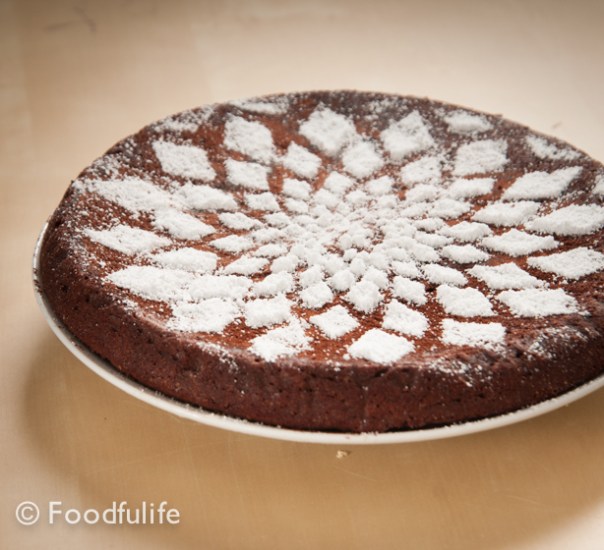
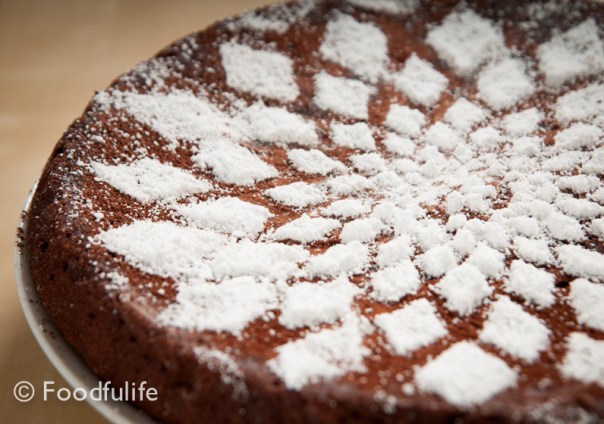
6. Take the cake out of the oven and let cool. Dust with some cocoa powder, decorate with icing sugar and serve.

DSC_8629

DSC_8638

DSC_8640

Torta Caprese.

Per 8 persone

Facile

Tempo di cottura: 1 ora

Tempo di preparazione: 20 minuti

Ingredienti

300 g di mandorle sbucciate

170 g di burro morbido (e del burro in più per imburrare la teglia)

100 g di zucchero di canna

45 g di miele

200 g di cioccolato fondente al 70 %

4 uova

zucchero e velo q. b. per guarnire

un pizzico di sale

cacao amaro in polvere q. b.

Preparazione.

1. Tostate le mandorle nel forno per qualche minuto a 180° C. Lasciatele raffreddare e poi tritatele molto finemente.

2. Fate fondere il cioccolato a bagnomaria.

3. In una terrina grande, amalgamate il burro con i tuorli d’uova, il miele, lo zucchero e un pizzico di sale, fino ad ottenere una crema. Aggiungete anche le mandorle con il cioccolato fuso e mescolate bene.

4. A parte, montate gli albumi a neve e uniteli al resto degli ingredienti, mescolando delicatamente dal basso verso l’alto.

5. Imburrate la teglia (uso una teglia larga 26 cm) e ricopritela con della carta da forno (tagliata di misura). Versate il composto nella teglia e infornate a 150°C per circa 1 ora.

6. Sfornate la torta e lasciatela raffreddare. Spolverate con un po’ di cacao amaro, decorate con dello zucchero a velo e servite.

DSC_8665

Traditional Recipe: La Peperonata

DSC_8575

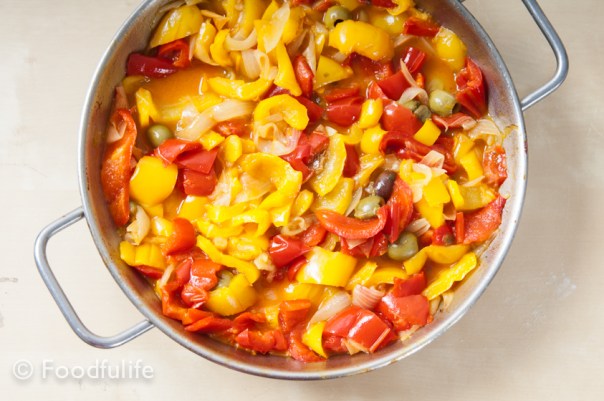
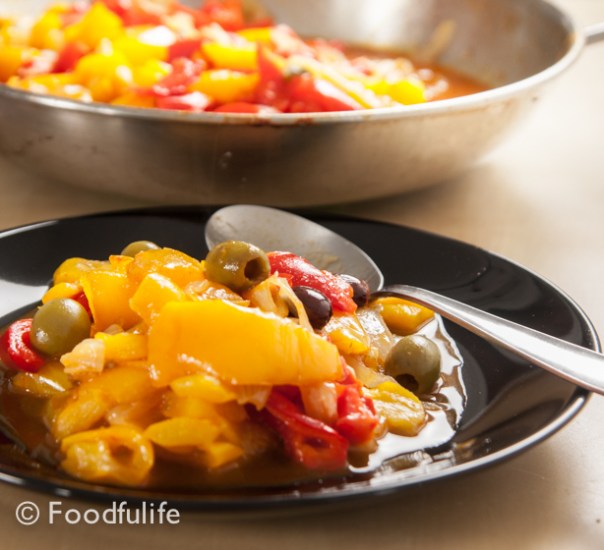
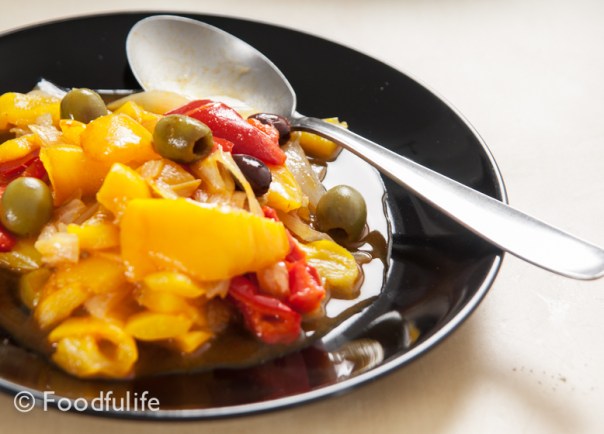
Peperonata is a delicious traditional Italian dish made with yellow and red bell peppers and a few other ingredients. It’s a dish full of character and flavour! It can be a great side dish and it can be a fantastic appetizer, when served with grilled rustic bread, like a bruschetta. The recipe I am publishing this week is my mother’ s peperonata. My mother made a few adaptations to the traditional recipe to achieve a creamier and very tasty dish. Nothing can beat my mother’ s peperonata! So sweet, flavourful and delicate at the same time; it really melts in the mouth!

DSC_8543

While cooking, the onions will melt creating a lovely creamy sauce which works perfectly with the rest of the ingredients. Give it a try, you’ll love it!

Tips. For extra flavour you can use Ketchup instead of tomato paste. The cooking time might vary for the thickness of the peppers.

DSC_8547

La Peperonata.

Ingredients

For 4-6 servings

Easy

Preparation and cooking time: 50 minutes

3 tablespoons extra virgin olive oil

2 large onions, chopped

4 bell peppers (2 yellow and 2 red)

1 tablespoon of capers (possibly in vinegar)

6 good quality pitted green olives

6 good quality pitted black olives

1/2 a tablespoon tomato paste (or tomato ketchup)

white wine (only if necessary)

a handful of pine nuts (optional)

salt and pepper to taste

Method.

1. Cut each pepper into 4 pieces and then slice them horizontally into slices (2 cm thick). Cut also the onions into thick slices.

DSC_8522

2. In a large frying pan, sauté the onion and the peppers with a clove of garlic in 3 tablespoons of extra virgin olive oil.

DSC_8524

DSC_8526

3. Add the capers, the olives​​ and the pine nuts.

DSC_8530

4. Add some tomato paste (or tomato ketchup), then cover and cook for 40 minutes over a low heat (add a little of white wine if it’s too dry). Let simmer until the peppers get really tender.

DSC_8535

5. Remove the lid and let most of the juices evaporate. Season with salt and pepper, then serve (you can serve the peperonata hot or cold).

DSC_8563

La Peperonata.

Ingredienti

Per 4-6 persone

Facile

Tempo di preparazione e cottura: 50 minuti

3 cucchiai d’olio extra vergine d’oliva

2 cipolle tagliate grosse

4 peperoni, due gialli e due rossi

1 cucchiaio di capperi sott’aceto

6 olive verdi

6 olive nere

1/2 cucchiaio di passata di pomodoro (oppure ketchup, per una peperonata più saporita)

vino bianco q. b. (facoltativo)

una manciata di pinoli (facoltativo)

sale e pepe q. b.

Preparazione.

1. Tagliate i peperoni in 4 pezzi e poi a strisce orizzontali. Affettate le cipolle grossolanamente.

2. In una padella grande, fate soffriggere la cipolla, i peperoni e uno spicchio d’aglio tagliato a metà.

3. Aggiungete ai peperoni un cucchiaio abbondante di capperi, 6 olive verdi, 6 olive nere e alcuni pinoli.

4. Aggiungete il concentrato di pomodoro, poi coprite e fate cuocere a fuoco lento per 40 minuti (se occorre aggiungete un po’ di vino bianco).

5. Quasi a fine cottura, levate il coperchio e fate ritirare un po’ il liquido. Aggiungete il pepe, il sale e servite.  La peperonata è ottima anche servita fredda.

DSC_8580

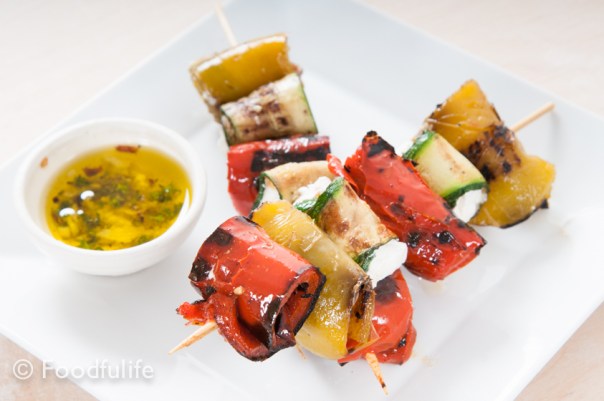
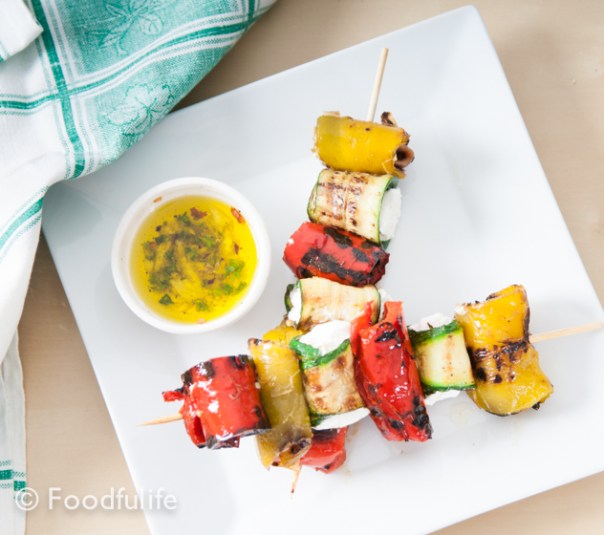
Delicious Summer Veggie Kebabs

Since the hot weather has finally arrived, it’s time to dust off the barbecue and eat plenty of fresh vegetables and delicious summer fruits! This time of the year we can be really creative with the dishes! Today we are going to prepare some fresh and light summer veggie kebabs and then, we are going to a party! It’s time to participate in Fiesta Friday, a lovely blog event hosted by my friend and talented blogger Angie, from the Novice Gardener, and co-hosted by other wonderful bloggers. This week, Fiesta Friday #21 is co-hosted by  Elaine@Foodbod and Julianna@Foodie On Board.

DSC_3367

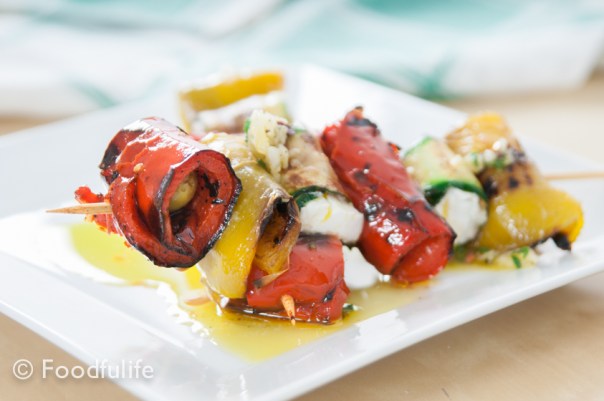
This is a lovely light recipe, fresh and full of mediterranean flavours! It could be served as an aperitif, a side dish or a delicious light meal…You choose!

Enjoy!

Tip. You can remove the the bell pepper skin after grilling the vegetables, if you wish.

I left it because it’s quicker.

DSC_3349

Summer Veggie Kebabs.

Ingredients

4 servings

1 red bell pepper

1 yellow bell pepper

1 small aubergine

2 courgettes

green picked olives

1 small fresh goat’s cheese (150 g)

anchovies

cherries tomatoes

8 wooden skewers

For the dressing

6 tablespoons of extra virgin olive oil

2 crushed clove of garlic

some dried or fresh origano

2 small fresh chillies, cut into slices

salt and bleck pepper to taste

DSC_3256

DSC_3257

Method.

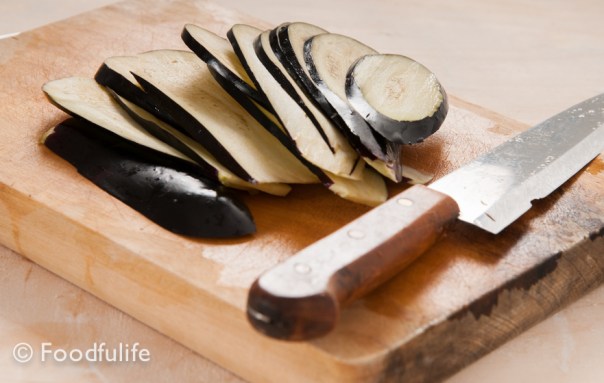
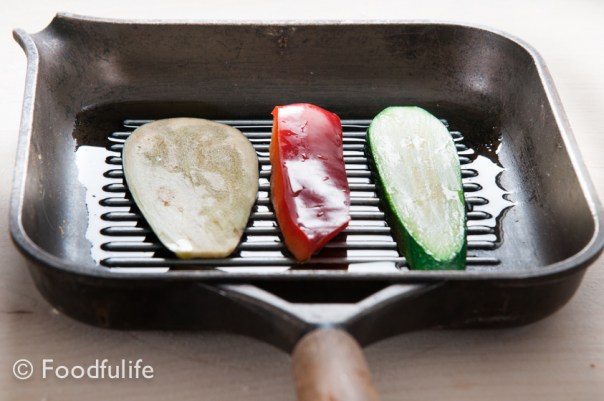
1. Wash the vegetables, cut them into thin slices and grill them on an electric grill or on a grill pan, previously greased with a little extra virgin olive oil.

DSC_3263

DSC_3268

DSC_3273

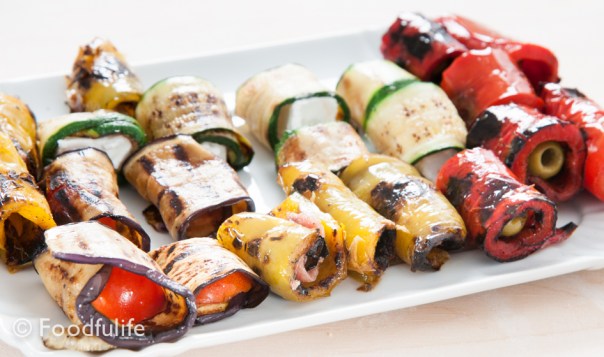
2. Roll the zucchini with the goat’s cheese in the center. Roll the yellow pepper with the anchovies and the red pepper with the olives in the center.

DSC_3275

DSC_3276

3. In a small bowl, mix the extra virgin olive oil and some dried origano with crushed garlic and chillies, salt and pepper.

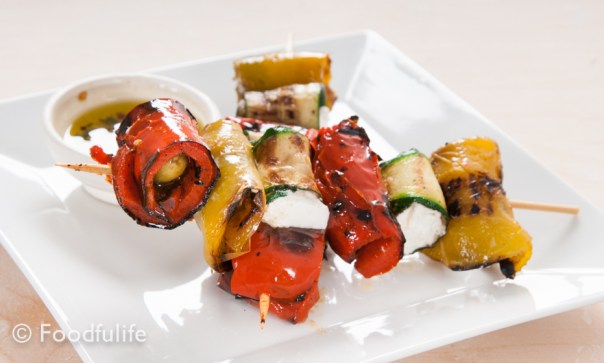
4. Pierce the stuffed vegetables with the wooden skewers and make 8 kebabs. Serve cold with some garlic-olive oil sauce on the side.

DSC_3282

DSC_3284

DSC_3329

DSC_3336

DSC_3369

Spiedini saporiti di verdure.

Ingredienti

Per 4 persone

1 peperone rosso

1 peperone giallo

1 melanzana

2 zucchine

olive verdi snocciolate

1 formaggio fresco di capra (150 g)

acciughe sott’olio

pomodorini ciliegia

8 stecchi di legno per gli spiedini

Per il condimento

6 cucchiai di olio extra vergine d’oliva

2 spicchi d’aglio (schiacciati e tagliati finemente)

un mazzetto di origano fresco o un cucchiaio di origano secco

2 peperoncini tagliati a fettine

sale e pepe q. b.

Preparazione.

1. Lavate e tagliate le verdure a fette. Fate grigliare tutte  le verdure su una bistecchiera (o una piastra elettrica), spennellata con abbondante olio extra vergine d’oliva.

2. Arrotolate gli zucchini con un pezzetto di formaggio di capra e le melanzane con mezzo pomodorino al centro. Arrotolate anche il peperone rosso con le olive e il peperone giallo con le acciughe.

3. A parte, mescolate 6 cucchiai di olio extra vergine d’oliva con l’origano, l’aglio schiacciato, il peperoncino a fettine, il sale e il pepe.

4. Infilzate le verdure con gli stecchi e create gli spiedini alternando i sapori. Servite gli spiedini freddi con l’olio aromatizzato.

Prawns With Pineapple In Sweet And Sour Sauce

A touch of exotic flavour in this light stir-fry recipe. By now you all know, I like to prepare different things and vary my diet. Well, this week I thought that a stir-fry would be really lovely to celebrate the warm weather. I could just imagine enjoying this dish with a nice glass of chilled white wine during a lovely sunset, sitting by the sea…Just perfect!!

DSC_3128

Prawns with pineapple in sweet and sour sauce.

Ingredients

For 3 servings

Easy

Preparation: 20 minutes

250 g (8.8 oz) of cleaned and peeled prawns

2 spring onions,  sliced

1 big red bell pepper

350 g (12.3 oz) pineapple (cleaned)

4 radishes (without leaves)

3 tablespoons soy sauce (use a naturally fermented soy sauce, which meets gluten free standards)

2 tablespoons lime juice

3 tablespoons extra virgin olive oil

ground black pepper to taste

fresh chillies to taste (optional)

DSC_3100

Method.

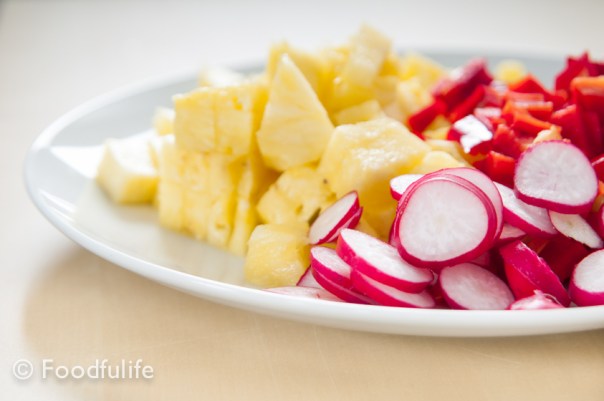
1. Cut and clean the pineapple, removing all the hard parts (including the centre).

DSC_3089

2. Wash and cut the bell pepper, then wash and slice the radishes.

DSC_3099

3. In a frying pan (or a wok), sauté the garlic and the spring onions for a few minutes with 3 tablespoons of extra virgin olive oil.

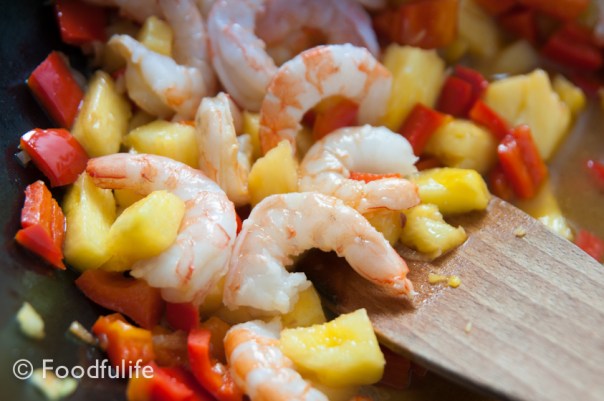
4. Add the pineapple and bell pepper, cut into small cubes. Fry for 5 minutes, then add the prawns and stir.

DSC_3110

DSC_3122

5. Separately, mix the lime juice with the soy sauce, previously diluted with a little bit of water. Pour into the pan and stir well.

DSC_3117

6. Stir fry over a medium heat for a few minutes, then turn off the heat. Add the crunchy radishes, season with black pepper and serve with a cup of steamed basmati rice. You can add some fresh chillies if you wish.

DSC_3120

DSC_3135-2

DSC_3160

DSC_3155

Gamberi in salsa agrodolce.

Ingredienti

Per 3 persone

Facile

Preparazione: 20 minuti

250 g di gamberi puliti

2 spicchi d’aglio, tagliati a pezzi

2 cipollotti, tagliati a fettine

1 peperone rosso (abbastanza grosso)

350 g di ananas (già pulito)

4 ravanelli (senza foglie)

3 cucchiai di salsa di soia (usate una salsa di soia fermentata naturalmente)

2 cucchiai di succo di lime

3 cucchiai di olio extra vergine d’oliva

pepe q. b.

peperoncino q. b. (facoltativo)

Preparazione.

1. Tagliate e pulite l’ananas, togliendo tutte le parti dure (compresa la parte dura al centro).

2. Lavate, tagliate a pezzi il peperone e affettate i ravanelli. Mettete i ravanelli da parte.

3. In una padella (o un wok), fate soffriggere i cipollotti e l’aglio per qualche minuto, in abbondante olio extra vergine d’oliva.

4. Aggiungete l’ananas e il peperone (tagliati a cubetti abbastanza piccoli). Fate soffriggere per 5 minuti, poi aggiungete i gamberi.
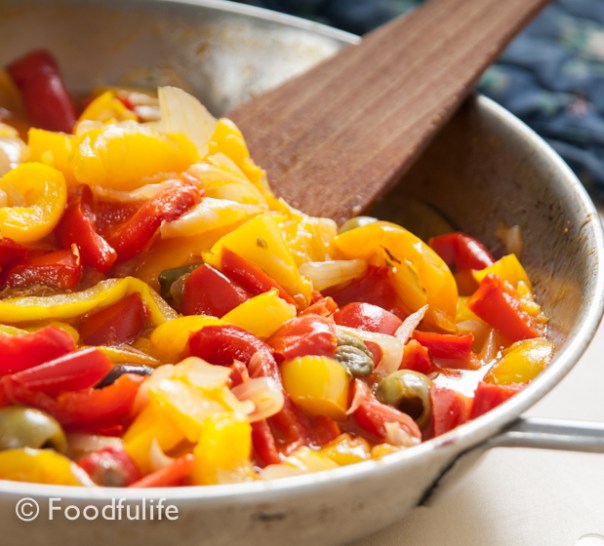
5. A parte, unite il succo di lime alla salsa di soia, precedentemente allungata con un po’ d’acqua. Amalgamate il tutto e versate il condimento in padella. Mescolate bene.

6. Fate friggere a fuoco medio per qualche minuto, poi spegnete il fuoco e aggiungete le fette di ravanelli. Servite con del riso basmati e aggiungete del pepe e/o peperoncino, se lo desiderate.

Mango Panna Cotta

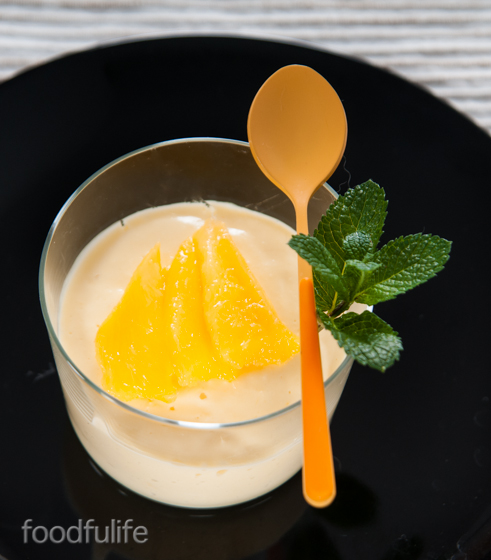
Panna cotta is one of the most appreciated Italian desserts and is well known all over the world. This amazing dessert is probably widely appreciated, not only for its wonderful velvety texture and delicate flavour but also for the simplicity of the preparation method. The traditional recipe is usually prepared with cream, sugar and vanilla pods and served with fruit, chocolate or caramel sauce. In addition to the traditional recipe, there are many variations which include different ingredients, in order to get more creative and complex flavour combinations (we have already prepared a double chocolate panna cotta, in a previous post).

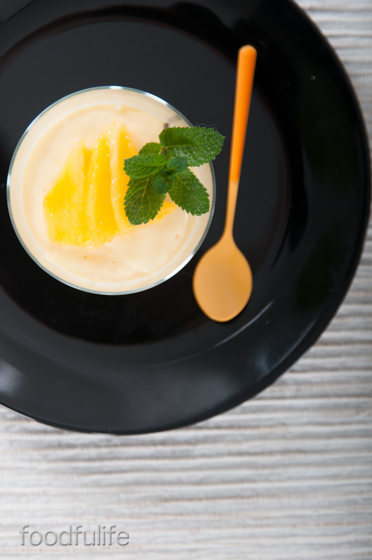
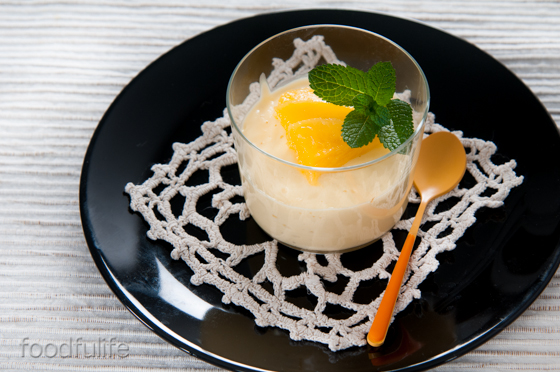
In this recipe, I added the mango pulp with a hint of lemon flavour, to celebrate the warm season. The result is an extremely velvety, exotic and charming dessert!

You’ll love it!!!

DSC_8005

 Tips.

1. To make a slightly lighter dessert you can replace 50 ml of whipping cream with 50 ml of whole milk.

2. It’s important to strain the mango puree well, because the mango pulp contains little hairy bits which can compromise the smoothness and texture of the dessert.

3. In this recipe, I added 1 tablespoon of honey, but half a tablespoon was actually enough for my taste. With half a tablespoon of honey you get a less sweet but more delicate panna cotta, which in my opinion, suits an adult taste best. You can taste the mixture with 1/2 tablespoon of honey and then decide whether you want to add more or not. For children, the preparation with a tablespoon of honey is perfect!

DSC_7961

Mango Panna Cotta.

Preparation: 20 minute + 3 hours in the fridge

Easy

Ingredients

for 2 servings

150g (5.2 oz) mango (+ a few pieces of fresh mango)

1 tablespoon of honey

the zest of half a lemon (or 1 drop of lemon essential oil)

2 gelatine leaves

200 ml ( 6.76 us fl oz) whipping or double cream

a few mint leaves

DSC_7943

Method

1. Leave the gelatine leaves to soak for about 10 minutes.

DSC_7932

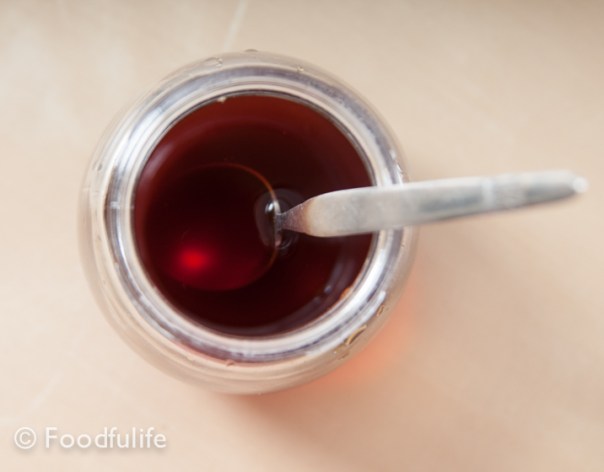
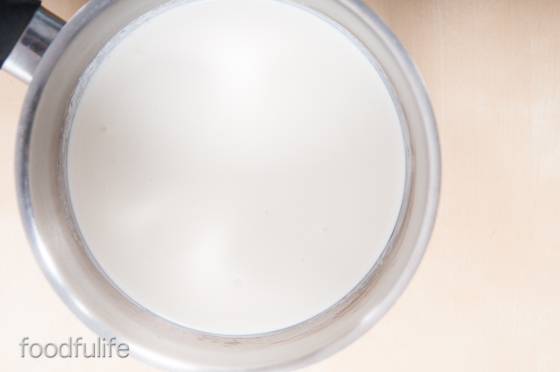
2. Pour the cream into a small saucepan with the honey and the lemon zest (or lemon essential oil). Cook over a moderate heat for a few minutes, until the cream is quite hot (but do not boil). Then add the gelatine leaves, stir very well and turn off the heat.

DSC_7934

3. Peel the mango and cut it into pieces. Puree the fruit in a blender with the warm cream.

4. Using a strainer, pour the mixture into small one-portion pots and let cool. Then put the pots in the refrigerator to set for about 3 hours.

DSC_7947

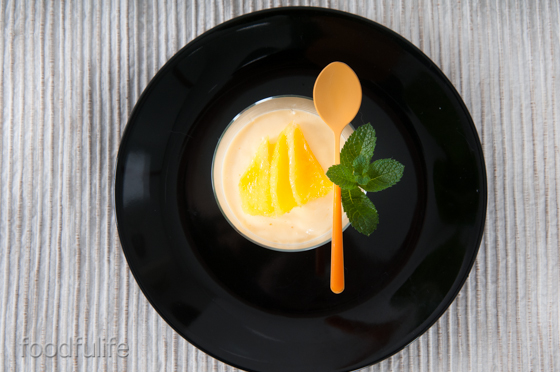
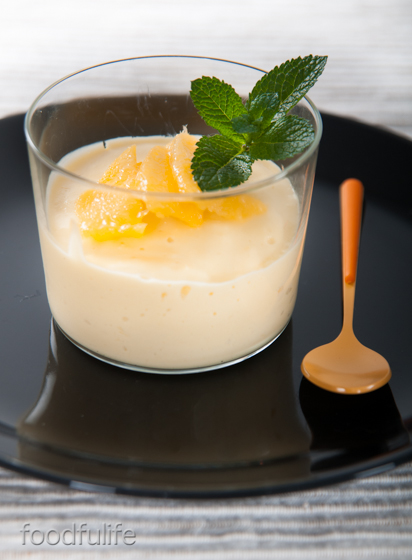
5.  Serve the panna cotta with some fresh mango and a few mint leaves on top.

DSC_7984

DSC_7980

DSC_7988

DSC_7958

Panna Cotta al Mango.

Difficoltà: facile

Preparazione: 20 minuti + 3 ore nel frigorifero

Ingredienti

per 2 panne cotte

150 g di mango (+ qualche pezzo di mango da aggiungere alla fine, come guarnizione)

Scorza di mezzo limone (oppure 1 o 2 goccia di olio essenziale di limone)

1 cucchiaio di miele

2 fogli di colla di pesce

200 ml di panna

qualche foglia di menta

Metodo

1. Mettete a bagno, in acqua tiepida, i fogli di gelatina per 10 minuti.

2. Riscaldate la panna in un pentolino (a fuoco basso) con il miele e la scorza di limone (oppure l’olio essenziale di limone). Aggiungete la gelatina, mescolate per qualche minuto e spegnete il fuoco.

3. Togliete la buccia al mango, tagliatelo a pezzi e frullatelo bene insieme alla panna (ancora calda).

4. Usando un colino, filtrate la panna e versatela negli stampini. Lasciate raffreddare e poi mettete in frigorifero per 3 ore a rassodare.

5. Servite con dei pezzi di mango fresco e qualche foglia di menta.

DSC_8008

Budget Friendly And Full Of Flavour!

This week we are going to prepare a lovely spring risotto with corn salad and fresh peas. This is a cheap and easy risotto to make, perfect for this season! You don’t usually cook corn salad, but a few weeks ago I had some left in the fridge, so I made a soup with it to use it up and It was really lovely!

Corn salad can be used instead of spinach or asparagus, and in fact the taste is somewhere in between the two vegetables, but very delicate. Moreover, It’s cheaper than a bunch of asparagus, which is great! Give it a try, you’ll love it!!!

DSC_7108

DSC_7063

Risotto With Fresh Peas And Corn Salad.

Cooking time: 35 minutes

Preparation: 20 minutes

Ingredients

for 2 servings

160 g (5.6 oz, 3/4 cup) arborio rice

100 g (3.5 oz) fresh peas without the pods (about 200 g ,7 oz, with the pods)

100 g (3.5 oz) of corn salad (lamb’s lettuce), washed and roughly chopped

3 shallots, peeled and finely chopped

1 clove garlic, peeled and finely chopped

3 tablespoons extra virgin olive oil

a small piece of butter (which you can replace with 1 tablespoon of olive oil, if you wish)

700 ml (3 cups vegetable stock), warm (made with an organic stock cube and water)

4 tablespoons of grated Parmesan cheese

salt and pepper to taste

a hint of nutmeg (optional, but very nice!)

DSC_7045

DSC_7075

Method.

1. In a large heavy based pan, pour 3 tablespoons of extra virgin olive oil, add a small piece of butter and gently fry the shallots over a low heat (without burning them). After a few minutes add the garlic, then stir.

DSC_7079

2. Add the rice and the peas and stir. After 2 minutes, gradually pour in the vegetable stock.

DSC_7081

DSC_7085

3. Simmer and stir at a moderate heat until the broth is mostly absorbed. Add the corn salad, then lower the heat and simmer for another 10 minutes (stirring continuously) until creamy.

DSC_7086

DSC_7096

4. Turn off the heat, season with a hint of nutmeg, 2 tablespoons of Parmesan cheese, salt and pepper; then put the lid on the pan and let the risotto sit for a few minutes. Serve with plenty of grated Parmesan on top.

DSC_7103

Tip. Garnish the dish with some fresh corn salad leaves.

Risotto Con Piselli Freschi e Valerianella.

Preparazione: 20 minuti

Cottura: 35 minuti

Ingredienti

per 2 persone

160 g riso arborio

100 g di piselli freschi sbucciati (200 g circa di peso con il bacello)

100 g di valerianella, lavata e tagliata grossolanamente

50 g di scalogno, sbucciato e tritato finemente

1 spicchio d’aglio, sbucciato e tritato

3 cucchiai di olio extra vergine d’oliva

una nonce di burro (che potete sostituire con 1 cucchiaio d’olio in più, se lo desiderate)

700 ml di brodo vegetale, caldo (fatto con un dado biologico)

un pizzico di noce moscata

sale e pepe q. b.

parmigiano grattugiato q. b.

Preparazione.

1. In una pentola grande a fondo spesso, versate 3 cucchiai di olio extra vergine d’oliva, aggiungete il burro e fate soffriggere lo scalogno a fiamma bassa. Dopo qualche minuto aggiungete l’aglio.

2. Unite al soffritto anche il riso e i piselli. Fate rosolare per qualche minuto, poi annaffiate con abbondante brodo vegetale. Continuate ad aggiungere il brodo gradualmente, durante la cottura.

3. Fate cuocere a fuoco moderato (mescolando sempre), finché il brodo si sarà ritirato quasi completamente. Aggiungete la valerianella verso fine cottura, poi abbassate il fuoco e fate cuocere per altri 10 minuti (sempre mescolando).

4. Spegnete il fuoco, condite con un pizzico di noce moscata, qualche cucchiaio di parmigiano, sale e pepe; lasciate riposare per qualche minuto il risotto, chiudendo la pentola con un coperchio. Servite con abbondante parmigiano.

DSC_7125

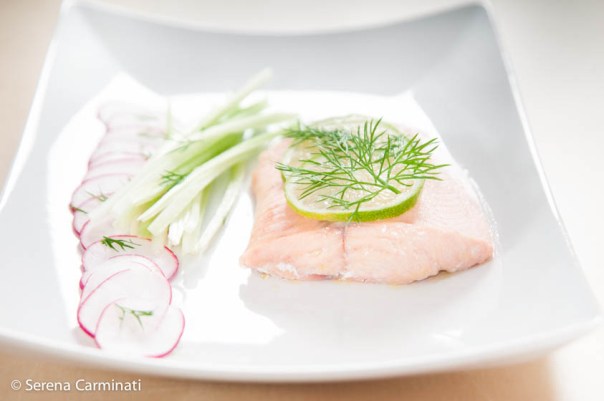
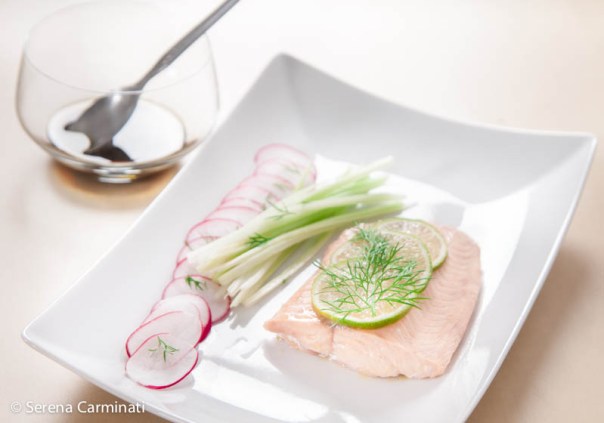
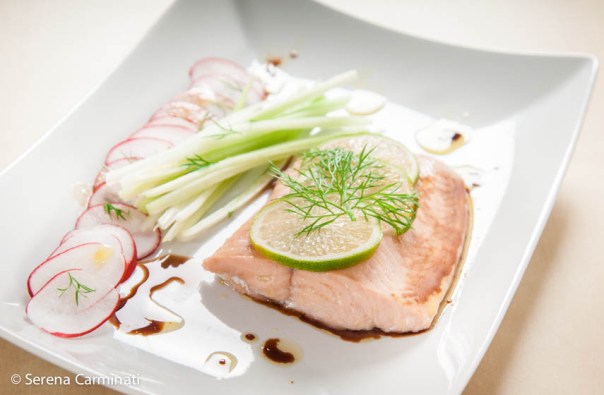
Salmon with lime and balsamic vinaigrette

I must admit, I came across the salmon-balsamic vinegar combination totally by accident. I was trying out a new dish that went horribly wrong, when I dropped some balsamic vinegar on a piece of salmon by mistake…Yes, in my kitchen these kind of things can happen! 🙂

DSC_6967

Anyway, I loved it! So I changed the recipe completely and I made a light balsamic vinaigrette as a salmon dressing. I know it is not a new combination, but it was the first time for me.
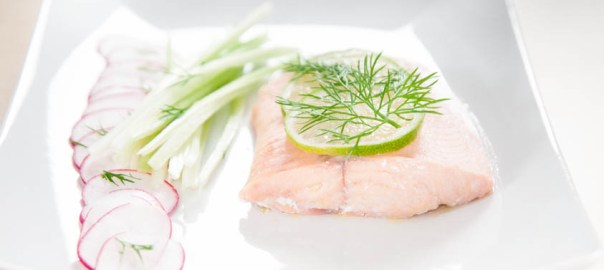
I love the way in which the balsamic vinegar aroma enhances the natural sweetness of salmon without covering its delicate flavour. The aniseed-tinged wild fennel leaves add a note of distinctive freshness to the recipe. If you can’t find wild fennel, you can use normal fennel leaves, they are probably a little bit easier to get and very similar in taste.

DSC_6993

Salmon with lime and balsamic vinaigrette.

Preparation: 15 minutes

Ingredients

For 2 servings

2 salmon steaks

1 lime

a few sprigs of fresh wild fennel, washed

6 radishes, washed

a stalk of celery, washed

for the balsamic vinaigrette

2 tablespoons of extra virgin olive oil

2 tablespoons of balsamic vinegar

a few drops of lime juice

Black pepper and salt to taste

DSC_6873

DSC_6883

DSC_6910

Method

1. Wash and cut a lime into thin slices, then put a few slices on top of the salmon, with a sprig of wild fennel.

DSC_6924

2. Steam the salmon steaks for 8-10 minutes.

3. Place the salmon steaks on the plates, garnish with a few radishes and the celery, both finely sliced. Then, add some wild fennel leaves (roughly chopped).

DSC_6978

For the vinaigrette.

1. Mix 2 tablespoons of extra virgin olive oil with 2 tablespoons of balsamic vinegar, a few drops of lime juice, salt and pepper to taste.

DSC_6943

2. Serve with the vinaigrette on the side.

DSC_6961

DSC_7011

Salmone con lime e aceto balsamico vinaigrette.

Preparation: 15 minutes

Ingredienti

Per due persone

2 tranci di salmone

1 lime intero

6 ravanelli, lavati

un gambo di sedano, lavato

qualche rametto di finocchio selvatico, lavato

Per la vinaigrette di aceto balsamico

2 cucchiai di olio extra vergine d’oliva

2 cucchiai di aceto balsamico

qualche goccia di succo di lime

Pepe e sale q.b.

Preparazione.

1. Lavate e tagliate un lime a fette molto sottili. Mettete le fette di lime sul salmone, con qualche rametto di finocchio selvatico.

2. Fate cuocere a vapore i tranci di salmone per 8-10 minuti.

3. Disponete il salmone sui piatti, guarnite ogni piatto con tre ravanelli tagliati a fette molto sottili e con un gambo di sedano tagliato alla julienne.

Per la vinaigrette.

1. Mescolate 2 cucchiai di olio extravergine d’oliva con 2 cucchiai di aceto balsamico, qualche goccia di succo di lime, sale e pepe.

2. Servite il salmone con il condimento a parte.

DSC_7021

DSC_6958