Tag Archives: Vegetarian

Chickpea Flour Bread With Pumpkin Seeds

DSC_2782

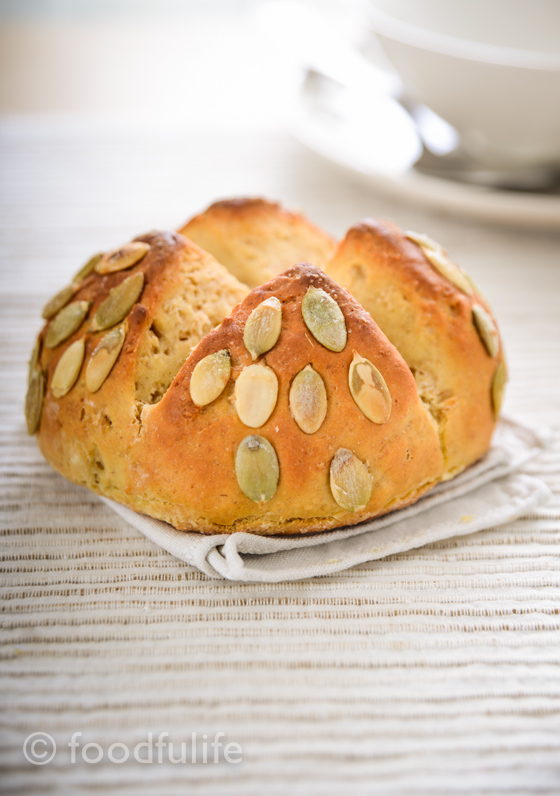
This is a delicious bread, made partially with chickpea flour, which is a rich source of  vegetable protein and has a low carbohydrate content. I’ve developed this recipe in order to create a delicious bread to be served with a light onion soup, a tasty combination for a balanced meal that will warm you up nicely during the festive season.

DSC_2820

As usual, I’ve included you all the directions you need to make the recipe using normal yeast or sourdough. If you use sourdough you can prepare the sourdough starter the night before and let it rise overnight. Then in the morning (or afternoon) you can follow the recipe as written below.

Chickpea flour bread (quickest method with normal yeast)

Cooking time: 25-30 minutes

Preparation time: 20 minutes + the rising time

Ingredients

2 small breads (4 servings)

150 g chickpea flour

150 g whole spelt flour

300 g plain flour

18 g yeast

a little brown sugar

10 g salt

water

For garnish

a handful of shelled pumpkin seeds

Method (with yeast).

1. Make the yeast starter. Mix the yeast with a little bit of warm water, then add two tablespoons of flour and a pinch of brown sugar. Make a small dough, then let double in volume.

2. Separately, mix the rest of the flour with 10 g of salt and enough water to make the bread dough. Add the yeast starter and knead well.

3. Slash an X cut on the surface and then let the dough rise until it has doubled in volume (at least 2 hours).

DSC_2745

4. Divide the dough into two equal parts, then shape two breads. Slash an X cut on both breads and garnish with the pumpkin seeds (possibly, let rise for another 30 minutes).

DSC_2748

5. Line the base of an oven tray with baking paper, then grease with a little extra virgin olive oil and dust with flour. Bake at 200 ° C (392° F) for 25-30 minutes.

DSC_2775

DSC_2783

DSC_2807

Chickpea flour bread with sourdough

Cooking time: 25-30 minutes

Preparation time: 20 minutes + the rising time

2 small breads (4 servings)

150 g chickpea flour

50 g whole spelt flour

270 g plain flour

10 g salt

water

For garnish

a handful of shelled pumpkin seeds

For the starter (to be prepared the night before).

50 g sourdough (I used a semi-solid sourdough made with plain organic flour)

100 g of whole spelt flour

a little of brown sugar

a little bit of water

Make the starter.

Mix 100 g of whole spelt flour with 50 g of sourdough and a little water, then cover with some cling film and let stand overnight.

Method (with sourdough).

1. In a large bowl, mix the rest of the flour with 10 g of salt and enough water to make a soft dough.

2. Combine the dough with the sourdough starter and then add some flour, but only if necessary (the dough shouldn’t be too sticky or dry).

3. Slash a big X on the surface of the dough, cover with a cloth and let stand in a warm place until the dough has doubled in volume (3 to 6 hours, depending on the sourdough strength).

4. Divide the dough into two equal parts and shape the breads, then slash an X on the surface and let rise once more.

5. Garnish the breads with the pumpkin seeds and bake at 200 ° C (392° F) for 25-30 minutes.

DSC_2784

DSC_2810

DSC_2813

See also the Farinata recipe (a delicious focaccia made with chickpea flour)

Pane con farina di ceci (preparazione con lievito di birra)

Tempo di cottura: 25-30 minuti

Tempo di preparazione: 20 minuti + il tempo di lievitazione

Ingredienti

Per 2 panini grossi (per 4 persone)

150 g di farina di ceci

150 g di farina di farro integrale

300 g di farina 00

18 g di lievito di birra

pochissimo zucchero di canna

10 g di sale

acqua q. b.

Per guarnire

una manciata di semi di zucca (senza buccia)

Preparazione dell’impasto con lievito di birra.

1. Sciogliete il lievito di birra in poca acqua tiepida, poi aggiungete due cucchiai di farina e un pizzico di zucchero di canna ; quindi mescolate fino a creare un panetto morbido e lasciate raddoppiare di volume.

2. A parte, mischiate le farine con il sale e aggiungete gradualmente l’acqua, fino ad ottenere un impasto uniforme. Incorporate il panetto di lievito e lavorate bene.

3. Fate un taglio a croce sulla superficie e poi fate lievitare l’impasto per 2 ore.

4. Dividete l’impasto in due parti uguali, date la forma a due panini (vedi le foto) e decorate con i semi di zucca (sarebbe meglio far lievitare per altri 30 minuti).

5. Ricoprite la teglia con carta da forno, ungete con poco olio d’oliva e infornate il pane a 200° C per 25-30 minuti.

Pane con farina di ceci (preparazione con lievito madre)

Tempo di cottura: 25-30 minuti

Tempo di preparazione: 20 minuti + il tempo di lievitazione

Ingredienti

Per due panini grandi ( 4 persone)

150 g di farina di ceci

50 g di farina di farro integrale

275 g di farina 00

10 g di sale

acqua q. b.

Per guarnire

una manciata di semi di zucca (senza buccia)

Per il panetto di lievito (da preparare la sera prima).

50 g di lievito madre (uso un lievito semisolido con base di farina biologica 00)

100 g di farina di farro integrale

pochissimo zucchero di canna

acqua q. b.

Preparazione del panetto di lievito.

Mescolate 100 g di farina di farro con 50 g di lievito madre e  poca acqua; quindi ricoprite con una pellicola e lasciate riposare per tutta la notte.

Preparazione dell’impasto con lievito madre.

1. In una ciotola grande, mischiate le farine con il sale e l’acqua necessaria per ottenere un impasto liscio e morbido.

2. Unite il lievitino al resto dell’impasto, aggiungendo un po’ di farina se necessario (l’impasto non deve risultare troppo umido).

3. Fate un taglio a croce sulla superficie, poi ricoprite  con un panno e lasciate lievitare l’impasto fino a quando sarà raddoppiato di volume (generalmente dalle 3 alle 6 ore, ma dipende dal lievito madre).

4. Dividete l’impasto in due,  date la forma a due panini (vedi le foto) e poi fate lievitare ancora.

5. Guarnite il pane con i semi di zucca e infornate a 200°C per 25-30 minuti.

Vedere anche la ricetta della Farinata

Light And Tasty Onion Soup With Chickpea Bread

DSC_2827

This week we are going to prepare a delicious and easy to make onion soup, served with a wonderful chickpea bread, especially made for this recipe. A meal so light and tasty that it could easily be considered comforting as well as healthy!

This soup is really well complemented by the chickpea bread (see the recipe), which is a good source of proteins and keeps the meal light and nicely balanced! The perfect winter dish to enjoy by the fire!

Enjoy!

DSC_2796

DSC_2724

Light onion soup (zuppa di cipolle)

Preparation time: 10 minutes

Cooking time: 40 minutes

Ingredients

For 4 servings

1 kg of onions of your choice

extra virgin olive oil

salt and pepper (use plenty, because onions are naturally quite sweet)

DSC_2719

Method.

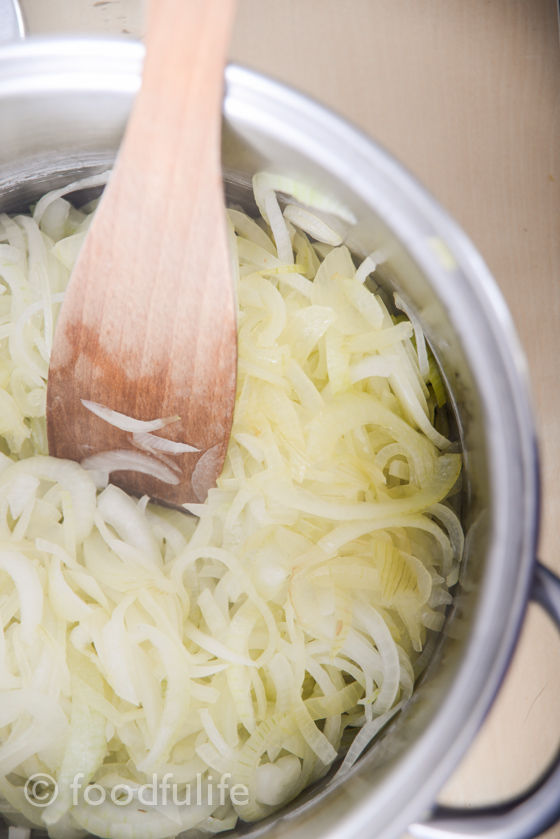
1. Slice the onion and fry them in extra virgin olive oil.

DSC_2738

2. Using a large pan, cover the onions with water and cook until tender.

DSC_2766

3. With an immersion blender, puree the onions until you get a smooth and creamy mixture.

DSC_2768

4. Drizzle with extra virgin olive oil, season with salt and pepper, then serve with the chickpea bread!

DSC_2793

DSC_2802

DSC_2806

See also the pasta e fagioli recipe (another delicious winter dish!).

Zuppa di leggera cipolle

Tempo di preparazione: 10 minuti

Tempo di cottura: 40 minuti

Ingredienti

Per 4 persone

1 kg di cipolle di vostra scelta

olio extra vergine d’oliva q. b.

sale e pepe (abbondate perché le cipolle sono naturalmente dolci)

Preparazione.

1. Sbucciate e affettate le cipolle, poi fatele soffriggere in olio extra vergine d’oliva.

2. Riempite la pentola d’acqua, fino a ricoprire tutte cipolle; quindi fate cuocere, a fuoco moderato e con il coperchio, per 30-35 minuti.

3. Usando un frullatore ad immersione, frullate le cipolle fino ad ottenere un composto cremoso.

4. Condire con olio extra vergine d’oliva e abbondante sale e pepe. Servite la zuppa calda con del pane di farina di ceci.

DSC_2729

More chickpea flour recipes coming up… (Black and white picture)

DSC_2583

see the Farinata and the chickpea bread recipe

More chickpea flour recipes coming up…

DSC_2578

see the Farinata and the chickpea bread recipe

Traditional Recipe: La Farinata Genovese (Genoese Socca)

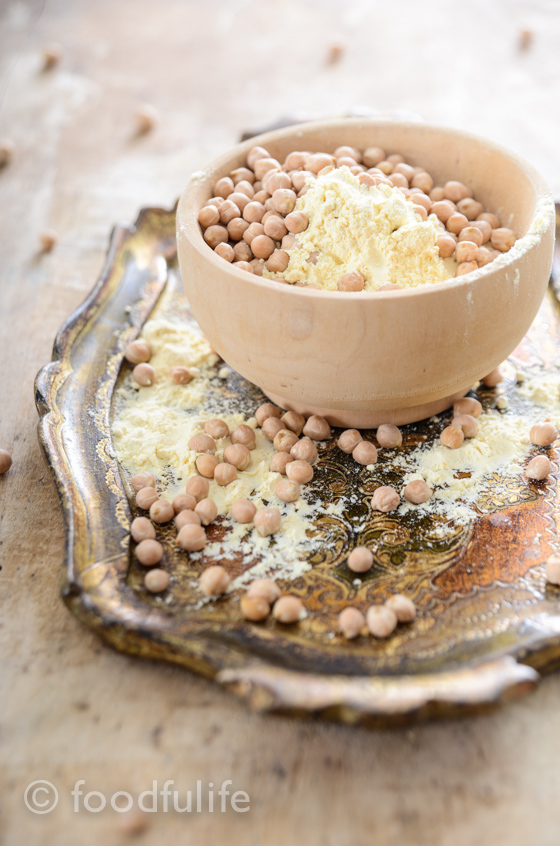
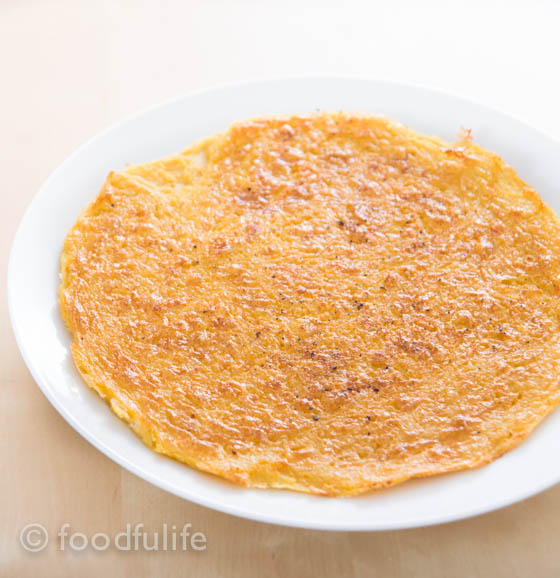
Basically made from 3 ingredients (chickpea flour, olive oil and water), la farinata, or socca (as it is called in Nice), is a kind of chickpea focaccia, which doesn’t contain gluten and is dairy free.  It is quite easy to prepare and it’s perfect for vegan and vegetarian diets, because it is a good source of proteins.

DSC_2043

Before getting the method and recipe right it might take a few tries, especially when it comes to finding the right balance between the ingredients. It might requires a lot of olive oil in order to become crispy on the outside and creamy on the inside, as it should be.
The farinata is traditionally only a few millimetres thin (see the pictures).

A few tips.
The ideal cooking method would also require a high temperature oven, like a wood stove, however, a good oven will do. Remember to use non-stick baking trays or baking paper.
The farinata has to be served quite hot, freshly made, otherwise it will become elastic and not very nice to eat. If you have leftovers, you can reheat the farinata in the oven the day after.

The farinata can also be enriched adding different ingredients; amongst the local most popular variations, you’ll find the onion and the artichoke farinata, also quite easy to make.

DSC_2051

Farinata could be a delicious starter or aperitif, but it is also a wonderful meal when served with a nice big salad on the side.
La farinata di ceci (Genoese socca)

Ingredients

for 3 rounded backing trays (28 cm in diameter)

1,5 litre of water

500 g chickpea flour

200 ml extra virgin olive oil

salt and pepper to taste

Method.

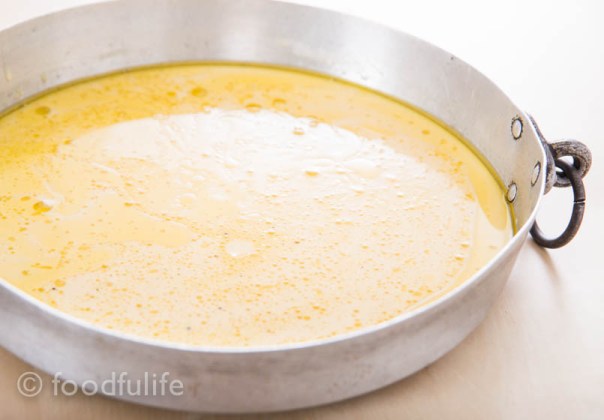
1. In a large bowl, vigorously whisk 1,5 litre of water with 500 g. of chickpea flour, 100 ml olive oil and some salt. Once all the ingredients are mixed well, let sit for at least 5 hours (but 10 hours would be better, so the flour can absorb the water well).

DSC_1994

2. After the resting time, remove the froth formed on the surface of the mixture with a spoon.

DSC_1997

3. Pour some extra virgin oil on a non-stick baking tray, then with a ladle add 1/3 of the mixture and season with salt and pepper.

DSC_2009

DSC_2007

4. Bake the farinata at 220°C / 428°F (or higher) until golden, then turn on the grill and cook for a little longer, in order to get a nice crispy crust on top. Remove from the oven and serve hot.

DSC_2013

DSC_2049

DSC_2056

Also see Chickpea flour bread recipe

La farinata di ceci.

Ingredients

Per 3 teglie rotonde di 28 cm di diametro

1,5 l d’ acqua

500 g di farina di ceci

sale e pepe q.b.

200 ml di olio extra vergine d’oliva

Preparazione.

1. In una ciotola grande, mescolate energicamente con una frusta 1, 5 l di acqua, 500 g. di farina di ceci, 100 ml di olio e un po’ di sale. Una volta amalgamati bene gli ingredienti, lasciate riposare per almeno 5 ore (sarebbe meglio 10 ore, per far assorbire bene l’acqua).

2. Passato il tempo necessario, togliete con un cucchiaio la schiuma formata in superficie.

3. Versate un po’ d’olio su una teglia antiaderente, poi con un mestolo aggiungete il composto liquido (non troppo perché deve restare sottile) e condite con sale e pepe.

4. Infornate a 220° C per una decina di minuti, poi accendete il grill e lasciate che si formi una crosta croccante. Sfornate e servite!

DSC_2047

DSC_2030

Vedi anche la ricetta del Pane con farina di ceci e semi di zucca

A bite of the new recipe :-)

DSC_2040

See the Farinata recipe

Quick And Easy Recipe: Sautéed Carrots

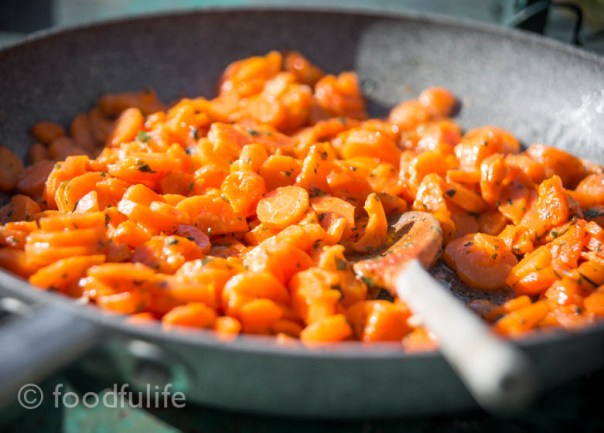
This is an easy and extremely delicious carrot recipe! You can add the quantity of extra virgin olive oil and butter you desire, or you can have a healthy dish with just a little extra virgin olive oil in it. You can adapt this recipe according to your taste.

Sautéed Carrots

Preparation time: 5 minutes

Cooking time: 15-20 minutes

Ingredients

For 6 servings

1 kg carrots, washed and peeled

2 garlic cloves, chopped

4-5 tablespoons extra virgin olive oil

2 tablespoons finely chopped parsley

salt to taste

a little bit of butter (optional)

Method.

1. Steam the carrots until a little bit tender.

2. Slice the carrots and then sauté (for 5-10 minutes) with the extra virgin olive oil, a little bit of butter (optional), the chopped garlic and parsley.

3. Add some salt and serve.

sautéed carrots

Carote saltate in padella.

Temo di preparazione: 5 minuti

Tempo di cottura: 15-20 minuti

Ingredienti

Per 6 porzioni

1 kg di carote, già pulite

2 spicchi d’aglio (tritati)

4-5 cucchiai di olio extra vergine di oliva

2 cucchiai di prezzemolo tritato

sale q. b.

un po’ di burro (facoltativo)

Preparazione.

1. Cuocete a vapore le carote, fino a renderle più tenere.

2. Tagliare le carote e poi fatele rosolare (per 5-10 minuti) con l’olio extra vergine di oliva, un po’ di burro (facoltativo), l’aglio e il prezzemolo.

3. Aggiungete un po’ di sale e servite.

Dark Chocolate And Marrons Glacés Tart

As promised, this week I continue my series of recipes dedicated to the chestnut season, with a wonderful dark chocolate and marrons glacés tart. This is a rich dark chocolate tart, enriched with an hint of sweet chestnut flavour and with a luscious creamy filling that will definitely warm you up nicely!

DSC_1677

I know that marrons glacés (candied chestnuts) can be expensive, however, in this recipe I used just 100 g, to add some sweetness and flavour…Believe me, it is worth it! You can buy marrons glacés in pieces, which are a little bit cheaper. I also added a little bit of chestnut flour in the shortcrust, which works quite nicely with the other ingredients, without overpowering their flavours.

DSC_1685

Dark chocolate and marrons glacés tart

(I used a ceramic cake pan of 24 cm of diameter)

Ingredients

180 g plain unbleached flour

40 g chestnut flour

50 g brown sugar

120 g softened butter

1 egg yolk

a pinch of salt

For the dark chocolate and marrons glacés filling

200 ml of milk

200 g of dark chocolate (I used 100 g chocolate with minimum 50% of cocoa solids and 100 g with 70% cocoa solids)

100 g marrons glacés (candied chestnuts)

2 tablespoons dark rum

2 eggs

60 g brown sugar

DSC_1642

Method.

1. Prepare the dough. Work the butter with 50 g of brown sugar and 1 egg yolk. Add the flour with a pinch of salt, then knead well (without overworking) and put in refrigerator for 30 minutes.

DSC_1647

DSC_1649

2. Prepare the filling. Separately, puree the marrons glacés using a fork. Then add 2 tablespoons of rum and mix until you get a jam-like consistency.

DSC_1607

3. Melt the chocolate in a bain-marie (double boiler). Combine the melted chocolate with the marrons glacés puree, then gradually add 2 eggs and 200 ml of milk. Mix well and put the filling in the refrigerator.

DSC_1615

DSC_1621

4. Prepare the tart crust.Take the dough and roll it out on a sheet of baking paper, using a rolling pin. Place the pastry (with the baking paper) on the cake pan and then cut off the excess paper. Pierce the base of the tart a few times with a fork.

DSC_1653

5. Fill the tart crust with the chocolate and marrons glacés filling. Bake at 180 ° C (356°F) for about 50 minutes (the cooking time depends on the oven, check on the cake!).

DSC_1659

DSC_1684

6. Let cool, cut and serve.

DSC_1696

DSC_1704

DSC_1715

DSC_1724

Crostata al cioccolato fondente e marrons glacés

Ho usato una tortiera di ceramica di 24 cm di diametro

Ingredienti

180 g di farina 00

40 g di farina di castagne

50 g di zucchero di canna

120 g di burro morbido

1 tuorlo d’uovo

un pizzico di sale

Per la crema al cioccolato fondente e marrons glacés

200 ml di latte

200 g di cioccolato fondente (ho usato una tavoletta da 100 g al 50% di contenuto di cacao e una sempre di 100 g al 70% di contenuto di cacao)

100 g di marrons glacés

2 cucchiai di rum scuro

2 uova

60 g di zucchero di canna

Preparazione.

1. Lavorate il burro con il tuorlo e 50 g di zucchero. Aggiungete la farina con un pizzico di sale e amalgamate bene l’impasto, senza lavorarlo troppo. Lasciate riposare in frigorifero per 30 minuti.

2. A parte, schiacciate bene i marrons glacés con una forchetta. Aggiungete due cucchiai di rum scuro e mescolate, fino ad ottenere la consistenza di una marmellata.

3. Fate sciogliere a bagnomaria il cioccolato. Mescolate il cioccolato sciolto con la purea di marrons glacés, due uova e il latte (aggiungete uova e latte molto gradualmente). Mettete la crema nel frigorifero a rassodare.

4. Prendete l’impasto dal frigorifero e stendetelo con il matterello su un foglio di carta da forno. Trasferite la sfoglia di pasta (con la carta) sulla teglia e tagliate la carta in eccesso. Forate più volte la pasta con la forchetta.

5. Riempite la base della torta con la crema al cioccolato e marrons glacés. Infornate a 180° C per circa 50 minuti (la cottura dipende dal forno, controllate la torta).

6. Fate raffreddare, tagliate e servite.

DSC_1702

Focaccia Rustica Alle Cipolle (Rustic Onion Focaccia)

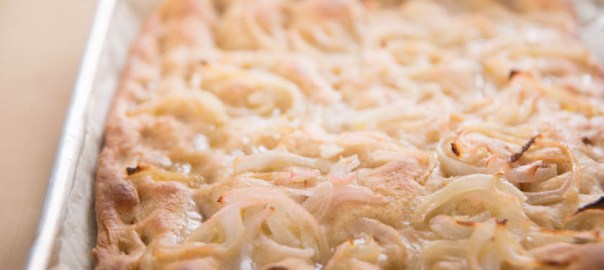
This is another popular version of the Focaccia Alla Genovese. This onion focaccia comes from a traditional recipe, but here I am making my own adaptation, using different flours and not just plain flour (we use plain flour in the traditional recipe).

In fact, for this recipe I am preparing a dough mixing plain flour, semolina flour and spelt flour in equal parts.  It is quite a rustic focaccia, with the addition of the onions that keep the focaccia nicely moist and sweet. It is definitely something to try…

DSC_1563

Focaccia rustica con le cipolle (onion focaccia).

Ingredients

for a medium sized oven tray

150 g plain unbleached flour

150 g whole spelt flour

150 g semolina (durum wheat) flour

14 g yeast

8 g salt (and a pinch of salt to put on top)

extra virgin olive oil

1/2 a glass of water (a small glass!!)

1 large onion, finely sliced

Method.

1. Mix the yeast with some warm water, than add two tablespoons of spelt flour (take two tablespoons from the 150 g of spelt flour mentioned in the ingredient list). Create a starter and let it rise until it doubles in volume.

Note. You can use yeast or make a starter using 50 g of semisolid sourdough (I used plain flour sourdough), a pinch of barley malt, a little bit of water and 100 g of spelt flour). If you are going to use sourdough, let the starter rise over night and then follow the recipe, starting from step 2.

2. Mix the remaining flour, arrange it on a working board (or a table) and create a well in the centre. Add 8 g of salt with a little bit of warm water and combine the ingredients to create a soft dough. Add the starter and work well.

3. Let rise until the dough has doubled in volume.

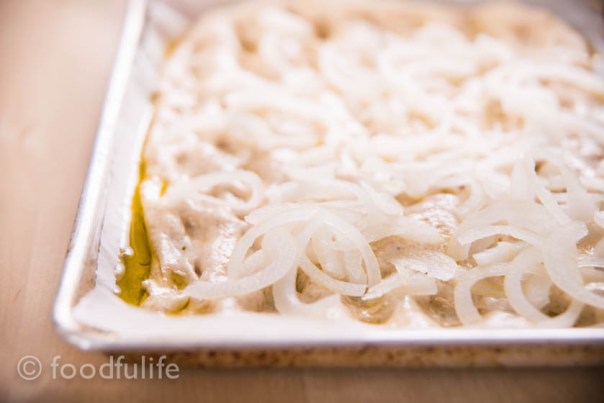
4. Roll out the dough on a baking tray,previously greased with plenty of extra virgin olive oil and let rise for an hour. When the dough has risen, pressed with your fingers to create regular indents on the surface.

DSC_1546

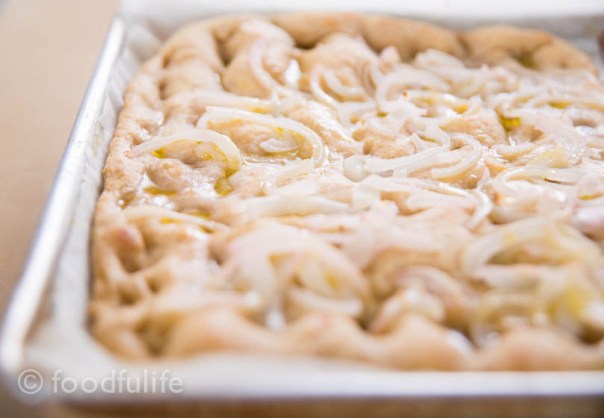
5. Top with the onion slices, add a little bit of salt and drizzle with extra virgin olive oil.

DSC_1560

6. Bake at 200° C (392°F) until the focaccia is slightly golden. Remove the focaccia from the oven and pour half a glass of water on the surface. Bake again until golden-brown and crisp.

DSC_1570

DSC_1573

DSC_1577

DSC_1581

also see the focaccia alla genovese recipe.

Focaccia rustica con le cipolle.

Ingredienti

per una teglia da forno di media grandezza

150 g di farina 00

150 g di farina di farro integrale

150g di semola rimacinata di grano duro

14 g di lievito di birra

8 g di sale fino (e un pizzico di sale in più, da aggiungere alla fine)

olio extra vergine di oliva q.b.

Mezzo bicchiere d’acqua (un bicchiere piccolo!)

1 cipolla grande, tagliata a fettine sottili

Preparazione.

1. Sciogliete il lievito di birra in poca acqua (tiepida) e aggiungete due cucchiai di farina di farro (prendete i due cucchiai di farina di farro dai 150 g indicati negli ingredienti). Create un panetto e lasciate raddoppiare di volume.

Nota. In questa ricetta è possibile utilizzare il lievito di birra oppure il lievito madre. Se utilizzate il lievito madre, fate un lievitino con 50 g di pasta madre semisolida (io ho usato lievito madre a base di farina 00), un pizzico di malto d’orzo, un po’ d’acqua e 100 g di farina integrale di farro). Lasciare lievitare tutta la notte e poi seguite la ricetta, a partire dal secondo passaggio.

2. Mischiate bene le farine rimaste e disponetele su una spianatoia (oppure su un tavolo). Aggiungete 8 g di sale con un po’ d’acqua tiepida e lavorate fino a creare un impasto morbido. Aggiungete anche il panetto di lievito e lavorate bene.

3. Lasciate lievitare in un luogo riparato, fino a quando l’impasto sarà raddoppiato di volume.

4. Stendete la pasta su una teglia (precedentemente unta con abbondante olio extra vergine d’oliva) e lasciate lievitare per un’oretta. Quando la pasta sarà nuovamente lievitata, pressate con le dita la superficie per creare delle fossette.

5. Ricoprite la focaccia con le fette di cipolla, aggiungete ancora un po’ di sale e irrorate con abbondante olio extra vergine d’oliva.

6. Infornate a 200°, fino a quando la focaccia sarà leggermente dorata. Togliete la focaccia dal forno e versate mezzo bicchiere d’acqua sulla parte superiore, poi infornate nuovamente, fino ad ottenere una focaccia ben dorata e croccante.

Da vedere anche la ricetta della focaccia alla genovese 

Stuffed Vegetables (Gluten-Free and Vegetarian)

Stuffed vegetables (gluten-free and vegetarian)_ Verdure ripiene vegetariane, senza glutine.

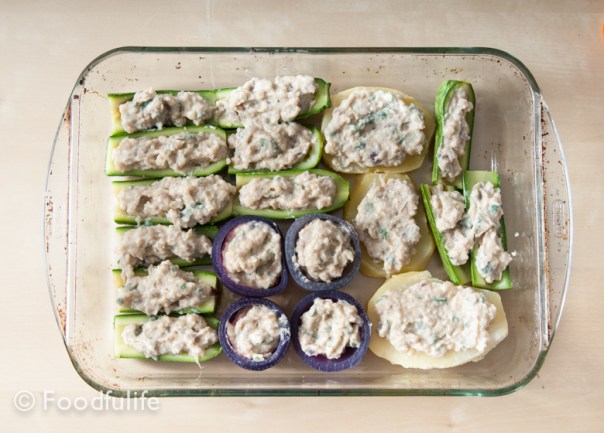
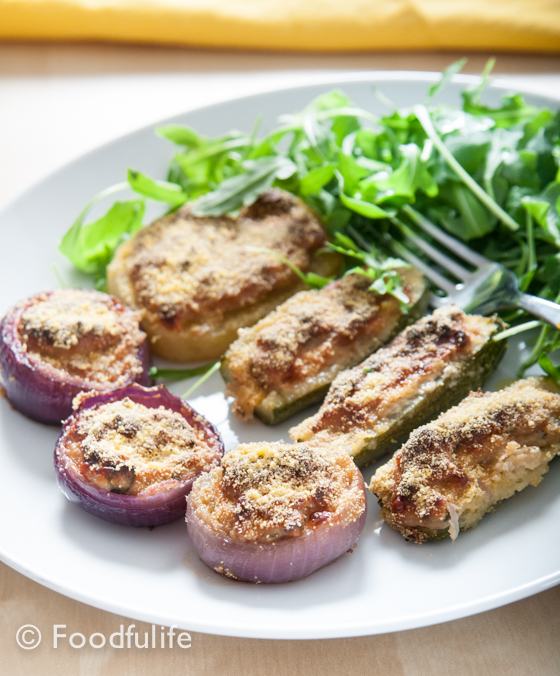
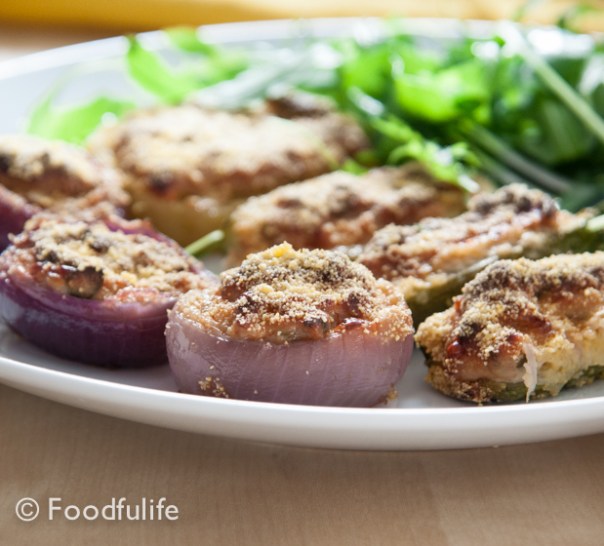
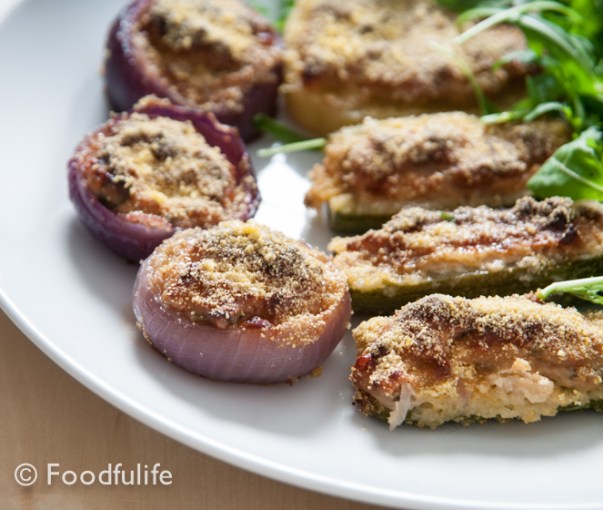
Stuffed vegetables are a typical genoese dish, which requires quite a long preparation and cooking time, but it’s worth it! In this case, I adapted my mom’s recipe to create a gluten-free, vegetarian dish, using ricotta, plenty of fresh marjoram (which is also in the traditional recipe) and some gluten-free breadcrumbs. These stuffed vegetables are incredibly tasty, soft in the middle and crunchy on the outside; a wonderful Sunday meal to share with family and friends!

My advice is to make plenty, keep them in the fridge and eat them the next day, they taste even better!

DSC_7725

Stuffed vegetables without meat and gluten-free.

Cooking time: 1 hour 15 minutes

Preparation time: 30 minutes

difficulty: medium

Ingredients

for 1 medium-large tray of stuffed vegetables

2 medium potatoes

4 medium-large zucchini (to be divided into 8 pieces)

2 onions, plus 1 small onion to sauté

1 clove of garlic

1 egg

50 g grated Parmesan cheese

125 g ricotta

3 full tablespoons of fresh marjoram, chopped

5 tablespoons of extra virgin olive oil

some gluten-free bread crumbs to sprinkle on top and 2 tablespoons to add to the stuffing (or you can use pre-cooked polenta)

salt and pepper to taste

Method.

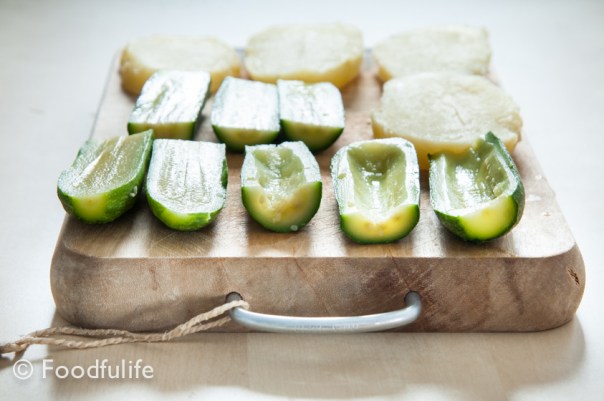
1. Steam all vegetables, until they are cooked but still crunchy.

2. Slice the potatoes, then place the smallest slices in a bowl and set aside for the stuffing.

3. Using a spoon and a knife, scoop out the central part of the zucchini and cut the onions in half (from the centre, not from the roots). Remove the central and the outer layers of onions, then put them in the bowl with the rest of the vegetables for the stuffing.

DSC_7641

DSC_7627

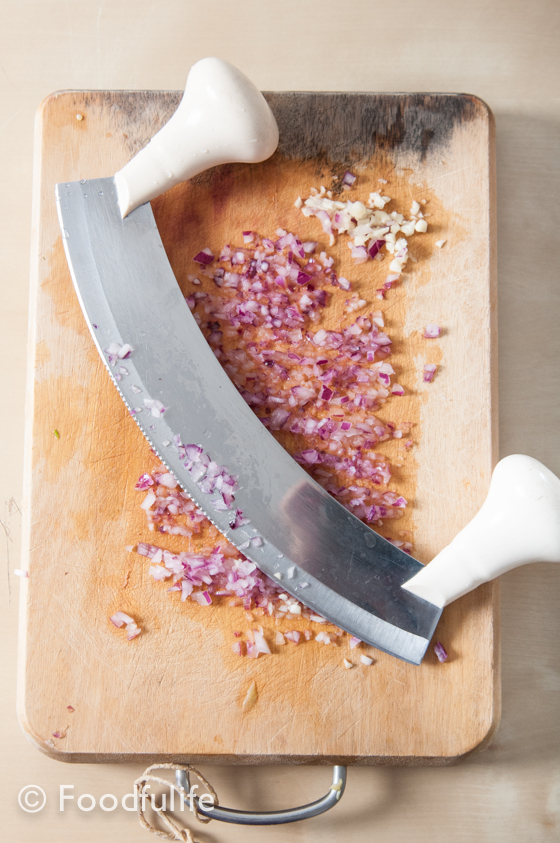
4. In a frying pan, sauté the onion with a clove of garlic, both finely chopped (add the garlic after a few minutes, to prevent burning).

DSC_7651

5. Remove the excess water, then using a food processor, puree all the vegetables for the stuffing. Fry over a medium heat, stirring well, until the mixture gets a little bit drier.

DSC_7654

6. In a food processor, mix the ricotta with the Parmesan cheese, 2 tablespoons of gluten-free bread crumbs, the marjoram and an egg. In a large bowl, add the vegetables puree to the ricotta mixture, then mix and season with salt and pepper.

DSC_7659

DSC_7660

7. Grease a baking tray with 2 tablespoons of extra virgin olive oil, then place the vegetables onto the tray and fill them with the stuffing.

DSC_7630

DSC_7673

8. Sprinkle some gluten-free bread crumbs on top, season with a little more extra virgin olive oil and bake at 200 ° C (392° F), until the vegetables are well coloured (about 30-40 minutes).

DSC_7735

DSC_7728

Verdure ripiene senza carne e senza glutine.

Cottura: 1 ora e 15 minuti

Preparazione: 30 minuti

Difficoltà media

Ingredienti

per 1 teglia medio-grande

2 patate di media grandezza

4 zucchini medio-grossi (da dividere in 8 pezzi)

2 cipolle , più 1 cipolla per il soffritto da mettere da perte

1 spicchio d’aglio

1 uova

50 g di parmigiano grattugiato

125 g di ricotta

3 cucchiai abbondanti di maggiorana fresca e tritata

5 cucchiai d’olio extravergine d’oliva

pangrattato senza glutine q. b. (oppure potete usare della polenta istantanea)

sale e pepe q. b.

Preparazione.

1. Fate cuocere a vapore tutte le verdure e toglietele dal fuoco ancora sode.

2. Tagliate le patate a fette, poi mettete le fette piccole e rotte in un contenitore per il ripieno.

3. Tagliate gli zucchini e scavate la polpa usando un cucchiaino e un coltello. Tagliate le cipolle a metà (non dalle radici ma dal centro), poi prendete la parte centrale e lo strato esterno delle cipolle e metteteli, con la polpa degli zucchini, nel contenitore per il ripieno.

4. In una padella, fate soffriggere 1 cipolla e uno spicchio d’aglio, entrambi tritati finemente (aggiungete l’aglio qualche minuto dopo, per evitare che si bruci).

5. Strizzate bene le verdure del ripieno per togliere l’acqua in eccesso, poi frullate e aggiungete al soffritto. Fate asciugare a fuoco medio e mescolando bene.

6. A parte, frullate la ricotta con il parmigiano, la maggiorana, due cucchiai di pangrattato senza glutine e un uovo. In una terrina grande, unite il purea di verdure passata in padella al composto di ricotta, poi mescolate e insaporite con sale e pepe.

7. Ungete una teglia con 2 cucchiai di olio extravergine d’oliva, disponetevi le verdure tagliate a metà, poi riempitele con il ripieno e spolverate con abbondante pangrattato senza glutine.

8. Condite con un filo d’olio e infornate a 200°C, finché le verdure saranno ben colorate (30-40 minuti).

DSC_7714