Category Archives: Main Dishes

Cooking Method: Pizza Margherita

DSC_3061-2

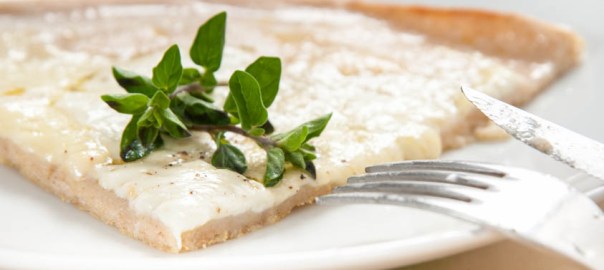
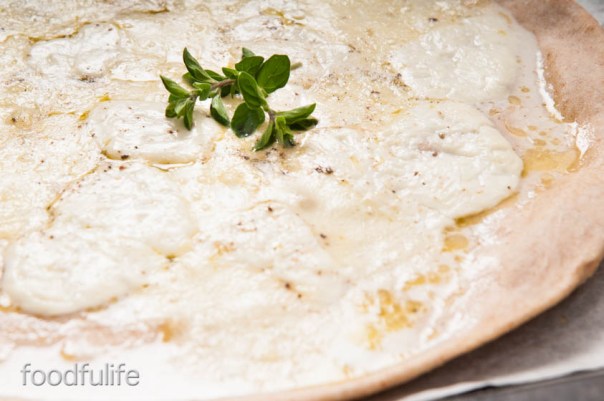
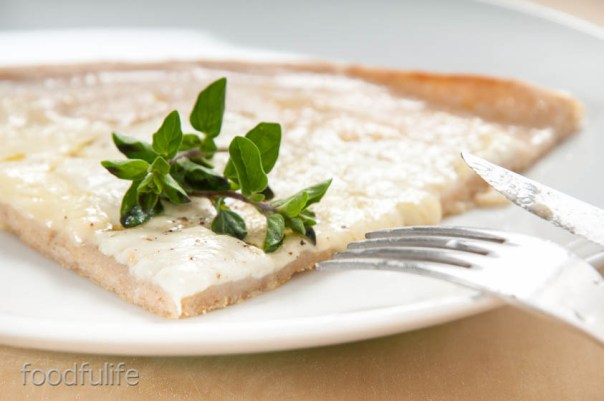
Plain but full of flavour, Pizza Margherita is one of the most appreciated pizzas in Italy! We use only fresh and the best quality ingredients, in order to get the right combination of flavours. It’s so simple but really delicious!

I often prepare this pizza with a sourdough starter and make a dough using mainly spelt flour, because I love it’s nutty flavour and crunchy texture. Here is my favourite sourdough recipe for the pizza base and the normal yeast version.

Pizza Margherita

Preparation time: 5 minutes + the time to make the dough

Cooking time: 30-40 minutes

Ingredients

For two large pizzas

2 pizza bases (use the dough you prefer)

Two good quality mozzarellas (if you want more flavour you can use buffalo mozzarella)

200 g good quality tomato sauce (sweet and not acidic)

2 tablespoons of chopped marjoram (fresh or dried)

Extra virgin olive oil and salt to taste ( I mix them with the tomato sauce and herbs)

Method.

1. Preheat the oven at the highest temperature and with the fan running (to dry out the excess water from the cheese). Place the pizza stone in the oven (the pizza stone has to heat up gradually, because otherwise it will break).

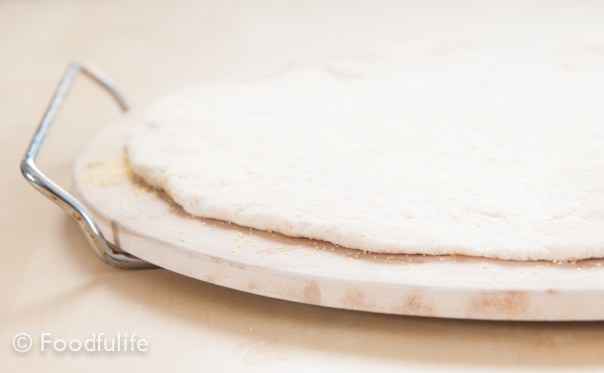
2. Once the pizza stone is hot, remove it from the oven and dust with some dried (quick cooking) polenta (the polenta will make the pizza crust crunchier).

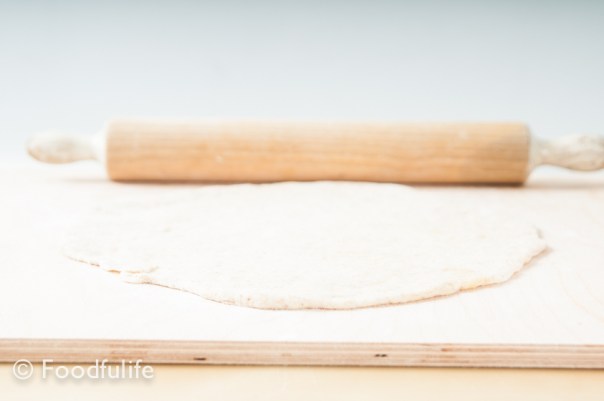
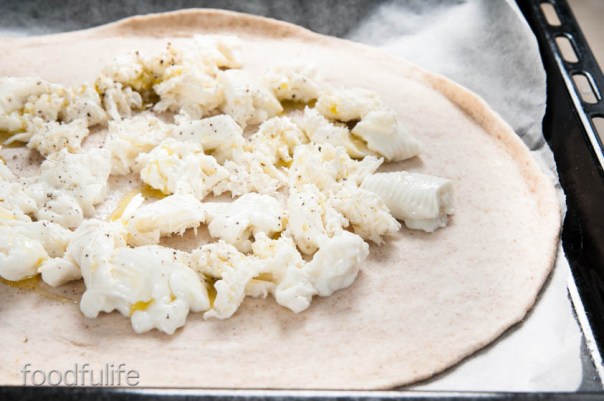
3. Roll out the pizza dough on the stone, top with the ingredients and place to cook in the oven, with the fan running, for 30-40 minutes (depending on the temperature you are using).

Notes.

1. Use the best quality tomato sauce you can get ; if the tomato sauce is too acidic, you can add some sugar and make it sweeter.

2. Mozzarella is usually preserved in water, so you have to rinse it really well and squeeze it with your hands when you use it.

3. You can use different herbs to personalise your pizza; we often use oregano, basil or marjoram.

Light And Tasty Onion Soup With Chickpea Bread

DSC_2827

This week we are going to prepare a delicious and easy to make onion soup, served with a wonderful chickpea bread, especially made for this recipe. A meal so light and tasty that it could easily be considered comforting as well as healthy!

This soup is really well complemented by the chickpea bread (see the recipe), which is a good source of proteins and keeps the meal light and nicely balanced! The perfect winter dish to enjoy by the fire!

Enjoy!

DSC_2796

DSC_2724

Light onion soup (zuppa di cipolle)

Preparation time: 10 minutes

Cooking time: 40 minutes

Ingredients

For 4 servings

1 kg of onions of your choice

extra virgin olive oil

salt and pepper (use plenty, because onions are naturally quite sweet)

DSC_2719

Method.

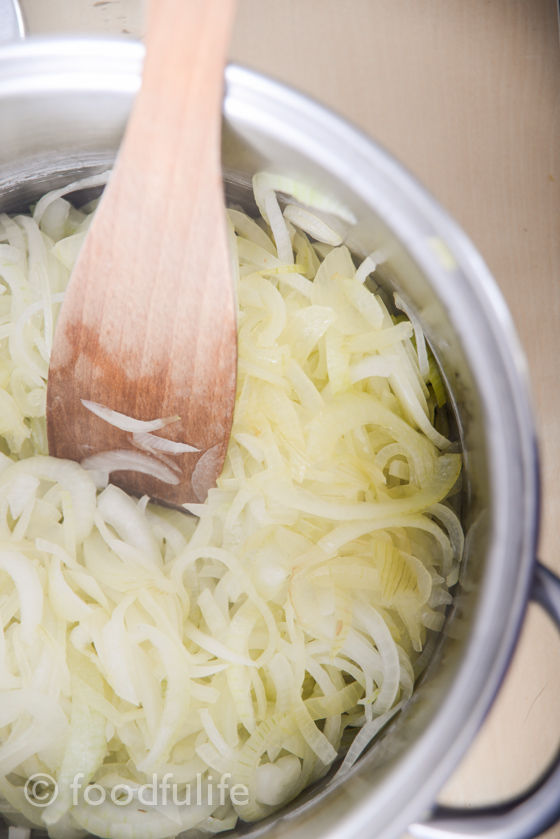
1. Slice the onion and fry them in extra virgin olive oil.

DSC_2738

2. Using a large pan, cover the onions with water and cook until tender.

DSC_2766

3. With an immersion blender, puree the onions until you get a smooth and creamy mixture.

DSC_2768

4. Drizzle with extra virgin olive oil, season with salt and pepper, then serve with the chickpea bread!

DSC_2793

DSC_2802

DSC_2806

See also the pasta e fagioli recipe (another delicious winter dish!).

Zuppa di leggera cipolle

Tempo di preparazione: 10 minuti

Tempo di cottura: 40 minuti

Ingredienti

Per 4 persone

1 kg di cipolle di vostra scelta

olio extra vergine d’oliva q. b.

sale e pepe (abbondate perché le cipolle sono naturalmente dolci)

Preparazione.

1. Sbucciate e affettate le cipolle, poi fatele soffriggere in olio extra vergine d’oliva.

2. Riempite la pentola d’acqua, fino a ricoprire tutte cipolle; quindi fate cuocere, a fuoco moderato e con il coperchio, per 30-35 minuti.

3. Usando un frullatore ad immersione, frullate le cipolle fino ad ottenere un composto cremoso.

4. Condire con olio extra vergine d’oliva e abbondante sale e pepe. Servite la zuppa calda con del pane di farina di ceci.

DSC_2729

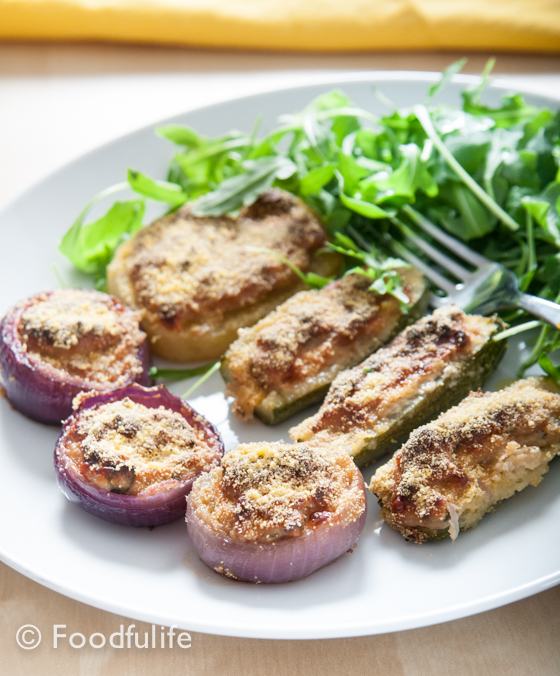
Stuffed Vegetables (Gluten-Free and Vegetarian)

Stuffed vegetables (gluten-free and vegetarian)_ Verdure ripiene vegetariane, senza glutine.

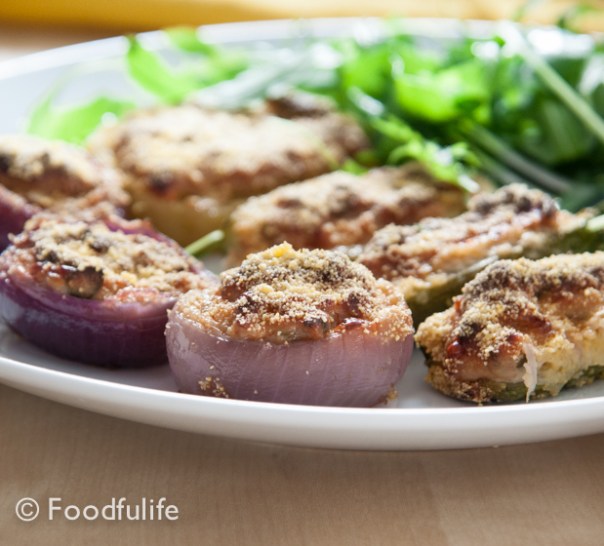
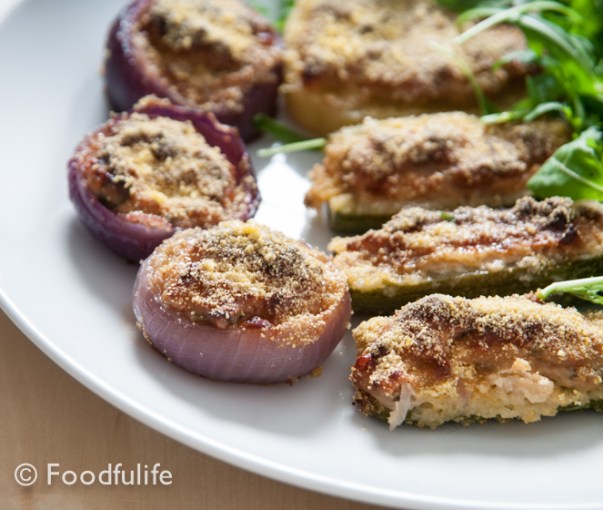
Stuffed vegetables are a typical genoese dish, which requires quite a long preparation and cooking time, but it’s worth it! In this case, I adapted my mom’s recipe to create a gluten-free, vegetarian dish, using ricotta, plenty of fresh marjoram (which is also in the traditional recipe) and some gluten-free breadcrumbs. These stuffed vegetables are incredibly tasty, soft in the middle and crunchy on the outside; a wonderful Sunday meal to share with family and friends!

My advice is to make plenty, keep them in the fridge and eat them the next day, they taste even better!

DSC_7725

Stuffed vegetables without meat and gluten-free.

Cooking time: 1 hour 15 minutes

Preparation time: 30 minutes

difficulty: medium

Ingredients

for 1 medium-large tray of stuffed vegetables

2 medium potatoes

4 medium-large zucchini (to be divided into 8 pieces)

2 onions, plus 1 small onion to sauté

1 clove of garlic

1 egg

50 g grated Parmesan cheese

125 g ricotta

3 full tablespoons of fresh marjoram, chopped

5 tablespoons of extra virgin olive oil

some gluten-free bread crumbs to sprinkle on top and 2 tablespoons to add to the stuffing (or you can use pre-cooked polenta)

salt and pepper to taste

Method.

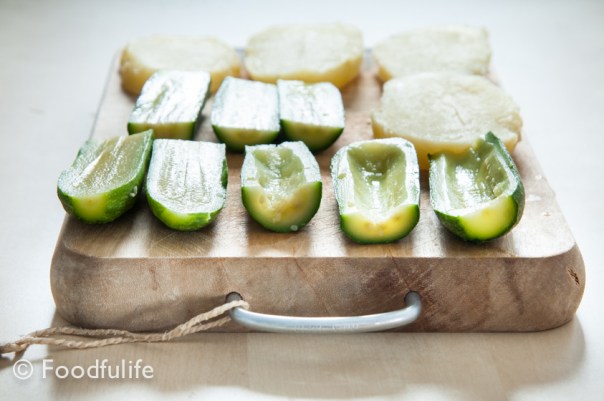
1. Steam all vegetables, until they are cooked but still crunchy.

2. Slice the potatoes, then place the smallest slices in a bowl and set aside for the stuffing.

3. Using a spoon and a knife, scoop out the central part of the zucchini and cut the onions in half (from the centre, not from the roots). Remove the central and the outer layers of onions, then put them in the bowl with the rest of the vegetables for the stuffing.

DSC_7641

DSC_7627

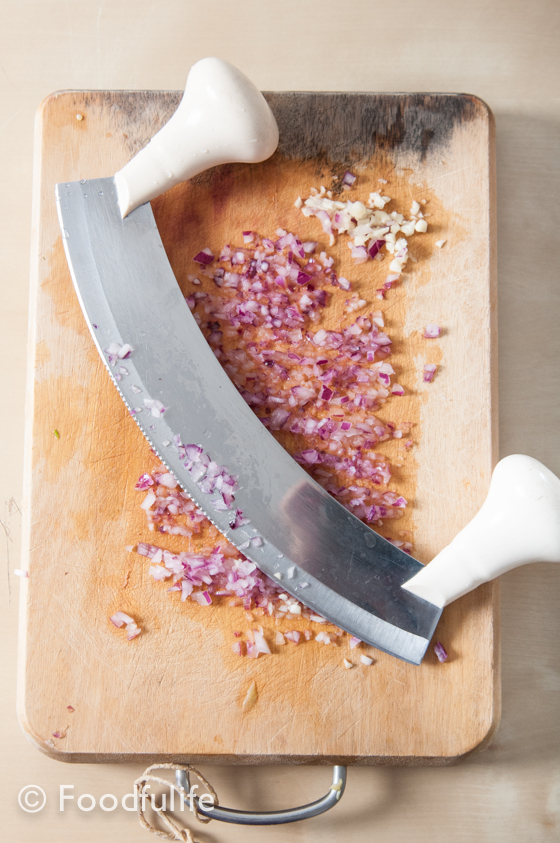
4. In a frying pan, sauté the onion with a clove of garlic, both finely chopped (add the garlic after a few minutes, to prevent burning).

DSC_7651

5. Remove the excess water, then using a food processor, puree all the vegetables for the stuffing. Fry over a medium heat, stirring well, until the mixture gets a little bit drier.

DSC_7654

6. In a food processor, mix the ricotta with the Parmesan cheese, 2 tablespoons of gluten-free bread crumbs, the marjoram and an egg. In a large bowl, add the vegetables puree to the ricotta mixture, then mix and season with salt and pepper.

DSC_7659

DSC_7660

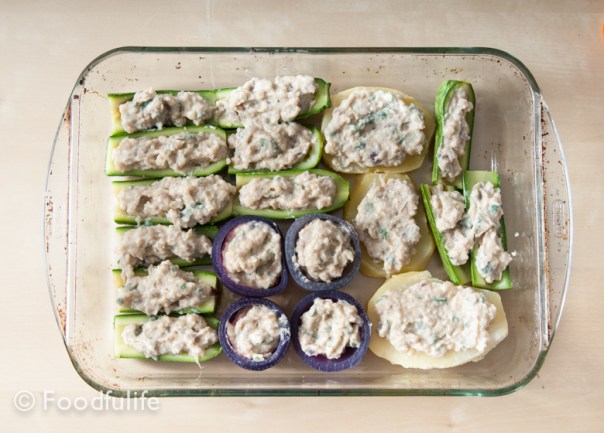
7. Grease a baking tray with 2 tablespoons of extra virgin olive oil, then place the vegetables onto the tray and fill them with the stuffing.

DSC_7630

DSC_7673

8. Sprinkle some gluten-free bread crumbs on top, season with a little more extra virgin olive oil and bake at 200 ° C (392° F), until the vegetables are well coloured (about 30-40 minutes).

DSC_7735

DSC_7728

Verdure ripiene senza carne e senza glutine.

Cottura: 1 ora e 15 minuti

Preparazione: 30 minuti

Difficoltà media

Ingredienti

per 1 teglia medio-grande

2 patate di media grandezza

4 zucchini medio-grossi (da dividere in 8 pezzi)

2 cipolle , più 1 cipolla per il soffritto da mettere da perte

1 spicchio d’aglio

1 uova

50 g di parmigiano grattugiato

125 g di ricotta

3 cucchiai abbondanti di maggiorana fresca e tritata

5 cucchiai d’olio extravergine d’oliva

pangrattato senza glutine q. b. (oppure potete usare della polenta istantanea)

sale e pepe q. b.

Preparazione.

1. Fate cuocere a vapore tutte le verdure e toglietele dal fuoco ancora sode.

2. Tagliate le patate a fette, poi mettete le fette piccole e rotte in un contenitore per il ripieno.

3. Tagliate gli zucchini e scavate la polpa usando un cucchiaino e un coltello. Tagliate le cipolle a metà (non dalle radici ma dal centro), poi prendete la parte centrale e lo strato esterno delle cipolle e metteteli, con la polpa degli zucchini, nel contenitore per il ripieno.

4. In una padella, fate soffriggere 1 cipolla e uno spicchio d’aglio, entrambi tritati finemente (aggiungete l’aglio qualche minuto dopo, per evitare che si bruci).

5. Strizzate bene le verdure del ripieno per togliere l’acqua in eccesso, poi frullate e aggiungete al soffritto. Fate asciugare a fuoco medio e mescolando bene.

6. A parte, frullate la ricotta con il parmigiano, la maggiorana, due cucchiai di pangrattato senza glutine e un uovo. In una terrina grande, unite il purea di verdure passata in padella al composto di ricotta, poi mescolate e insaporite con sale e pepe.

7. Ungete una teglia con 2 cucchiai di olio extravergine d’oliva, disponetevi le verdure tagliate a metà, poi riempitele con il ripieno e spolverate con abbondante pangrattato senza glutine.

8. Condite con un filo d’olio e infornate a 200°C, finché le verdure saranno ben colorate (30-40 minuti).

DSC_7714

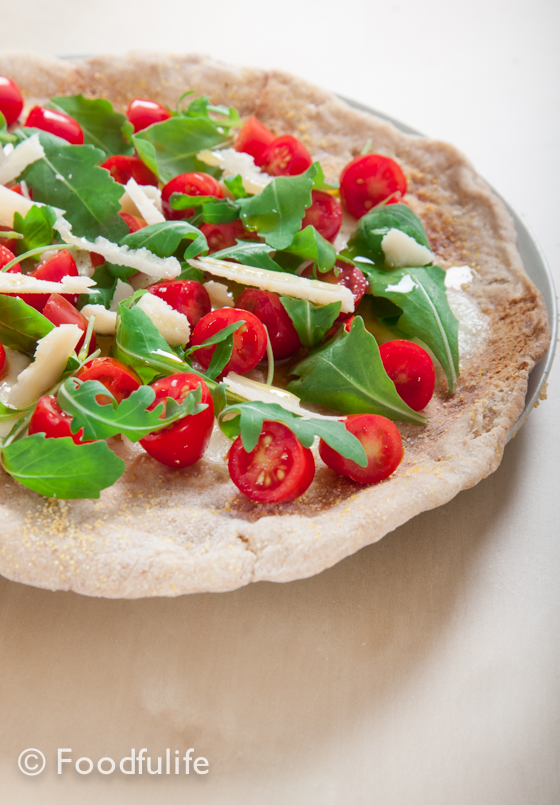
Home-Made Pizza With Tomatoes, Rocket and Parmesan Cheese

A crunchy pizza base, topped with fresh Piccadilly tomatoes, some rocket leaves and Parmesan cheese…

An easy recipe, perfect for this season!

Enjoy!

DSC_0986

Pizza with tomatoes, rocket and Parmesan cheese.

Ingredients

for 2 large pizzas

Buy 2 ready made pizza bases or follow this recipe

For the pizza toppings

2 fresh mozzarellas (or you can use stracchino)

300 g Piccadilly tomatoes or cherry tomatoes

60 g rocket leaves (arugula)

50 g Parmesan cheese (thin slices)

Extra virgin olive oil

salt and pepper to taste

Method.

1. Wash and dry the rocket leaves and the tomatoes. Cut the tomatoes in half.

2. Using a rolling pin, roll out the pizza dough and make two large pizza bases.

DSC_0911

DSC_0926

3. Bake the pizza bases at 200 ° C (392°F) until they are crunchy (I am using a use a pizza stone, but you can use a baking tray greased with olive oil).

4. Add the mozzarella cheese and put the bases back in oven for a few minutes, to melt the cheese.

DSC_0938

DSC_0941

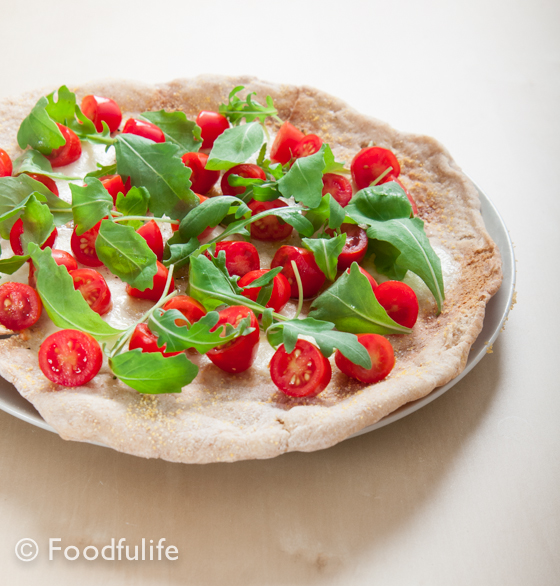
5. Turn off the oven and garnish your pizzas. Place the tomatoes, the rocket leaves and Parmesan cheese onto the pizza bases, then season with extra virgin olive oil, salt and pepper.

DSC_0958

DSC_0972

DSC_0965

DSC_1026

Pizza con pomodorini freschi, rucola e parmigiano.

Ingredienti

Per 2 pizze grandi

Per fare due basi per la pizza seguite questa ricetta

Per guarnire le pizze

2 mozzarelle (oppure stracchino)

300 g di pomodorini Piccadilly

60 g di rucola

50 g di scaglie di Parmigiano Reggiano

olio extra vergine d’oliva

sale e pepe q. b.

Preparazione.

1. Lavate e asciugate la rucola e i pomodorini, poi tagliate i pomodorini a metà.

2. Stendete la pasta con un matterello.

3. Infornate le basi della pizza a 200° C (uso una pietra per la cottura della pizza, ma potete usare una teglia unta). Fate cuocere fino ad ottenere una pasta croccante.

4. Aggiungete la mozzarella e infornate ancora per qualche minuto, per far sciogliere il formaggio.

5. Sfornate le pizze e spegnete il forno. Disponete i pomodorini, la rucola e il parmigiano sulle pizze, poi condite con abbondante olio extra vergine d’oliva, sale e pepe.

Tasty Pizza With Cannellini Bean Hummus And Mussels

DSC_9006

We love our pizzas! We love them with all sort of ingredients on top, as long as the ingredients are of the best quality! We have so many different types of pizza in Italy that is easy to get confused! I don’t even know all of them, I just know there are several recipes.  Some of the most amazing pizzas are made with seafood and fresh herbs.

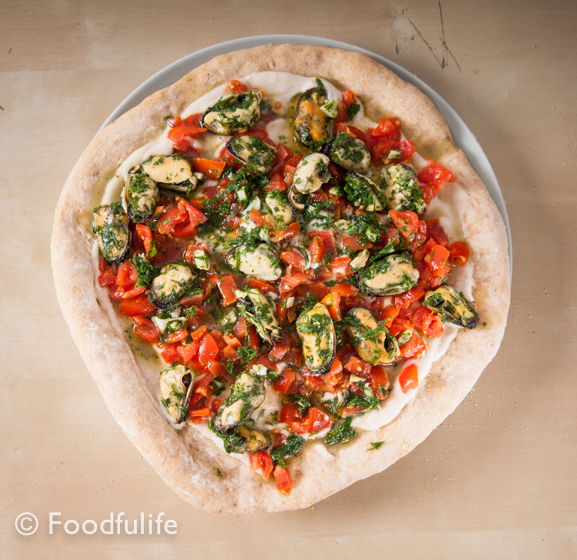
This is one of my recipes, a lovely pizza made with a creamy cannellini bean hummus and topped with mussels, full of flavours and really crunchy! You can call it pizza or you can call it focaccia, either way, it is delicious!!!
Cannellini beans are perfect with mussels, so I have adapted my hummus recipe with slightly different ingredients to suit this recipe best. It is a great summer dish, fresh crunchy and very tasty!
DSC_9011

Pizza with cannellini bean hummus and mussels.

Ingredients

For 2 large pizzas (4 people)

500 g pizza dough (you can follow this recipe)

DSC_8917

For the cannellini bean hummus

1 can of cannellini beans

1/2 clove of garlic

1 small shallot

the juice of 1/2 a lemon

1 teaspoon sesame seeds

a few crystals of sea salt

2 tablespoons of extra virgin olive

2 tablespoons of water (if needed)

DSC_8955

For the mussels

2 cloves of garlic, finally chopped

250g (8.8 oz) of mussels ( I used already cleaned and frozen mussels without shell, but you can use fresh ones if you like)

1 tablespoon of chopped parsley

1 tablespoon of chopped tarragon

salt and pepper to taste

3 tablespoons of extra virgin olive oil

To garnish

20 cherry tomatoes, washed, chopped and drained

DSC_8959

Method.

For the Hummus.

1. Using a small mortar and a pestle, crush 1 teaspoon of sesame seeds with a few sea salt crystals.

DSC_8922

2. Rinse the beans well, then boil them for a few minutes in salted water and drain.

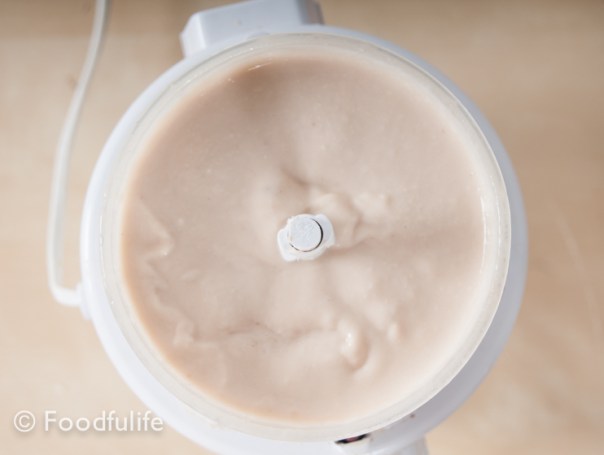
3. In a food processor, finely chop the beans with the crushed sesame seeds, the salt crystals, 1/2 a clove of garlic and a small shallot. After a few minutes, add the juice of half a lemon, 2 tablespoons of water (only if needed) and 2 tablespoons of extra virgin olive oil. Process everything until you have a smooth and creamy mixture.

DSC_8930

DSC_8937

For the pizza.

1. Make 500g of pizza dough (follow this recipe).

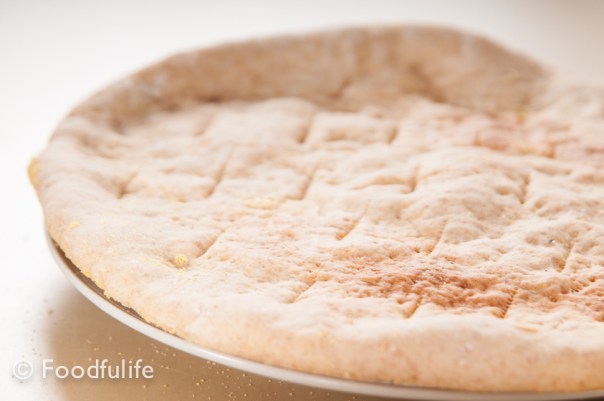
2. Roll out the dough on two baking trays, greased with plenty of extra virgin olive oil and shape 2 large pizzas.

DSC_8949

3. Pierce the dough using a knife and bake in a preheated oven at 200 ° C (392° F) for 15-20 minutes.

DSC_8979

For the mussels.

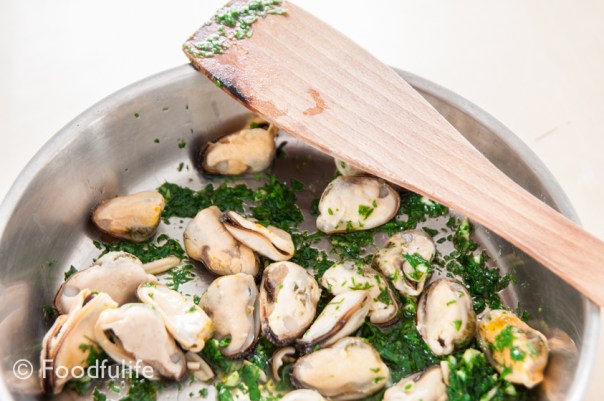
1. In a frying pan, fry two cloves of garlic with the parsley and the tarragon (all finely chopped), over very low heat with 3 tablespoons of extra virgin olive oil.

DSC_8964

2. After a few minutes add the mussels and cook over a medium heat for about 10 minutes, then turn off the heat.
DSC_8970

To garnish.

Garnish the pizzas with the cannellini hummus, then top with the tomatoes and the mussels.
DSC_8991

DSC_8995

DSC_9013

DSC_9004

Pizza saporita con hummus di cannellini e muscoli.

Ingredienti

Per 2 pizze grosse (4 persone)

500 g di pasta per la pizza

Per l’hummus di cannellini

1 scatola di cannellini

1/2 spicchio d’aglio

1 scalogno piccolo

il succo di 1/2 limone

1 cucchiaio di semi di sesamo

qualche cristallo di sale marino

acqua q. b.

2 cucchiai di olio extra vergine d’oliva

Per i muscoli

2 spicchi d’aglio

250g di muscoli ( ho usato muscoli già puliti, senza guscio e surgelati, ma potete anche usare quelli freschi)

1 cucchiaio di prezzemolo, lavato e tritato

1 cucchiaio di dragoncello, lavato e tritato

sale e pepe q.b.

3 cucchiai d’olio extra vergine d’oliva

Per la guarnizione.

20 pomodorini ciliegina, lavati, tagliati a pezzetti e scolati

Per la preparazione dell”hummus.

1. Con un pestello e un piccolo mortaio, schiacciate i semi di sesamo con qualche cristallo di sale.

2. Sciacquate bene i fagioli e scottateli per qualche minuto (in acqua leggermente salata). Quando saranno pronti, scolate i fagioli.

3. In un tritatutto, tritate finemente i fagioli con i semi di sesamo, il sale, mezzo spicchio d’aglio e lo scalogno. Dopo qualche minuto, aggiungete il succo di mezzo limone, un po’ d’acqua (solo se necessario) e 2 cucchiai d’olio extra vergine d’oliva. Tritate tutto fino ad ottenere una crema uniforme.

Preparazione della base.

1. Preparate 500g di pasta per la pizza seguendo questa ricetta.

2. Stendete la pasta su due teglie unte abbondantemente con olio extra vergine d’oliva e formate due pizze grandi.

3. Fate dei piccoli tagli sulla superficie della pasta e infornate a 200°C per 15-20 minuti.

Per la preparazione dei muscoli.

1. In una padella, fate soffriggere due spicchi d’aglio con il prezzemolo e il dragoncello (a fuoco molto basso).

2. Dopo qualche minuto aggiungete i muscoli e fate cuocere per circa una decina di minuti, poi spegnete il fuoco.

Preparate la pizza.

Con un cucchiaio spalmate l’hummus di cannellini uniformemente sulla base della pizza, poi aggiungete i pomodorini e i muscoli.

DSC_9024

Make The Best Pizza Dough ( Part 2)

I already published a basic pizza dough recipe with normal yeast a few weeks ago, this is basically the same recipe adapted for sourdough. Before getting started with the recipe, let me say a few things about sourdough.

Why sourdough?
Sourdough is a natural yeast created by fermenting flour with water. It is a long process, which is not particularly complicated, but it takes some time and care.
Basically, you create the natural yeast, then you feed it and keep it in good shape, that’s really all there is to it! In exchange, your sourdough will reward you with a lot of flavour, leavening strength and satisfaction!
Moreover, sourdough is healthier and much more digestible than commonly used yeast. Another good reason to use it is the difference in taste, as sourdough’s flavour is much more delicate and pleasant than all the other yeasts.
So, don’t give up if you haven’t tried yet, instead give it a go and you’ll see the difference, I promise you!
To get started with sourdough you can follow the step by step recipe here.

DSC_7541

Some things you have to know before you go on with the recipe:

1. The flour-sourdough ratio in recipes is usually 3 to 1 (3 parts of flour plus 1 part of sourdough). In order to prepare approximately 500 g of dough we will use 375 g of flour with 125 g of sourdough. You can use this recipe to make sourdough bread as well as pizza.

2. Semi-liquid sourdough contains a lot of water, therefore you have to add less water than in normal yeast pizza and bread recipes. My advice is to add a little bit of water gradually.

3. Sometimes it’s useful to make the dough in the evening and then keep it in the fridge with some extra water over night. The following day, take it out of the fridge two hours before you use it (knead the dough a little, then make the pizzas and let them rise for a couples of hours at room temperate). During this process the dough will rise much better and faster.

DSC_7548

Sourdough Pizza Crust.

Ingredients

For 2 large pizzas

Recipe No. 1

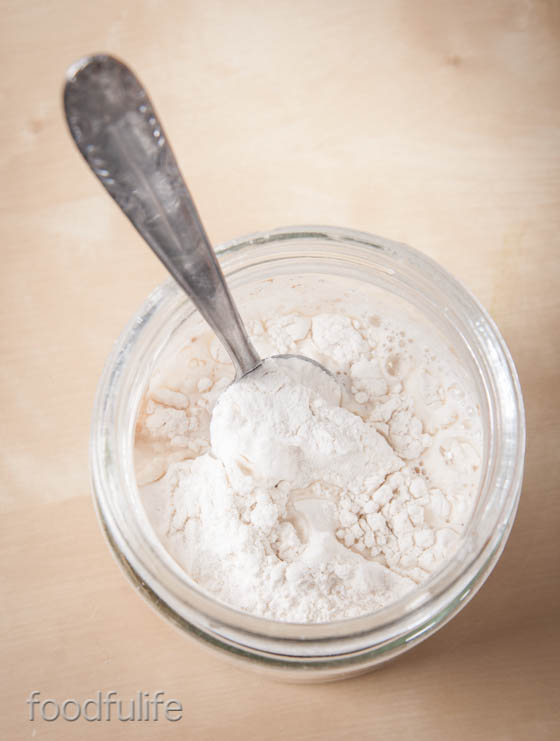
210 g flour 00 (or plain, unbleached all-purpuse flour)

135 g whole spelt flour

30 g durum wheat flour (semolina)

125 g sourdough (semi-liquid and made ​​with manitoba flour)

10 g salt

a pinch of barley malt (optional)

extra virgin olive oil to taste

water

Note.

If you use the sourdough starter made ​​from flour 00 (or plain, unbleached all-purpose flour) the ingredient ratio changes slightly:

Recipe No. 2

130 g flour 00 (or plain, unbleached all-purpuse flour)

135 g whole spelt flour

80 g Manitoba flour

30 g durum wheat flour (semolina)

125 g sourdough (semi-liquid and made with flour 00 of plain, unbleached all-purpuse flour)

10 g salt

a pinch of barley malt (optional)

extra virgin olive oil to taste

water

Method.

1. Sift and mix the flour on a wooden board or a large bowl (use a fine sieve). Mix the flour with the sourdough and a little bit of water. Add the salt and, if you want, you can also add 2 tablespoons of extra virgin olive oil with a pinch of malt.

DSC_7477-2

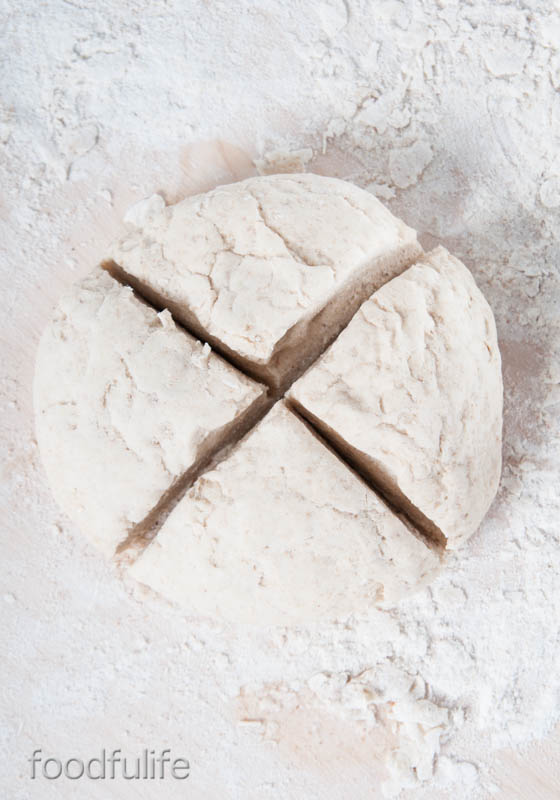
2. knead vigorously, until you get an elastic dough. Let the dough rise in a sheltered place for 3-6 hours (the rising time varies depending on different factors, the dough is ready when it has doubled in volume).

DSC_7487

DSC_7490

3. Take two large oven trays, cover them with baking paper and brush them with plenty of extra virgin olive oil. Roll out the dough with a rolling pin, make two pizza bases and then add the other ingredients (I am going to make a pizza with mozzarella cheese and crescenza, a nice sweet and creamy Italian cheese)

DSC_7509

DSC_7512

DSC_7519

4. Let the pizzas rise for about 1 hour, then bake in a preheated oven at 190° (374°F) for 20-30 minutes.

DSC_7533

DSC_7555

Impasto base per la pizza con lievito madre.

Ingredienti

2 pizze grandi

Ricetta n°1

210 g di farina 00

135 g di farina di farro integrale

30 g di semola rimacinata

125 g di lievito madre (semiliquido, a base di farina manitoba)

acqua q. b.

10 g di sale

pochissimo malto d’orzo (facoltativo)

olio extra vergine d’olio d’oliva q. b.

Nota.

Se usate il lievito madre a base di farina 00 gli ingredienti variano leggermente:

Ricetta n° 2

130 g di farina 00

135 g di farina di farro integrale

80 g di farina manitoba

125 g di lievito madre (semiliquido con base di farina 00)

30 g di semola rimacinata

10 g di sale

acqua q. b.

pochissimo malto d’orzo (facoltativo)

olio extra vergine d’olio d’oliva q. b.

Metodo.

1. Mescolate, setacciate le farine e sistematele a fontana su una spianatoia o mettetele in una ciotola grande. Unite il lievito madre alla farina con un po d’acqua. Mescolate leggermente, poi aggiungere il sale con cucchiai d’ olio extra vergine di oliva e un pizzico di malto, se desiderate aggiungerli.

2. Lavorate energicamente gli ingredienti, fino ad ottenere un impasto omogeneo ed elastico. Lasciate lievitare l’impasto in un luogo riparato per 3-6 ore (il tempo di lievitazione varia a seconda di diversi fattori, l’impasto è pronto quando sarà raddoppiato di volume).

3. Prendete due teglie grandi, ricopritele con carta da forno e spennellatele con abbondante olio extra vergine d’oliva. Stendete la pasta con un matterello e fate due basi per pizza, poi aggiungere gli altri ingredienti (in questo caso faremo una pizza bianca con crescenza e mozzarella).

4. Lasciate lievitare le pizze per circa 1 ora, poi fate cuocere a 190° C in forno preriscaldato per 20-30 minuti (dipende dallo spessore della pasta).

DSC_7558

Traditional Recipe: Pasta e Fagioli

DSC_7416

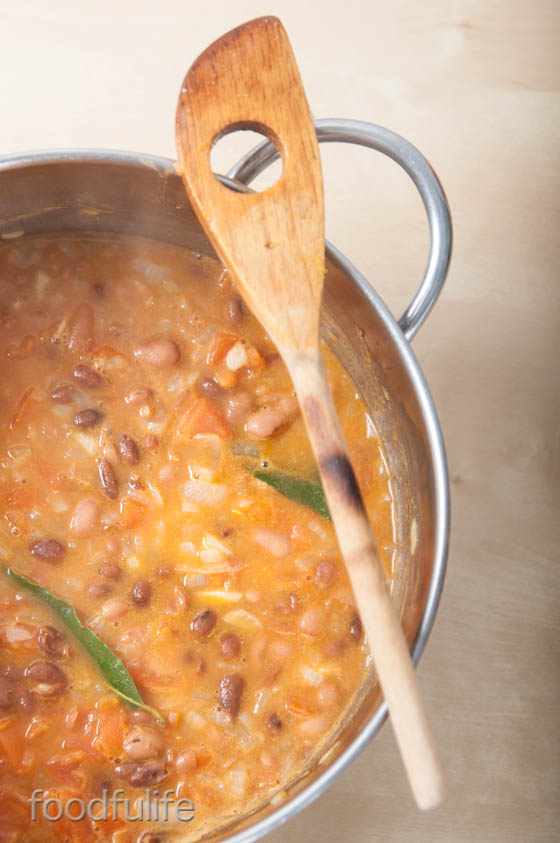
Budget friendly, easy and delicious, pasta e fagioli (pasta and borlotti beans) is one of the most appreciated and popular recipes in Italy. Like many traditional recipes many variations exist of this wonderful Italian dish. We use different herbs, sometimes we add bacon or lard and we can replace borlotti beans with cannellini. The recipe that I am going to share today is one of my favourite dishes since I was a child. Pasta e fagioli is a complete meal with high protein content, perfect for vegetarian and vegan diets. As a vegan or low fat version, you can serve it without Parmesan, it’s delicious anyway! 🙂

DSC_7386

Pasta e Fagioli.

Ingredients

for 2 Servings

Easy

Preparation: 10 minutes

Cooking: 25 minutes

110 g (3.88 oz) ditaloni rigati (or broken spaghetti or tagliatelle)

2 cans borlotti beans (keep 1 cup of borlotti beans to add at the end of the cooking process)

4 tablespoons of extra virgin olive oil

6 cherry tomatoes (or piccadilly), washed and diced (optional)

1 medium onion, finely chopped

2 cloves of garlic, finely chopped

2 sprigs of fresh rosemary

2 bay leaves, washed

2 sprigs of fresh sage

500 ml (16.9 us fl oz) organic vegetable broth (made with water and organic vegetable stock)

1/2 tablespoon tomato paste

Parmesan to taste (optional, but nice!)

salt and black pepper to taste

Method.

1. Wash and chop the sage and rosemary (removing the hard stems).

2. In a large sauce pan, gently fry the onion with 3 tablespoons of extra virgin olive oil, then (after a few minutes) add the garlic.

DSC_7408

3. Drain and rinse the borlotti beans.  Put the beans with the tomatoes in the pan. Sauté for a few minutes, then pour in the vegetable broth with 1/2 a tablespoon of tomato paste and 2 bay leaves. Stir well.

DSC_7404

4. Cook over a medium heat for about 15 minutes, until the broth is partially absorbed, then add the chopped herbs.

DSC_7416

5. Turn off the heat. Using an immersion blender, mix everything well. Turn on the heat, add 1 cup of borlotti beans and the pasta. Stir well and simmer for another 10 minutes.

DSC_7446

DSC_7451

6. Season with salt and pepper, turn off the heat. Serve with a tablespoon of extra virgin olive oil and plenty of parmesan (optional).

DSC_7461

DSC_7472

Pasta e Fagioli

Ingredienti

Per 2 persone

Facile

Preparazione: 10 minuti

Cottura: 25 minuti

110 g di ditaloni rigati (oppure spaghetti spezzettati o tagliatelle)

2 scatole di fagioli borlotti (tenete una tazza di borlotti da aggiungere a fine cottura)

4 cucchiai d’olio extra vergine d’oliva

1 cipolla media, tritata finemente

6 pomodorini (piccadilly o ciliegino), lavati e tagliati a dadini (facoltativo)

2 spicchi d’aglio, tritato finemente

2 rametti di rosmarino

2 foglie di alloro, lavate

un mazzetto di salvia fresca

500 ml di brodo vegetale (biologico)

1/2 cucchiaio di concentrato di pomodoro

Parmigiano q. b. (facoltativo)

sale e pepe q. b.

Preparazione.

1. Lavate e tritate la salvia con il rosmarino (togliendo i gambi).

2. Fate soffriggete la cipolla con 3 cucchiai d’olio extra vergine d’oliva. Dopo qualche minuto aggiungete l’aglio.

3. Scolate, sciacquate i fagioli e aggiungeteli con i pomodorini al soffritto. Fate rosolare per qualche minuto, poi aggiungete il brodo vegetale con 1/2 cucchiaio di concentrato di pomodoro e le foglie d’alloro. Mescolate bene.

4. Fate ritirare il brodo per 15 minuti, poi levate le foglie d’alloro e aggiungete le erbe tritate.

5. Spegnate il fuoco e con un frullatore ad immersione frullate bene tutto.  Aggiungete la pasta e i borlotti che avete tenuto da parte. Fate cuocere a fuoco moderato (mescolando continuativamente) per altri 10 minuti.

6. Spegnete il fuoco e condite con un po’ d’olio extra vergine d’oliva, sale e pepe. Servite con abbondante parmigiano.

DSC_7443

Happy Easter!!!!

Happy Easter!!!!

Yes, this time I am having a little Easter break! 🙂
Have a wonderful Easter full of lovely flavours and colours!!!
I’ll be back next week with a new recipe 🙂

How To Make Sourdough (re-edited).

DSC_7382

What is sourdough?

Sourdough is a natural yeast, obtained by fermenting flour and water. It can have a solid or a liquid consistency, depending on the amount of water used to feed it. Liquid sourdough usually rises better.

I personally recommend the preparation and use of this great ingredient because it’s completely natural, therefore much healthier and more digestible than other yeasts. Sourdough can be used to make a variety of breads, pizzas, pies and cakes with surprising results. Moreover, it makes everything taste better!

Preparing the sourdough starter.

1. First you have to make a starter. Mix 1 cup of organic wholemeal flour (the wholemeal flour is necessary for the first feed) with 1/2 cup of cool water (use non-chlorinated water, you can mix tap water with still drinking water from a bottle).
Put the ingredients in a glass, stainless steel or a plastic container for food.

DSC_7335

2. Stir all the ingredients together, until creamy and smooth, then cover the container with a damp cloth and let it sit for 24 hours.

DSC_7367

DSC_7348

3. After 24 hours remove the top half of the mixture, then feed the starter again with 1 cup of plain flour (you can use manitoba, whole spelt or wholemeal flour, if you prefer) and half a cup of water. Stir well, cover with a damp cloth and let it sit for another 24 hours.

DSC_7355

DSC_7363

DSC_7367

4. Now you can start feeding the starter every two days. Repeat this process for about 10 days.

DSC_7376

5. After 10 days, you can start feeding your sourdough every 4-5 days and you can use it for your recipes.

Store the sourdough.

1. Store the sourdough in a glass jar and keep it in the fridge (with the lid on).

2. Each time you feed the sourdough let it sit for 1-2 hours at room temperature in a glass jar covered with a damp cloth (with no lid on). Then remove the cloth, close the container and put it back in the refrigerator.

DSC_7385

Doses.

1. Feed the sourdough the day before you use it (12 hours before). To feed the sourdough, weight the natural yeast, then add the same amount of  flour and half the amount of water.

2. In the quickest recipes, the ratio of flour and sourdough used must be 3 to 1. (e.g. for 900 g of flour use 300 g of sourdough).

3. The rising time of the dough will depend on the age and strength of the yeast, at first it may take 3 to 6 hours (however, when it doubles in size it is ready for use).

DSC_7378

DSC_6085

DSC_6203

La pasta madre.
La pasta madre è un lievito naturale che si ottiene facendo fermentare farina e acqua. Questo lievito può avere una consistenza più solida o liquida, a seconda della quantità d’acqua utilizzata, normalmente la versione più liquida ha una lievitazione migliore.

Consiglio vivamente la preparazione e l’utilizzo di questo ingrediente, essendo un lievito completamente naturale e quindi molto più digeribile e salutare rispetto ad altri lieviti comunemente utilizzati. Inoltre può essere usato facilmente nella preparazione di svariati tipi di pane, pizze torte salate e dolci con risultati sorprendenti.

Preparazione della pasta madre.

1. Per prima cosa, preparate un piccolo impasto unendo 1 tazza di farina integrale biologica (la farina integrale è necessaria per il primo impasto) a 1/2 tazza d’acqua fredda (utilizzate acqua con poco cloro, potete miscelare l’acqua del rubinetto con acqua minerale naturale).

2. Mettere gli ingredienti in un contenitore (è consigliabile utilizzare un contenitore di vetro oppure acciaio inossidabile, ma anche la plastica per alimenti va bene) e mescolare fino ad ottenere un composto cremoso. Coprire il contenitore con un panno umido e lasciate riposare per 24 ore.

3. Passate 24 ore, levate la parte dura in superficie e rinfrescare quello che resta del lievito, cioè aggiungete al composto 1 tazza di farina (potete utilizzare la 00, manitoba oppure farina integrale, come preferite) e mezzo bicchiere d’ acqua. Mescolare bene, coprire con un panno umido e lasciate riposare per altre 24 ore.

4. Ora potete rinfrescare il lievito ogni 2 giorni, utilizzando sempre una tazza di farina e 1/2 tazza d’acqua. Continuate con questa procedura per circa 10 giorni.

5. Dopo 10 giorni, potete incominciare a rinfrescare la pasta madre ogni 4-5 giorni. Arrivati a questo punto, la vostra pasta madre è pronta per essere utilizzata nelle vostre ricette.

La conservazione.

1. Conservate la pasta madre in un vasetto di vetro, chiuso con il coperchio e tenuto in frigorifero.

2. Dopo ogni rinfresco, lasciate riposare il lievito madre per una o due ore in un vasetto coperto da un panno umido a temperatura ambiente, poi chiudete il contenitore e rimettetelo nel frigorifero.

Le dosi consigliate.

1. Nutrite la pasta madre il giorno prima di utilizzarla (almeno 12 ore prima). Per nutrire la pasta madre, prima pesate il lievito naturale, poi aggiungere la stesso peso di farina e metà del peso di acqua.

2. Nelle ricette più rapide, il rapporto tra farina e pasta madre deve essere di 3 a 1, cioè su 900 g di farina utilizzeremo 300 g di lievito naturale.

3. Il tempo di lievitazione dipenderà dall’età e dalla forza della pasta madre. I tempi possono variare dalle 3 alle 6 ore, consiglio però di non guardare l’orologio ma di osservare il volume dell’impasto, quando raddoppia è pronto per l’uso.

Budget Friendly And Full Of Flavour!

This week we are going to prepare a lovely spring risotto with corn salad and fresh peas. This is a cheap and easy risotto to make, perfect for this season! You don’t usually cook corn salad, but a few weeks ago I had some left in the fridge, so I made a soup with it to use it up and It was really lovely!

Corn salad can be used instead of spinach or asparagus, and in fact the taste is somewhere in between the two vegetables, but very delicate. Moreover, It’s cheaper than a bunch of asparagus, which is great! Give it a try, you’ll love it!!!

DSC_7108

DSC_7063

Risotto With Fresh Peas And Corn Salad.

Cooking time: 35 minutes

Preparation: 20 minutes

Ingredients

for 2 servings

160 g (5.6 oz, 3/4 cup) arborio rice

100 g (3.5 oz) fresh peas without the pods (about 200 g ,7 oz, with the pods)

100 g (3.5 oz) of corn salad (lamb’s lettuce), washed and roughly chopped

3 shallots, peeled and finely chopped

1 clove garlic, peeled and finely chopped

3 tablespoons extra virgin olive oil

a small piece of butter (which you can replace with 1 tablespoon of olive oil, if you wish)

700 ml (3 cups vegetable stock), warm (made with an organic stock cube and water)

4 tablespoons of grated Parmesan cheese

salt and pepper to taste

a hint of nutmeg (optional, but very nice!)

DSC_7045

DSC_7075

Method.

1. In a large heavy based pan, pour 3 tablespoons of extra virgin olive oil, add a small piece of butter and gently fry the shallots over a low heat (without burning them). After a few minutes add the garlic, then stir.

DSC_7079

2. Add the rice and the peas and stir. After 2 minutes, gradually pour in the vegetable stock.

DSC_7081

DSC_7085

3. Simmer and stir at a moderate heat until the broth is mostly absorbed. Add the corn salad, then lower the heat and simmer for another 10 minutes (stirring continuously) until creamy.

DSC_7086

DSC_7096

4. Turn off the heat, season with a hint of nutmeg, 2 tablespoons of Parmesan cheese, salt and pepper; then put the lid on the pan and let the risotto sit for a few minutes. Serve with plenty of grated Parmesan on top.

DSC_7103

Tip. Garnish the dish with some fresh corn salad leaves.

Risotto Con Piselli Freschi e Valerianella.

Preparazione: 20 minuti

Cottura: 35 minuti

Ingredienti

per 2 persone

160 g riso arborio

100 g di piselli freschi sbucciati (200 g circa di peso con il bacello)

100 g di valerianella, lavata e tagliata grossolanamente

50 g di scalogno, sbucciato e tritato finemente

1 spicchio d’aglio, sbucciato e tritato

3 cucchiai di olio extra vergine d’oliva

una nonce di burro (che potete sostituire con 1 cucchiaio d’olio in più, se lo desiderate)

700 ml di brodo vegetale, caldo (fatto con un dado biologico)

un pizzico di noce moscata

sale e pepe q. b.

parmigiano grattugiato q. b.

Preparazione.

1. In una pentola grande a fondo spesso, versate 3 cucchiai di olio extra vergine d’oliva, aggiungete il burro e fate soffriggere lo scalogno a fiamma bassa. Dopo qualche minuto aggiungete l’aglio.

2. Unite al soffritto anche il riso e i piselli. Fate rosolare per qualche minuto, poi annaffiate con abbondante brodo vegetale. Continuate ad aggiungere il brodo gradualmente, durante la cottura.

3. Fate cuocere a fuoco moderato (mescolando sempre), finché il brodo si sarà ritirato quasi completamente. Aggiungete la valerianella verso fine cottura, poi abbassate il fuoco e fate cuocere per altri 10 minuti (sempre mescolando).

4. Spegnete il fuoco, condite con un pizzico di noce moscata, qualche cucchiaio di parmigiano, sale e pepe; lasciate riposare per qualche minuto il risotto, chiudendo la pentola con un coperchio. Servite con abbondante parmigiano.

DSC_7125