Tag Archives: Dairy-free

Tasty Pizza With Cannellini Bean Hummus And Mussels

DSC_9006

We love our pizzas! We love them with all sort of ingredients on top, as long as the ingredients are of the best quality! We have so many different types of pizza in Italy that is easy to get confused! I don’t even know all of them, I just know there are several recipes.  Some of the most amazing pizzas are made with seafood and fresh herbs.

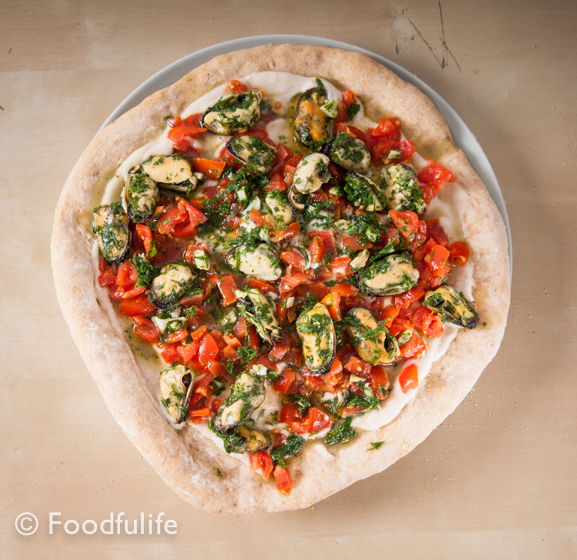
This is one of my recipes, a lovely pizza made with a creamy cannellini bean hummus and topped with mussels, full of flavours and really crunchy! You can call it pizza or you can call it focaccia, either way, it is delicious!!!
Cannellini beans are perfect with mussels, so I have adapted my hummus recipe with slightly different ingredients to suit this recipe best. It is a great summer dish, fresh crunchy and very tasty!
DSC_9011

Pizza with cannellini bean hummus and mussels.

Ingredients

For 2 large pizzas (4 people)

500 g pizza dough (you can follow this recipe)

DSC_8917

For the cannellini bean hummus

1 can of cannellini beans

1/2 clove of garlic

1 small shallot

the juice of 1/2 a lemon

1 teaspoon sesame seeds

a few crystals of sea salt

2 tablespoons of extra virgin olive

2 tablespoons of water (if needed)

DSC_8955

For the mussels

2 cloves of garlic, finally chopped

250g (8.8 oz) of mussels ( I used already cleaned and frozen mussels without shell, but you can use fresh ones if you like)

1 tablespoon of chopped parsley

1 tablespoon of chopped tarragon

salt and pepper to taste

3 tablespoons of extra virgin olive oil

To garnish

20 cherry tomatoes, washed, chopped and drained

DSC_8959

Method.

For the Hummus.

1. Using a small mortar and a pestle, crush 1 teaspoon of sesame seeds with a few sea salt crystals.

DSC_8922

2. Rinse the beans well, then boil them for a few minutes in salted water and drain.

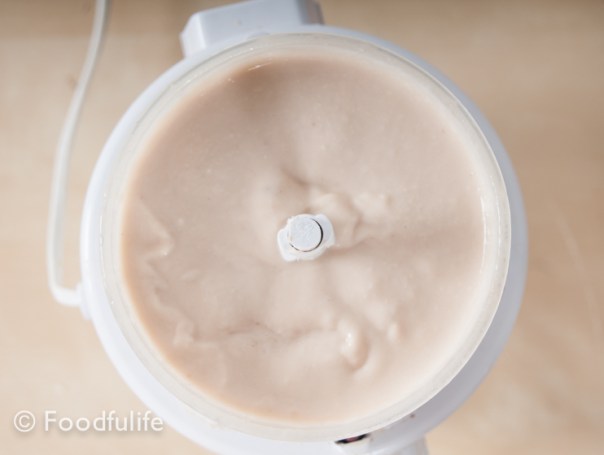
3. In a food processor, finely chop the beans with the crushed sesame seeds, the salt crystals, 1/2 a clove of garlic and a small shallot. After a few minutes, add the juice of half a lemon, 2 tablespoons of water (only if needed) and 2 tablespoons of extra virgin olive oil. Process everything until you have a smooth and creamy mixture.

DSC_8930

DSC_8937

For the pizza.

1. Make 500g of pizza dough (follow this recipe).

2. Roll out the dough on two baking trays, greased with plenty of extra virgin olive oil and shape 2 large pizzas.

DSC_8949

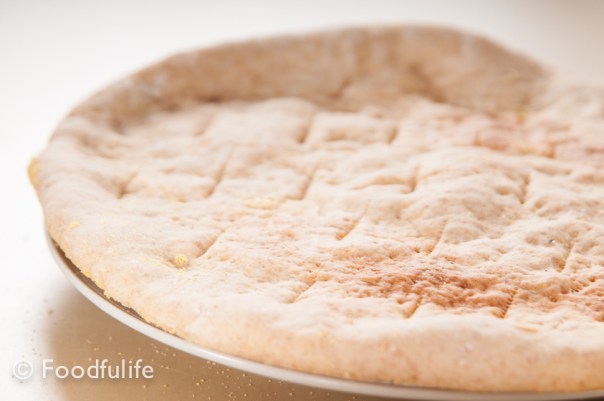
3. Pierce the dough using a knife and bake in a preheated oven at 200 ° C (392° F) for 15-20 minutes.

DSC_8979

For the mussels.

1. In a frying pan, fry two cloves of garlic with the parsley and the tarragon (all finely chopped), over very low heat with 3 tablespoons of extra virgin olive oil.

DSC_8964

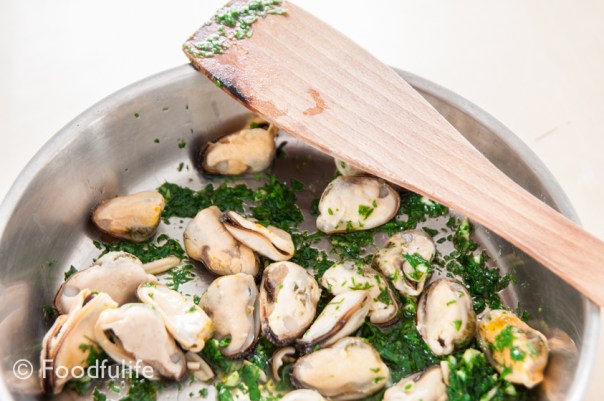
2. After a few minutes add the mussels and cook over a medium heat for about 10 minutes, then turn off the heat.
DSC_8970

To garnish.

Garnish the pizzas with the cannellini hummus, then top with the tomatoes and the mussels.
DSC_8991

DSC_8995

DSC_9013

DSC_9004

Pizza saporita con hummus di cannellini e muscoli.

Ingredienti

Per 2 pizze grosse (4 persone)

500 g di pasta per la pizza

Per l’hummus di cannellini

1 scatola di cannellini

1/2 spicchio d’aglio

1 scalogno piccolo

il succo di 1/2 limone

1 cucchiaio di semi di sesamo

qualche cristallo di sale marino

acqua q. b.

2 cucchiai di olio extra vergine d’oliva

Per i muscoli

2 spicchi d’aglio

250g di muscoli ( ho usato muscoli già puliti, senza guscio e surgelati, ma potete anche usare quelli freschi)

1 cucchiaio di prezzemolo, lavato e tritato

1 cucchiaio di dragoncello, lavato e tritato

sale e pepe q.b.

3 cucchiai d’olio extra vergine d’oliva

Per la guarnizione.

20 pomodorini ciliegina, lavati, tagliati a pezzetti e scolati

Per la preparazione dell”hummus.

1. Con un pestello e un piccolo mortaio, schiacciate i semi di sesamo con qualche cristallo di sale.

2. Sciacquate bene i fagioli e scottateli per qualche minuto (in acqua leggermente salata). Quando saranno pronti, scolate i fagioli.

3. In un tritatutto, tritate finemente i fagioli con i semi di sesamo, il sale, mezzo spicchio d’aglio e lo scalogno. Dopo qualche minuto, aggiungete il succo di mezzo limone, un po’ d’acqua (solo se necessario) e 2 cucchiai d’olio extra vergine d’oliva. Tritate tutto fino ad ottenere una crema uniforme.

Preparazione della base.

1. Preparate 500g di pasta per la pizza seguendo questa ricetta.

2. Stendete la pasta su due teglie unte abbondantemente con olio extra vergine d’oliva e formate due pizze grandi.

3. Fate dei piccoli tagli sulla superficie della pasta e infornate a 200°C per 15-20 minuti.

Per la preparazione dei muscoli.

1. In una padella, fate soffriggere due spicchi d’aglio con il prezzemolo e il dragoncello (a fuoco molto basso).

2. Dopo qualche minuto aggiungete i muscoli e fate cuocere per circa una decina di minuti, poi spegnete il fuoco.

Preparate la pizza.

Con un cucchiaio spalmate l’hummus di cannellini uniformemente sulla base della pizza, poi aggiungete i pomodorini e i muscoli.

DSC_9024

Traditional Recipe: Pasta e Fagioli

DSC_7416

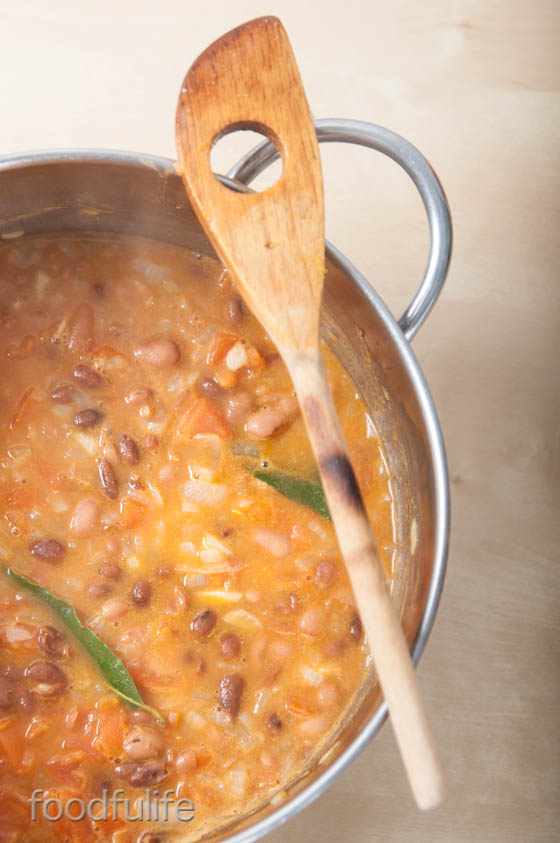
Budget friendly, easy and delicious, pasta e fagioli (pasta and borlotti beans) is one of the most appreciated and popular recipes in Italy. Like many traditional recipes many variations exist of this wonderful Italian dish. We use different herbs, sometimes we add bacon or lard and we can replace borlotti beans with cannellini. The recipe that I am going to share today is one of my favourite dishes since I was a child. Pasta e fagioli is a complete meal with high protein content, perfect for vegetarian and vegan diets. As a vegan or low fat version, you can serve it without Parmesan, it’s delicious anyway! 🙂

DSC_7386

Pasta e Fagioli.

Ingredients

for 2 Servings

Easy

Preparation: 10 minutes

Cooking: 25 minutes

110 g (3.88 oz) ditaloni rigati (or broken spaghetti or tagliatelle)

2 cans borlotti beans (keep 1 cup of borlotti beans to add at the end of the cooking process)

4 tablespoons of extra virgin olive oil

6 cherry tomatoes (or piccadilly), washed and diced (optional)

1 medium onion, finely chopped

2 cloves of garlic, finely chopped

2 sprigs of fresh rosemary

2 bay leaves, washed

2 sprigs of fresh sage

500 ml (16.9 us fl oz) organic vegetable broth (made with water and organic vegetable stock)

1/2 tablespoon tomato paste

Parmesan to taste (optional, but nice!)

salt and black pepper to taste

Method.

1. Wash and chop the sage and rosemary (removing the hard stems).

2. In a large sauce pan, gently fry the onion with 3 tablespoons of extra virgin olive oil, then (after a few minutes) add the garlic.

DSC_7408

3. Drain and rinse the borlotti beans.  Put the beans with the tomatoes in the pan. Sauté for a few minutes, then pour in the vegetable broth with 1/2 a tablespoon of tomato paste and 2 bay leaves. Stir well.

DSC_7404

4. Cook over a medium heat for about 15 minutes, until the broth is partially absorbed, then add the chopped herbs.

DSC_7416

5. Turn off the heat. Using an immersion blender, mix everything well. Turn on the heat, add 1 cup of borlotti beans and the pasta. Stir well and simmer for another 10 minutes.

DSC_7446

DSC_7451

6. Season with salt and pepper, turn off the heat. Serve with a tablespoon of extra virgin olive oil and plenty of parmesan (optional).

DSC_7461

DSC_7472

Pasta e Fagioli

Ingredienti

Per 2 persone

Facile

Preparazione: 10 minuti

Cottura: 25 minuti

110 g di ditaloni rigati (oppure spaghetti spezzettati o tagliatelle)

2 scatole di fagioli borlotti (tenete una tazza di borlotti da aggiungere a fine cottura)

4 cucchiai d’olio extra vergine d’oliva

1 cipolla media, tritata finemente

6 pomodorini (piccadilly o ciliegino), lavati e tagliati a dadini (facoltativo)

2 spicchi d’aglio, tritato finemente

2 rametti di rosmarino

2 foglie di alloro, lavate

un mazzetto di salvia fresca

500 ml di brodo vegetale (biologico)

1/2 cucchiaio di concentrato di pomodoro

Parmigiano q. b. (facoltativo)

sale e pepe q. b.

Preparazione.

1. Lavate e tritate la salvia con il rosmarino (togliendo i gambi).

2. Fate soffriggete la cipolla con 3 cucchiai d’olio extra vergine d’oliva. Dopo qualche minuto aggiungete l’aglio.

3. Scolate, sciacquate i fagioli e aggiungeteli con i pomodorini al soffritto. Fate rosolare per qualche minuto, poi aggiungete il brodo vegetale con 1/2 cucchiaio di concentrato di pomodoro e le foglie d’alloro. Mescolate bene.

4. Fate ritirare il brodo per 15 minuti, poi levate le foglie d’alloro e aggiungete le erbe tritate.

5. Spegnate il fuoco e con un frullatore ad immersione frullate bene tutto.  Aggiungete la pasta e i borlotti che avete tenuto da parte. Fate cuocere a fuoco moderato (mescolando continuativamente) per altri 10 minuti.

6. Spegnete il fuoco e condite con un po’ d’olio extra vergine d’oliva, sale e pepe. Servite con abbondante parmigiano.

DSC_7443

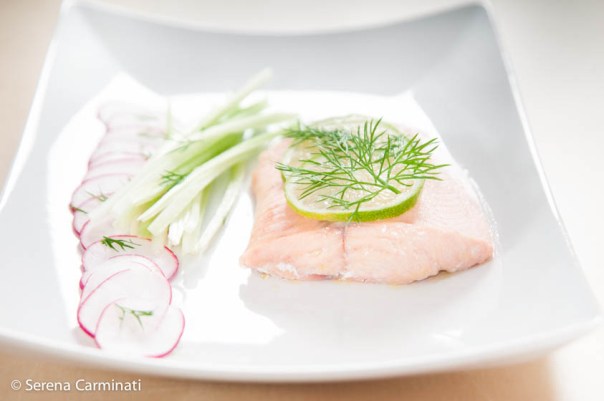
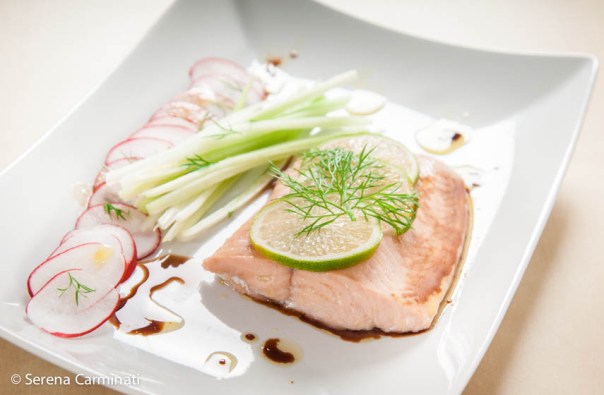
Salmon with lime and balsamic vinaigrette

I must admit, I came across the salmon-balsamic vinegar combination totally by accident. I was trying out a new dish that went horribly wrong, when I dropped some balsamic vinegar on a piece of salmon by mistake…Yes, in my kitchen these kind of things can happen! 🙂

DSC_6967

Anyway, I loved it! So I changed the recipe completely and I made a light balsamic vinaigrette as a salmon dressing. I know it is not a new combination, but it was the first time for me.
I love the way in which the balsamic vinegar aroma enhances the natural sweetness of salmon without covering its delicate flavour. The aniseed-tinged wild fennel leaves add a note of distinctive freshness to the recipe. If you can’t find wild fennel, you can use normal fennel leaves, they are probably a little bit easier to get and very similar in taste.

DSC_6993

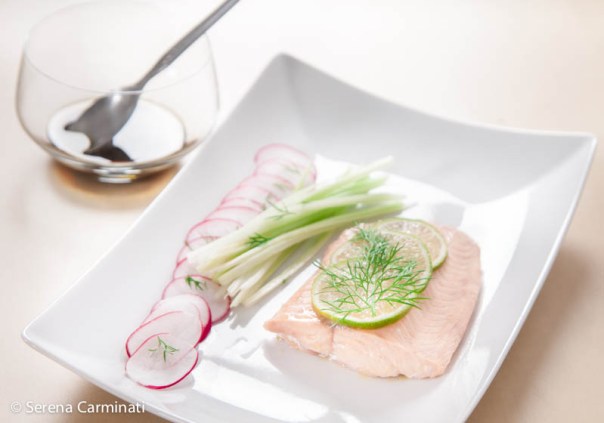
Salmon with lime and balsamic vinaigrette.

Preparation: 15 minutes

Ingredients

For 2 servings

2 salmon steaks

1 lime

a few sprigs of fresh wild fennel, washed

6 radishes, washed

a stalk of celery, washed

for the balsamic vinaigrette

2 tablespoons of extra virgin olive oil

2 tablespoons of balsamic vinegar

a few drops of lime juice

Black pepper and salt to taste

DSC_6873

DSC_6883

DSC_6910

Method

1. Wash and cut a lime into thin slices, then put a few slices on top of the salmon, with a sprig of wild fennel.

DSC_6924

2. Steam the salmon steaks for 8-10 minutes.

3. Place the salmon steaks on the plates, garnish with a few radishes and the celery, both finely sliced. Then, add some wild fennel leaves (roughly chopped).

DSC_6978

For the vinaigrette.

1. Mix 2 tablespoons of extra virgin olive oil with 2 tablespoons of balsamic vinegar, a few drops of lime juice, salt and pepper to taste.

DSC_6943

2. Serve with the vinaigrette on the side.

DSC_6961

DSC_7011

Salmone con lime e aceto balsamico vinaigrette.

Preparation: 15 minutes

Ingredienti

Per due persone

2 tranci di salmone

1 lime intero

6 ravanelli, lavati

un gambo di sedano, lavato

qualche rametto di finocchio selvatico, lavato

Per la vinaigrette di aceto balsamico

2 cucchiai di olio extra vergine d’oliva

2 cucchiai di aceto balsamico

qualche goccia di succo di lime

Pepe e sale q.b.

Preparazione.

1. Lavate e tagliate un lime a fette molto sottili. Mettete le fette di lime sul salmone, con qualche rametto di finocchio selvatico.

2. Fate cuocere a vapore i tranci di salmone per 8-10 minuti.

3. Disponete il salmone sui piatti, guarnite ogni piatto con tre ravanelli tagliati a fette molto sottili e con un gambo di sedano tagliato alla julienne.

Per la vinaigrette.

1. Mescolate 2 cucchiai di olio extravergine d’oliva con 2 cucchiai di aceto balsamico, qualche goccia di succo di lime, sale e pepe.

2. Servite il salmone con il condimento a parte.

DSC_7021

DSC_6958

Rich Chocolate Tart with Fresh Raspberries…Yes, but it’s different!

Vegan, dairy-free, gluten-free, egg-free, with only a little refined sugar and absolutely delicious!!!!

I must admit I was a little bit sceptical about vegan desserts, I thought that without dairy products, desserts would just taste dull! So I decided to give it a try and make this vegan chocolate tart, because I usually like to try things before I make a judgement, especially when I am talking about recipes. I am glad to say that I was wrong! I might even dedicate an entire post to the lovely vegan chocolate ganache that I’ve made for this recipe, because I think it deserves a little place on its own in this blog and a few more words given over to it.

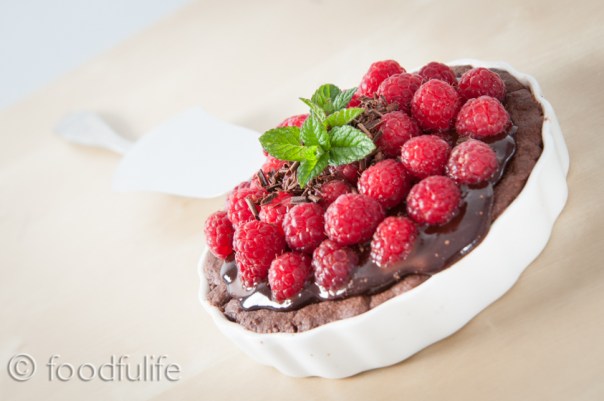
So, today we are going to prepare a delicious mini chocolate tart with a lot of fresh raspberries on top! As a filling, I made a rich dark chocolate ganache. Usually, the chocolate ganache is prepared with heavy whipping cream or butter, I used rice milk instead and I thickened the sauce with a little cornstarch. The result is a velvety smooth chocolate filling that contains little refined sugar and is dairy-free.

This is an amazing vegan dessert that everyone can enjoy!

DSC_5795

DSC_5793

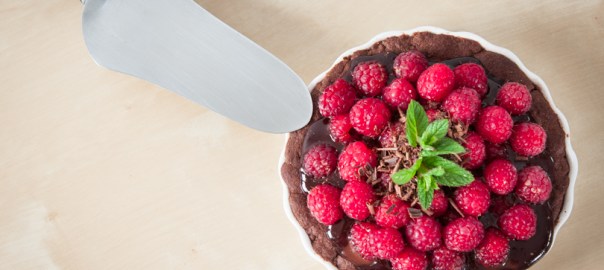
Rich Chocolate Tart with Fresh Raspberries

 Ingredients

For the pastry

2-3 servings. 

50 g (1.7 oz) skinless almonds (or hazelnuts, if you prefer)

60 g (2 oz) dark chocolate (organic, with 70% cocoa solids)

60 g (2 oz) rice flour

30 g (1 oz) of potato starch

1/2 teaspoon of baking powder

2 tablespoons of sunflower oil

1 tablespoon of agave syrup (or 1 tablespoon of honey, if you are not on a vegan diet)

a pinch of salt

For the dark chocolate ganache 

60 g (2 oz) of dark chocolate (organic, 70 % cocoa)

100 ml (3.38 fl oz US, 0.175 pt UK) rice milk (replace with soya or almond milk, if you prefer)

1 tablespoon of agave syrup (or 2 tablespoon of honey, if you are not on a vegan diet)

1/2 a tablespoon of cornstarch

To garnish

100 g (3.5 oz) raspberries, fresh and washed

a few chocolate chips

DSC_5601

Method. 

For the pastry. 

Preparation: 20 minutes

Cooking: 15 minutes

1. In a double boiler (bain-marie), melt 60 g (2 oz) of dark chocolate.

DSC_5626

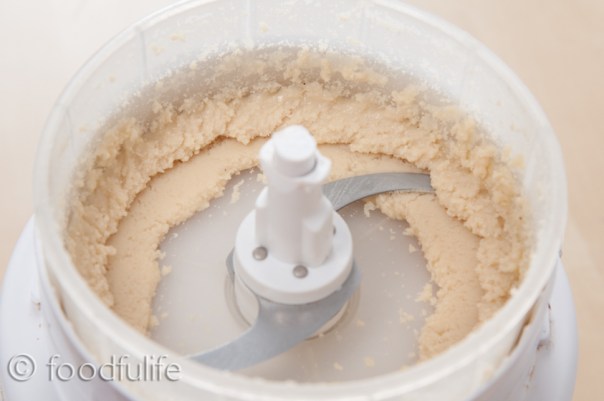
2. Finely grind the almonds using a food processor, until you get a fine paste.

DSC_5619

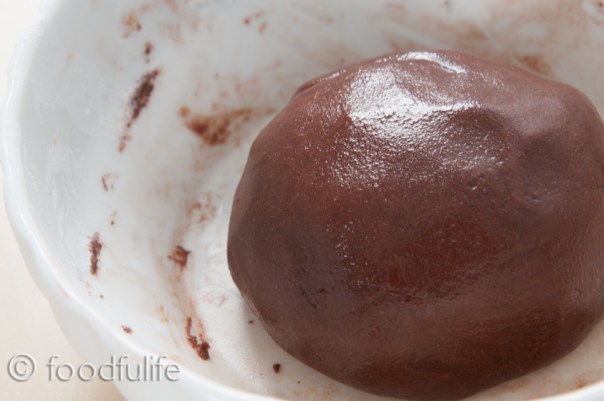
3. In a small bowl, sift the flour and the potato starch using a fine strainer. Then, mix in the melted chocolate, the almond paste, 1/2 a teaspoon of baking powder, a pinch of salt, 2 tablespoons of sunflower oil and 1 tablespoon of agave syrup (or 1 tablespoon of honey).

DSC_5630

4. Place the dough in the refrigerator for 15 minutes.

DSC_5632

5. Lightly grease the base of a small cake pan (15-17 cm or 6 – 7 inches of diameter) and bake at 170 ° C (338° F) for about 15 minutes.

DSC_5643

For the chocolate ganache.

Preparation: 20 minutes

1. In a double boiler (or bain-marie), melt 60 g (2 oz) of dark chocolate.

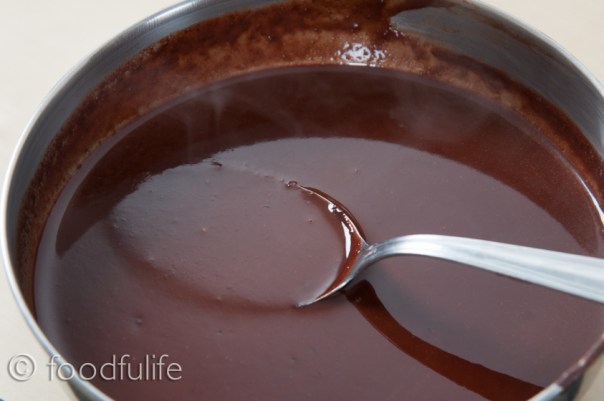
2. In a small pan, heat 100 ml (3.38 fl oz US) of rice milk and add it (gradually and stirring) to the melted chocolate (both must be warm).

DSC_5639

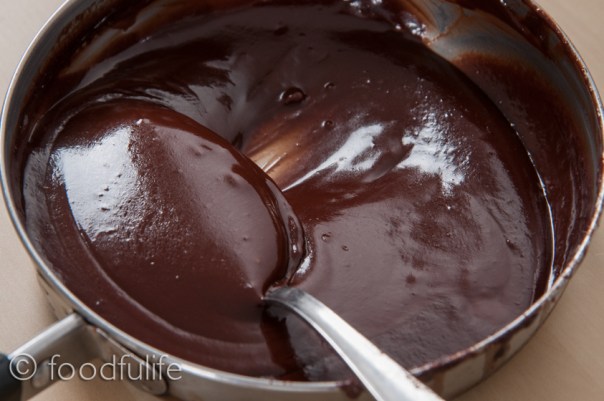
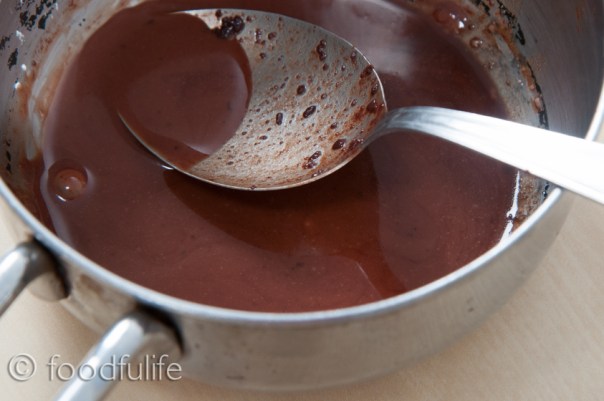
3. In another pan, mix 1/2 a tablespoon of cornstarch with 1 tablespoon of the chocolate mixture and stir well. Gradually add the rest of the chocolate mixture, then cook over a low heat and stir until the chocolate ganache has thickened (it will take only a few minutes).

DSC_5646

4. Turn off the heat, add 1 tablespoon of agave syrup (or 2 tablespoon of honey) and mix well. Let cool.

DSC_5650

To garnish.

Refrigeration: 30 minutes

1. Pour the chocolate ganache into the base of the tart, then put the cake in the refrigerator for about 30 minutes.

DSC_5689

2. Garnish with plenty of raspberries and some chocolate chips.

DSC_5698

DSC_5794

DSC_5800

DSC_5808

 Crostata di lamponi con ganache di cioccolato fondente.

Ingredienti

Per la base.

2-3 porzioni.

50 g di mandorle, senza pelle (oppure nocciole, se preferite)

60 g di farina di riso

30 g di fecola di patate

60 g di cioccolato fondente bio ( con 70% di cacao)

1/2 cucchiaino di lievito per torte

2 cucchiai di olio di semi di girasole

1 cucchiaio di sciroppo d’agave (oppure 1 cucchiaio di miele bio, se non seguite una dieta vegana)

un pizzico di sale

Per la ganache al cioccolato fondente

100 ml di latte di riso (oppure latte di mandorle, soia o latte normale)

1 cucchiaio di sciroppo d’agave (oppure 2 cucchiai di miele bio, se non seguite una dieta vegana)

60 g di cioccolato fondente bio (con 70% di cacao)

1/2 cucchiaio di amido di mais

Per guarnire

100 g di lamponi (freschi e ben lavati)

un po’ di scaglie di cioccolato per decorare

Preparazione.

Per la base.

1. Fate sciogliere 60 g di cioccolato fondente a bagnomaria.

2. Tritate molto finemente le mandorle usando un tritatutto.

3. In una terrina, setacciate la farina e la fecola di patate usando un colino molto fine. Aggiungete il cioccolato sciolto, la pasta di mandorle, il lievito per dolci, un pizzico di sale, due cucchiai d’olio di semi di girasole e 1 cucchiaio di sciroppo d’agave (oppure 1 cucchiaio di miele).

4. Impastate bene e mettete in frigo per 15 minuti.

5. Ungete leggermente la base di una piccola teglia (15-16 cm di diametro) e infornate a 170° per 15 minuti.

Per la ganache al cioccolato.

1. Fate sciogliere 60 g di cioccolato fondente a bagnomaria.

2. Scaldate 100 ml di latte di riso in un pentolino e unitelo al cioccolato ancora caldo, mescolando bene.

3. In un altro pentolino, unite una piccola quantità di latte di riso al cioccolato con mezzo cucchiaio di amido di mais (mescolando energicamente). In modo molto graduale, aggiungete tutto il latte al cioccolato, poi fate rassodare la ganache sul fuoco a fiamma bassa, per qualche minuto (continuando a mescolare).

4. Spegnete il fuoco e aggiungete 1 cucchiaio di sciroppo d’agave (oppure 2 cucchiai di miele). Mescolate ancora, poi lasciate raffreddare.

 Per guarnire.

1. Versate la crema sulla base della crostata e mettete in frigorifero per 30 minuti.

2. Guarnite con un doppio strato di lamponi e scaglie di cioccolato.

Fresh Egg Pasta with Flour 00 (Step by Step)

This week we are going to prepare plain fresh egg pasta, using flour 00. This pasta can be used as a base for making a variety dishes, prepared with all sorts of creative stuffings and sauces, but we will see this in the next posts.

I generally tend to use more complex and heavier types of flour, because they are tastier and rich in nutrients. In some recipes , however, it’s better to use a finer and more delicate flour, in order to avoid covering the flavour of the other ingredients. For this recipe the Italian flour 00 is perfect for making pasta, because it is finer than normal flour, however, if you can’t find it use plain flour.

DSC_5166

tips.

1. The ingredients listed are for 400 g of (uncooked) pasta, but if you need a different quantity, just bear in mind that for every 100g of flour you have to add an egg. For example, if you need 200 g of pasta just halve the ingredients (and use 2 small eggs).

2 . It is important to sift the flour before using it to avoid lumps or impurities (I don’t usually say this but you should always do it).

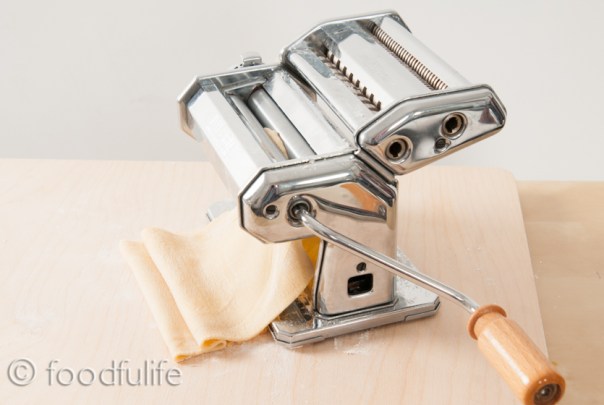
3. Here I am using a rolling pin, but if you are planning to make large quantities of fresh pasta I strongly advise you to get a pasta machine, to make things easier.

DSC_5342-4

Fresh Egg Pasta (with flour 00)

 Ingredients

for 400 g (14 oz) of pasta (approximately)

300 g (10.5 oz)  flour 00 (or plain flour)

3 eggs

salt to taste

 Tools

a clean kitchen cloth

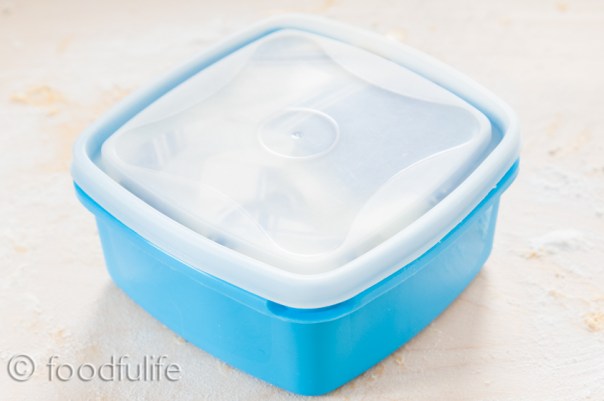
an airtight container

a long rolling pin

a wooden board (with a rough surface) or a table

 Method

1. Sift the flour with a sieve, add some salt, make a well and crack three eggs in the centre. With a fork, beat the eggs lightly, in order to mix the whites with the yolks. Still using a fork, combine the flour with the eggs starting from the outer edge, then continue mixing the ingredients with your fingers and begin to knead.

DSC_5018

DSC_5022

DSC_5024

DSC_5029

2. Knead until you get a smooth dough, then wrap in a clean cloth and place in an airtight container (or use cling film). Let stand for about an hour at room temperature (if you don’t have much time, 30 minutes is fine).

DSC_5037

DSC_5045

DSC_5047

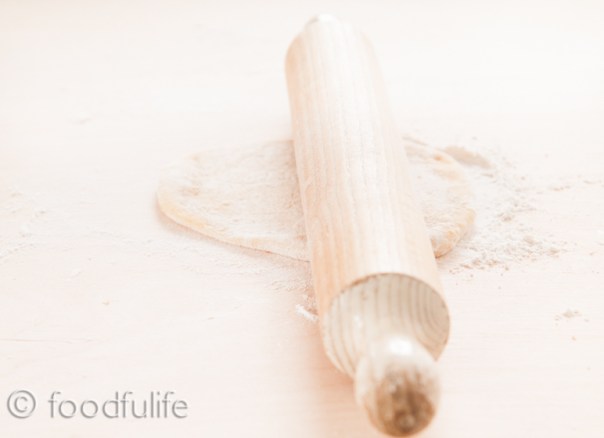
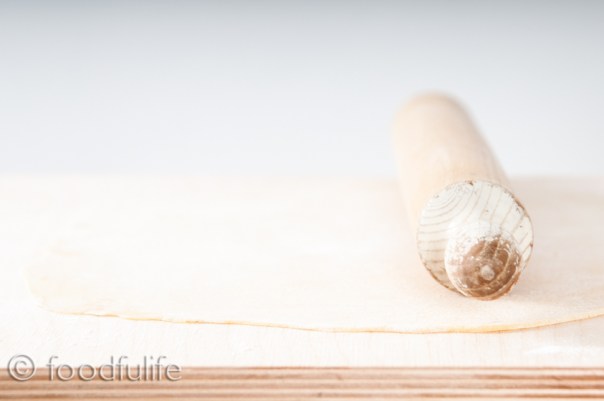
3. After an hour (or 30 minutes), take the dough and divide it into 3-4 pieces. Dust the working surface with some flour and, using a rolling pin, roll a very thin sheet of pasta. Repeat this process with the other pieces and cut the sheets as required by the recipe you are going to prepare.

DSC_5128

DSC_5140

DSC_5163

Notes.

You can make lasagne, ravioli, cannelloni and many varieties of pasta from these sheets. We will see how in the next few weeks. See also the post on spelt (farro) pasta for more ideas.

Pasta fresca all’uovo.

Ingredienti

per circa 400g di pasta

300g di farina 00

3 uova

sale q.b.

 Utensili

uno panno pulito

un contenitore a chiusura ermetica

un matterello lungo

una spianatoia di legno (con superficie ruvida)

 Preparazione.

1. Setacciate la farina con un colino grande (oppure un setaccio) e disponetela a fontana con tre uova al centro. Con una forchetta sbattete leggermente le uova, in modo da mischiare il bianco al tuorlo. Sempre con una forchetta, unite la farina all’uovo partendo del bordo esterno, poi proseguite con le dita e incominciate ad impastare.

2. Lavorate bene l’impasto, poi avvolgetelo in un panno pulito e mettetelo in un contenitore con chiusura ermetica (potete anche utilizzare la pellicola). Lasciate riposare un’ oretta (oppure 30 minuti, se non avete molto tempo).

3. Prendete l’impasto, dividetelo in 3-4 pezzi e incominciate a stendere la pasta (infarinando bene le superfici), fino ad ottenere una sfoglia molto sottile. Ripetete l’operazione con gli altri pezzi e tagliate la pasta come richiede la ricetta che state preparando.

Special Stuffed Calamari (Quinoa Recipe)

DSC_4810

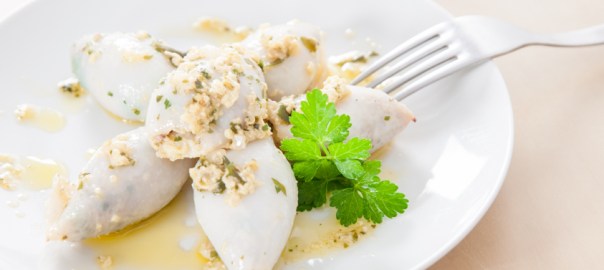
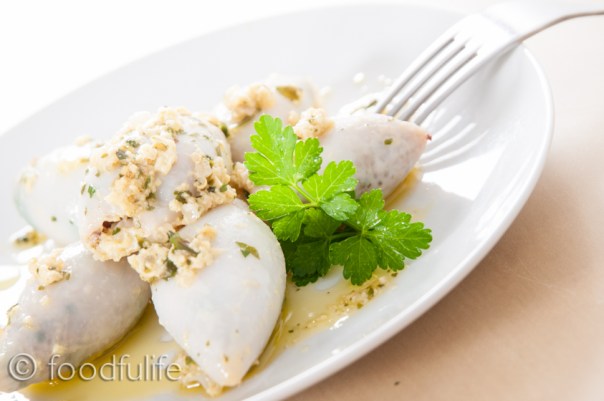
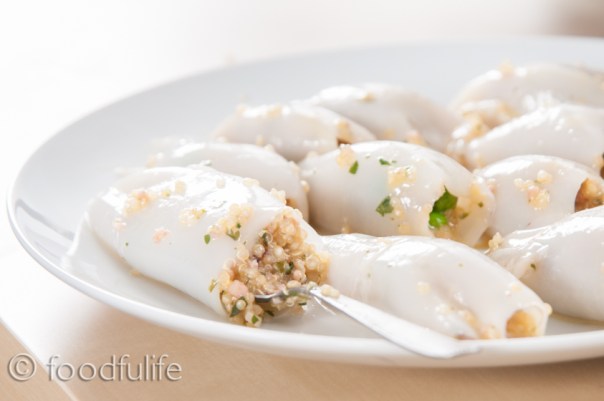
Stuffed calamari (calamari ripieni) is a very popular dish in Italy. Normally, the recipe is made with bread stuffing and some variation on the other ingredients. This time, we are going to prepare a quinoa stuffing with peas, anchovies and garlic. It is a wonderful starter and a great main meal served with vegetables. It might seem a little complex to prepare, but it’s such a delicious full-flavoured dish that it’s worth a try!

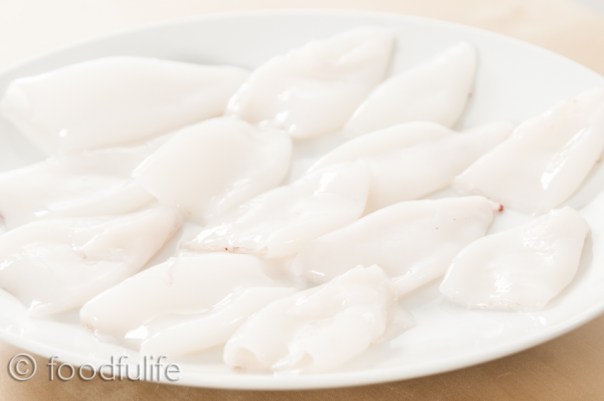
Tip. Calamari ( squid) should be fresh and properly cleaned before you start the preparation. It’s very important not to over cook the seafood, because calamari can become very chewy and unpleasant to eat. If that happens continue to cook them until they become tender again (in this case, remember to add more wine and some vegetable or fish stock).

DSC_4813

 Stuffed Calamari (quinoa recipe)

Ingredients 

for 3 servings

Preparation: 40 minutes

400g (14.1 oz) cleaned calamari (squid)

1 clove of garlic

2 tablespoons extra virgin olive oil

1 splash of white wine (non-acidic)

salt and pepper to taste

For the filling

50 g (1.76 oz) quinoa (uncooked)

3 tablespoons extra virgin olive oil

2 cloves of garlic

2 anchovies

3 tablespoons finely chopped fresh parsley

20 g (0.7 oz) of frozen peas

1 egg

30 g (1.05 oz) grated Parmesan cheese

White wine (good quality)

Salt and pepper to taste

 Method

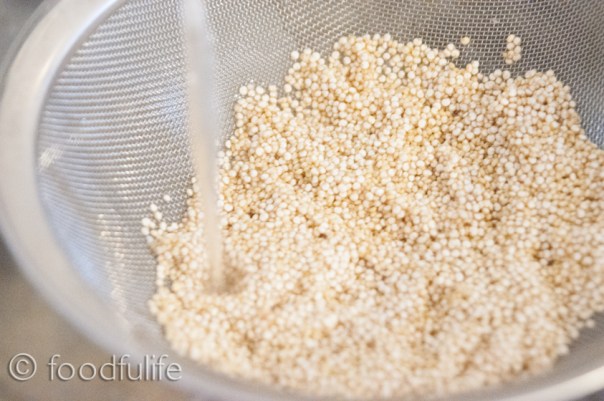
1. Wash the quinoa, using a strainer under running water, for a few minutes (to remove the natural bitter taste).

DSC_4725

2 . Cook for 15 minutes in 200 ml (6.76 us oz fl, 0.35 uk pt) of water, then cover with a lid and set aside.

3.  Separate the tentacles from the top of the body of the calamari. Finely chop the tentacles.

DSC_4746

DSC_4747

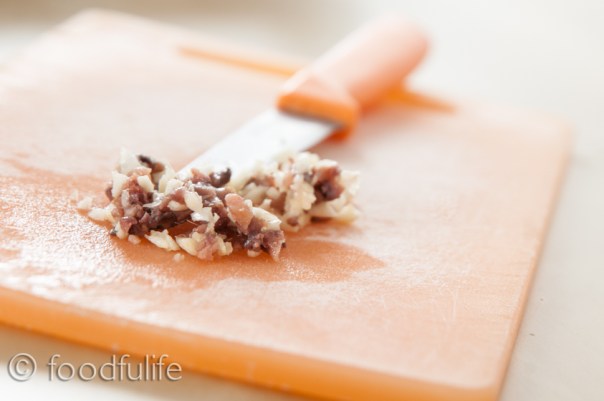
4. Chop two cloves of garlic and two anchovies and gently fry them over a low heat with three tablespoons of extra virgin olive oil.

DSC_4756

5. Add the chopped tentacles with the peas and (after a couple of minutes) drizzle with a little bit of white wine.

DSC_4760

DSC_4766

6. Add the quinoa with two tablespoons of parsley, then stir and after a few minutes turn off the heat.

DSC_4770

7. Combine the ingredients with an egg, the Parmesan cheese, some salt and pepper and mix well. Stuff the calamari using a teaspoon (and your fingers) or a piping bag ( fill only 2/3 to avoid braking the calamari during the cooking time) . Seal the calamari with toothpicks.

DSC_4772

DSC_4774

DSC_4783

DSC_4795

8. Put the calamari in a frying pan with two tablespoons of extra virgin olive oil, a chopped clove of garlic, a splash of white wine and season with salt and pepper. Cook for 10 minutes at a medium heat,  after 5 minutes add a tablespoon of parsley and stir. Serve warm.

DSC_4803

DSC_4811

Calamari ripieni con quinoa.

 Ingredienti

per 3 persone

400 g di calamari puliti (senza dente)

1 spicchio d’aglio

2 cucchiai di olio extra vergine d’oliva

1 spruzzata di vino bianco (non acido)

sale e pepe q b

 Per il ripieno

50 g quinoa (cruda)

3 cucchiai di olio extra vergine d’oliva

2 spicchi d’aglio

3 cucchiai di prezzemolo (tritato finemente)

20 g di piselli surgelati

Sale e pepe q b

1 uova

30 g Parmigiano Reggiano grattugiato

vino bianco (non acido) q b

2 acciughe sott’ olio (alici)

 Preparazione

1. Lavate la quinoa, utilizzando un colino sotto l’acqua del rubinetto, per qualche minuto (questa operazione serve a togliere il sapore amaro della quinoa).

2. Fate bollire per 15 minuti in 200 ml d’acqua, poi spegnete il fuoco, coprite con un coperchio e mettete da parte.

3. Usando un coltello, separate i tentacoli dalle tasche dei calamari. Tritate finemente i tentacoli.
4. Tritate e fate soffriggere a fuoco basso due spicchi d’aglio e due acciughe con tre cucchiai di olio extra vergine d’oliva.

5. Aggiungete i tentacoli tritati con i piselli e annaffiate con un po’ di buon vino. Fate ritirare a fuoco lento.

6. Aggiungete la quinoa con due cucchiai di prezzemolo, mescolando per qualche minuto e poi spegnete il fuoco.

7. Unite agli ingredienti un uovo, del parmigiano, sale, pepe e mescolate bene. Riempite i calamari usando un cucchiaino o la saccapoche (riempite solo 2/3, per evitare che si rompano durante la cottura). Chiudete con degli stuzzicadenti.

8. Mettete i calamari in una padella con due cucchiai d’olio, uno spicchio d’aglio tritato, uno spruzzo di vino bianco e un po’ di sale e pepe. Fate cuocere per 10 minuti a fuoco medio, aggiungendo un cucchiaio di prezzemolo dopo 5 minuti. Spegnete e servite.

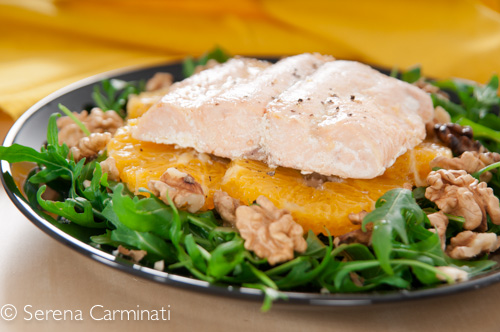
Steamed Salmon with Rocket and Oranges.

This week we are going to prepare a light salad with salmon, oranges and rocket leaves. I love the way in which the buttery texture of salmon and the freshness of oranges work together, I think it’s a perfect match! There isn’t much I can say about it, you just have to try it!!! I added a few rocket leaves because the pungent and slightly bitter flavour of this lovely herb creates a pleasant contrast with the other ingredients, which balance the recipe nicely.

This dish is a real feel-good booster and is packed with health benefits! Salmon is considered an extremely healthy food due to the high content of protein, omega-3 fatty acid and B 6 and B 12 vitamins; while rocket not only contains plenty of vitamins but is also rich in iron… So, if you often have iron-deficiency problems like me, or you simply like healthy food (same as me, anyway!), you have plenty of reasons to enjoy this dish!

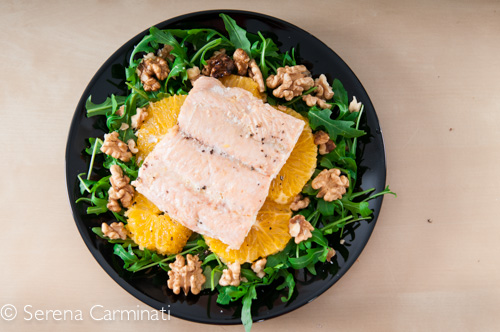
Steamed salmon with rocket, oranges and walnuts.

Preparation time: 15 minutes

Ingredients

for 2 servings

2 salmon steaks (250 g / 8.81 oz)

2 large oranges

50 g (1.76 oz) rocket (arugula), washed and cleaned

30 g (1.05 oz) walnuts, unshelled

extra virgin olive oil

salt and pepper to taste

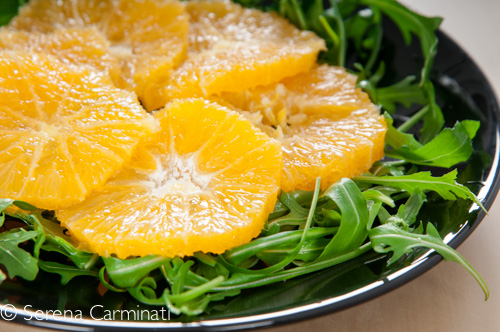
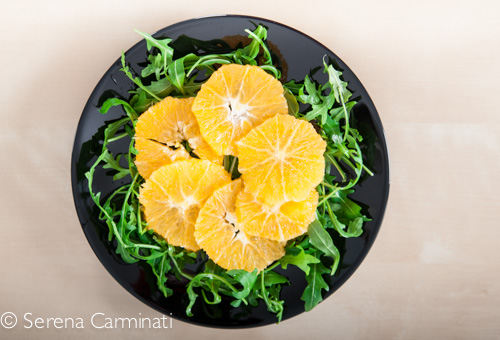
Steamed salmon with rocket and oranges (front view, rocket or arugula with oranges)

Preparation method

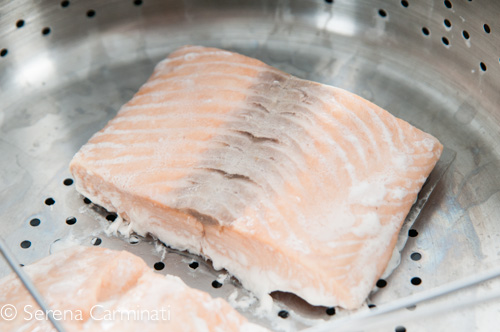
1. Steam the salmon steaks for about 6-8 minutes.

Step 1. Steam the salmon for a few minutes.

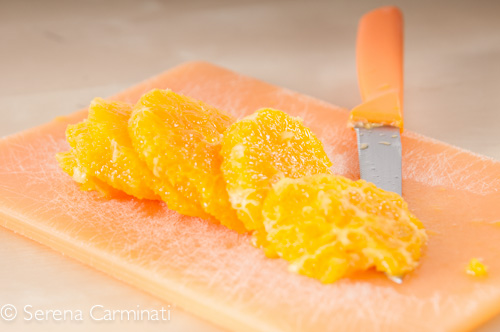
2. With a sharp knife, peel the oranges, completely removing the white part. Then cut them into thin slices.

Step 2. Peel and cut the oranges .

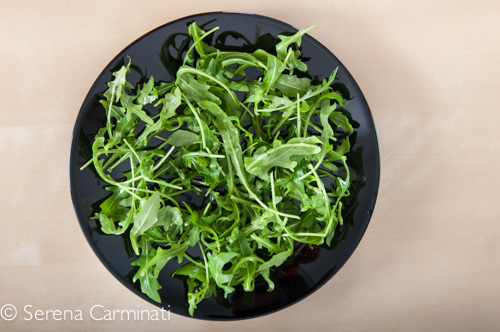
3. Arrange the rocket leaves on the plate, place the slices of orange on top with the salmon in the middle.

Step 3. Arrange the rocket (or arugula),the oranges and the salmon on the plate.

Step 3. Arrange the rocket (or arugula),the oranges and the salmon on the plate.

4. Sprinkle the walnuts on the ingredients, drizzle with extra virgin olive oil and season with some salt and plenty of black pepper.

Step 4. Sprinkle the walnuts, drizzle with olive oil and season with salt and pepper.

Enjoy your meal!

 Steamed salmon with rocket and oranges (front view, close up)
Salmone con arance e rucola (cottura a vapore).

Preparazione: 15 minutes

 Ingredienti

per 2 persone

2 filetti di salmone (250 g)

2 arance grosse

50 g rucola, lavata e pulita

30 g di noci, senza guscio

olio extra vergine d’oliva

sale e pepe q b

Preparazione.

1. Cuocete a vapore i due filetti di salmone per 6-8 minuti.

2. Con un coltello molto affilato, sbucciate due arance togliendo completamente anche la parte bianca.

3. Sistemate le foglie di rucola sulla base del piatto, ricoprite con le fette d’arancia e appoggiate al centro il filetto di salmone.

4. Distribuite le noci sopra gli ingredienti, condite con olio extra vergine d’oliva, un po’ di sale e pepe in abbondanza.

Buon appetito!

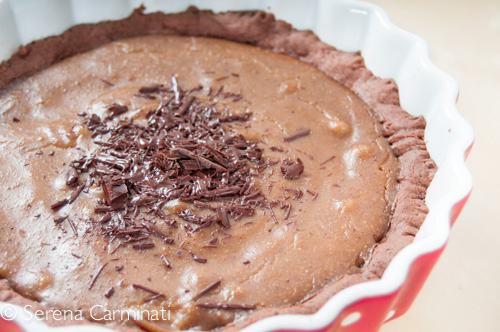
Delicious Chocolate and Pistachio Flan.

This week I’m publishing another recipe from my friend, Anahita Tcheraghali.
With the Christmas holidays just around the corner, we decided to prepare a light and tasty dessert for you to enjoy with the whole family during this festive season!
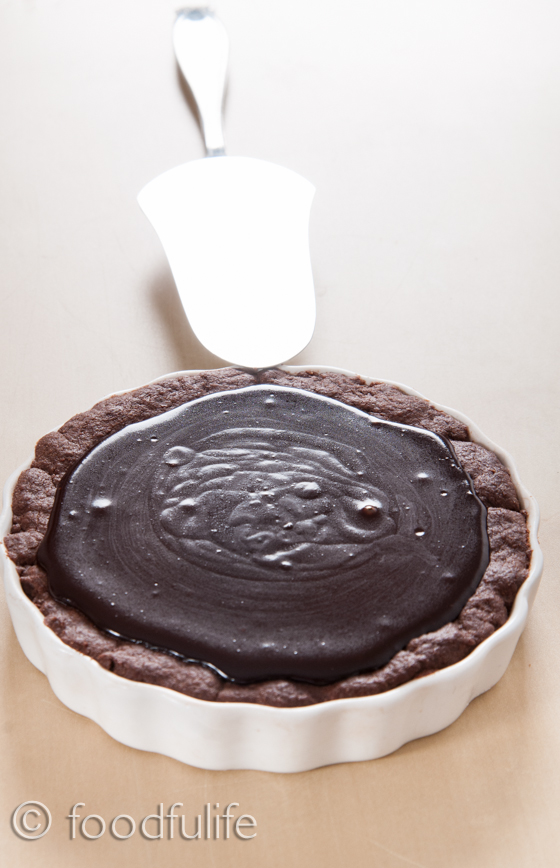
This delightful flan is made with a nice chocolate shortcrust pastry and an exquisite pistachio filling, with an intense caramel-like flavour. It is light and perfect for vegan diets because it doesn’t contain eggs and it’s dairy-free.
You will love it!
DSC_3399
Ingredients
for the filling
300 ml (10 fl oz)  rice milk
25 g (0.88 oz) muscovado brown sugar
40 g (1.4 oz) of shelled pistachios 
2 tablespoons cornstarch
a vanilla bean (or a few drops of vanilla extract)
For the pastry
200 g (7 oz) flour 00
60 g (2 oz) of sunflower oil
60 g (2 oz) dark chocolate (with 70% cocoa solids)
80 g (3 oz) muscovado brown sugar
a pinch of baking soda
some grated lemon zest
a pinch of salt
a pinch of cinnamon (optional)
Preparation of the filling.
1. Finely grind the pistachios.
DSC_3332
2. Mix the ground pistachios with 2 tablespoons of cornstarch and 25 g (0.88 oz)  of sugar.
DSC_3341
3. Add the rice milk with a few seeds of the vanilla bean.
4. Thicken the filling on a low heat, stirring continuously for about 10 minutes.
DSC_3355
Preparation of the pastry.
1. Separately, combine the flour with the baking soda, then melt the chocolate in a bain-marie.
DSC_3371
2. Mix the flour with the melted chocolate, 300 ml (10 fl oz) of oil, a little bit of lemon zest, cinnamon, salt and 80 g of sugar.
DSC_3379
3. Once you have a smooth dough, put it in the fridge for 30 minutes.
DSC_3383
4. Roll out the pastry on a greased baking tray and pierce the surface with a fork.
DSC_3390
5. Bake the base of the tart at 170 ° C (338 °F)  for 10 minutes.
6. Spoon the filling into the the pastry base and bake for another 15 minutes.
DSC_3395
DSC_3417
DSC_3443
Crostata di cioccolato con crema di pistacchi.
Ingredienti
Per la pasta brisé al cioccolato
200 g di farina 00
60 g di olio di semi di girasole
60 g di cioccolato fondente al 70 % (possibilmente bio)
80 g di zucchero di canna muscovado
un pizzico di bicarbonato
1 po’ di scorza di limone non trattato
un pizzico di cannella (facoltativo)
un pizzico di sale
Per la crema
2 cucchiai di amido di mais
300 ml di latte di riso
40 g di pistacchi sgusciati
una stecca di vaniglia (o qualche goccia di estratto di vaniglia)
25 g di zucchero di canna muscovado
Preparazione della crema.
1. Tritate i pistacchi finemente.
2. Unite i pistacchi tritati all’amido di mais e allo zucchero. Aggiungete il latte di riso e qualche seme del baccello di vaniglia.
3. Fate addensare la crema sul fornello a fuoco basso, mescolando continuativamente.
Preparazione della pasta.
1. A parte, unite la farina al bicarbonato e poi fate sciogliere il cioccolato a bagnomaria.
2. Impastate la farina con l’olio, la scorza di limone, la cannella, il cioccolato fuso, il sale e lo zucchero.
3. Una volta ottenuto un impasto omogeneo, mettetelo a riposare nel frigo per 30 minuti.
4. Stendete la pasta su una teglia leggermente unta e bucherellate la superficie con una forchetta.
5. Infornate la base della crostata a 170 °C per 10 minuti.
6. Riempite la base della torta con la crema e poi fate cuocere per altri 15 minuti.