Tag Archives: Healthy

Make the Best Home-made Yogurt!

DSC_0946

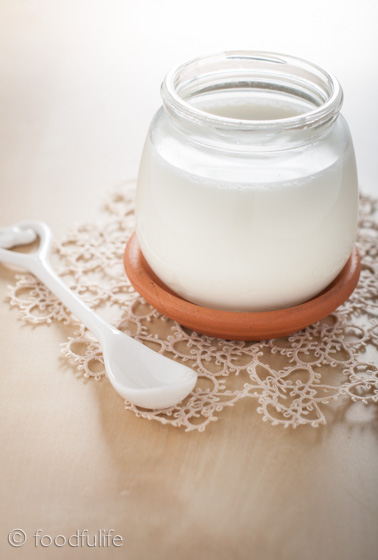
Home-made yogurt is cheap, healthy and delicious! There are several ways to make yogurt at home, today I am going to show you the easiest method, using a yogurt maker, some milk and live culture yogurt bacteria.

First, there are a few things that you have to keep in mind when choosing the ingredients…
DSC_4196-2

You’ll need :

1. One litre (33.8 fl oz, 1.75 pt uk ) of good quality milk, possibly organic, to avoid that the antibiotics contained in the milk might compromise the development of the good bacteria in the process. Unless you are on a low-fat diet, choose full-fat milk to make a creamier and smoother yogurt.

2. A live culture yogurt or a yogurt culture packet (here I am going to use a yogurt culture packet).

3. Sterilised glass jars. You can sterilise the jars by putting them (of course, without the lids) in a pre-heated oven at 100° C (212 F°) for about 8-10 minutes. Let cool before using.

DSC_4267

Home-made yogurt (basic recipe)

Ingredients

1 litre (33.8 fl oz, 1.75 pt uk ) of good quality milk

1 live culture yogurt (1 cup) or a yogurt culture packet

Tools

a food thermometer

a yogurt maker (possibly with glass jars)

a stainer, or a cheese cloth

a spoon

a pan

a cup, or a small bowl to strain the yogurt

a measuring cup

DSC_4205-4

The Method.

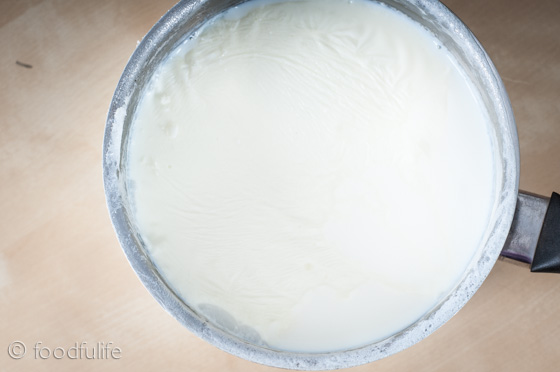
1. Pasteurise your milk. Heat the milk up to 85°C (185°F ), checking the temperature using a food thermometer (avoid boiling the milk, this way you can preserve the nutrients contained in it). This process will take a few minutes.

Variation. If you prefer thick yogurt, you have to boil the milk for at least 5-10 minutes and then remove the skin on the surface.
DSC_4236

DSC_4246

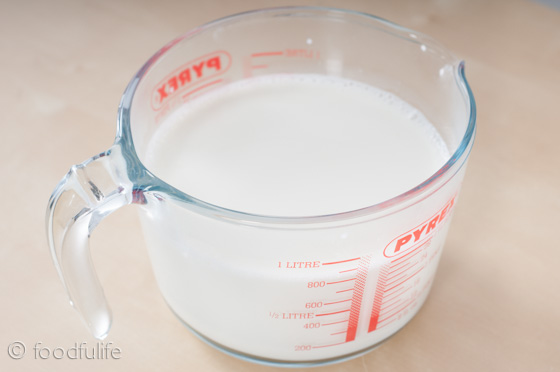
2. Let the milk cool (you have to use the milk at room temperature to make the yogurt).
DSC_4256

3. Add the healthy bacteria. You can use a live culture yogurt (unflavoured, unsweetened and to be added at room temperature) or you can buy a yogurt culture packet. If you use a yogurt culture packet, you have to mix the culture with 2 tablespoons of milk first.

DSC_4276

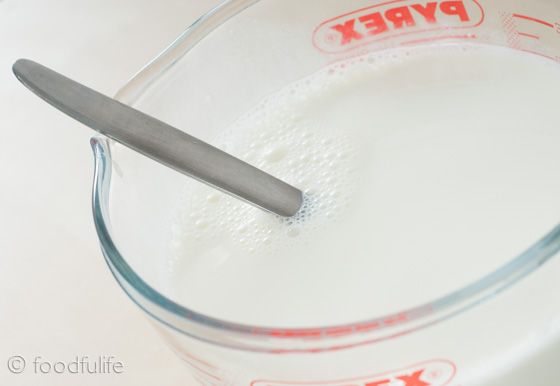
4. Mix the live culture with 1 litre of milk (or less, if you have boiled the milk to make thick yogurt). Mix everything well.
DSC_4299

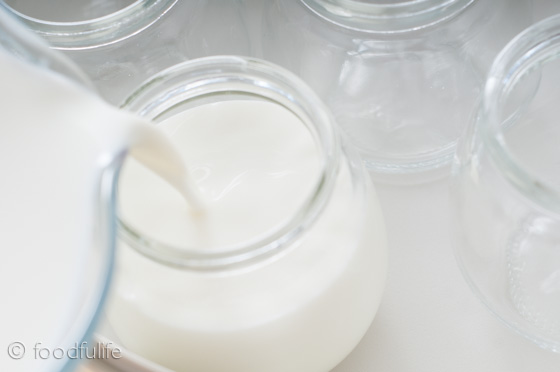
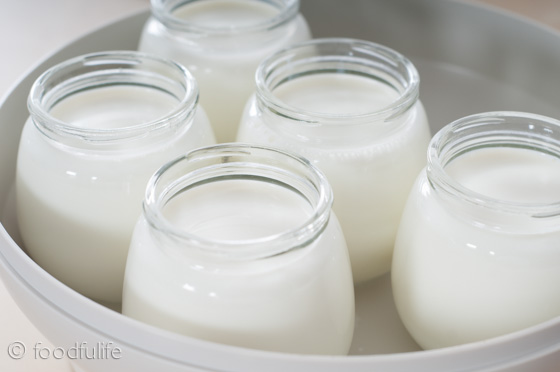
5. Set the timer (or an alarm) and keep the mixture at 38-40 °C (100-104°F) for 8-12 h. Use a yogurt maker, in this way your temperature will be constant at all times.
DSC_4313

DSC_4318

6. Strain your yogurt (this is optional). If you desire a thicker yogurt, you can strain the liquid using a cheese cloth (or a tea towel or a strainer). This process might take from a few up to several hours, depending on the device you use and on the thickness of the yogurt you wish to achieve. Leave the yogurt in the fridge while you do this.

DSC_3857

 Notes.

1. Store your yogurt in sterilised jars. Seal the jars with a lid and keep them in the fridge for 5-7 days (your yogurt might last even longer, if properly stored). You can freeze it and it will last up to a month.

2. If you are going to use your home-made yogurt as a starter to make a new batch, you have to do this within 5 days from the day you’ve made it, to make sure that the bacteria is fully active.

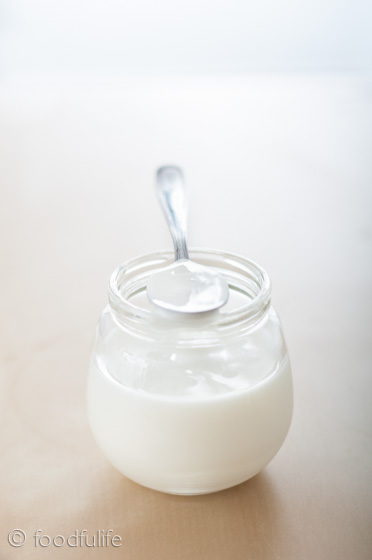
Comparing yogurts.
DSC_4331

In the picture above the yogurt was made without boiling the milk.

DSC_4214-2

In this picture the yogurt was made boiling the milk during the process.

I hope this post was helpful. Please let me know if you having troubles with the process.

Thank you!

Come fare lo yogurt in casa. 

Lo yogurt fatto in casa è economico, sano e delizioso! Ci sono diversi modi per fare lo yogurt, oggi vi mostrerò il metodo più semplice utilizzando la yogurtiera, del latte bio e dei fermenti lattici.

Prima di tutto, ci sono alcuni accorgimenti da seguire quando scegliete gli ingredienti…

Per avere un ottimo yogurt fatto in casa è necessario: 

1. Acquistare latte di buona qualità (possibilmente biologico), per evitare che gli antibiotici contenuti in esso possano compromettere lo sviluppo dei batteri buoni durante il processo. A meno che non stiate seguendo una dieta povera di grassi, è consigliabile scegliere del latte intero di buona qualità per ottenere yogurt denso e cremoso.

2. Utilizzare uno yogurt con i fermenti lattici vivi, oppure acquistare un pacchetto di fermenti lattici liofilizzati, che potete trovare in farmacia (in questa dimostrazione utilizzerò i fermenti in pacchetto).

3. Sterilizzare i vasetti di vetro. Se volete uno yogurt perfettamente conservato è necessario sterilizzare i contenitori che si utilizzeranno per conservare il prodotto. È possibile farlo mettendo i vasetti (senza il coperchio) in forno preriscaldato a 100 ° C per circa 8-10 minuti, oppure si possono far bollire (eseguite questo passaggio solo se utilizzate dei contenitori di vetro, non fatelo con la plastica!). Lasciate raffreddare prima dell’uso.

Ingredienti

1 litro di latte di buona qualità

1 yogurt con fermenti lattici vivi o un pacchetto di fermenti liofilizzati per fare lo yogurt

Utensili

un termometro per alimenti

una yogurtiera (possibilmente con vasetti di vetro)

un colino molto fitto, o un panno e un colino normale

un cucchiaio

una pentola

una tazza, o una piccola ciotola per scolare lo yogurt

una caraffa graduata per misurare i liquidi

Il Metodo. 

1. Pastorizzate il latte. Scaldare il latte fino a 85 ° C (185 ° F), controllando la temperatura con un termometro per alimenti. E’ bene non portare a bollore il latte per conservarne al meglio le sostanze nutritive. Questo processo richiederà alcuni minuti. Per ottenere invece uno yogurt più denso, fate bollire il latte per 5-10 minuti, poi rimuovete la pellicola che si forma in superficie e proseguite con il procedimento.

2. Lasciate raffreddare il latte. Utilizzare il latte a temperatura ambiente per fare lo yogurt.

3. Aggiungete i fermenti lattici. È possibile utilizzare uno yogurt con i fermenti lattici vivi come base per farne altro, oppure si può acquistare un pacchetto di fermenti lattici liofilizzati. Nel secondo caso, è necessario miscelare i fermenti con 2 cucchiai di latte prima di procedere.

4. Mescolate il latte con i fermenti. Utilizzate 1 litro di latte, o quello che rimane se ne avete già mischiata una parte o avete fatto bollire il latte. Mescolare bene tutto.

5. Impostate il timer (o un allarme) e mantenete la miscela a 38-40 ° C (100-108 ° F) per 8-12 h. Vi consiglio di utilizzare una yogurtiera, in questo modo la temperatura sarà mantenuta costante in ogni momento ed eviterete sorprese.

6. Filtrate il vostro yogurt. Se volete lo yogurt più denso, potete filtrarlo per eliminare il siero con un panno, un canovaccio oppure un colino molto fitto. Lasciate lo yogurt in frigo durante questa operazione. Questo passaggio può richiedere da poche a svariate ore, dipende da ciò che utilizzate e dal risultato che volete ottenere (il filtraggio è facoltativo).

Note. 

Conservate lo yogurt in vasetti sterilizzati. Sigillate i vasetti con un coperchio e riponeteli in frigo per 5-7 giorni (ma il vostro yogurt potrebbe durare anche più a lungo, se correttamente conservato). Potete anche congelarlo e durerà fino a un mese. Se avete intenzione di utilizzare lo yogurt fatto in casa come base per farne di nuovo, dovete farlo entro 5 giorni dalla produzione, per essere sicuri che i batteri siano pienamente attivi.

Nelle ultime due immagini del post, potete vedere chiaramente la differente consistenza di uno yogurt fatto con il latte pastorizzato (non bollito o scaldato) e uno yogurt fatto facendo bollire il latte durante il procedimento (ultima immagine).

Amazing Artichoke and Pea Quinoa.

DSC_3748

Quinoa has become a very popular ingredient in recent years. Besides being very versatile, it’s considered by nutritionists to be one of the most important super foods for its numerous nutritional properties and it’s often used as a substitute for couscous in gluten-free recipes. Quinoa is also an excellent source of protein and amino acids, therefore is perfect for vegetarian and vegan diets.

I must thank my mother for this awesome recipe! She usually prepares meat dishes using artichokes, peas and potatoes. Being a vegetarian, I thought of using this amazing combination of flavours in a quinoa recipe, in order to create a delicious and perfectly balanced meal.

Cooking tip. After cutting the artichokes dip them in cold water and some lemon juice for a few minutes, to preserve the colour.

DSC_3741

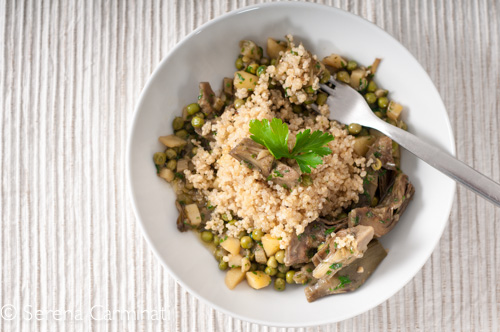
Artichoke and Pea Quinoa.

 Ingredients 

for 4 servings

4 artichokes

200 g ( 7 oz) of peas

1 large potato

1 organic vegetable stock cube

1 large onion

1 clove of garlic

a bunch of parsley

a sprig of fresh marjoram

5 tablespoons extra virgin olive oil

salt and pepper to taste

400 ml (14 fl. oz) of vegetable stock (made with 400 ml of hot water and 1 organic vegetable stock cube)

For the quinoa.

1 cup quinoa

2 cups water

a pinch of salt

Quinoa preparation.

1. Wash the quinoa, using a strainer, under running water for a few minutes.

2. Put 1 cup of quinoa, 2 cups of water and a pinch of salt in a small pan, then cook for 15 minutes.

3. Turn off the heat and cover with the lid.

How to prepare the Vegetables. 

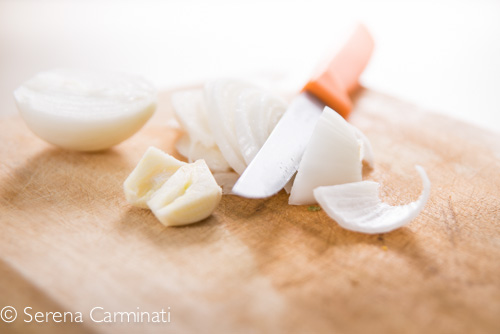
1. Peel, wash and finely cut the onion. Fry over a low heat for a few minutes. Cut the garlic clove, remove the green core, then chop and fry with the onion.

DSC_0908

DSC_3642

2. Wash and trim the artichokes, removing all the sharp,  hard and hairy bits.  Cut each artichoke into 8 parts (also peel and cut the stems into small pieces) then add to the ingredients.

DSC_3638

DSC_3656

DSC_3675

3. Wash, peel and cut the potato into very small cubes.  Add the potato, pour 400 ml of vegetable stock into the pan and mix well.

DSC_3686

4. Then add the peas and cook for about 30 minutes over a low heat (cover with the lid and stir from time to time).

DSC_3691

5. Five minutes before the end of the cooking time, add the herbs ( finely chopped) and season with salt and pepper.

DSC_3711

6. Turn off the heat and serve the vegetables with the quinoa in the middle.

DSC_3783

DSC_3751

Quinoa con Carciofi e Piselli.

Ingredienti

per 4 persone

4 carciofi

200 g di piselli

1 patata grande

1 cipolla grande

1 spicchio d’aglio

1 dado vegetale biologico

un mazzetto di prezzemolo

un mazzetto di maggiorana fresca

5 cucchiai di olio extra vergine d’ oliva

400 ml di brodo vegetale (fatto con 400 ml d’acqua bollente e un dado vegetale)

sale e pepe q b

per la quinoa

80 g di quinoa

200 ml d’acqua (ancora meglio se usate del brodo vegetale)

un pizzico di sale

 Preparazione della quinoa.

1. Lavate la quinoa, usando un colino, sotto il getto d’acqua del rubinetto per qualche minuto.

2. Fate cuocere in acqua leggermente salata (o brodo)  la quinoa per circa 15 minuti.

3. Spegnete il fuoco, coprite con il coperchio e lasciate riposare.

Preparazione delle verdure.

1. Pulite, tagliate finemente la cipolla e fate soffriggere a fuoco basso. Tagliate in due lo spicchio d’aglio, togliete l’anima, tritate e aggiungete al soffritto.

2. Lavate e pulite i carciofi, togliendo tutte le spine, le parti dure e fastidiose. Tagliate ciascun carciofo in 8 parti, tagliate anche il gambo a pezzetti e aggiungete al soffritto.

3. Pelate, lavate e tagliate la patata a cubetti molto piccoli. Mettete a cuocere la patata e aggiungete del brodo vegetale. Mescolate bene.

4. Aggiungete i piselli e fate cuocere a fuoco lento per 30 minuti con il coperchio semi chiuso, mescolando occasionalmente.

5. Quasi a fine cottura, aggiungete le erbe tritate finemente e condite con il sale e pepe.

6. A cottura terminata, spegnete il fuoco e servite le verdure con la quinoa nel centro.

Steamed Prawn and Bell Pepper Kebabs.

Today I am publishing my first recipe of the year, after taking a little break.
Bearing in mind that many of you will be on a diet, just like me, after a full-on Christmas feast, I decided to go for a light and delicate starter made with seafood and vegetables . Experimenting in my kitchen, not long ago, I discovered that the delicate flavours of yellow bell peppers and prawns complement each other very well, especially if steamed. This recipe is very healthy and the preparation is quick and easy, however it’s important to get the cooking time right, because if you overcook the ingredients the final result won’t be any good, as the bell peppers will become too soft and the prawns will turn out hard, dry and chewy. In order to avoid this follow carefully the instructions and you’ll have the most amazing prawn kebabs!
Tip. As a light meal, serve the prawn kebabs with steamed basmati rice.
DSC_3587
Prawn and bell pepper kebabs.
Ingredients
for 4 people ( for 8 kebabs)
2 big yellow peppers (or 3 small peppers)
450 g prawn tails, to clean
a few leaves of fresh parsley
6 tablespoons of extra virgin olive oil
3 tablespoons of lime juice
salt and pepper to taste
1. Wash the peppers, remove the core, pith and seeds, then cut them into 2 halves.
DSC_3488
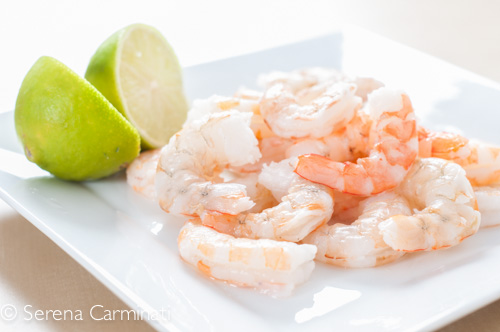
2. Wash and peel the prawns. Using a knife, remove the hard parts and the dark vein on the back.
DSC_3463
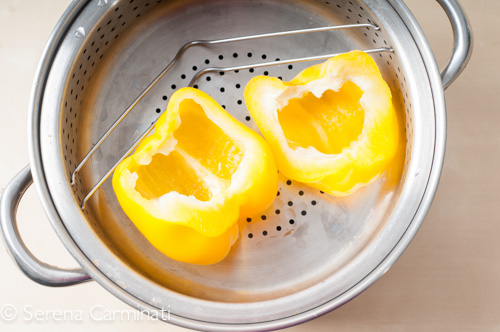
3. Steam the peppers for about 10-15 minutes (external side facing down).
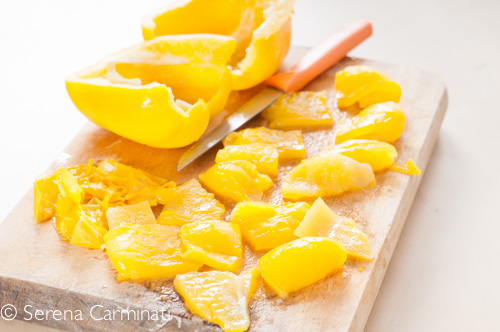
DSC_3492
4. Remove the peppers from the heat, peel the skin off using a knife and cut them into small pieces (about 4 cm).
DSC_3521
5. Steam the prawns for about 3 minutes.
6. Insert the skewers, alternating pieces of pepper with prawns.
DSC_3570
For the seasoning (lime citronette sauce).
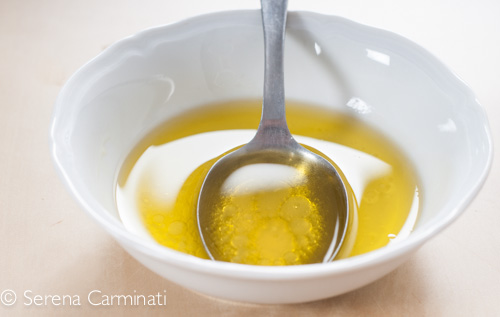
DSC_3533
1. In a small bowl, mix 6 spoons of extra virgin olive oil with the lime juice.
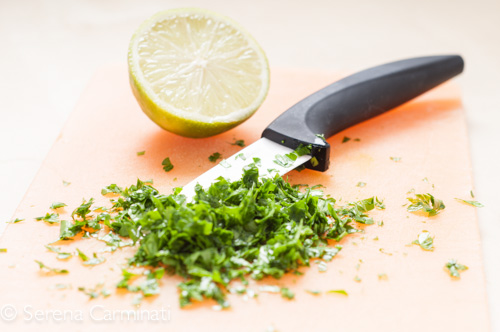
DSC_3523
2. Chop a few parsley leaves finely.
DSC_3506
3. Mix all the ingredients together with some salt and pepper.
DSC_3538
4. Season the prawn kebabs and serve them warm with the sauce.
DSC_3585
Spiedini di Gamberi e Peperoni (cottura a vapore).

Ingredienti

per 4 persone (8 spiedini)

2 grandi peperoni gialli (o 3 piccoli)

450 g di code di gambero (da pulire)

alcune foglie di prezzemolo

6 cucchiai di olio extra vergine di oliva

3 cucchiai di succo di lime

sale e pepe q b

1. Lavate, pulite e tagliate i peperoni in due.

2. Pulite e sgusciate i gamberi, eliminando completamente la buccia e il budellino nero.

3. Fate cuocere i peperoni a vapore per 10-15 minuti (con la parte esterna verso il basso).

4. Togliete i peperoni dal fuoco, sbucciateli delicatamente e tagliateli a pezzetti rettangolari.

5. Fate cuocere a vapore i gamberi per 3 minuti.

6. Infilzate gli ingredienti con degli spiedini di legno, alternando dei pezzi di peperone ai gamberi.

Per la citronette di lime.

1. In una piccola ciotola, mischiate 6 cucchiai di olio extra vergine di oliva con 3 cucchiai di succo di lime.

2. Tritate qualche foglia di prezzemolo molto finemente.

3. Unite tutti gli ingredienti, aggiungendo anche un po’ di sale e pepe.

4. Condite bene gli spiedini di gamberi e serviteli tiepidi, accompagnandoli con il condimento.

Crock Pot Quinoa and Veggie Stew.

 This dish is very healthy and nourishing, perfect for the winter.
Quinoa is a plant that can be used as a grain, in fact it is quite similar to couscous. It takes 15 minutes to cook, usually it’s boiled and added to the dish, however here I cook it together with the vegetables at end of the preparation of the recipe.
Quinoa is considered a superfood because it contains important amino acids and it’s gluten-free. As a matter of fact it’s not a cereal, but it can be used like one in many recipes.
Cooking tips.
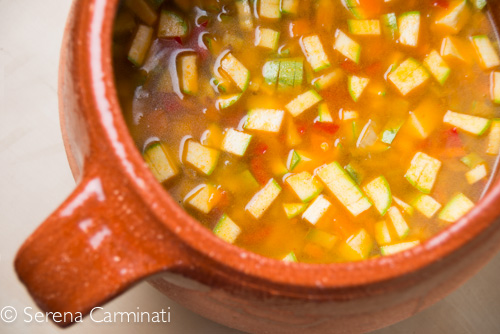
To cook this stew I used an eco-friendly crock pot.  Some crock pots can release harmful chemicals contained in their paint, when they are used at high temperatures for slow cooking recipes. There are specialised shops that sell these eco-friendly crock pots, painted with harmless natural paint, they are a little bit expensive, but you’ll only need one….Although, a crock pot is nice, but it is not strictly necessary, you can also use a normal stainless steel pan or a slow cooker to prepare this recipe.
DSC_0540
Ingredients
Serves 4
1 large onion
2 cloves of garlic
2 medium carrots
2 stalks of celery
2 large potatoes
3 zucchini / courgettes
1 red bell pepper
300 g (10.6 oz) sweet tomatoes, like cherry tomatoes
1 can of cannellini beans (or baked beans)
150 g (5.3 oz) quinoa
3 bay leaves
700 ml (23.6 oz fl) water
extra virgin olive oil, salt and pepper to taste
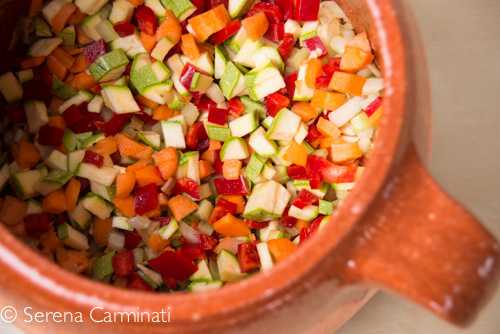
1. Peel and cut all the vegetables into small pieces.
DSC_0508
2. Fry the onion with plenty of olive oil, then add the garlic after a few minutes.
DSC_0504
3. When the onions are golden, add all the vegetables with the bay leaves and 700 ml of water.
DSC_0516
DSC_0518-2
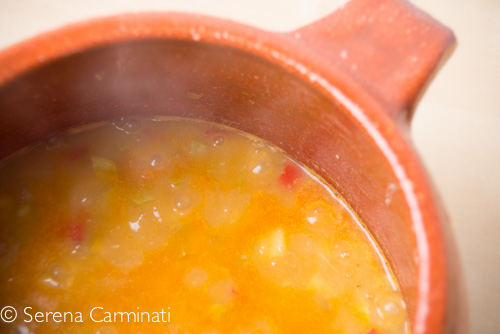
4. Stir and continue to cook over a low heat for 1 hour and 20 minutes (but add the beans after 40 minutes of cooking time).
DSC_0522
5. Wash the quinoa, using a strainer, under running water for a few minutes.
6. When the vegetables are cooked add the quinoa, then stir and cook for another 10 minutes.
DSC_0527
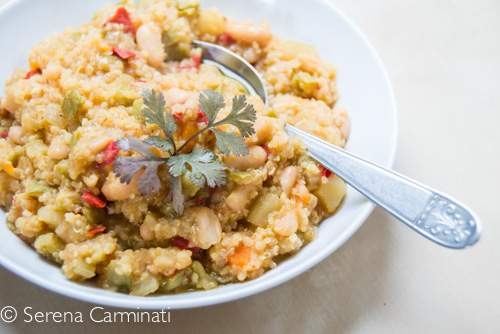
7.  Turn off the heat and cover with a lid. Season with a little olive oil, salt, pepper and serve after 5 minutes.
DSC_0545
Zuppa di quinoa con verdure.

Ingredienti

4 persone 

1 cipolla grossa

3 zucchini

2 spicchi d’aglio

2 carote medie

2 gambi di sedano

2 patate grosse

1 peperone rosso

300 g di pomodorini piccoli e dolci

1 scatola di fagioli cannellini

150 g di quinoa

3 foglie di alloro

700 ml d’acqua

olio extra vergine d’oliva, sale e pepe q b

1. Mondate e tagliate tutte le verdure a dadini.

2. Mettete a soffriggere la cipolla, aggiungendo l’aglio dopo qualche minuto per non farlo bruciare.

3. Quando il soffritto sarà dorato, aggiungete tutte le verdure con le foglie di alloro. Innaffiate con 700 ml d’acqua, poi coprite con il coperchio e fate cuocere lentamente.

4. Mescolate e continuate a cuocere a fuoco molto lento per 1 ora e 20 minuti (aggiungete i fagioli dopo 40 minuti di cottura).

5. Lavate la quinoa, usando un colino, sotto il getto d’acqua del rubinetto per qualche minuto.

6. Poco prima di spegnere il fuoco aggiungente la quinoa (circa 10 minuti prima), spegnete e coprite con il coperchio.

7. Lasciate riposare per 5 minuti. Condite con un po’ d’olio, sale e pepe e servite.