Tag Archives: Vegetarian

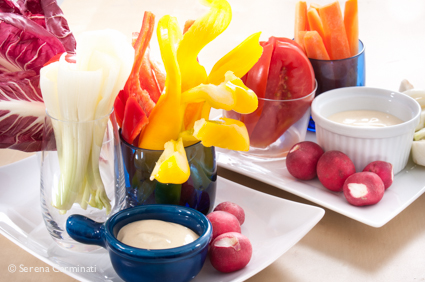
Pinzimonio (vegetable crudites) with yogurt and mustard sauce.

This week we are going to prepare a lovely platter of Italian-style vegetable crudites (Pinzimonio) with a nice creamy sauce. Light and healthy, this colorful platter consists of a mixture of crunchy vegetables, usually cut into sticks and served with a dressing on the side. For this recipe I prepared a slightly chilled dipping sauce, made with yogurt and mustard.

 Ingredients

4-6 servings

1 large tomato

3 medium carrots

1 yellow pepper

1 red pepper

1/2 fennel

1 bunch of red radicchio leaves

1 bunch of radishes

3 stalks of celery

 for the sauce

1 low-fat greek yogurt ( 170 g, 5.99 oz, unsweetened)

1 tablespoon of apple cider vinegar

1 tablespoon of extra virgin olive oil

2 tablespoons strong mustard

a pinch of honey

salt and paprika to taste

Method.

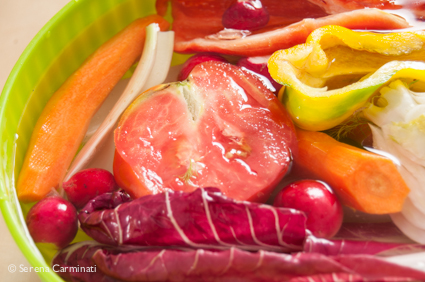
1. Wash and prepare all the vegetable, then cut them into sticks ( except the radicchio leaves and radishes). Put all the vegetable to soak in cold water for a few minutes and drain.

DSC_9482

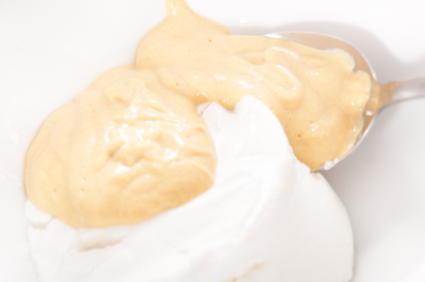
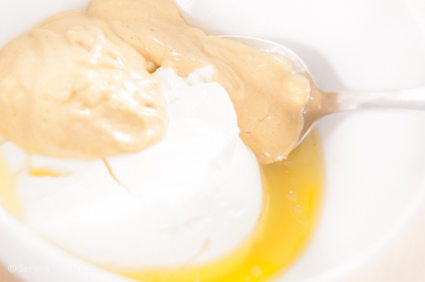
2. Separately, prepare a sauce combining the yogurt with mustard and the honey.

DSC_9412

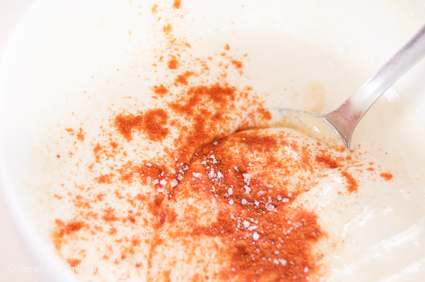
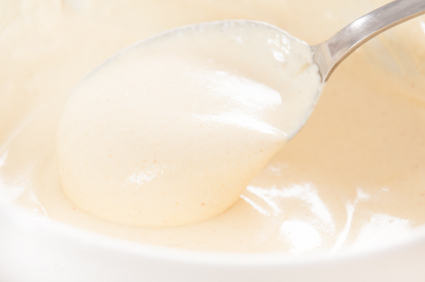
3. Add vinegar, olive oil, salt and paprika to the mixture.

DSC_9420

DSC_9422

4. Put the sauce to cool in the refrigerator for about 30 minutes.

DSC_9467

5. Serve the vegetables on a large dish (or two) with the sauce in the centre.

DSC_9495

Pinzimonio di verdure con salsa di yogurt e senape.

1 pomodoro grande

3 carote medie

1 peperone giallo

1 peperone rosso

1/2 finocchio

1 mazzetto di radicchio rosso

1 mazzetto di ravanelli

3 coste di sedano

 per la salsa

1 yogurt greco magro (170 g, non zuccherato)

1 cucchiai di aceto di mele

1 cucchiaio di olio extravergine di oliva

2 cucchiai di senape

pochissimo miele

sale e paprica q b

Preparazione.

1. Lavate, mondate e tagliate le verdure a bastoncino, tranne il radicchio e i ravanelli. Immergete le verdure in acqua molto fredda per qualche minuto.

2. A parte, preparate una salsa unendo lo yogurt alla senape e al miele.

3. Aggiungete l’olio, l’aceto di mele, il sale e la paprica.

4. Mettete la salsa a raffreddare in frigorifero per 30 minuti. 

5. Servite le verdure in un piatto grande da portata (o due) , con la salsa al centro.

Chickpea hummus with multigrain pita bread (sourdough bread recipe).

Hummus is a delicious chickpea spread, easy to make and suitable for every occasion. Served with this special multigrain bread it becomes a real treat! This dish is rich in vegetable protein, fiber and omega 3, found in flaxseed. It is a great balanced meal when served with salad or fresh vegetables, while served with bread it is a wonderful starter.

Mutigrain pita bread.

For 4 flat breads.

ingredients

70 g (2.46 oz) wholemeal flour (whole wheat flour)

70 g (2.46 oz) wholemeal spelt flour

40 g (1.41) Manitoba flour

90 g (3.17 oz) sourdough

3 tablespoons 6 mixed grains (hulled oats, hulled barley, hulled spelt, wheat, rye, brown rice)

1 tablespoon flax seeds (linseeds)

1 tablespoon extra virgin olive oil

1 tea spoon of salt

1/2 teaspoon honey or barley malt (unsweetened) syrup (it helps the dough to rise and gives a nice crust to the bread, optional)

water as needed

For the hummus.

Ingredients

1 can chickpeas (240 g, 8.46 oz, drained chickpeas)

1 clove garlic

the juice 1/2 a lemon

1 teaspoon sesame seeds finely chopped

a few crystal of sea salt

4 tablespoons extra virgin olive oil

1/2 cup water

paprika to taste

Method (Multi Grain Pita Bread).

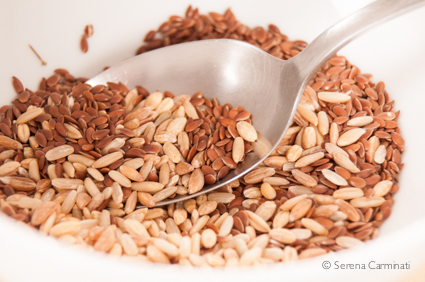
1. Wash the seeds in a bowl, changing the water several times, until it’s completely clear.

Step 1. Wash the seeds until the water is clear.

2. Leave the seeds to soak for 6-8 hours.
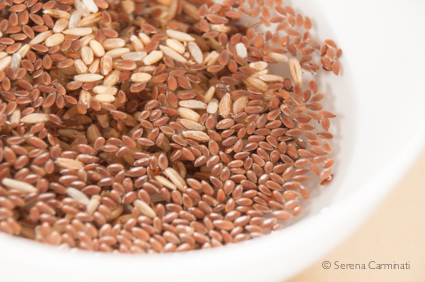
Step 2. Leave to soak for 6-8 hours.

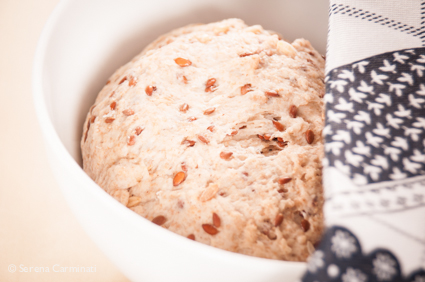
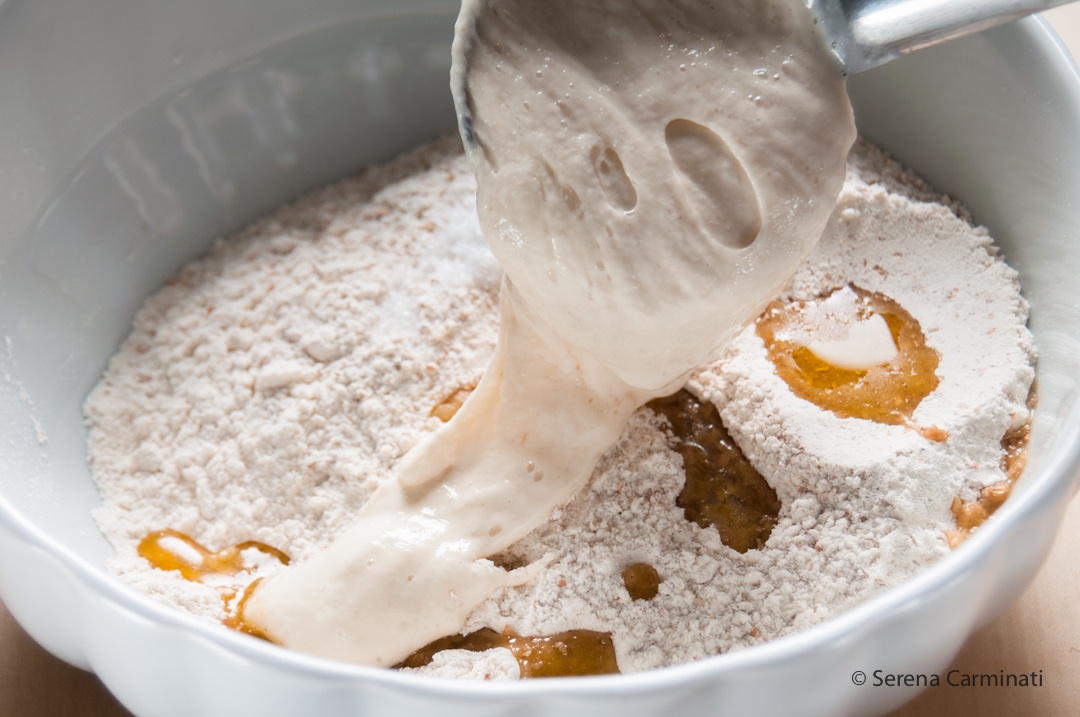
3. Mix the flour with the sourdough, adding some water and a little bit of malt (or honey). Sprinkle the seeds on top of the mixture, add a teaspoon of salt and knead everything well (adding flour or water if necessary, as the dough should be neither too sticky nor too hard and dry).

Step 3. Mix the flour, the sourdough,the seeds,some malt and water.

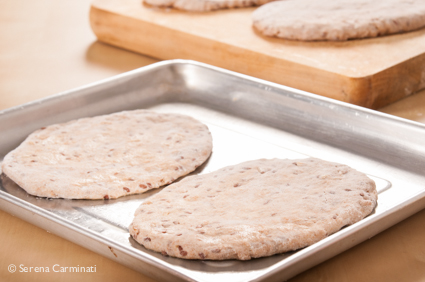
4. Let it rise for 3 to 6 hours. When the dough has doubled in volume, divide it into 4 pieces and shape them into flat breads, using a rolling pin, if necessary.

5. Lay your breads on a baking sheet lightly oiled and bake at 200 ° C (392° F) for 15 minutes.

Step 4 and 5. Let rise, then shape the breads and bake them.

Chickpea hummus with multigrain pita bread (front shot pita bread)

Method (Chickpea Hummus).

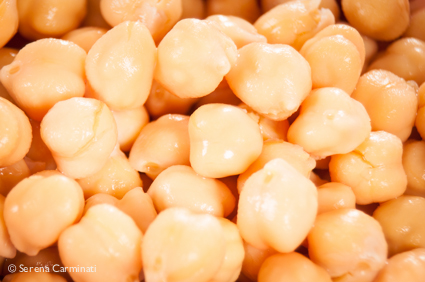
1. Wash and drain the chickpeas (you can boil them for a few minutes to be safe).

Chickpea Hummus. Step 1. Wash and dry the chickpeas

2. Using a food processor, process the chickpeas until very finely chopped with the garlic, sesame seeds and salt (for better a result, I use mortar and pestle to break the sesame seeds with just a few sea salt crystals, before putting them in the food processor)

Chickpea Hummus. Step 2. Process the chickpeas with the garlic, the sesame seeds and salt.

3. Continue to process adding the lemon juice, water, and gradually the olive oil, until you have a nice creamy sauce.
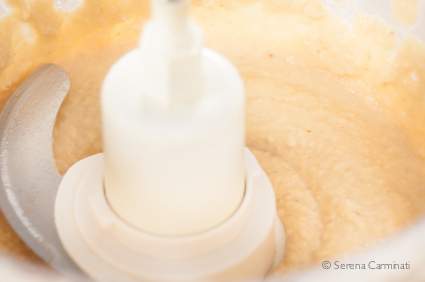
Chickpea Hummus. Step 3. Add lemon juice, water and olive oil and process until creamy.

4. Put the hummus in a small bowl, top with some paprika and serve with the multigrain bread.

Step 4. Serve the hummus in a small bowl with the multigrain pita bread.

Hummus di ceci con pane arabo ai cereali e semi di lino.

Per 4 panini piatti (tipo pita) ai cereali.

Ingredienti

70 g di farina integrale

70 g di farina integrale di farro

40 g di manitoba

90 g di lievito madre

3 cucchiaio di 6 cereali misti ( avena decorticata, orzo decorticato, farro decorticato, frumento, segale,riso integrale)

1 cucchiaio di semi di lino

1 cucchiaio di olio extravergine di oliva

1 cucchiaino di sale

1/2 cucchiaino di miele o di malto (fa lievitare meglio l’impasto e aiuta il formarsi di una bella crosta, ma é facoltativo)

acqua q b

Per l’hummus di ceci

1 scatola di ceci (240 g di ceci scolati)

1 spicchio d’aglio

Il succo di 1/2 limone

! cucchiaino di semi di sesamo tritati

qualche cristallo di sale grosso

4 cucchiai di olio extravergine d’oliva

1/ 2 bicchiere d’acqua

una spolverata di paprika

Preparazione (pane pita ai cereali).

1. Mettete a bagno in una ciotola tutti i semi, cambiando l’acqua più volte, finché non sarà completamente limpida. Lasciate i semi immersi in acqua per 6 ore.

2. Unite le farine al lievito madre, aggiungendo un po’ d’acqua e un po’ di malto (o di miele). Unite i semi all’impasto, aggiungete un cucchiaino di sale e impastate bene.

3. Aggiungete farina o acqua se necessario,  l’impasto ottenuto non dovrebbe essere né troppo appiccicoso, né troppo duro e asciutto.

4. Fate lievitare dalle 3 alle 6 ore, fino a quando l’impasto sarà raddoppiato di volume.

5. Formate 4 pagnotte e stendetele su una teglia leggermente unta con olio d’oliva. Infornate a 200° C per 15 minuti.

Preparazione ( hummus di ceci).

1. Lavate e scolate i ceci (potete anche bollirli per qualche minuto, per sicurezza). Frullate i legumi molto finemente con l’aglio, i semi di sesamo e il sale (per un risultato migliore, uso prima un mortaio per sbriciolare i semi di sesamo con qualche cristallo di sale grosso e poi li metto con il resto degli ingredienti nel tritatutto).

2. Continuate a frullare e aggiungete il succo di mezzo limone,  l’acqua e in fine l’olio molto gradualmente, fino ad ottenere una crema.

3. Mettete l’hummus in una ciotola, aggiungete una spolverata di paprika e servite con il pane ancora cado.

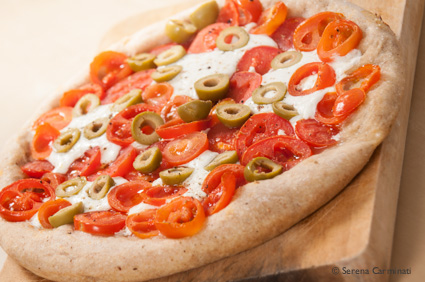
Posh and perfect! Wholemeal pizza with goat’s cheese, olives and rocket (arugula).

This is a great veggy pizza! The dough, once cooked, is perfectly crunchy on the outside and soft on the inside. I used a mixture of manitoba, semolina and wholemeal flour to give elasticity, crispness and flavour to the pizza. Instead of using sourdough you can use 6 g of yeast to significantly reduce the rising time of the dough. At this link https://foodfulife.wordpress.com/2013/01/02/how-to-make-natural-yeast-sourdough/  you will find a short article that explains how to make sourdough at home.

Wholemeal pizza with goat’s cheese, olives and rocket (arugula).

Ingredients

For 1 thick pizza

50 g (1.76 oz) manitoba flour

50 g (1.76 oz) wholemeal (whole wheat) flour

40 g (1.41 oz)  fine semolina flour

50 g (1.76 oz) sourdough

70 g (2.46 oz) fresh and creamy goat’s cheese

70 g (2.46 oz) sweet and creamy soft cheese (crescienza or stracchino)

3 tablespoons extra virgin olive oil

1 teaspoon salt

A handful of rocket (arugula)

A handful of pitted olives

6-7 ripe cherry tomatoes

salt and pepper as needed (for seasoning the pizza)

100 ml (3.38 fl. oz) water (or more)

1/2 teaspoon honey

Create a starter dough with 50 g (1.76 oz ) wholemeal flour, 50 g manitoda flour and 50 g sourdough. Knead the starter dough with 100 ml (3.38 fl. oz) water and half a teaspoon of honey.

DSC_6289

Cover and set for a couple of hours. After 2 hours, take the starter dough and mix with the semolina flour ( adding some water or flour if needed). Add a teaspoon of salt and a tablespoon of oil and work until smooth.

DSC_6357

Let rise for a few hours, and then the dough will ready when it doubles in volume. Roll out the dough and place in a baking tray, previously evenly greased with a tablespoon of olive oil.

DSC_6371-3

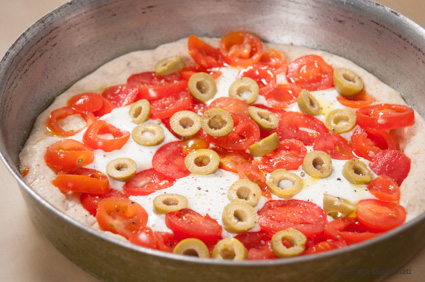
Cut the tomatoes and the olives into thin slices. In a small bowl, mix the goat’s cheese with crescenza until smooth.

DSC_6361-3

Alternating, place the tomatoes and cheese on top of the dough, then garnish with some slices of olives. Season your pizza with a tablespoon of olive oil, some salt and pepper.

DSC_6378-3

Bake at 200 ° C (392° F) for 25-30 minutes.

DSC_6395-3

Top the pizza with fresh rocket and serve.

DSC_6408-3

DSC_6425-3

Pizza integrale con formaggio di capra, olive e rucola.

Ingredienti

per 1 pizza

50g di farina manitoba

50g di farina integrale

40g di semola (rimacinata)

50g di lievito madre  (oppure 6 g di lievito di birra con aggiunta di acqua)

70 g di formaggio fresco (cremoso) di capra

70 g di crescenza o stracchino

3 cucchiai di olio extravergine d’oliva

Una manciata di olive verdi snocciolate

Una manciata di rucola

1 cucchiaino scarso di sale

6-7 pomodorini ciliegia ben maturi

sale e pepe qb (sulla pizza finita)

100 ml di acqua (o più)

1/2 cucchiaino di miele

Create un lievitino con 50g di farina integrale, 50g di farina manitoda e 50 g di lievito madre. Impastate il lievitino con 100 ml di acqua e mezzo cucchiaino di miele. Coprite e lasciate lievitare per un paio d’ore. Dopo la prima lievitazione, prendete il lievitino e impastate con la semola (aggiungendo un po’ d’acqua o di farina se necessario). Aggiungete un cucchiaino di sale e un cucchiaio d’olio all’impasto. Lasciate lievitare per qualche ora ( tenete presente che l’impasto è pronto quando raddoppia di volume).
Stendete l’impasto su una teglia, uniformemente unta con un cucchiaio di olio extravergine d’oliva. Tagliate i pomodorini e le olive a fettine. In una terrina piccola, unite e mescolate bene la crescenza con il formaggio di capra, fino ad ottenere una crema abbastanza omogenea. Cospargete i pomodorini alternandoli al formaggio sulla base della pizza e finite di decorare con delle fettine di olive. Condite la pizza con un cucchiaio di olio, un po’ di sale e pepe.

Fate cuocere a 200° di per 25-30 minuti. Sfornate la pizza, aggiungete la rucola e servite.

My Favourite Oven-Baked Falafels.

Oven-baked broad bean falafel (front view 1 with yellow cloth)

Falafel is delicious middle eastern food, usually prepared with dried chickpeas or dried broad beans (fava beans). Broad bean falafel is a traditional egyptian recipe. Being rich in vegetable protein, this food is an excellent alternative to meatballs in vegetarian diet. In this recipe, I changed a few steps in order to get a little lighter dish. Falafels can be served with a yogurt and cucumber sauce, or with fresh tomato salad.

Oven-cooked broad bean falafel (raw on a plate, front view) 

Oven-cooked broad bean falafels.

Ingredients

Serves 2-4  (16 falafel)

preparation: 20 minutes + 12 hours to soak the beans in water + 30 minutes (minimum) refrigeration

cooking time: 30 minutes

150 g (5.2 oz) dried broad beans

1 large onion

1 clove of garlic

2 tablespoons chopped fresh parsley

1 teaspoon cumin seeds (ground)

1 teaspoon coriander seeds (ground)

1 tablespoon sesame seeds (ground)

1 tablespoon wholemeal flour (or plain flour)

1 teaspoon baking powder or baking soda

3 tablespoon extra virgin olive oil

1 teaspoon salt (maybe a little less)

pepper to taste

Method.

1. Let the beans soak in a bowl overnight (12 hours, at least).. Lay a kitchen towel on a table and rub the broad beans to dry them up.

Step 1. Soak the beans, then dry them with a towel.

2. Put the beans in a food processor and chop finely with the onion, garlic and parsley. Add the seeds (already finely ground), flour , salt , pepper and baking powder. Mix well.

Step 2. Chop the beans with garlic, the onions and all the other ingredients.

Step 2. Chop the beans with garlic, the onions and all the other ingredients.

3. Place the mixture to cool for 30 minutes in the refrigerator (sometimes I leave it in the fridge for hours, I think my falafels taste even better afterwards). Form small balls with the mixture.

Step 3. Place in the fridge for 30 minutes, then shape small balls.

4. In a frying pan, heat 3 tablespoons of olive oil, then fry the balls until they are golden on all sides. Place all the falafels in a greased baking tray and cook in the oven at 170 ° C (338° F) for about 20 minutes. Serve while still warm.

Step 4. fry the falafel until golden, then bake for 20 minutes.

Falafel di fave cotti al forno.

Ingredienti

2-4 persone (16 falafel)

Preparazione: 20 minuti + 12 ore per fare ammorbidire le fave in acqua + 30 minuti (minimo) per far riposare l’impasto nel frigo.

Cottura: 30 minuti

150 g di fave secche

1 cipolla grande

1 spicchio d’aglio

2 cucchiai di prezzemolo fresco tritato

1 cucchiaino di semi di cumino tritati

1 cucchiaino di semi di coriandolo tritati

1 cucchiaio di semi di sesamo tritati

1 cucchiaio di farina integrale (o farina normale)

3 cucchiai di olio extravergine d’oliva

1 cucchiaino di lievito in polvere o bicarbonato per uso alimentare

1  cucchiaino scarso di sale e pepe q. b.

Preparazione.

1. Lasciate le fave a bagno in una ciotola per tutta la notte. Stendete un panno sul tavolo e asciugate le fave strofinandole bene. 

2. Mettete i legumi in un tritatutto e tritateli molto finemente con la cipolla, l’aglio e il prezzemolo. Aggiungete i semi ( già finemente tritati), la farina, il sale , il pepe e il lievito in polvere (o bicarbonato). Mescolate bene tutto.

3. Lasciate riposare l’impasto per almeno 30 minuti nel frigorifero ( lasciandolo riposare più a lungo, ho dei risultati anche migliori). Con l’impasto ottenuto, formate tante polpette di piccole dimensioni.

4. In una padella scaldate 3 cucchiai di olio extravergine d’oliva, poi fate soffriggere le polpette facendole dorare su tutti i lati. Quando le polpette saranno completamente dorate, mettetele in una teglia leggermente unta e fatele cuocere a 170° per 20 minuti. Servite i falafel quando sono ancora caldi.

More than just another pizza!

DSC_7881

A pizza for all occasions. A great dish, full of flavor but also healthy as it contains whole grain fibers and vitamins. Personally, I prefer the flavor and texture of different flours mixed together, compared to plain white flour, I think it’s a matter of habit. With experience, I realized that by gradually increasing the use of whole grains and vegetables in the preparation of traditional dishes you can have a healthier diet without having to give up taste or tradition.

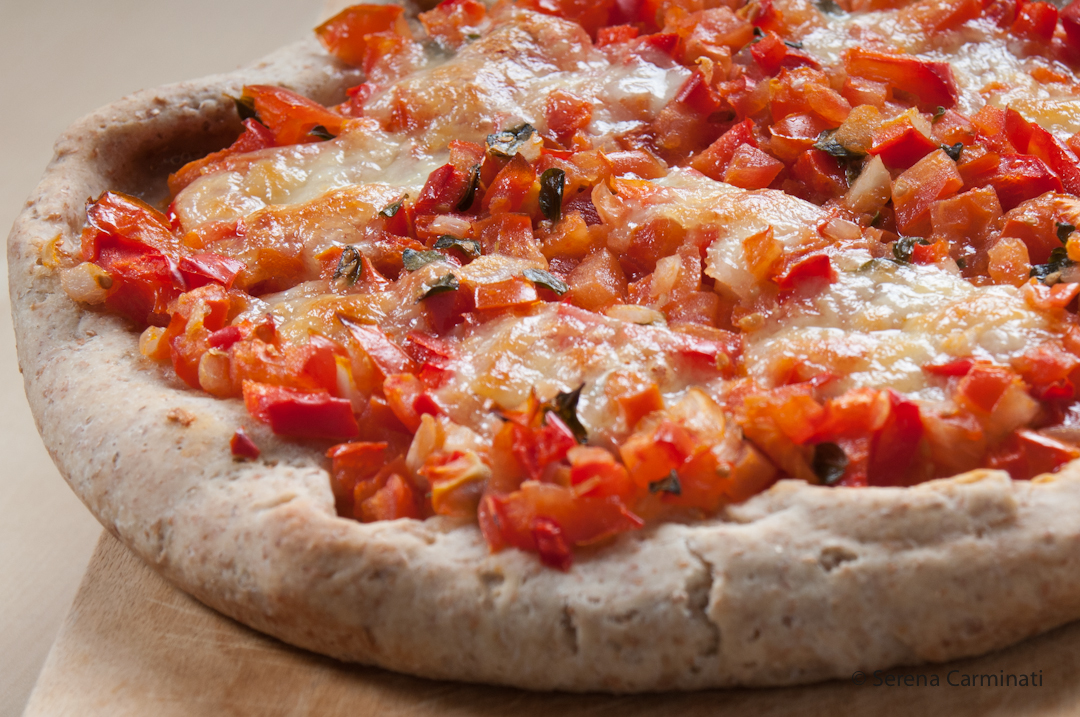
Pizza with three flours and vegetables.

100 g wholemeal flour (3.5 oz)

100 g (3.5 oz) whole spelt flour (but use 150 g [5.2 oz] spelt flour if you use yeast instead of sourdough)

100 g durum wheat semolina flour (all organic if possible) 3.5 oz

1 teaspoon of salt

1 tablespoon extra virgin olive oil

2 medium size tomatoes

1/2 medium size bell pepper

1/3 small onion (optional)

a bunch of fresh marjoram or a tablespoon of dried marjoram

ground pepper to taste

100 g of sourdough (3.5 oz) or 5 g yeast dissolved in a little water.

(the dose of yeast may vary depending on the humidity and the quality of the product)

1/2 squeezed mozzarella cheese

1/2 glass of water approximately for the dough

Prepare the dough by combining the three flours, salt, olive oil and sourdough (or yeast).

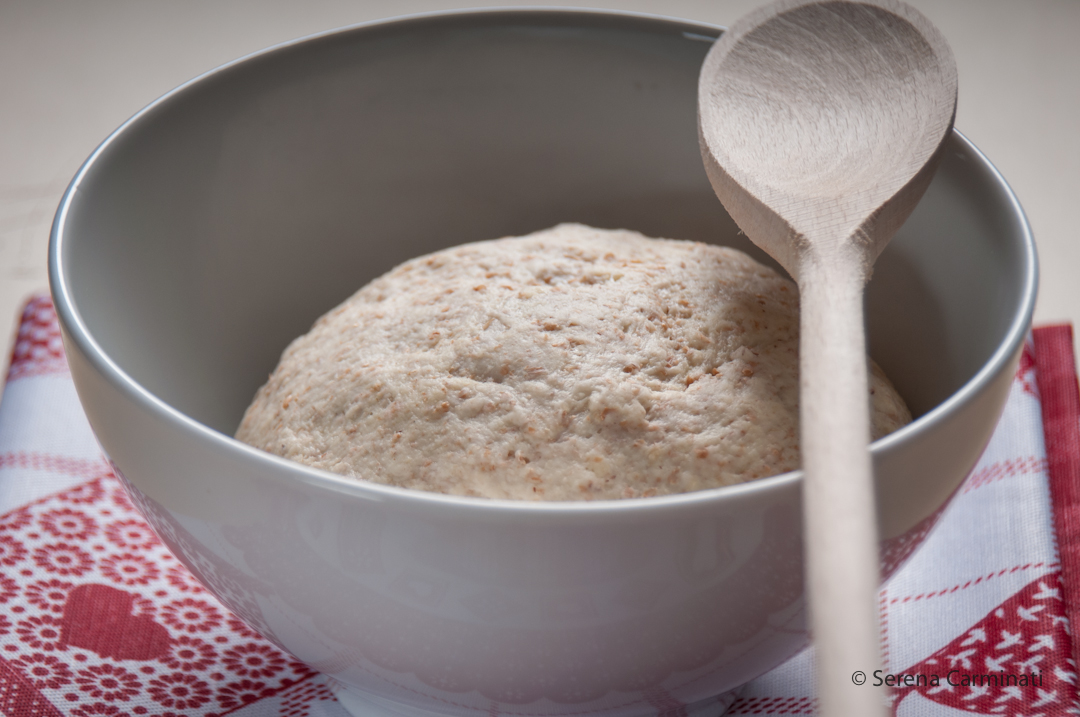
Mix all the ingredients together and knead to form a soft and smooth dough ( add some flour if the dough is too wet and a little more water if is too dry). Let the dough rise in a bowl with a wet cloth on top for 6 hours if you use sourdough or for an hour if you use yeast.

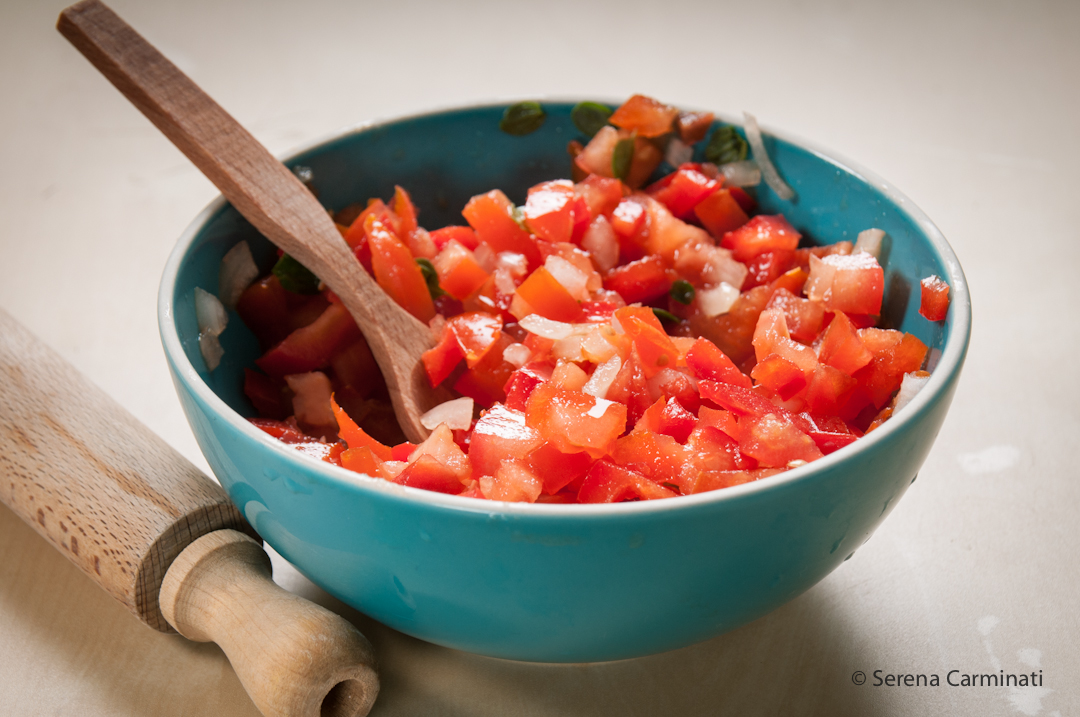
Cut the vegetables, place them in a bowl and drizzle with some olive oil, a pinch of salt and some marjoram.

When the dough is ready roll it out with a rolling pin, pour a little oil evenly over the bottom of a round baking tray and roll out the dough until the baking tray is completely covered.

Place the vegetables on top of the dough and add some mozzarella cheese.

Bake for 20-30 minutes at 180 ° C (356°).

Sprinkle the pizza with some ground pepper and serve it hot.

Una pizza ideale per tutte le occasioni. Un ottimo piatto unico, ricco di sapore ma anche sano, perché contiene fibre e vitamine. Ho elaborato questa ricetta perché personalmente preferisco il sapore e la consistenza delle farine miste, rispetto alla farina bianca, credo sia una questione di abitudine. Con l’esperienza, ho capito che incrementando gradualmente l’uso di farine integrali e verdure nella preparazione di alcuni piatti tipici si può avere una dieta più varia e sana, senza dover necessariamente rinunciare a gusto o tradizione.

Pizza alle tre farine con peperoni e maggiorana.

100 g di farina di integrale

100 g di farina di farro (usate 150 g.di farina di farro se usate il lievito di birra)

100 g di farina di semola di grano duro (tutte possibilmente bio)

1 cucchiaino scarso di sale fino

1 cucchiaio di olio extravergine di oliva

2 pomodori di medie dimensioni

1/2 peperone rosso di medie dimensioni

1/3 di cipolla piccola (facoltativo)

un mazzetto di maggiorana fresca o un cucchiaio di maggiorana secca

pepe macinato a piacere

100 g di lievito madre o 5 g di lievito di birra sciolto in un po’ d’acqua.

(la dose di lievito madre può variare a seconda dell’umidità e della qualità del prodotto, meglio comunque abbondare)

1/2 mozzarella ben strizzata

1/2  bicchiere d’acqua circa per l’impasto

Preparate l’impasto unendo le tre farine, il sale,  l’olio e il lievito. Mescolate tutti gli ingredienti, impastate fino a formare una pasta morbida e omogenea, aggiungendo un po’ di farina se l’impasto è troppo umido e un po’ più d’acqua se il risultato è  troppo asciutto. Lasciate lievitare l’impasto in una terrina con sopra uno straccio umido per sei ore se avete usato il lievito madre o per un’ ora se avete usato il lievito di birra.

Tagliate le verdure, riponetele in una scodella e conditele con un filo d’olio, un pizzico di sale e la maggiorana. Quando l’impasto sarà ben lievitato stendetelo con un mattarello, versate un po’ d’olio uniformemente sul fondo di una teglia rotonda e stendetevi l’impasto fino a coprirlo completamente.

Versate le verdure sopra l’impasto e aggiungete la mozzarella.

Infornate a forno caldo per 20-30 minuti a 180°.

Spolverate la pizza con del pepe macinato e servitela calda.

Buon appetito!