Category Archives: Dairy-free

Mom’s Amazing Salted Cod Recipe

First of all, I shall introduce this recipe explaining that salted and dried cod (Baccalà and Stoccafisso) are both very popular in Genoa, where I live. We use them in many traditional dishes, although they are widely used in several countries, I know. Both these cod require some care in the process, but they are very healthy and versatile.

This weekend I had the great pleasure to try a lovely salted-cod recipe, prepared by my mother, who was extremely enthusiastic about it.  It is indeed a delicious dish, full of flavour but also quite delicate, despite the fact that salted cod usually has quite a strong and distinctive taste; so we decided to publish it on Foodfulife. I must admit, I am so excited to share one of my mom’s wonderful recipes with you this week!!!!!
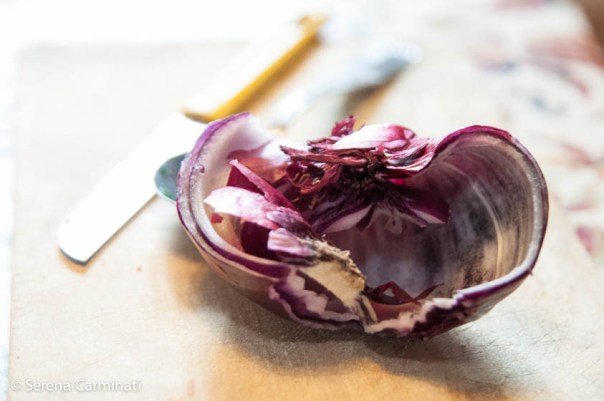
Tips.

1. Salted cod is cod preserved in salt. The salt used to preserve the fish should have been completely removed when you buy it, however, it’s better to check the fish. You can always remove the excess salt by soaking the cod in water overnight ( in the fridge), before preparing the recipe.

2. Use two large frying pans, wide enough to contains all the fish, which will be moved from one pan to the other during the cooking process. Always lay the fish skin-side down, to avoid breaking it.

3. If you wish, you can replace salted cod with swordfish and monkfish, all of these fish are well suited for this recipe.

DSC_6529

Mom’ s Baccalà With Tasty Tomato Sauce

Preparation 10 minutes

Cooking 20 minutes

Ingredients

4 tablespoons extra virgin olive oil for the sauce and extra oil (also use extra virgin olive oil) for frying the fish

1/2 medium size red onion, finally chopped

1 clove of garlic, finely crushed

1 tablespoon fresh chopped parsley

1 anchovy

800 g (28.2 oz) salted cod

1 tablespoon salted capers

5 pickled green olives

5 pickled black olives

1/2 tablespoon of tomato paste

2 cups Italian passata (Italian tomato puree in glass jars)

Flour for dusting

Salt and pepper to taste (salt only if necessary)

Method

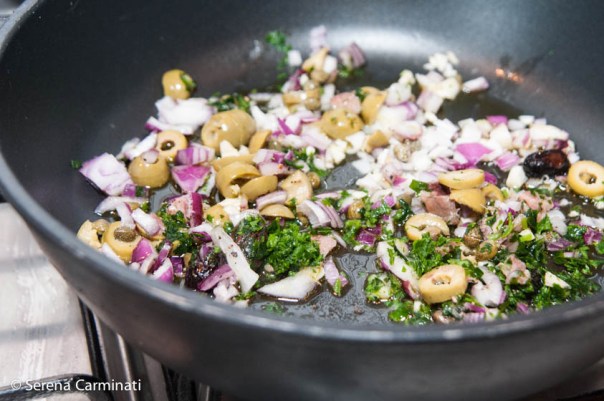
1. Fry the onion, parsley and anchovy in 4 tablespoons of extra virgin olive oil. When the onion is almost golden add the garlic. After a few minutes, add the capers and all the olives with tomato paste and the passata, stir well and lower the heat.
DSC_6510

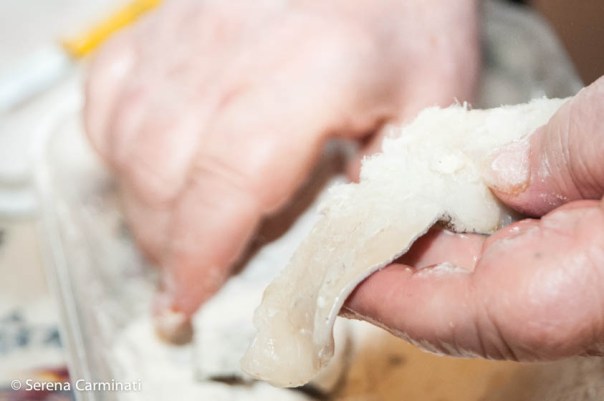
2. Separately, cut the salted cod into thick slices (leave the skin on) and remove the bones.
DSC_6535

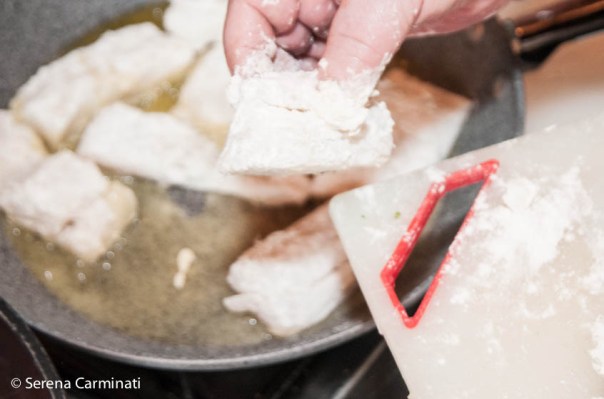
3. Flour the pieces of cod and then fry them in a large pan with plenty of extra virgin olive oil until golden.
DSC_6555

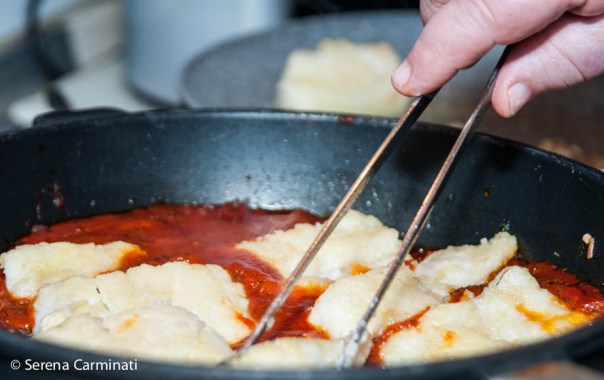
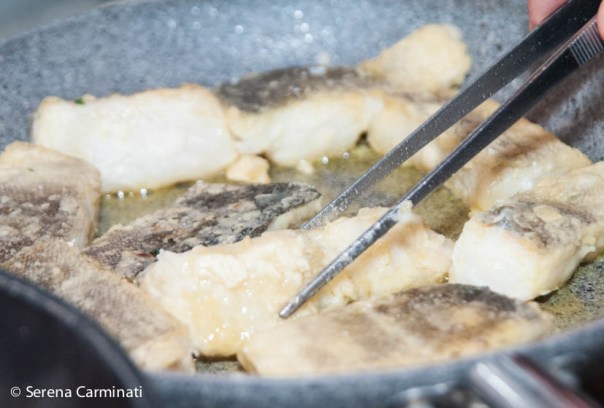
4. Using a pair of kitchen tongs, place the fried fish in tomato sauce (prepared in step 1) and then cook for about 10 minutes. While cooking, season the top of the fish using a spoon (during this process do not flip the fish, to avoid breaking it).
DSC_6564

DSC_6571

DSC_6579-2

5. Turn off the heat and season with salt and pepper (salt only if necessary). Cover with a lid, let it sit for a few minutes and then serve.

DSC_6585-2

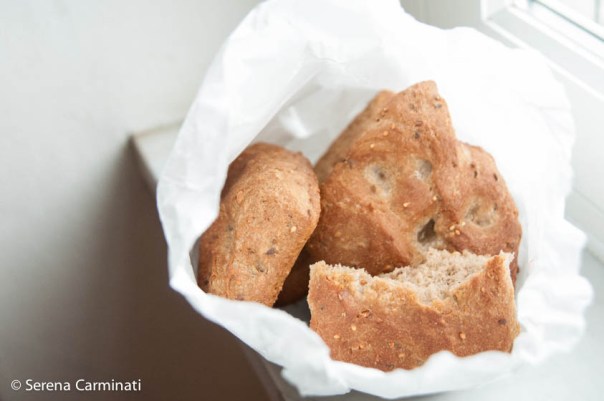
The cod was served with a huge salad and some amazing wholemeal bread, made with a lot of tasty seeds! Lovely!!!

DSC_6604

DSC_6609

I only wish I took better photographs for this recipe…But I didn’t have the proper equipment with me and It wasn’t easy to work with my mother cooking/complaining in the kitchen…Believe me!!!  🙂 When she cooks she gets really nervous! :-)))

DSC_6592

Baccalà al sugo saporito della mamma.

Preparazione 10 minuti

Cottura 20 minuti

Ingredienti

4 cucchiai di olio d’oliva per la salsa e extra olio (sempre olio extra vergine d’oliva) per friggere

1/2 cipolla rossa, tritata finemente

1 spicchio d’aglio tritato

1 cucchiaio di prezzemolo fresco tritato

1 acciuga sott’olio

800 g di baccalà

1 cucchiaio di capperi sotto sale

5 olive verdi

5 olive nere

1/2 cucchiaio di concentrato di pomodoro

1 bicchiere grande di passata di pomodoro

Farina q.b. per infarinare

Sale e pepe q. b. (sale solo se è necessario)

Preparazione.

1. Fate soffriggere la cipolla, il prezzemolo e l’acciuga con 4 cucchiai d’olio extra vergine d’oliva. Poco dopo aggiungete anche l’aglio (giusto per non farlo bruciare). Dopo qualche minuto, unite al soffritto i capperi, tutte le olive, il concentrato di pomodoro e la passata. Mescolate bene il sugo e abbassate il fuoco.

2. A parte, tagliate il baccalà a tranci (con la pelle) e levate le lische.

3. Infarinate i pezzi di baccalà e fateli friggere in padella con abbondante olio extra vergine d’oliva. Lasciate dorare.

4. Usando delle pinze da cucina, mettete tutto il pesce nel sugo saporito al pomodoro che abbiamo preparato, appoggiandolo delicatamente dalla parte della pelle.  Fate cuocere ancora per qualche minuto, non girando il pesce per evitare di romperlo (condite aiutandovi con un cucchiaio).

5. Spegnete il fuoco e aggiungete il sale e il pepe (il sale solo se necessario). Lasciate riposare per qualche minuto e poi servite.
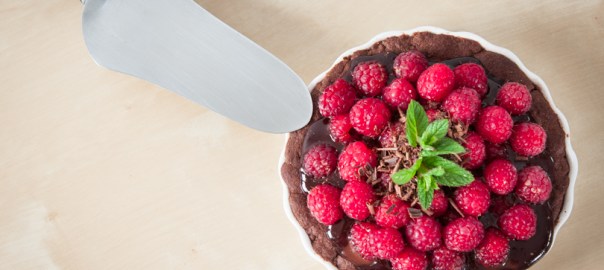
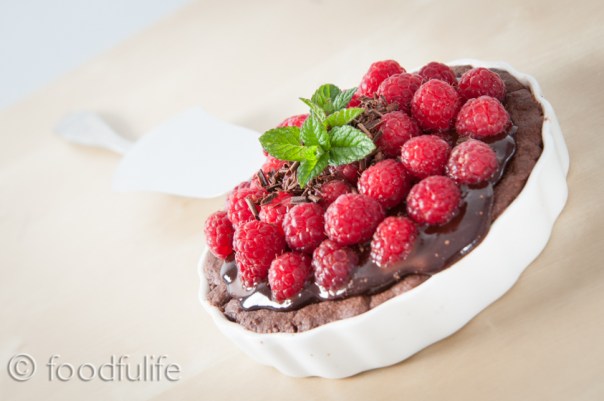
Rich Chocolate Tart with Fresh Raspberries…Yes, but it’s different!

Vegan, dairy-free, gluten-free, egg-free, with only a little refined sugar and absolutely delicious!!!!

I must admit I was a little bit sceptical about vegan desserts, I thought that without dairy products, desserts would just taste dull! So I decided to give it a try and make this vegan chocolate tart, because I usually like to try things before I make a judgement, especially when I am talking about recipes. I am glad to say that I was wrong! I might even dedicate an entire post to the lovely vegan chocolate ganache that I’ve made for this recipe, because I think it deserves a little place on its own in this blog and a few more words given over to it.

So, today we are going to prepare a delicious mini chocolate tart with a lot of fresh raspberries on top! As a filling, I made a rich dark chocolate ganache. Usually, the chocolate ganache is prepared with heavy whipping cream or butter, I used rice milk instead and I thickened the sauce with a little cornstarch. The result is a velvety smooth chocolate filling that contains little refined sugar and is dairy-free.

This is an amazing vegan dessert that everyone can enjoy!

DSC_5795

DSC_5793

Rich Chocolate Tart with Fresh Raspberries

 Ingredients

For the pastry

2-3 servings. 

50 g (1.7 oz) skinless almonds (or hazelnuts, if you prefer)

60 g (2 oz) dark chocolate (organic, with 70% cocoa solids)

60 g (2 oz) rice flour

30 g (1 oz) of potato starch

1/2 teaspoon of baking powder

2 tablespoons of sunflower oil

1 tablespoon of agave syrup (or 1 tablespoon of honey, if you are not on a vegan diet)

a pinch of salt

For the dark chocolate ganache 

60 g (2 oz) of dark chocolate (organic, 70 % cocoa)

100 ml (3.38 fl oz US, 0.175 pt UK) rice milk (replace with soya or almond milk, if you prefer)

1 tablespoon of agave syrup (or 2 tablespoon of honey, if you are not on a vegan diet)

1/2 a tablespoon of cornstarch

To garnish

100 g (3.5 oz) raspberries, fresh and washed

a few chocolate chips

DSC_5601

Method. 

For the pastry. 

Preparation: 20 minutes

Cooking: 15 minutes

1. In a double boiler (bain-marie), melt 60 g (2 oz) of dark chocolate.

DSC_5626

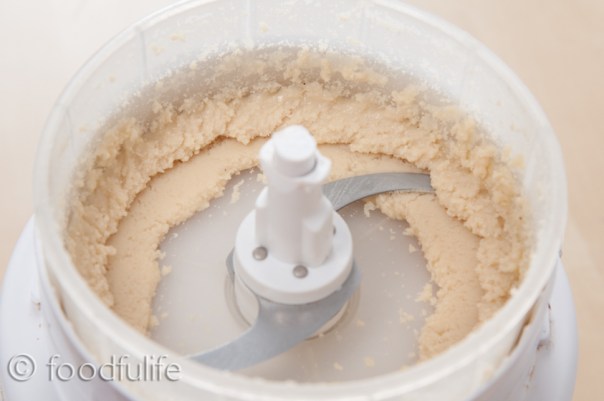
2. Finely grind the almonds using a food processor, until you get a fine paste.

DSC_5619

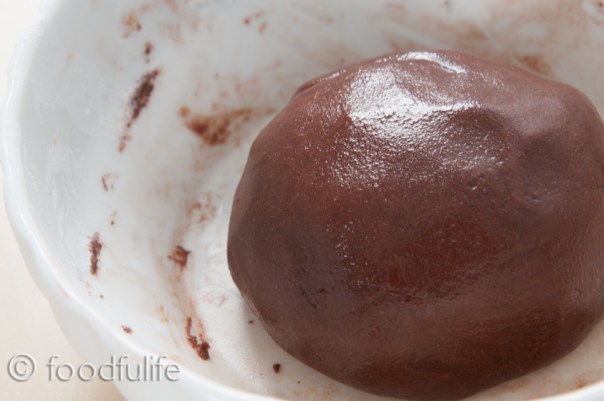
3. In a small bowl, sift the flour and the potato starch using a fine strainer. Then, mix in the melted chocolate, the almond paste, 1/2 a teaspoon of baking powder, a pinch of salt, 2 tablespoons of sunflower oil and 1 tablespoon of agave syrup (or 1 tablespoon of honey).

DSC_5630

4. Place the dough in the refrigerator for 15 minutes.

DSC_5632

5. Lightly grease the base of a small cake pan (15-17 cm or 6 – 7 inches of diameter) and bake at 170 ° C (338° F) for about 15 minutes.

DSC_5643

For the chocolate ganache.

Preparation: 20 minutes

1. In a double boiler (or bain-marie), melt 60 g (2 oz) of dark chocolate.

2. In a small pan, heat 100 ml (3.38 fl oz US) of rice milk and add it (gradually and stirring) to the melted chocolate (both must be warm).

DSC_5639

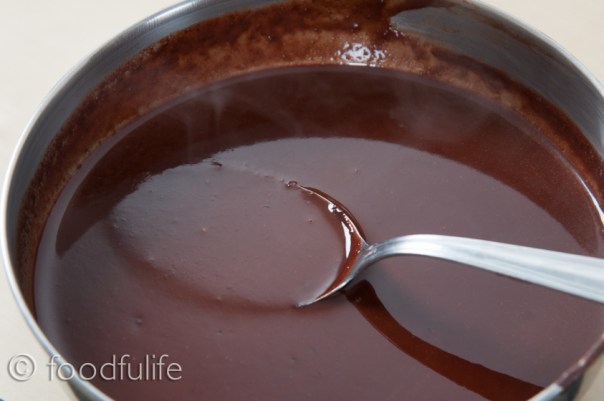
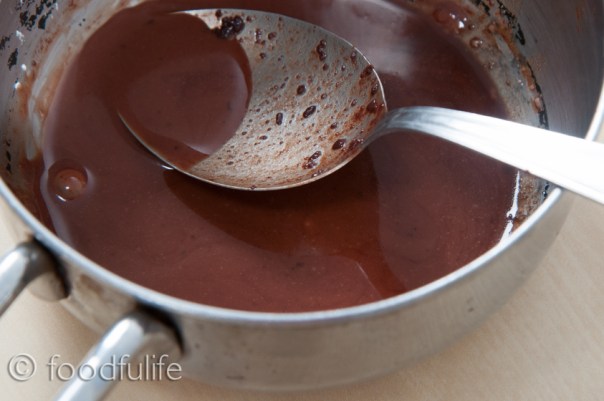
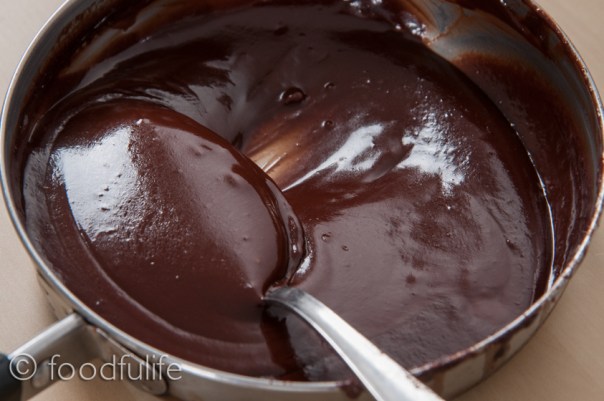
3. In another pan, mix 1/2 a tablespoon of cornstarch with 1 tablespoon of the chocolate mixture and stir well. Gradually add the rest of the chocolate mixture, then cook over a low heat and stir until the chocolate ganache has thickened (it will take only a few minutes).

DSC_5646

4. Turn off the heat, add 1 tablespoon of agave syrup (or 2 tablespoon of honey) and mix well. Let cool.

DSC_5650

To garnish.

Refrigeration: 30 minutes

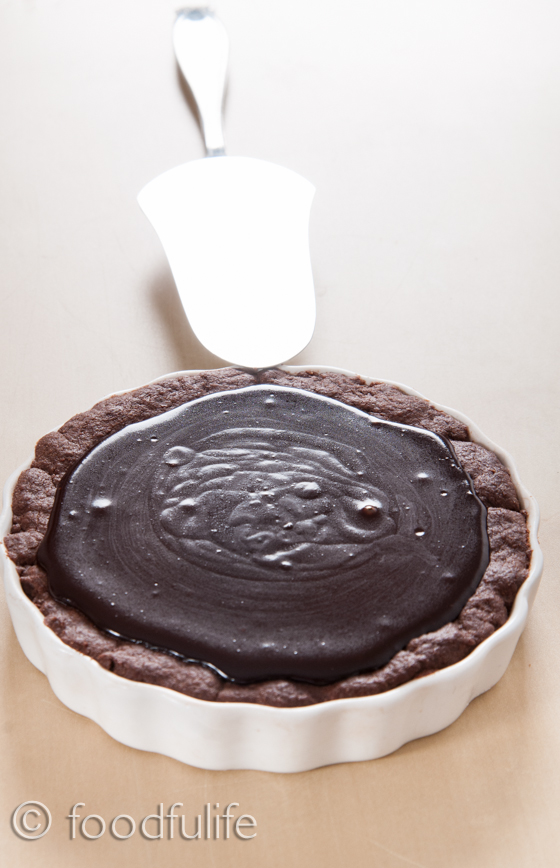
1. Pour the chocolate ganache into the base of the tart, then put the cake in the refrigerator for about 30 minutes.

DSC_5689

2. Garnish with plenty of raspberries and some chocolate chips.

DSC_5698

DSC_5794

DSC_5800

DSC_5808

 Crostata di lamponi con ganache di cioccolato fondente.

Ingredienti

Per la base.

2-3 porzioni.

50 g di mandorle, senza pelle (oppure nocciole, se preferite)

60 g di farina di riso

30 g di fecola di patate

60 g di cioccolato fondente bio ( con 70% di cacao)

1/2 cucchiaino di lievito per torte

2 cucchiai di olio di semi di girasole

1 cucchiaio di sciroppo d’agave (oppure 1 cucchiaio di miele bio, se non seguite una dieta vegana)

un pizzico di sale

Per la ganache al cioccolato fondente

100 ml di latte di riso (oppure latte di mandorle, soia o latte normale)

1 cucchiaio di sciroppo d’agave (oppure 2 cucchiai di miele bio, se non seguite una dieta vegana)

60 g di cioccolato fondente bio (con 70% di cacao)

1/2 cucchiaio di amido di mais

Per guarnire

100 g di lamponi (freschi e ben lavati)

un po’ di scaglie di cioccolato per decorare

Preparazione.

Per la base.

1. Fate sciogliere 60 g di cioccolato fondente a bagnomaria.

2. Tritate molto finemente le mandorle usando un tritatutto.

3. In una terrina, setacciate la farina e la fecola di patate usando un colino molto fine. Aggiungete il cioccolato sciolto, la pasta di mandorle, il lievito per dolci, un pizzico di sale, due cucchiai d’olio di semi di girasole e 1 cucchiaio di sciroppo d’agave (oppure 1 cucchiaio di miele).

4. Impastate bene e mettete in frigo per 15 minuti.

5. Ungete leggermente la base di una piccola teglia (15-16 cm di diametro) e infornate a 170° per 15 minuti.

Per la ganache al cioccolato.

1. Fate sciogliere 60 g di cioccolato fondente a bagnomaria.

2. Scaldate 100 ml di latte di riso in un pentolino e unitelo al cioccolato ancora caldo, mescolando bene.

3. In un altro pentolino, unite una piccola quantità di latte di riso al cioccolato con mezzo cucchiaio di amido di mais (mescolando energicamente). In modo molto graduale, aggiungete tutto il latte al cioccolato, poi fate rassodare la ganache sul fuoco a fiamma bassa, per qualche minuto (continuando a mescolare).

4. Spegnete il fuoco e aggiungete 1 cucchiaio di sciroppo d’agave (oppure 2 cucchiai di miele). Mescolate ancora, poi lasciate raffreddare.

 Per guarnire.

1. Versate la crema sulla base della crostata e mettete in frigorifero per 30 minuti.

2. Guarnite con un doppio strato di lamponi e scaglie di cioccolato.

Fresh Egg Pasta with Flour 00 (Step by Step)

This week we are going to prepare plain fresh egg pasta, using flour 00. This pasta can be used as a base for making a variety dishes, prepared with all sorts of creative stuffings and sauces, but we will see this in the next posts.

I generally tend to use more complex and heavier types of flour, because they are tastier and rich in nutrients. In some recipes , however, it’s better to use a finer and more delicate flour, in order to avoid covering the flavour of the other ingredients. For this recipe the Italian flour 00 is perfect for making pasta, because it is finer than normal flour, however, if you can’t find it use plain flour.

DSC_5166

tips.

1. The ingredients listed are for 400 g of (uncooked) pasta, but if you need a different quantity, just bear in mind that for every 100g of flour you have to add an egg. For example, if you need 200 g of pasta just halve the ingredients (and use 2 small eggs).

2 . It is important to sift the flour before using it to avoid lumps or impurities (I don’t usually say this but you should always do it).

3. Here I am using a rolling pin, but if you are planning to make large quantities of fresh pasta I strongly advise you to get a pasta machine, to make things easier.

DSC_5342-4

Fresh Egg Pasta (with flour 00)

 Ingredients

for 400 g (14 oz) of pasta (approximately)

300 g (10.5 oz)  flour 00 (or plain flour)

3 eggs

salt to taste

 Tools

a clean kitchen cloth

an airtight container

a long rolling pin

a wooden board (with a rough surface) or a table

 Method

1. Sift the flour with a sieve, add some salt, make a well and crack three eggs in the centre. With a fork, beat the eggs lightly, in order to mix the whites with the yolks. Still using a fork, combine the flour with the eggs starting from the outer edge, then continue mixing the ingredients with your fingers and begin to knead.

DSC_5018

DSC_5022

DSC_5024

DSC_5029

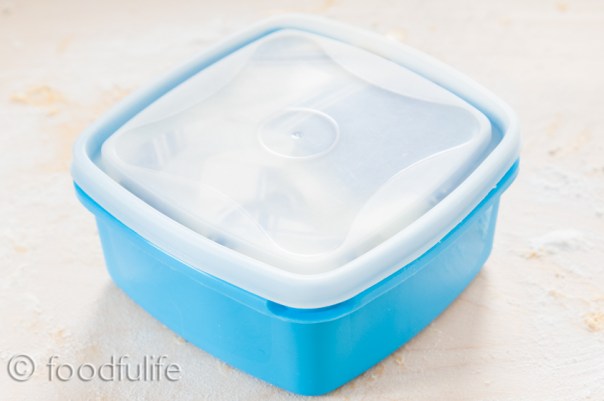
2. Knead until you get a smooth dough, then wrap in a clean cloth and place in an airtight container (or use cling film). Let stand for about an hour at room temperature (if you don’t have much time, 30 minutes is fine).

DSC_5037

DSC_5045

DSC_5047

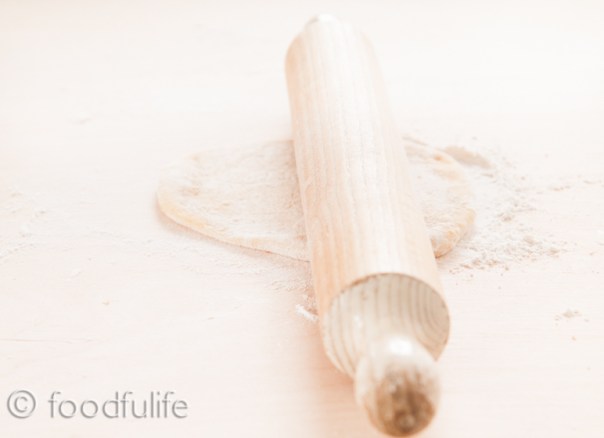
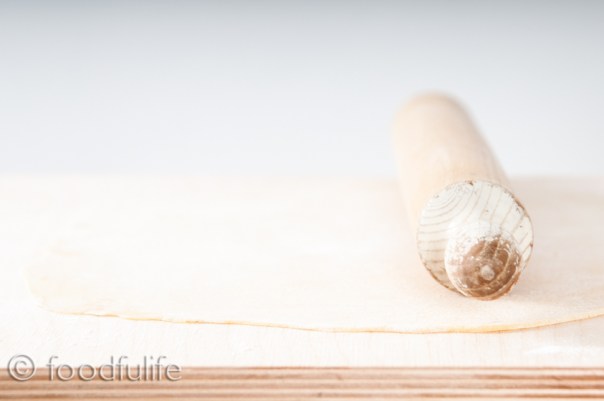
3. After an hour (or 30 minutes), take the dough and divide it into 3-4 pieces. Dust the working surface with some flour and, using a rolling pin, roll a very thin sheet of pasta. Repeat this process with the other pieces and cut the sheets as required by the recipe you are going to prepare.

DSC_5128

DSC_5140

DSC_5163

Notes.

You can make lasagne, ravioli, cannelloni and many varieties of pasta from these sheets. We will see how in the next few weeks. See also the post on spelt (farro) pasta for more ideas.

Pasta fresca all’uovo.

Ingredienti

per circa 400g di pasta

300g di farina 00

3 uova

sale q.b.

 Utensili

uno panno pulito

un contenitore a chiusura ermetica

un matterello lungo

una spianatoia di legno (con superficie ruvida)

 Preparazione.

1. Setacciate la farina con un colino grande (oppure un setaccio) e disponetela a fontana con tre uova al centro. Con una forchetta sbattete leggermente le uova, in modo da mischiare il bianco al tuorlo. Sempre con una forchetta, unite la farina all’uovo partendo del bordo esterno, poi proseguite con le dita e incominciate ad impastare.

2. Lavorate bene l’impasto, poi avvolgetelo in un panno pulito e mettetelo in un contenitore con chiusura ermetica (potete anche utilizzare la pellicola). Lasciate riposare un’ oretta (oppure 30 minuti, se non avete molto tempo).

3. Prendete l’impasto, dividetelo in 3-4 pezzi e incominciate a stendere la pasta (infarinando bene le superfici), fino ad ottenere una sfoglia molto sottile. Ripetete l’operazione con gli altri pezzi e tagliate la pasta come richiede la ricetta che state preparando.

Gluten-free Buckwheat Gnocchi (Step by Step)

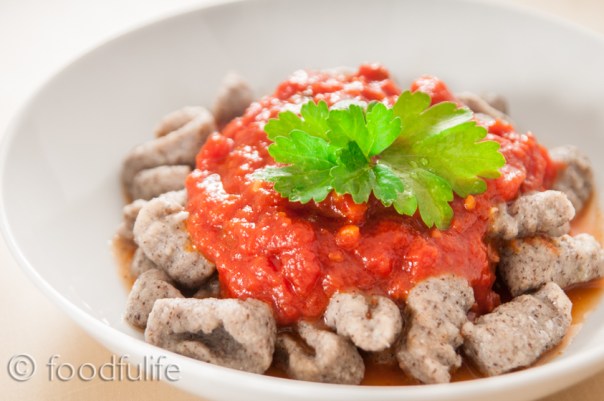
I adore gnocchi! Gnocchi with pesto has been my favourite pasta dish since I was a kid. In Italy there are numerous variations of this wonderful pasta, some of which are really colourful and tasty. Today we are going to prepare a gluten-free version made with buckwheat flour. This flour might be a little expensive, but I decided to use it because of the benefits that introducing gluten-free meals in our every-day diet have. Even though I don’t have intolerances or allergies, but also because I think it’s delicious. Of course, it is also a good alternative to traditional gnocchi for celiac people.

DSC_4831

 A few words about Buckwheat. 

Buckwheat is related to sorrel, knotweed and rhubarb. The seeds are fruit seeds, not cereals, very similar to sunflower seeds, and with a distinctive triangular shape. They are rich in protein, important minerals ( iron, phosphorus, zinc, selenium and potassium.) and vitamins B. Buckwheat is normally used in flour or grains. The flour is very tasty and perfect for pasta recipes, in fact, in Italy it is widely used in many traditional dishes.

DSC_4890

Ingredients

Preparation: 25 minutes

Potatoes Cooking time: 15-20 minutes + time to cool

Gnocchi Cooking time: 5 minutes

Serves 4-5

1 kg (35.2 oz) large potatoes

200 g (7.05 oz) buckwheat flour (and a little bit more for dusting)

50 g  (1.76 oz) potato starch

salt to taste

 Tools 

wooden board or table

A large pan (with a steaming basket  or you can use a steamer if you prefer this cooking method)

a large sieve (to sift the flour)

potato ricer (or a potato masher)

a knife

a fork (or a gnocchi board)

DSC_4828

 Method

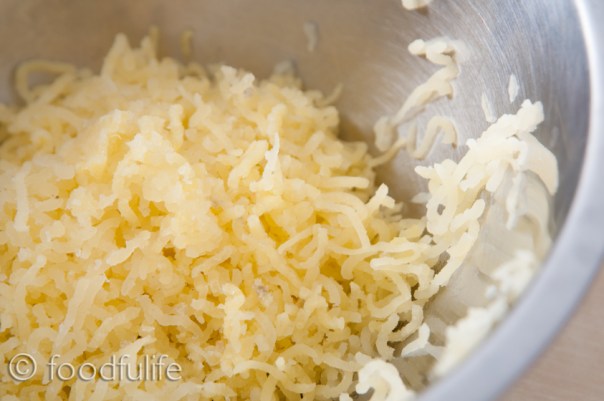
1.Wash, then steam or boil the potatoes for 15-20 minutes (if you boil, put them in cold salted water and then, bring to the boil). Mash the potatoes and let cool. Once they have cooled down, add the flour and starch (previously sifted and mixed).

DSC_4863

DSC_4864

2. Combine all the ingredients, add some salt and work until you get a soft and smooth dough (adding some flour, if necessary).

DSC_4871

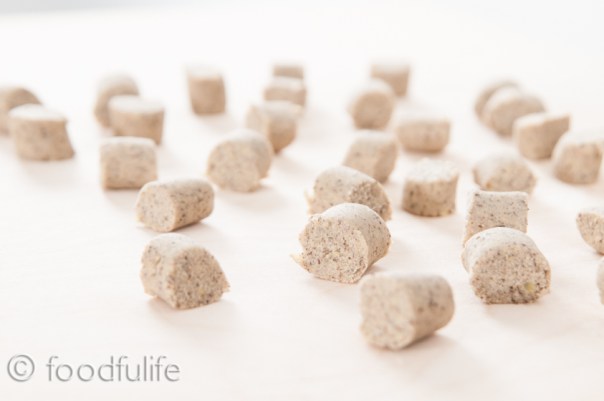
3. Dust the board, then divide the dough into 4-5 equal pieces and roll each piece into long ropes (the ropes should be 1,5 cm [0.39 uk inches] high). Cut each rope into small pieces (3 cm [ 1.18 uk inches] long and 1,5 cm [ 0.39 uk inches] high).

DSC_4878

DSC_4882

4. Use a fork to indent the gnocchi by pressing the centre and roll each piece on the fork (watch the video below) , in this way the gnocchi will absorb the condiment better.

DSC_1055

DSC_1060

Watch the video:

5. Add more flour to prevent the gnocchi from sticking together and lay them a little apart from each other on a table, previously covered with clean kitchen cloths (I used a plate because I prepared only one portion). Cook as soon as possible.

DSC_4965

 Tips.

Boil in plenty of salted water for a few minutes. Once they rise, gently drain and season as you prefer (serve these wonderful gnocchi with pesto or with a nice tomato sauce. If you don’t follow a vegan or a low-cal diet I suggest you try them with a gorgonzola sauce).

DSC_4981

Gnocchi di patate e grano saraceno.

Preparazione: 25 minuti

Cottura delle patate: 15-20 minuti + il tempo di farle un po’ raffreddare

Cottura degli gnocchi: 5 minuti

Ingredienti

per 4-5 persone

1 kg di patate farinose

200 g di farina di grano saraceno ( e un po’ di più per infarinare)

50 g di fecola di patate

sale q.b.

Utensili

una spianatoia di legno abbastanza grande

Una pentola grande (con cestello per cottura a vapore oppure una  vaporiera, se preferite questo tipo di cottura)

un setaccio o un colino grande (per setacciare la farina)

uno schiaccia patate

un coltello

una forchetta

 Preparazione

1. Lavate bene le patate e fate cuocere a vapore per 15-20 minuti (o lessatele mettendole in acqua fredda salata e portando a bollore). Schiacciate le patate e lasciate raffreddare. Aggiungete la farina e la fecola (setacciate e mescolate in precedenza).

2. Amalgamate gli ingredienti con un po’ di sale, fino ad ottenere un impasto morbido ed uniforme. Nel caso fosse necessario, aggiungete un po’ di farina.

3. Infarinate la superficie della spianatoia, dividete l’impasto in 4-5 pezzi uguali e rotolate ogni pezzo fino a formare dei filoncini molto lunghi e alti 1,5 cm. Tagliate ogni cilindro di pasta in piccoli gnocchi (lunghi 3 cm e alti 1,5 cm circa).

4. Usate una forchetta per rigare gli gnocchi (guarda il video).

5. Appoggiate gli gnocchi distanti tra loro su un tavolo coperto da strofinacci puliti, leggermente infarinati (nelle foto uso un piatto perché ho preparato una porzione sola).

 Note.

Per la cottura consiglio di far bollire in acqua abbondante e salata per qualche minuto. Poi scolate e condite come preferite. Un ottimo condimento per gli gnocchi di grano saraceno potrebbe essere una salsa al gorgonzola, oppure condite semplicemente con del buon pesto o una salsa al pomodoro, se seguite una dieta vegana o a basso contenuto calorico.

Special Stuffed Calamari (Quinoa Recipe)

DSC_4810

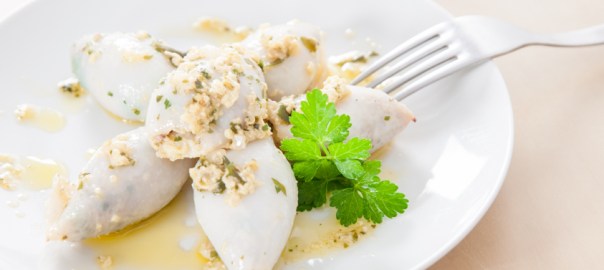
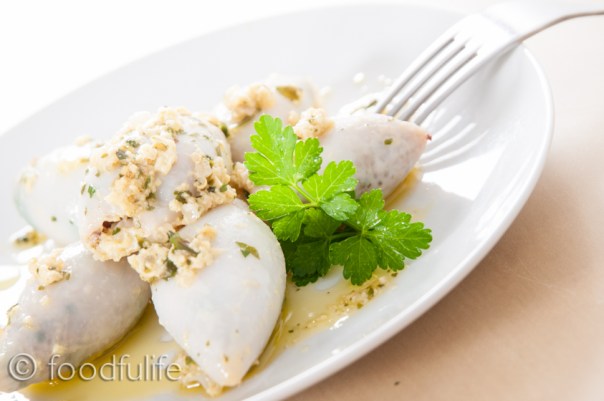
Stuffed calamari (calamari ripieni) is a very popular dish in Italy. Normally, the recipe is made with bread stuffing and some variation on the other ingredients. This time, we are going to prepare a quinoa stuffing with peas, anchovies and garlic. It is a wonderful starter and a great main meal served with vegetables. It might seem a little complex to prepare, but it’s such a delicious full-flavoured dish that it’s worth a try!

Tip. Calamari ( squid) should be fresh and properly cleaned before you start the preparation. It’s very important not to over cook the seafood, because calamari can become very chewy and unpleasant to eat. If that happens continue to cook them until they become tender again (in this case, remember to add more wine and some vegetable or fish stock).

DSC_4813

 Stuffed Calamari (quinoa recipe)

Ingredients 

for 3 servings

Preparation: 40 minutes

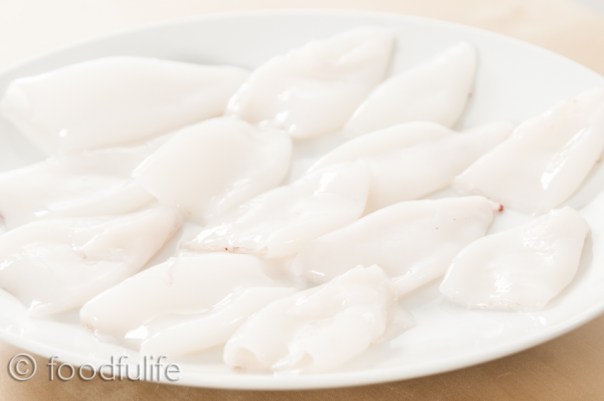
400g (14.1 oz) cleaned calamari (squid)

1 clove of garlic

2 tablespoons extra virgin olive oil

1 splash of white wine (non-acidic)

salt and pepper to taste

For the filling

50 g (1.76 oz) quinoa (uncooked)

3 tablespoons extra virgin olive oil

2 cloves of garlic

2 anchovies

3 tablespoons finely chopped fresh parsley

20 g (0.7 oz) of frozen peas

1 egg

30 g (1.05 oz) grated Parmesan cheese

White wine (good quality)

Salt and pepper to taste

 Method

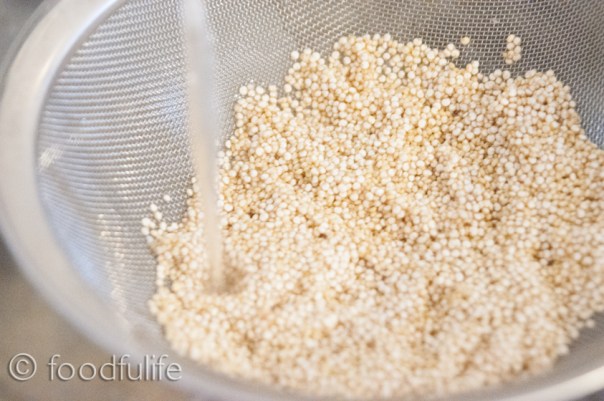
1. Wash the quinoa, using a strainer under running water, for a few minutes (to remove the natural bitter taste).

DSC_4725

2 . Cook for 15 minutes in 200 ml (6.76 us oz fl, 0.35 uk pt) of water, then cover with a lid and set aside.

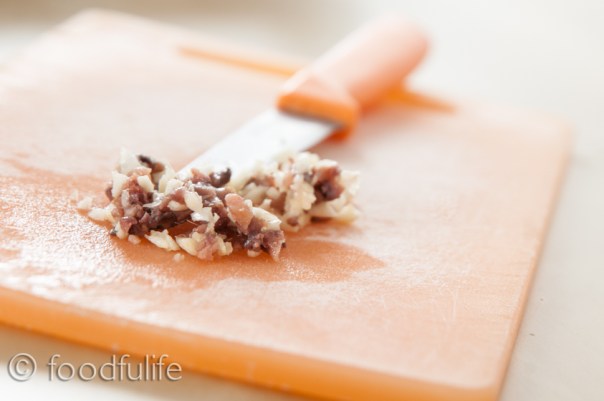
3.  Separate the tentacles from the top of the body of the calamari. Finely chop the tentacles.

DSC_4746

DSC_4747

4. Chop two cloves of garlic and two anchovies and gently fry them over a low heat with three tablespoons of extra virgin olive oil.

DSC_4756

5. Add the chopped tentacles with the peas and (after a couple of minutes) drizzle with a little bit of white wine.

DSC_4760

DSC_4766

6. Add the quinoa with two tablespoons of parsley, then stir and after a few minutes turn off the heat.

DSC_4770

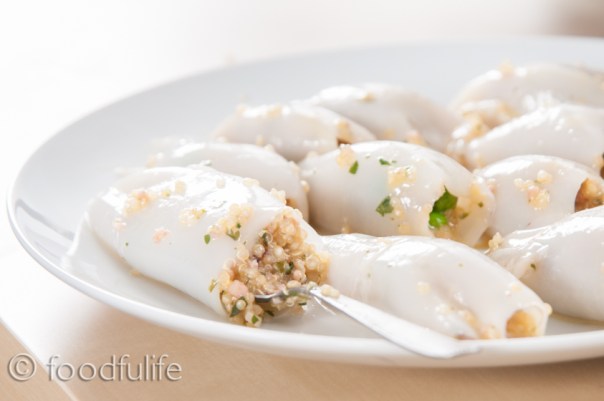
7. Combine the ingredients with an egg, the Parmesan cheese, some salt and pepper and mix well. Stuff the calamari using a teaspoon (and your fingers) or a piping bag ( fill only 2/3 to avoid braking the calamari during the cooking time) . Seal the calamari with toothpicks.

DSC_4772

DSC_4774

DSC_4783

DSC_4795

8. Put the calamari in a frying pan with two tablespoons of extra virgin olive oil, a chopped clove of garlic, a splash of white wine and season with salt and pepper. Cook for 10 minutes at a medium heat,  after 5 minutes add a tablespoon of parsley and stir. Serve warm.

DSC_4803

DSC_4811

Calamari ripieni con quinoa.

 Ingredienti

per 3 persone

400 g di calamari puliti (senza dente)

1 spicchio d’aglio

2 cucchiai di olio extra vergine d’oliva

1 spruzzata di vino bianco (non acido)

sale e pepe q b

 Per il ripieno

50 g quinoa (cruda)

3 cucchiai di olio extra vergine d’oliva

2 spicchi d’aglio

3 cucchiai di prezzemolo (tritato finemente)

20 g di piselli surgelati

Sale e pepe q b

1 uova

30 g Parmigiano Reggiano grattugiato

vino bianco (non acido) q b

2 acciughe sott’ olio (alici)

 Preparazione

1. Lavate la quinoa, utilizzando un colino sotto l’acqua del rubinetto, per qualche minuto (questa operazione serve a togliere il sapore amaro della quinoa).

2. Fate bollire per 15 minuti in 200 ml d’acqua, poi spegnete il fuoco, coprite con un coperchio e mettete da parte.

3. Usando un coltello, separate i tentacoli dalle tasche dei calamari. Tritate finemente i tentacoli.

4. Tritate e fate soffriggere a fuoco basso due spicchi d’aglio e due acciughe con tre cucchiai di olio extra vergine d’oliva.

5. Aggiungete i tentacoli tritati con i piselli e annaffiate con un po’ di buon vino. Fate ritirare a fuoco lento.

6. Aggiungete la quinoa con due cucchiai di prezzemolo, mescolando per qualche minuto e poi spegnete il fuoco.

7. Unite agli ingredienti un uovo, del parmigiano, sale, pepe e mescolate bene. Riempite i calamari usando un cucchiaino o la saccapoche (riempite solo 2/3, per evitare che si rompano durante la cottura). Chiudete con degli stuzzicadenti.

8. Mettete i calamari in una padella con due cucchiai d’olio, uno spicchio d’aglio tritato, uno spruzzo di vino bianco e un po’ di sale e pepe. Fate cuocere per 10 minuti a fuoco medio, aggiungendo un cucchiaio di prezzemolo dopo 5 minuti. Spegnete e servite.

Easy Fresh Egg Spelt Pasta (Step by Step)

This week we are going to prepare home-made spelt (farro) pasta. In Italy there are several kinds of pasta, made with different ingredients, colours and shapes. Each type has its own precise measurements, name and tradition. Today we are going to make pappardelle. This pasta is very similar to tagliatelle, only a little bit easier to cut, with a thin and long rectangular shape (about 1,5- 2 cm wide).

Pappardelle is made by mixing flour (usually 00 or plain) with a few eggs. In the next posts I’ll show you how to prepare different kinds of pasta, some without eggs and some gluten-free recipes as well. First of all, let’s make a list of the things we need.

DSC_4696

 Spelt Flour (Farro) Pappardelle.

Preparation: 30 minutes +1 hour refrigeration

Cooking: 10-15 minutes

Ingredients

3-4 servings

100g (3.5 oz) plain flour (best if you find 00 flour, which is very fine)

200g (7 oz ) wholemeal spelt flour (whole wheat farro flour)

50 g (1.76 oz) of plain flour, for dusting

a pinch of salt

3 eggs

 Tools 

a large knife

a large wooden board (or a large table will do)

a long rolling pin

DSC_4607-2

Method.

1. Mix the flours with salt on a wooden board and make a well in the centre. Put three eggs in it, then mix them slightly using a fork.

DSC_4645

2. Starting from the outside edges, slowly combine the flour with the eggs.

DSC_4648

3. Work the dough until smooth.

DSC_4652

DSC_4656

DSC_4661

4. Fold a kitchen cloth around the dough and place it in an airtight container for about an hour (during this time the dough becomes more elastic).

DSC_4662

DSC_4663

5. After an hour, take the dough (dust with some flour), divide it into two parts and using a rolling pin make two thin sheets of pasta.

DSC_4667

DSC_4669

DSC_4673

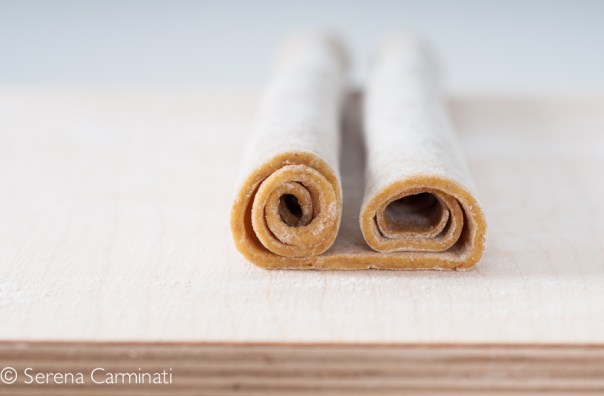
6. Using a rolling pin, roll the pasta from the outside inwards (see the picture).

DSC_4676

DSC_4675

DSC_4677

7. Cut the pasta (each cut should be about 2 cm, 0.70 inches, from the next). Roll and cut both sheets of pasta.

DSC_4678

8. Dust with more flour and separate the pappardelle on the wooden board, then cook and serve.

DSC_4683

DSC_4687

Tip. Boil the pasta in plenty of hot water, with 1/2 a tablespoon of salt (no oil needed) for 10-15 minutes. Then drain and serve with fresh pesto or tomato sauce.

DSC_4704

Pappardelle di farina di farro.

Preparazione: 30 minuti+1 ora in frigorifero

Cottura: 10-15 minuti

ingredienti 

per 3-4 persone

100g di farina 00

200 g di farina di farro (preferibilmente integrale)

50 g di farina 00 (per non fare attaccare la pasta)

un pizzico di sale

3 uova

Utensili

un grosso coltello

una spianatoia in legno (abbastanza grande e con superficie ruvida)

un matterello lungo

1. Mescolate le farine e il sale su una spianatoia. Disponete la farina a fontana con tre uova al centro, poi sbattete leggermente le uova usando una forchetta. Unite gli ingredienti, partendo dal bordo esterno.

2. Lavorate fino ad ottenere un impasto omogeneo. Ricopritelo con un panno e mettetelo in un contenitore ermetico per circa un’ora (in questo modo l’impasto diventerà più elastico).

3. Dopo un’ora, prendete l’impasto (dividetelo in due) infarinate bene tutto e fate due sfoglie sottili con il matterello. Sempre aiutandovi con il matterello, arrotolare la pasta per tagliarla (vedi la foto).

4. Tagliate la pasta (ogni taglio deve essere distante 2 cm circa dal successivo). Infarinate e separate le pappardelle sulla tavola. Cuocete le pappardelle per 10-15 minuti e condite come preferite.

Steamed Salmon with Rocket and Oranges.

This week we are going to prepare a light salad with salmon, oranges and rocket leaves. I love the way in which the buttery texture of salmon and the freshness of oranges work together, I think it’s a perfect match! There isn’t much I can say about it, you just have to try it!!! I added a few rocket leaves because the pungent and slightly bitter flavour of this lovely herb creates a pleasant contrast with the other ingredients, which balance the recipe nicely.

This dish is a real feel-good booster and is packed with health benefits! Salmon is considered an extremely healthy food due to the high content of protein, omega-3 fatty acid and B 6 and B 12 vitamins; while rocket not only contains plenty of vitamins but is also rich in iron… So, if you often have iron-deficiency problems like me, or you simply like healthy food (same as me, anyway!), you have plenty of reasons to enjoy this dish!

Steamed salmon with rocket, oranges and walnuts.

Preparation time: 15 minutes

Ingredients

for 2 servings

2 salmon steaks (250 g / 8.81 oz)

2 large oranges

50 g (1.76 oz) rocket (arugula), washed and cleaned

30 g (1.05 oz) walnuts, unshelled

extra virgin olive oil

salt and pepper to taste

Steamed salmon with rocket and oranges (front view, rocket or arugula with oranges)

Preparation method

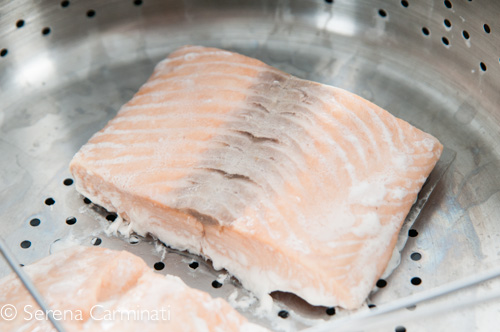
1. Steam the salmon steaks for about 6-8 minutes.

Step 1. Steam the salmon for a few minutes.

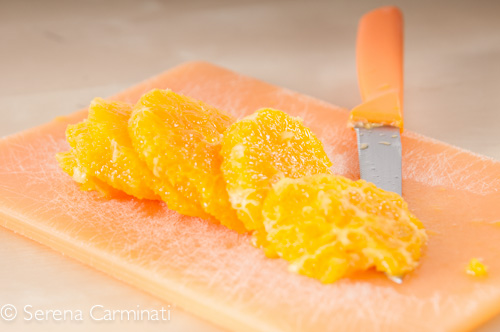
2. With a sharp knife, peel the oranges, completely removing the white part. Then cut them into thin slices.

Step 2. Peel and cut the oranges .

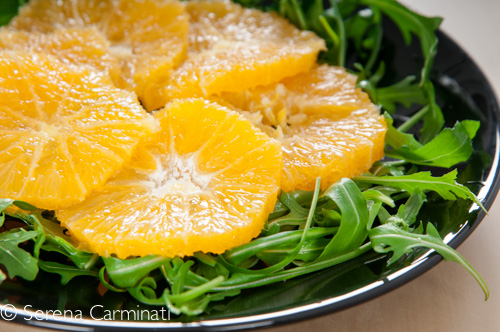
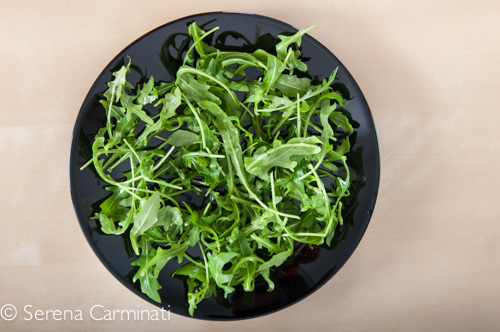
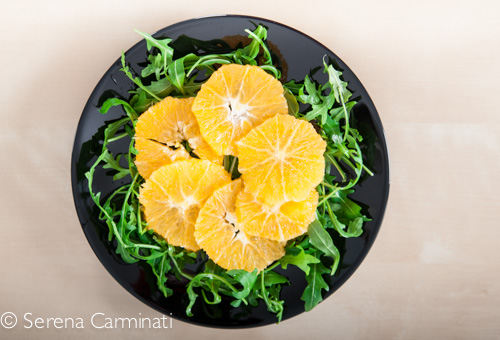
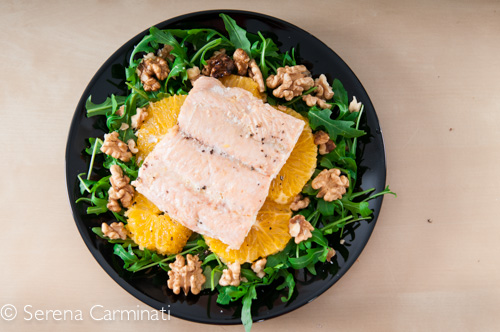
3. Arrange the rocket leaves on the plate, place the slices of orange on top with the salmon in the middle.

Step 3. Arrange the rocket (or arugula),the oranges and the salmon on the plate.

Step 3. Arrange the rocket (or arugula),the oranges and the salmon on the plate.

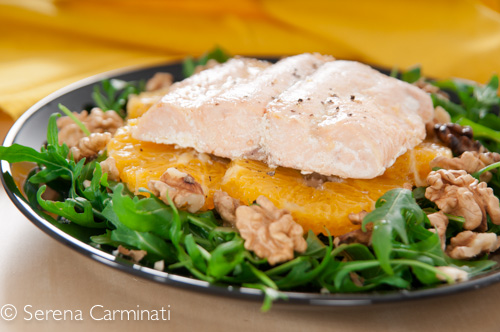
4. Sprinkle the walnuts on the ingredients, drizzle with extra virgin olive oil and season with some salt and plenty of black pepper.

Step 4. Sprinkle the walnuts, drizzle with olive oil and season with salt and pepper.

Enjoy your meal!

 Steamed salmon with rocket and oranges (front view, close up)
Salmone con arance e rucola (cottura a vapore).

Preparazione: 15 minutes

 Ingredienti

per 2 persone

2 filetti di salmone (250 g)

2 arance grosse

50 g rucola, lavata e pulita

30 g di noci, senza guscio

olio extra vergine d’oliva

sale e pepe q b

Preparazione.

1. Cuocete a vapore i due filetti di salmone per 6-8 minuti.

2. Con un coltello molto affilato, sbucciate due arance togliendo completamente anche la parte bianca.

3. Sistemate le foglie di rucola sulla base del piatto, ricoprite con le fette d’arancia e appoggiate al centro il filetto di salmone.

4. Distribuite le noci sopra gli ingredienti, condite con olio extra vergine d’oliva, un po’ di sale e pepe in abbondanza.

Buon appetito!

Steamed Prawn and Bell Pepper Kebabs.

Today I am publishing my first recipe of the year, after taking a little break.
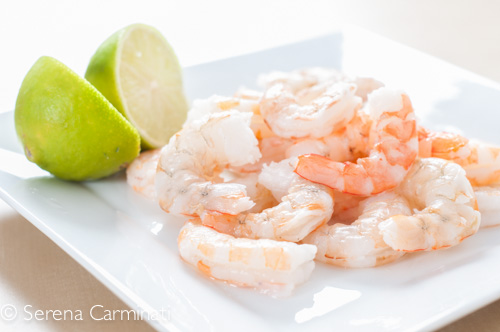
Bearing in mind that many of you will be on a diet, just like me, after a full-on Christmas feast, I decided to go for a light and delicate starter made with seafood and vegetables . Experimenting in my kitchen, not long ago, I discovered that the delicate flavours of yellow bell peppers and prawns complement each other very well, especially if steamed. This recipe is very healthy and the preparation is quick and easy, however it’s important to get the cooking time right, because if you overcook the ingredients the final result won’t be any good, as the bell peppers will become too soft and the prawns will turn out hard, dry and chewy. In order to avoid this follow carefully the instructions and you’ll have the most amazing prawn kebabs!
Tip. As a light meal, serve the prawn kebabs with steamed basmati rice.
DSC_3587
Prawn and bell pepper kebabs.
Ingredients
for 4 people ( for 8 kebabs)
2 big yellow peppers (or 3 small peppers)
450 g prawn tails, to clean
a few leaves of fresh parsley
6 tablespoons of extra virgin olive oil
3 tablespoons of lime juice
salt and pepper to taste
1. Wash the peppers, remove the core, pith and seeds, then cut them into 2 halves.
DSC_3488
2. Wash and peel the prawns. Using a knife, remove the hard parts and the dark vein on the back.
DSC_3463
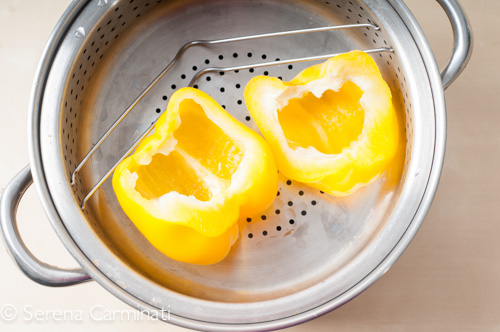
3. Steam the peppers for about 10-15 minutes (external side facing down).
DSC_3492
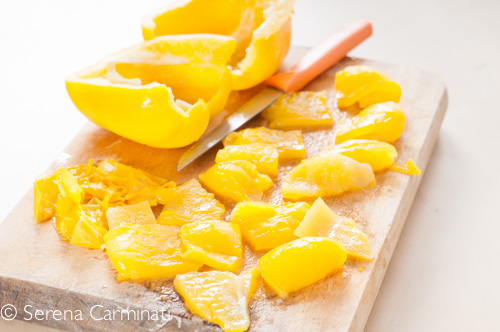
4. Remove the peppers from the heat, peel the skin off using a knife and cut them into small pieces (about 4 cm).
DSC_3521
5. Steam the prawns for about 3 minutes.
6. Insert the skewers, alternating pieces of pepper with prawns.
DSC_3570
For the seasoning (lime citronette sauce).
DSC_3533
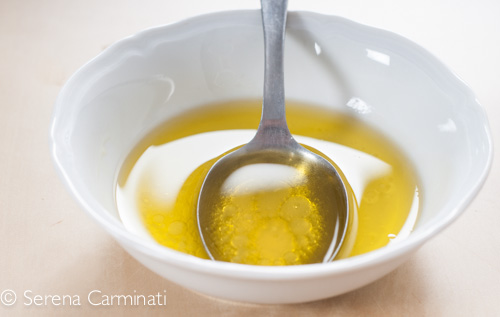
1. In a small bowl, mix 6 spoons of extra virgin olive oil with the lime juice.
DSC_3523
2. Chop a few parsley leaves finely.
DSC_3506
3. Mix all the ingredients together with some salt and pepper.
DSC_3538
4. Season the prawn kebabs and serve them warm with the sauce.
DSC_3585
Spiedini di Gamberi e Peperoni (cottura a vapore).

Ingredienti

per 4 persone (8 spiedini)

2 grandi peperoni gialli (o 3 piccoli)

450 g di code di gambero (da pulire)

alcune foglie di prezzemolo

6 cucchiai di olio extra vergine di oliva

3 cucchiai di succo di lime

sale e pepe q b

1. Lavate, pulite e tagliate i peperoni in due.

2. Pulite e sgusciate i gamberi, eliminando completamente la buccia e il budellino nero.

3. Fate cuocere i peperoni a vapore per 10-15 minuti (con la parte esterna verso il basso).

4. Togliete i peperoni dal fuoco, sbucciateli delicatamente e tagliateli a pezzetti rettangolari.

5. Fate cuocere a vapore i gamberi per 3 minuti.

6. Infilzate gli ingredienti con degli spiedini di legno, alternando dei pezzi di peperone ai gamberi.

Per la citronette di lime.

1. In una piccola ciotola, mischiate 6 cucchiai di olio extra vergine di oliva con 3 cucchiai di succo di lime.

2. Tritate qualche foglia di prezzemolo molto finemente.
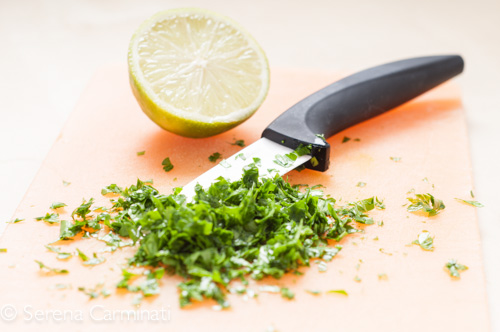
3. Unite tutti gli ingredienti, aggiungendo anche un po’ di sale e pepe.

4. Condite bene gli spiedini di gamberi e serviteli tiepidi, accompagnandoli con il condimento.

Spring onion stuffed focaccia bread.

My grandmother used to prepare this recipe for family dinners and celebrations. I remember eating a lot of this focaccia bread at every dinner we had. Of course, as usual, I made my own version using wholemeal flour and less anchovies and olives than in the original recipe. Anyway, it’s delicious and quite a versatile dish that you can have as a main vegan or vegetarian dish, or as a side dish with other courses. 
I am very happy to share this recipe here, its flavour takes me back to some good memories.
DSC_1623

Ingredients

500 g (17.6 oz) of well risen pizza dough (I made mine with 1/3 wholemeal flour, 1/3 wholemeal spelt flour, 1/3 sourdough, water and salt) . Also see the post on how to make pizza dough with yeast for the recipe.

500 g ( 17.6 oz) spring onions

4-5 anchovies in oil

50 g (1.76 oz) pitted green olives 

extra virgin olive oil 

salt to taste

1. Divide the dough into two equal parts. Take one part and shape a disk slightly larger than 30 cm in diameter.

2. Take an oven pan (28 cm in diameter), grease with plenty of olive oil and roll out the dough.

3. Peel and slice the spring onions, including the tender green part. Fry the onions with plenty of olive oil over low heat, until they are tender.

DSC_1631

DSC_1634

4. Cut the olives, chop the anchovies and place all the ingredients evenly on the dough.

DSC_1641

5. Make another disk with the remaining dough, in order to cover and seal the focaccia, then let it rise for an hour.

DSC_1649

6. Season with some salt and a little bit of oil, then bake at 200 ° C (392° F) for 20 minutes.

DSC_1666

Focaccia integrale ripiena con cipollotti e olive.
Ingredienti

500 g di pasta da pane ben lievitata (ho fatto la mia usando 1/3 di farina integrale, 1/3 di farina di farro, 1/3 di pasta madre, acqua e sale)

500 g di cipollotti

4-5 acciughe sott’olio

50 g di olive verdi snocciolate

olio extra vergine d’oliva e sale qb

1. Dividete la pasta in due parti uguali. Prendete una parte dell’impasto e formate un disco leggermente più grande di 30 cm di diametro.

2. Prendete una teglia da forno (di 28 cm di diametro), ungete con abbondante olio d’oliva e stendere la pasta.

3. Sbucciare e affettare i cipollotti, compresa la parte verde più tenera. Fate soffriggere con abbondante olio d’oliva a fuoco basso.

4. Tagliare le olive e tritate le acciughe. Stendete tutti gli ingredienti in modo uniforme sulla pasta.

5. Formate un disco con la pasta rimasta per coprire e sigillare la focaccia. Lasciate lievitare per circa un’ora.

6. Condite con un po’ di sale e olio, quindi infornare a 200 ° C per 20 minuti.

Neither a salad or a pizza: Insalapizza! (no cheese)

As refreshing as a summer salad and as tasty as a pizza! This is why I decided to call this dish insalapizza (salad-pizza). I often end up with no mozzarella cheese in my fridge, and this usually happens when I feel like having a pizza!…So one evening I came up with this nice and simple recipe. Since then I have had several occasions to try out and improve this dish. I hope you like it!

Pizza-salad recipe.

Ingredients

for 1 pizza

For the pizza dough

35 g (1.23 oz) wholemeal flour (whole wheat flour)

35 g (1.23 oz) whole spelt flour

20 g  (0.70 oz) Manitoba flour

45 g (1.58 oz) plain flour sourdough (or you can use 5 g of yeast. In this case, you have to add 45 g of plain flour and more water to make the dough. the rising time will also vary)

1 or 2 tablespoons mixed grains (hulled oats, hulled barley, hulled spelt, wheat, rye, brown rice)

1/2  tablespoon flax seeds (linseeds), optional

1/2  teaspoon salt

a little bit of barley malt syrup (to increase leavening strenght, optional)

Pizza toppings and seasoning

1 big onion

3 plum tomatos

water as needed

some rocket (arugula) leaves, washed and dried

salt and pepper

extra virgin olive oil (2 tablespoons to grease the oven tray and 2 more to pour on the pizza toppings)

Method
1. Wash the seeds and soak them in water for 6-8 hours.
2. Mix the sourdough with the flours, some water and malt (or honey). Add the seeds and half a teaspoon of salt to the dough. Mix well and increase the amount of flour if necessary (the dough shouldn’t stick to your hands).
DSC_9284
3. Let the dough rise until it has doubled in volume (3-6 hours, if you use sourdough).
If you use normal yeast (not sourdough) you have to increase the amount of flour and water ( in this case, add 45 g of plain flour) to the dough. Dissolve the yeast in a little bit of water with 1 tablespoon of flour. Then add the yeast to the mixture and let it rise for about an hour.
4. When the dough is ready, roll out the pizza base in a round baking tray (20-30 cm in diameter), greased with plenty of olive oil. Let the pizza base rise for another hour. Meanwhile, clean and cut the onion very finely and leave it to soak for an hour in water.
5. Wash, dry and cut the tomatoes into small cubes. Top your pizza base with the onion and the tomatoes. Season your pizza with plenty of extra virgin olive oil and bake at 200 ° C (392° F) for 30 minutes (until crispy).
DSC_9299
DSC_9314
Remove from the oven, season with salt and pepper, and garnish with a few rocket leaves.
DSC_9315
A few tips.
To shorten the preparation time, I usually make a lot of dough, I divide it into small quantities and store it in the freezer. In this way the dough is ready when I need it. Leave the seeds to soak at night, this also save some time.
Insalapizza.
Ingredienti per la base della pizza ai cereali.
Per 1 pizza

35 g di farina integrale

35 g di farina integrale di farro

20 g di manitoba

45 g di lievito madre (potete sostituire il lievito madre aggiungendo 45 g di farina 00 all’impasto con un po’ d’acqua e 5 g di lievito di birra da diluire con poca acqua e farina)

1 o 2 cucchiai di cereali misti (avena decorticata, orzo decorticato, farro decorticato, frumento, segale, riso integrale)

1/2 cucchiaio di semi di lino (facoltativo)

1/2 cucchiaino di sale

pochissimo malto d’orzo (per fare lievitare meglio l’impasto,  ma è facoltativo)

un po’ di farina in più da aggiungere a fine impasto

acqua q b

Ingredienti per il condimento

3 pomodori perini maturi

1 cipolla dolce grande

un mazzetto di rucola, lavata e pulita

sale e pepe q b

Olio d’oliva abbondante (2 cucchiai per ungere la teglia e 2 in più per condire la pizza in superficie )

Preparazione.

1. Lavate e lasciate i semi a bagno in acqua per 6-8 ore. Nel frattempo, unite le farine e il malto al lievito madre, aggiungendo un po’ d’acqua, se necessario. Lavorate bene l’impasto.  Aggiungete i semi, con mezzo cucchiaino di sale e aumentate la quantità di farina nel caso il composto risultasse troppo umido.

2. Fate lievitare fino a quando l’impasto sarà raddoppiato di volume (3-6 ore). Se usate il lievito di birra dovete aggiungere 45 g di farina 00 all’impasto, poi diluire il lievito di birra in un po’ d’acqua e impastare tutto. In questo caso, dovete lasciare lievitare per un’ ora circa.

3. Quando l’impasto sarà lievitato, stendetelo su una teglia rotonda (25-30 cm di diametro), ungendo la base con abbondante alio d’oliva. Lasciate lievitare per 1 oretta. Nel frattempo, tagliate la cipolla e lasciatela immersa in acqua per almeno 1 ora (per renderla più dolce). Lavate, asciugate e tagliate i pomodori a cubetti.

4. Disponete la cipolla e i pomodori sulla pizza e condite con abbondante olio d’oliva .Cuocete a 200 ° C per 30 minuti. Sfornate, condite con sale e pepe, aggiungendo qualche foglia di rucola per guarnire.

Consigli per la preparazione.
Per accorciare i tempi, generalmente preparo in anticipo una grossa quantità di pasta, la divido nelle giuste dosi e la scongelo in caso di bisogno. Questo procedimento facilità notevolmente le cose e funziona alla grande! Consiglio anche di lasciare i semi immersi nell’acqua tutta la notte, saranno più morbidi e i tempi di preparazione saranno più facili da gestire.