Category Archives: Main Dishes

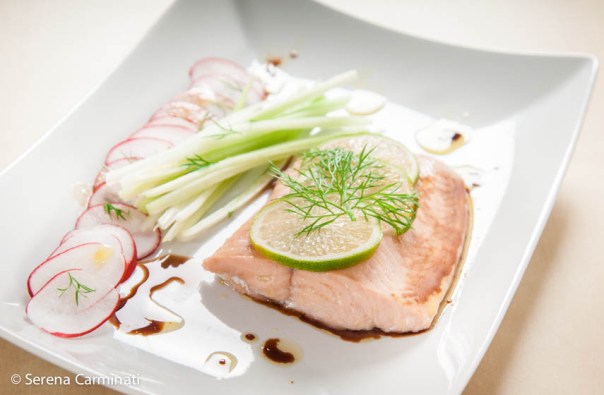
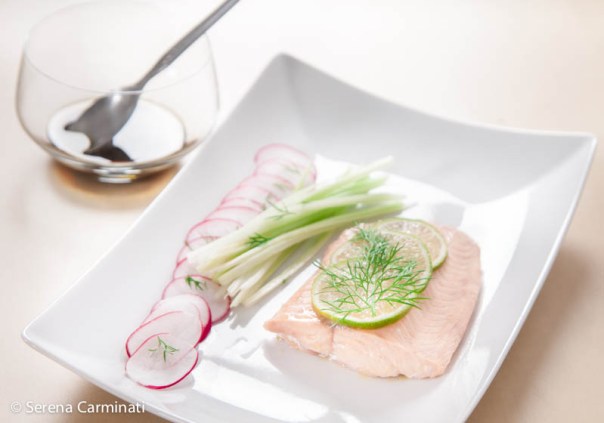
Salmon with lime and balsamic vinaigrette

I must admit, I came across the salmon-balsamic vinegar combination totally by accident. I was trying out a new dish that went horribly wrong, when I dropped some balsamic vinegar on a piece of salmon by mistake…Yes, in my kitchen these kind of things can happen! 🙂

DSC_6967

Anyway, I loved it! So I changed the recipe completely and I made a light balsamic vinaigrette as a salmon dressing. I know it is not a new combination, but it was the first time for me.
I love the way in which the balsamic vinegar aroma enhances the natural sweetness of salmon without covering its delicate flavour. The aniseed-tinged wild fennel leaves add a note of distinctive freshness to the recipe. If you can’t find wild fennel, you can use normal fennel leaves, they are probably a little bit easier to get and very similar in taste.

DSC_6993

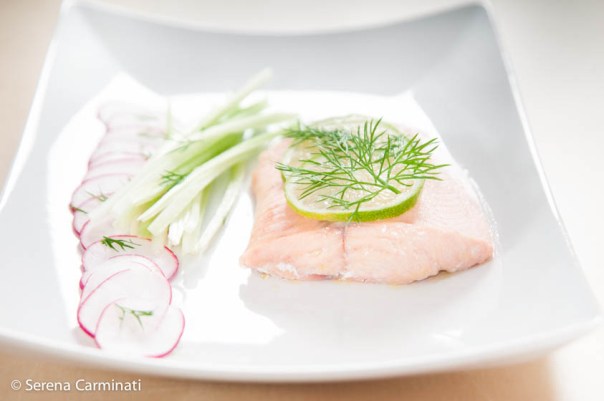
Salmon with lime and balsamic vinaigrette.

Preparation: 15 minutes

Ingredients

For 2 servings

2 salmon steaks

1 lime

a few sprigs of fresh wild fennel, washed

6 radishes, washed

a stalk of celery, washed

for the balsamic vinaigrette

2 tablespoons of extra virgin olive oil

2 tablespoons of balsamic vinegar

a few drops of lime juice

Black pepper and salt to taste

DSC_6873

DSC_6883

DSC_6910

Method

1. Wash and cut a lime into thin slices, then put a few slices on top of the salmon, with a sprig of wild fennel.

DSC_6924

2. Steam the salmon steaks for 8-10 minutes.

3. Place the salmon steaks on the plates, garnish with a few radishes and the celery, both finely sliced. Then, add some wild fennel leaves (roughly chopped).
DSC_6978

For the vinaigrette.

1. Mix 2 tablespoons of extra virgin olive oil with 2 tablespoons of balsamic vinegar, a few drops of lime juice, salt and pepper to taste.

DSC_6943

2. Serve with the vinaigrette on the side.
DSC_6961

DSC_7011

Salmone con lime e aceto balsamico vinaigrette.

Preparation: 15 minutes

Ingredienti

Per due persone

2 tranci di salmone

1 lime intero

6 ravanelli, lavati

un gambo di sedano, lavato

qualche rametto di finocchio selvatico, lavato

Per la vinaigrette di aceto balsamico

2 cucchiai di olio extra vergine d’oliva

2 cucchiai di aceto balsamico

qualche goccia di succo di lime

Pepe e sale q.b.

Preparazione.

1. Lavate e tagliate un lime a fette molto sottili. Mettete le fette di lime sul salmone, con qualche rametto di finocchio selvatico.

2. Fate cuocere a vapore i tranci di salmone per 8-10 minuti.

3. Disponete il salmone sui piatti, guarnite ogni piatto con tre ravanelli tagliati a fette molto sottili e con un gambo di sedano tagliato alla julienne.

Per la vinaigrette.

1. Mescolate 2 cucchiai di olio extravergine d’oliva con 2 cucchiai di aceto balsamico, qualche goccia di succo di lime, sale e pepe.

2. Servite il salmone con il condimento a parte.
DSC_7021

DSC_6958

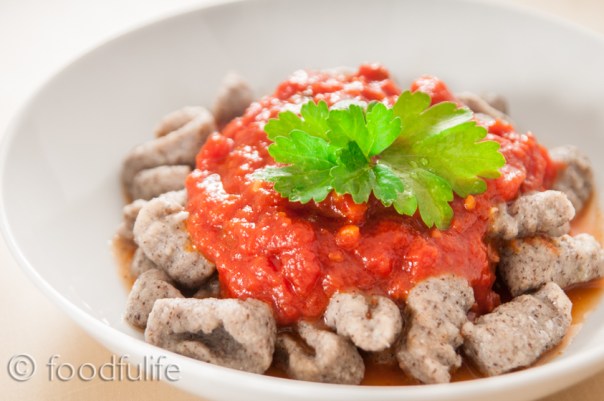
Gluten-free Buckwheat Gnocchi (Step by Step)

I adore gnocchi! Gnocchi with pesto has been my favourite pasta dish since I was a kid. In Italy there are numerous variations of this wonderful pasta, some of which are really colourful and tasty. Today we are going to prepare a gluten-free version made with buckwheat flour. This flour might be a little expensive, but I decided to use it because of the benefits that introducing gluten-free meals in our every-day diet have. Even though I don’t have intolerances or allergies, but also because I think it’s delicious. Of course, it is also a good alternative to traditional gnocchi for celiac people.

DSC_4831

 A few words about Buckwheat. 

Buckwheat is related to sorrel, knotweed and rhubarb. The seeds are fruit seeds, not cereals, very similar to sunflower seeds, and with a distinctive triangular shape. They are rich in protein, important minerals ( iron, phosphorus, zinc, selenium and potassium.) and vitamins B. Buckwheat is normally used in flour or grains. The flour is very tasty and perfect for pasta recipes, in fact, in Italy it is widely used in many traditional dishes.

DSC_4890

Ingredients

Preparation: 25 minutes

Potatoes Cooking time: 15-20 minutes + time to cool

Gnocchi Cooking time: 5 minutes

Serves 4-5

1 kg (35.2 oz) large potatoes

200 g (7.05 oz) buckwheat flour (and a little bit more for dusting)

50 g  (1.76 oz) potato starch

salt to taste

 Tools 

wooden board or table

A large pan (with a steaming basket  or you can use a steamer if you prefer this cooking method)

a large sieve (to sift the flour)

potato ricer (or a potato masher)

a knife

a fork (or a gnocchi board)

DSC_4828

 Method

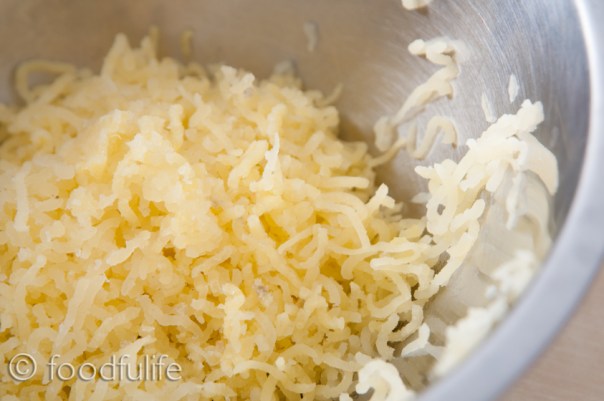
1.Wash, then steam or boil the potatoes for 15-20 minutes (if you boil, put them in cold salted water and then, bring to the boil). Mash the potatoes and let cool. Once they have cooled down, add the flour and starch (previously sifted and mixed).

DSC_4863

DSC_4864

2. Combine all the ingredients, add some salt and work until you get a soft and smooth dough (adding some flour, if necessary).

DSC_4871

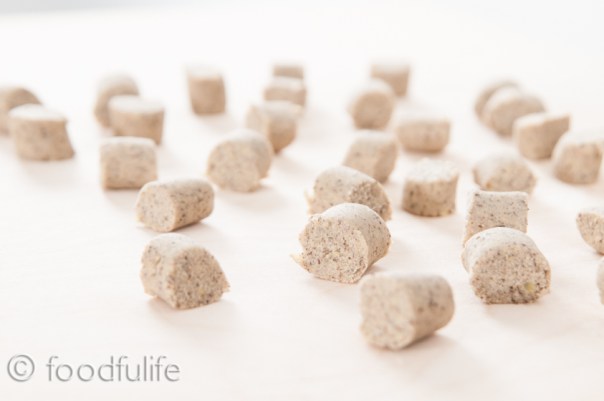
3. Dust the board, then divide the dough into 4-5 equal pieces and roll each piece into long ropes (the ropes should be 1,5 cm [0.39 uk inches] high). Cut each rope into small pieces (3 cm [ 1.18 uk inches] long and 1,5 cm [ 0.39 uk inches] high).

DSC_4878

DSC_4882

4. Use a fork to indent the gnocchi by pressing the centre and roll each piece on the fork (watch the video below) , in this way the gnocchi will absorb the condiment better.

DSC_1055

DSC_1060

Watch the video:

5. Add more flour to prevent the gnocchi from sticking together and lay them a little apart from each other on a table, previously covered with clean kitchen cloths (I used a plate because I prepared only one portion). Cook as soon as possible.

DSC_4965

 Tips.

Boil in plenty of salted water for a few minutes. Once they rise, gently drain and season as you prefer (serve these wonderful gnocchi with pesto or with a nice tomato sauce. If you don’t follow a vegan or a low-cal diet I suggest you try them with a gorgonzola sauce).

DSC_4981

Gnocchi di patate e grano saraceno.

Preparazione: 25 minuti

Cottura delle patate: 15-20 minuti + il tempo di farle un po’ raffreddare

Cottura degli gnocchi: 5 minuti

Ingredienti

per 4-5 persone

1 kg di patate farinose

200 g di farina di grano saraceno ( e un po’ di più per infarinare)

50 g di fecola di patate

sale q.b.

Utensili

una spianatoia di legno abbastanza grande

Una pentola grande (con cestello per cottura a vapore oppure una  vaporiera, se preferite questo tipo di cottura)

un setaccio o un colino grande (per setacciare la farina)

uno schiaccia patate

un coltello

una forchetta

 Preparazione

1. Lavate bene le patate e fate cuocere a vapore per 15-20 minuti (o lessatele mettendole in acqua fredda salata e portando a bollore). Schiacciate le patate e lasciate raffreddare. Aggiungete la farina e la fecola (setacciate e mescolate in precedenza).

2. Amalgamate gli ingredienti con un po’ di sale, fino ad ottenere un impasto morbido ed uniforme. Nel caso fosse necessario, aggiungete un po’ di farina.

3. Infarinate la superficie della spianatoia, dividete l’impasto in 4-5 pezzi uguali e rotolate ogni pezzo fino a formare dei filoncini molto lunghi e alti 1,5 cm. Tagliate ogni cilindro di pasta in piccoli gnocchi (lunghi 3 cm e alti 1,5 cm circa).

4. Usate una forchetta per rigare gli gnocchi (guarda il video).

5. Appoggiate gli gnocchi distanti tra loro su un tavolo coperto da strofinacci puliti, leggermente infarinati (nelle foto uso un piatto perché ho preparato una porzione sola).

 Note.

Per la cottura consiglio di far bollire in acqua abbondante e salata per qualche minuto. Poi scolate e condite come preferite. Un ottimo condimento per gli gnocchi di grano saraceno potrebbe essere una salsa al gorgonzola, oppure condite semplicemente con del buon pesto o una salsa al pomodoro, se seguite una dieta vegana o a basso contenuto calorico.
Easy Fresh Egg Spelt Pasta (Step by Step)

This week we are going to prepare home-made spelt (farro) pasta. In Italy there are several kinds of pasta, made with different ingredients, colours and shapes. Each type has its own precise measurements, name and tradition. Today we are going to make pappardelle. This pasta is very similar to tagliatelle, only a little bit easier to cut, with a thin and long rectangular shape (about 1,5- 2 cm wide).

Pappardelle is made by mixing flour (usually 00 or plain) with a few eggs. In the next posts I’ll show you how to prepare different kinds of pasta, some without eggs and some gluten-free recipes as well. First of all, let’s make a list of the things we need.

DSC_4696

 Spelt Flour (Farro) Pappardelle.

Preparation: 30 minutes +1 hour refrigeration

Cooking: 10-15 minutes

Ingredients

3-4 servings

100g (3.5 oz) plain flour (best if you find 00 flour, which is very fine)

200g (7 oz ) wholemeal spelt flour (whole wheat farro flour)

50 g (1.76 oz) of plain flour, for dusting

a pinch of salt

3 eggs

 Tools 

a large knife

a large wooden board (or a large table will do)

a long rolling pin

DSC_4607-2

Method.

1. Mix the flours with salt on a wooden board and make a well in the centre. Put three eggs in it, then mix them slightly using a fork.

DSC_4645

2. Starting from the outside edges, slowly combine the flour with the eggs.

DSC_4648

3. Work the dough until smooth.

DSC_4652

DSC_4656

DSC_4661

4. Fold a kitchen cloth around the dough and place it in an airtight container for about an hour (during this time the dough becomes more elastic).

DSC_4662

DSC_4663

5. After an hour, take the dough (dust with some flour), divide it into two parts and using a rolling pin make two thin sheets of pasta.

DSC_4667

DSC_4669

DSC_4673

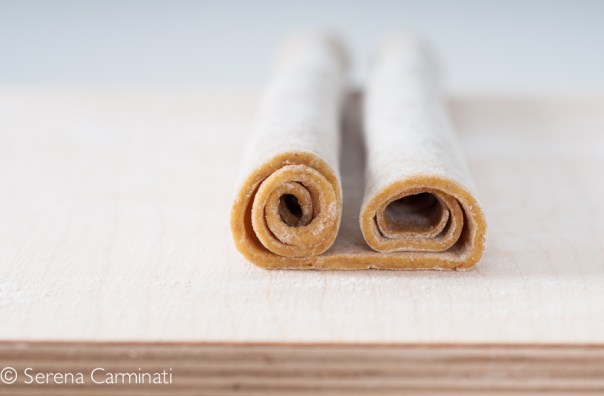
6. Using a rolling pin, roll the pasta from the outside inwards (see the picture).

DSC_4676

DSC_4675

DSC_4677

7. Cut the pasta (each cut should be about 2 cm, 0.70 inches, from the next). Roll and cut both sheets of pasta.

DSC_4678

8. Dust with more flour and separate the pappardelle on the wooden board, then cook and serve.

DSC_4683

DSC_4687

Tip. Boil the pasta in plenty of hot water, with 1/2 a tablespoon of salt (no oil needed) for 10-15 minutes. Then drain and serve with fresh pesto or tomato sauce.

DSC_4704

Pappardelle di farina di farro.

Preparazione: 30 minuti+1 ora in frigorifero

Cottura: 10-15 minuti

ingredienti 

per 3-4 persone

100g di farina 00

200 g di farina di farro (preferibilmente integrale)

50 g di farina 00 (per non fare attaccare la pasta)

un pizzico di sale

3 uova

Utensili

un grosso coltello

una spianatoia in legno (abbastanza grande e con superficie ruvida)

un matterello lungo

1. Mescolate le farine e il sale su una spianatoia. Disponete la farina a fontana con tre uova al centro, poi sbattete leggermente le uova usando una forchetta. Unite gli ingredienti, partendo dal bordo esterno.

2. Lavorate fino ad ottenere un impasto omogeneo. Ricopritelo con un panno e mettetelo in un contenitore ermetico per circa un’ora (in questo modo l’impasto diventerà più elastico).

3. Dopo un’ora, prendete l’impasto (dividetelo in due) infarinate bene tutto e fate due sfoglie sottili con il matterello. Sempre aiutandovi con il matterello, arrotolare la pasta per tagliarla (vedi la foto).

4. Tagliate la pasta (ogni taglio deve essere distante 2 cm circa dal successivo). Infarinate e separate le pappardelle sulla tavola. Cuocete le pappardelle per 10-15 minuti e condite come preferite.

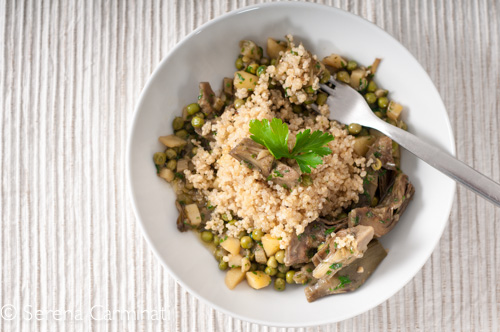
Amazing Artichoke and Pea Quinoa.

DSC_3748

Quinoa has become a very popular ingredient in recent years. Besides being very versatile, it’s considered by nutritionists to be one of the most important super foods for its numerous nutritional properties and it’s often used as a substitute for couscous in gluten-free recipes. Quinoa is also an excellent source of protein and amino acids, therefore is perfect for vegetarian and vegan diets.

I must thank my mother for this awesome recipe! She usually prepares meat dishes using artichokes, peas and potatoes. Being a vegetarian, I thought of using this amazing combination of flavours in a quinoa recipe, in order to create a delicious and perfectly balanced meal.

Cooking tip. After cutting the artichokes dip them in cold water and some lemon juice for a few minutes, to preserve the colour.

DSC_3741

Artichoke and Pea Quinoa.

 Ingredients 

for 4 servings

4 artichokes

200 g ( 7 oz) of peas

1 large potato

1 organic vegetable stock cube

1 large onion

1 clove of garlic

a bunch of parsley

a sprig of fresh marjoram

5 tablespoons extra virgin olive oil

salt and pepper to taste

400 ml (14 fl. oz) of vegetable stock (made with 400 ml of hot water and 1 organic vegetable stock cube)

For the quinoa.

1 cup quinoa

2 cups water

a pinch of salt

Quinoa preparation.

1. Wash the quinoa, using a strainer, under running water for a few minutes.

2. Put 1 cup of quinoa, 2 cups of water and a pinch of salt in a small pan, then cook for 15 minutes.

3. Turn off the heat and cover with the lid.

How to prepare the Vegetables. 

1. Peel, wash and finely cut the onion. Fry over a low heat for a few minutes. Cut the garlic clove, remove the green core, then chop and fry with the onion.

DSC_0908

DSC_3642

2. Wash and trim the artichokes, removing all the sharp,  hard and hairy bits.  Cut each artichoke into 8 parts (also peel and cut the stems into small pieces) then add to the ingredients.

DSC_3638

DSC_3656

DSC_3675

3. Wash, peel and cut the potato into very small cubes.  Add the potato, pour 400 ml of vegetable stock into the pan and mix well.

DSC_3686

4. Then add the peas and cook for about 30 minutes over a low heat (cover with the lid and stir from time to time).

DSC_3691

5. Five minutes before the end of the cooking time, add the herbs ( finely chopped) and season with salt and pepper.

DSC_3711

6. Turn off the heat and serve the vegetables with the quinoa in the middle.

DSC_3783

DSC_3751

Quinoa con Carciofi e Piselli.

Ingredienti

per 4 persone

4 carciofi

200 g di piselli

1 patata grande

1 cipolla grande

1 spicchio d’aglio

1 dado vegetale biologico

un mazzetto di prezzemolo

un mazzetto di maggiorana fresca

5 cucchiai di olio extra vergine d’ oliva

400 ml di brodo vegetale (fatto con 400 ml d’acqua bollente e un dado vegetale)

sale e pepe q b

per la quinoa

80 g di quinoa

200 ml d’acqua (ancora meglio se usate del brodo vegetale)

un pizzico di sale

 Preparazione della quinoa.

1. Lavate la quinoa, usando un colino, sotto il getto d’acqua del rubinetto per qualche minuto.

2. Fate cuocere in acqua leggermente salata (o brodo)  la quinoa per circa 15 minuti.

3. Spegnete il fuoco, coprite con il coperchio e lasciate riposare.

Preparazione delle verdure.

1. Pulite, tagliate finemente la cipolla e fate soffriggere a fuoco basso. Tagliate in due lo spicchio d’aglio, togliete l’anima, tritate e aggiungete al soffritto.

2. Lavate e pulite i carciofi, togliendo tutte le spine, le parti dure e fastidiose. Tagliate ciascun carciofo in 8 parti, tagliate anche il gambo a pezzetti e aggiungete al soffritto.

3. Pelate, lavate e tagliate la patata a cubetti molto piccoli. Mettete a cuocere la patata e aggiungete del brodo vegetale. Mescolate bene.

4. Aggiungete i piselli e fate cuocere a fuoco lento per 30 minuti con il coperchio semi chiuso, mescolando occasionalmente.

5. Quasi a fine cottura, aggiungete le erbe tritate finemente e condite con il sale e pepe.

6. A cottura terminata, spegnete il fuoco e servite le verdure con la quinoa nel centro.

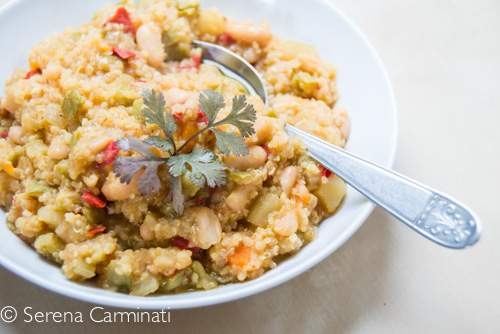
Crock Pot Quinoa and Veggie Stew.

 This dish is very healthy and nourishing, perfect for the winter.
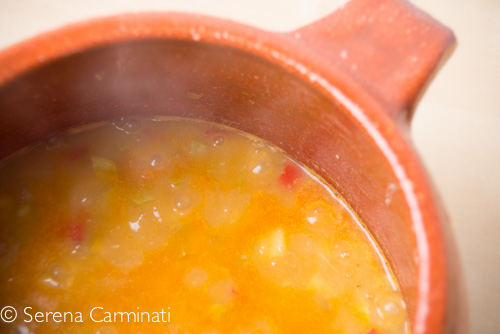
Quinoa is a plant that can be used as a grain, in fact it is quite similar to couscous. It takes 15 minutes to cook, usually it’s boiled and added to the dish, however here I cook it together with the vegetables at end of the preparation of the recipe.
Quinoa is considered a superfood because it contains important amino acids and it’s gluten-free. As a matter of fact it’s not a cereal, but it can be used like one in many recipes.
Cooking tips.
To cook this stew I used an eco-friendly crock pot.  Some crock pots can release harmful chemicals contained in their paint, when they are used at high temperatures for slow cooking recipes. There are specialised shops that sell these eco-friendly crock pots, painted with harmless natural paint, they are a little bit expensive, but you’ll only need one….Although, a crock pot is nice, but it is not strictly necessary, you can also use a normal stainless steel pan or a slow cooker to prepare this recipe.
DSC_0540
Ingredients
Serves 4
1 large onion
2 cloves of garlic
2 medium carrots
2 stalks of celery
2 large potatoes
3 zucchini / courgettes
1 red bell pepper
300 g (10.6 oz) sweet tomatoes, like cherry tomatoes
1 can of cannellini beans (or baked beans)
150 g (5.3 oz) quinoa
3 bay leaves
700 ml (23.6 oz fl) water
extra virgin olive oil, salt and pepper to taste
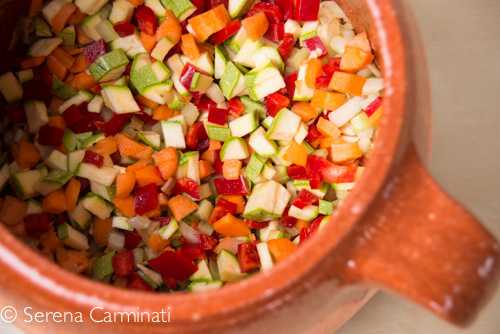
1. Peel and cut all the vegetables into small pieces.
DSC_0508
2. Fry the onion with plenty of olive oil, then add the garlic after a few minutes.
DSC_0504
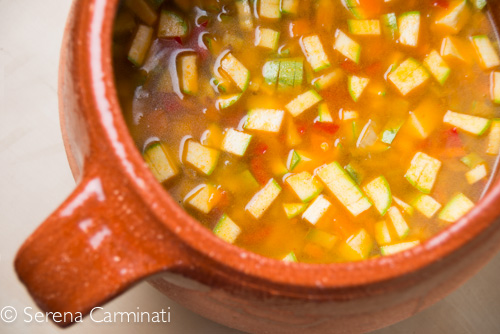
3. When the onions are golden, add all the vegetables with the bay leaves and 700 ml of water.
DSC_0516
DSC_0518-2
4. Stir and continue to cook over a low heat for 1 hour and 20 minutes (but add the beans after 40 minutes of cooking time).
DSC_0522
5. Wash the quinoa, using a strainer, under running water for a few minutes.
6. When the vegetables are cooked add the quinoa, then stir and cook for another 10 minutes.
DSC_0527
7.  Turn off the heat and cover with a lid. Season with a little olive oil, salt, pepper and serve after 5 minutes.
DSC_0545
Zuppa di quinoa con verdure.

Ingredienti

4 persone 

1 cipolla grossa

3 zucchini

2 spicchi d’aglio

2 carote medie

2 gambi di sedano

2 patate grosse

1 peperone rosso

300 g di pomodorini piccoli e dolci

1 scatola di fagioli cannellini

150 g di quinoa

3 foglie di alloro

700 ml d’acqua

olio extra vergine d’oliva, sale e pepe q b

1. Mondate e tagliate tutte le verdure a dadini.

2. Mettete a soffriggere la cipolla, aggiungendo l’aglio dopo qualche minuto per non farlo bruciare.

3. Quando il soffritto sarà dorato, aggiungete tutte le verdure con le foglie di alloro. Innaffiate con 700 ml d’acqua, poi coprite con il coperchio e fate cuocere lentamente.

4. Mescolate e continuate a cuocere a fuoco molto lento per 1 ora e 20 minuti (aggiungete i fagioli dopo 40 minuti di cottura).

5. Lavate la quinoa, usando un colino, sotto il getto d’acqua del rubinetto per qualche minuto.

6. Poco prima di spegnere il fuoco aggiungente la quinoa (circa 10 minuti prima), spegnete e coprite con il coperchio.

7. Lasciate riposare per 5 minuti. Condite con un po’ d’olio, sale e pepe e servite.

Spaghetti with prawns and trumpet gourds

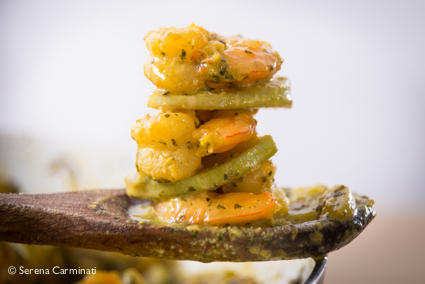
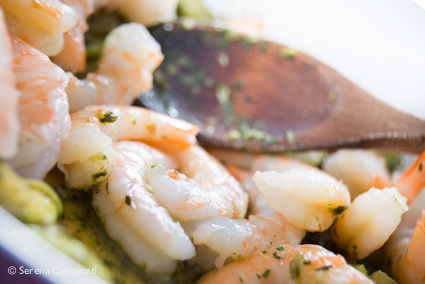
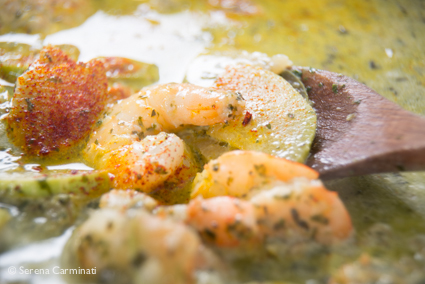
Today’s recipe is suitable for a special occasion like a romantic dinner (remember to halve the ingredients in this case) or an elegant meal. For this recipe I used italian trumpet gourds because, being very sweet, delicate and with a creamy, almost avocado-like texture, they work really well with the prawns in this dish.  If you can’t find any gourds you can use some zucchini / courgettes instead.

DSC_0141

Ingredients

Serves 4

3 medium-sized spring onions

1 sachet of saffron

1 large clove of garlic

a bunch of parsley

a bunch of tarragon

200 g (7 oz) trumpet gourds of Albenga , still green, with delicate skin (you can use zucchini / courgettes if you can’t find the gourds)

200 g (7 oz) prawns (washed and cleaned)

200 g (7 oz) spaghetti

2 tablespoons single cream

2 glasses of good white wine 

3 tablespoons extra virgin olive oil

salt and pepper to taste

DSC_0106

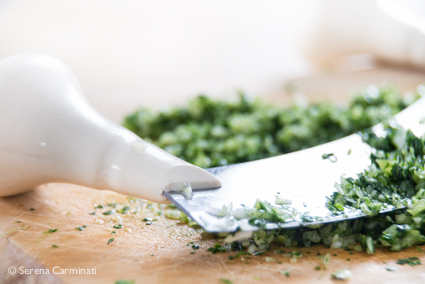
Finely chop the herbs with the spring onions and garlic.

DSC_0111

Fry the chopped ingredients in a large pan with plenty of olive oil.

DSC_0118

Add the gourds (cut into very thin slices). Cook, adding a little bit of water if necessary, until the grounds are tender.

DSC_0125

Season with salt and pepper. At this point, add the prawns with the white wine.

DSC_0131

Meanwhile, in a large pan boil the pasta with a little bit of sea salt. Now, add the cream and saffron to the prawns and cook over medium heat until most of the excess liquid evaporates (bearing in mind that the sauce has to be very creamy, almost liquid).

DSC_0135

Once ready, drain the pasta and toss it directly in the frying pan with the sauce.

DSC_0170

Spaghetti con gamberi e zucchine trombetta.

Ingredienti

per 4 persone

3 cipollotti di media grandezza

1 bustina di zafferano

1 spicchio d’aglio grande

un mazzetto di prezzemolo

un mazzetto di dragoncello

200 g di zucchine trombetta

200 g di code di gambero lavate e pulite

200 g di spaghetti

2 cucchiai di panna da cucina

2 bicchieri di vino bianco buono

3 cucchiai di olio extra vergine di oliva

sale e pepe q b

Tritate finemente i cipollotti con l’aglio e le erbe. Mettete a soffriggere gli ingredienti appena tritati in una padella grande con abbondante olio d’oliva. Nel frattempo, fate bollire l’acqua per la pasta con un po’ di sale grosso. Aggiungete al soffritto le zucchine trombetta tagliate a spicchi molto sottili. Fate rosolare bene, poi annaffiate con un po’ d’acqua. Aggiungete sale e pepe a piacere e continuate a cuocere finché le zucche saranno tenere. A questo punto,  aggiungete i gamberi e il vino bianco. A parte, buttate la pasta. Unite la panna e lo zafferano ai gamberi, facendo evaporare a fuoco medio il liquido in eccesso, tenendo presente che il condimento dovrà rimanere molto cremoso, quasi liquido.

Una volta pronto il condimento, scolate la pasta e conditela direttamente in padella.

Neither a salad or a pizza: Insalapizza! (no cheese)

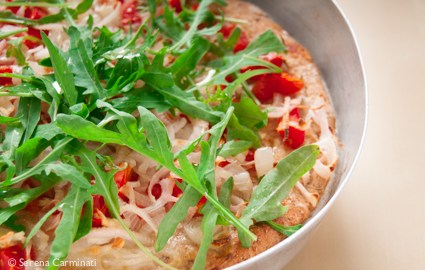
As refreshing as a summer salad and as tasty as a pizza! This is why I decided to call this dish insalapizza (salad-pizza). I often end up with no mozzarella cheese in my fridge, and this usually happens when I feel like having a pizza!…So one evening I came up with this nice and simple recipe. Since then I have had several occasions to try out and improve this dish. I hope you like it!

Pizza-salad recipe.

Ingredients

for 1 pizza

For the pizza dough

35 g (1.23 oz) wholemeal flour (whole wheat flour)

35 g (1.23 oz) whole spelt flour

20 g  (0.70 oz) Manitoba flour

45 g (1.58 oz) plain flour sourdough (or you can use 5 g of yeast. In this case, you have to add 45 g of plain flour and more water to make the dough. the rising time will also vary)

1 or 2 tablespoons mixed grains (hulled oats, hulled barley, hulled spelt, wheat, rye, brown rice)

1/2  tablespoon flax seeds (linseeds), optional

1/2  teaspoon salt

a little bit of barley malt syrup (to increase leavening strenght, optional)

Pizza toppings and seasoning

1 big onion

3 plum tomatos

water as needed

some rocket (arugula) leaves, washed and dried

salt and pepper

extra virgin olive oil (2 tablespoons to grease the oven tray and 2 more to pour on the pizza toppings)

Method
1. Wash the seeds and soak them in water for 6-8 hours.
2. Mix the sourdough with the flours, some water and malt (or honey). Add the seeds and half a teaspoon of salt to the dough. Mix well and increase the amount of flour if necessary (the dough shouldn’t stick to your hands).
DSC_9284
3. Let the dough rise until it has doubled in volume (3-6 hours, if you use sourdough).
If you use normal yeast (not sourdough) you have to increase the amount of flour and water ( in this case, add 45 g of plain flour) to the dough. Dissolve the yeast in a little bit of water with 1 tablespoon of flour. Then add the yeast to the mixture and let it rise for about an hour.
4. When the dough is ready, roll out the pizza base in a round baking tray (20-30 cm in diameter), greased with plenty of olive oil. Let the pizza base rise for another hour. Meanwhile, clean and cut the onion very finely and leave it to soak for an hour in water.
5. Wash, dry and cut the tomatoes into small cubes. Top your pizza base with the onion and the tomatoes. Season your pizza with plenty of extra virgin olive oil and bake at 200 ° C (392° F) for 30 minutes (until crispy).
DSC_9299
DSC_9314
Remove from the oven, season with salt and pepper, and garnish with a few rocket leaves.
DSC_9315
A few tips.
To shorten the preparation time, I usually make a lot of dough, I divide it into small quantities and store it in the freezer. In this way the dough is ready when I need it. Leave the seeds to soak at night, this also save some time.
Insalapizza.
Ingredienti per la base della pizza ai cereali.
Per 1 pizza

35 g di farina integrale

35 g di farina integrale di farro

20 g di manitoba

45 g di lievito madre (potete sostituire il lievito madre aggiungendo 45 g di farina 00 all’impasto con un po’ d’acqua e 5 g di lievito di birra da diluire con poca acqua e farina)

1 o 2 cucchiai di cereali misti (avena decorticata, orzo decorticato, farro decorticato, frumento, segale, riso integrale)

1/2 cucchiaio di semi di lino (facoltativo)

1/2 cucchiaino di sale

pochissimo malto d’orzo (per fare lievitare meglio l’impasto,  ma è facoltativo)

un po’ di farina in più da aggiungere a fine impasto

acqua q b

Ingredienti per il condimento

3 pomodori perini maturi

1 cipolla dolce grande

un mazzetto di rucola, lavata e pulita

sale e pepe q b

Olio d’oliva abbondante (2 cucchiai per ungere la teglia e 2 in più per condire la pizza in superficie )

Preparazione.

1. Lavate e lasciate i semi a bagno in acqua per 6-8 ore. Nel frattempo, unite le farine e il malto al lievito madre, aggiungendo un po’ d’acqua, se necessario. Lavorate bene l’impasto.  Aggiungete i semi, con mezzo cucchiaino di sale e aumentate la quantità di farina nel caso il composto risultasse troppo umido.

2. Fate lievitare fino a quando l’impasto sarà raddoppiato di volume (3-6 ore). Se usate il lievito di birra dovete aggiungere 45 g di farina 00 all’impasto, poi diluire il lievito di birra in un po’ d’acqua e impastare tutto. In questo caso, dovete lasciare lievitare per un’ ora circa.

3. Quando l’impasto sarà lievitato, stendetelo su una teglia rotonda (25-30 cm di diametro), ungendo la base con abbondante alio d’oliva. Lasciate lievitare per 1 oretta. Nel frattempo, tagliate la cipolla e lasciatela immersa in acqua per almeno 1 ora (per renderla più dolce). Lavate, asciugate e tagliate i pomodori a cubetti.

4. Disponete la cipolla e i pomodori sulla pizza e condite con abbondante olio d’oliva .Cuocete a 200 ° C per 30 minuti. Sfornate, condite con sale e pepe, aggiungendo qualche foglia di rucola per guarnire.

Consigli per la preparazione.
Per accorciare i tempi, generalmente preparo in anticipo una grossa quantità di pasta, la divido nelle giuste dosi e la scongelo in caso di bisogno. Questo procedimento facilità notevolmente le cose e funziona alla grande! Consiglio anche di lasciare i semi immersi nell’acqua tutta la notte, saranno più morbidi e i tempi di preparazione saranno più facili da gestire.

Posh and perfect! Wholemeal pizza with goat’s cheese, olives and rocket (arugula).

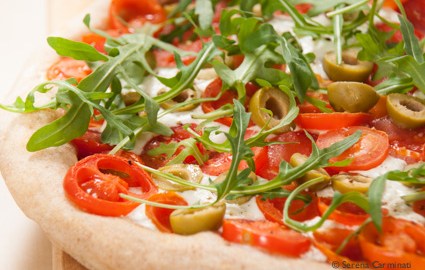
This is a great veggy pizza! The dough, once cooked, is perfectly crunchy on the outside and soft on the inside. I used a mixture of manitoba, semolina and wholemeal flour to give elasticity, crispness and flavour to the pizza. Instead of using sourdough you can use 6 g of yeast to significantly reduce the rising time of the dough. At this link https://foodfulife.wordpress.com/2013/01/02/how-to-make-natural-yeast-sourdough/  you will find a short article that explains how to make sourdough at home.

Wholemeal pizza with goat’s cheese, olives and rocket (arugula).

Ingredients

For 1 thick pizza

50 g (1.76 oz) manitoba flour

50 g (1.76 oz) wholemeal (whole wheat) flour

40 g (1.41 oz)  fine semolina flour

50 g (1.76 oz) sourdough

70 g (2.46 oz) fresh and creamy goat’s cheese

70 g (2.46 oz) sweet and creamy soft cheese (crescienza or stracchino)

3 tablespoons extra virgin olive oil

1 teaspoon salt

A handful of rocket (arugula)

A handful of pitted olives

6-7 ripe cherry tomatoes

salt and pepper as needed (for seasoning the pizza)

100 ml (3.38 fl. oz) water (or more)

1/2 teaspoon honey

Create a starter dough with 50 g (1.76 oz ) wholemeal flour, 50 g manitoda flour and 50 g sourdough. Knead the starter dough with 100 ml (3.38 fl. oz) water and half a teaspoon of honey.

DSC_6289

Cover and set for a couple of hours. After 2 hours, take the starter dough and mix with the semolina flour ( adding some water or flour if needed). Add a teaspoon of salt and a tablespoon of oil and work until smooth.

DSC_6357

Let rise for a few hours, and then the dough will ready when it doubles in volume. Roll out the dough and place in a baking tray, previously evenly greased with a tablespoon of olive oil.

DSC_6371-3

Cut the tomatoes and the olives into thin slices. In a small bowl, mix the goat’s cheese with crescenza until smooth.

DSC_6361-3

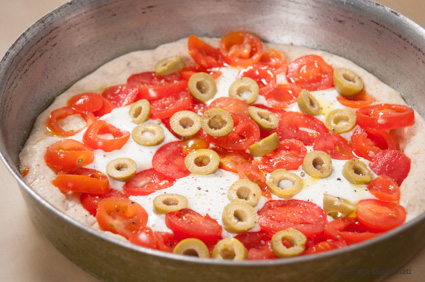
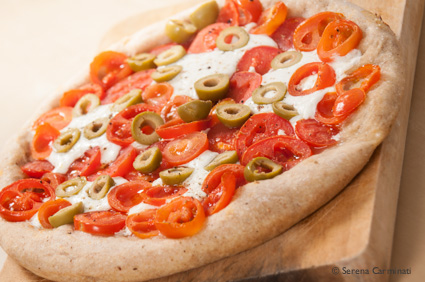
Alternating, place the tomatoes and cheese on top of the dough, then garnish with some slices of olives. Season your pizza with a tablespoon of olive oil, some salt and pepper.

DSC_6378-3

Bake at 200 ° C (392° F) for 25-30 minutes.

DSC_6395-3

Top the pizza with fresh rocket and serve.

DSC_6408-3

DSC_6425-3

Pizza integrale con formaggio di capra, olive e rucola.

Ingredienti

per 1 pizza

50g di farina manitoba

50g di farina integrale

40g di semola (rimacinata)

50g di lievito madre  (oppure 6 g di lievito di birra con aggiunta di acqua)

70 g di formaggio fresco (cremoso) di capra

70 g di crescenza o stracchino

3 cucchiai di olio extravergine d’oliva

Una manciata di olive verdi snocciolate

Una manciata di rucola

1 cucchiaino scarso di sale

6-7 pomodorini ciliegia ben maturi

sale e pepe qb (sulla pizza finita)

100 ml di acqua (o più)

1/2 cucchiaino di miele

Create un lievitino con 50g di farina integrale, 50g di farina manitoda e 50 g di lievito madre. Impastate il lievitino con 100 ml di acqua e mezzo cucchiaino di miele. Coprite e lasciate lievitare per un paio d’ore. Dopo la prima lievitazione, prendete il lievitino e impastate con la semola (aggiungendo un po’ d’acqua o di farina se necessario). Aggiungete un cucchiaino di sale e un cucchiaio d’olio all’impasto. Lasciate lievitare per qualche ora ( tenete presente che l’impasto è pronto quando raddoppia di volume).

Stendete l’impasto su una teglia, uniformemente unta con un cucchiaio di olio extravergine d’oliva. Tagliate i pomodorini e le olive a fettine. In una terrina piccola, unite e mescolate bene la crescenza con il formaggio di capra, fino ad ottenere una crema abbastanza omogenea. Cospargete i pomodorini alternandoli al formaggio sulla base della pizza e finite di decorare con delle fettine di olive. Condite la pizza con un cucchiaio di olio, un po’ di sale e pepe.

Fate cuocere a 200° di per 25-30 minuti. Sfornate la pizza, aggiungete la rucola e servite.

More than just another pizza!

DSC_7881

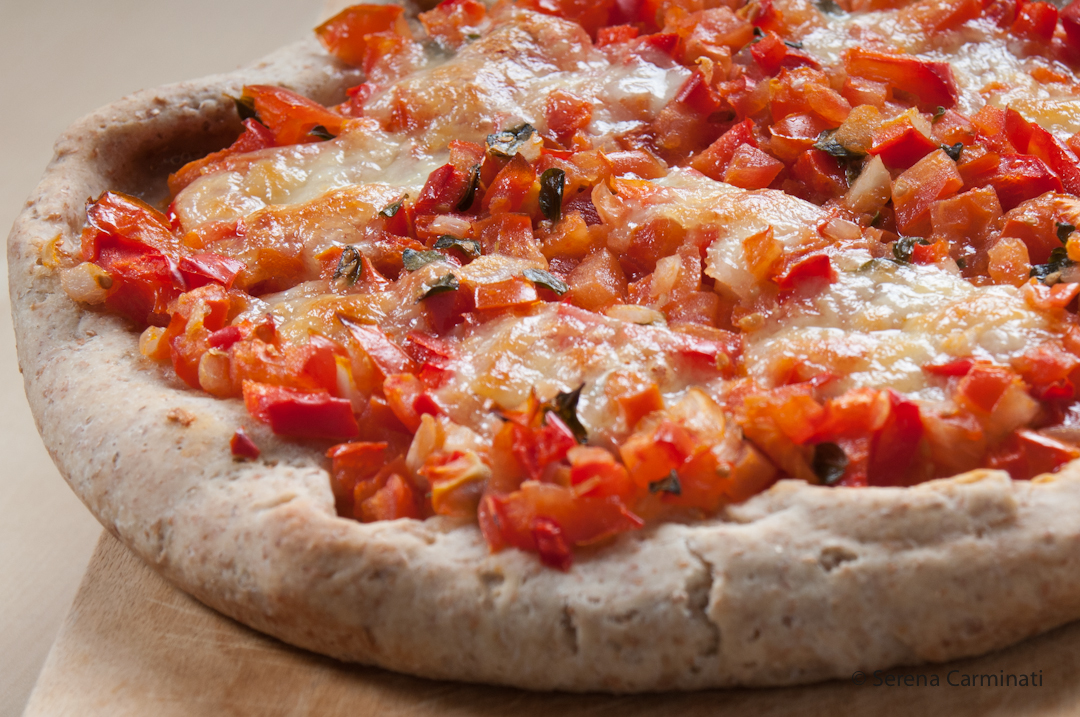
A pizza for all occasions. A great dish, full of flavor but also healthy as it contains whole grain fibers and vitamins. Personally, I prefer the flavor and texture of different flours mixed together, compared to plain white flour, I think it’s a matter of habit. With experience, I realized that by gradually increasing the use of whole grains and vegetables in the preparation of traditional dishes you can have a healthier diet without having to give up taste or tradition.

Pizza with three flours and vegetables.

100 g wholemeal flour (3.5 oz)

100 g (3.5 oz) whole spelt flour (but use 150 g [5.2 oz] spelt flour if you use yeast instead of sourdough)

100 g durum wheat semolina flour (all organic if possible) 3.5 oz

1 teaspoon of salt

1 tablespoon extra virgin olive oil

2 medium size tomatoes

1/2 medium size bell pepper

1/3 small onion (optional)

a bunch of fresh marjoram or a tablespoon of dried marjoram

ground pepper to taste

100 g of sourdough (3.5 oz) or 5 g yeast dissolved in a little water.

(the dose of yeast may vary depending on the humidity and the quality of the product)

1/2 squeezed mozzarella cheese

1/2 glass of water approximately for the dough

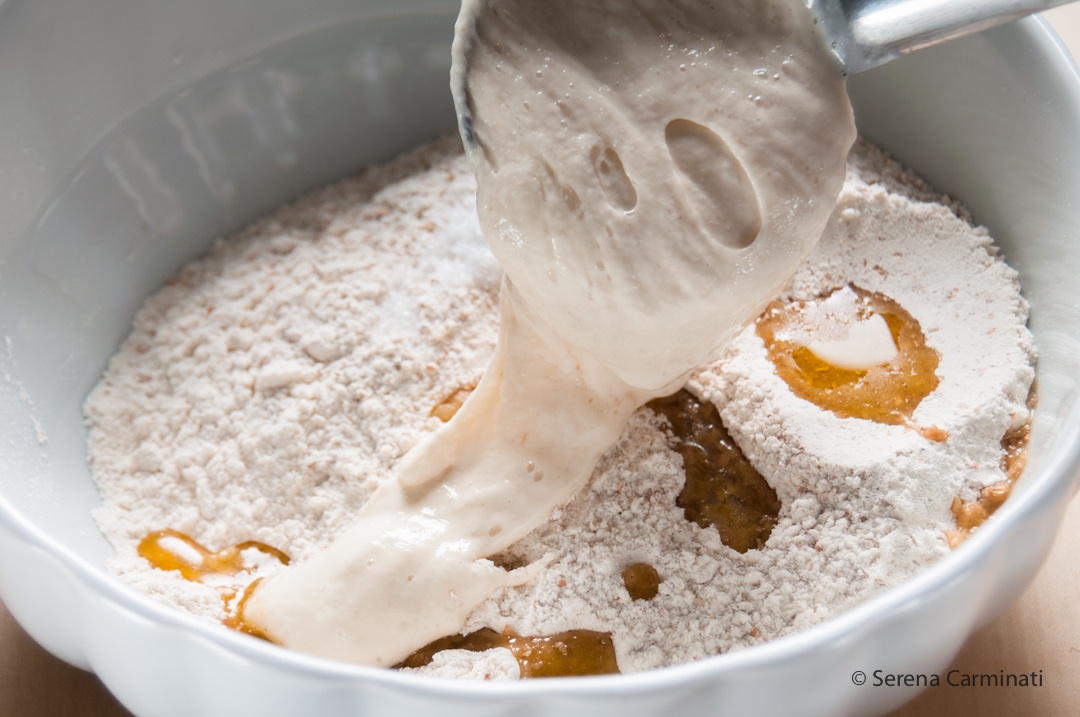
Prepare the dough by combining the three flours, salt, olive oil and sourdough (or yeast).

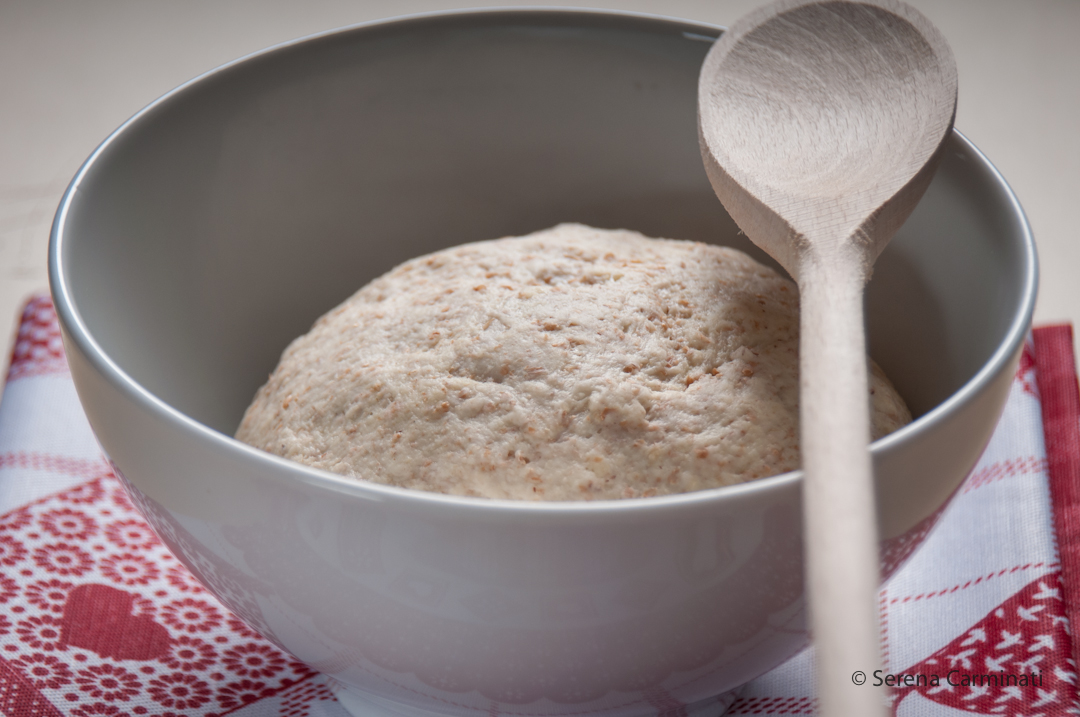
Mix all the ingredients together and knead to form a soft and smooth dough ( add some flour if the dough is too wet and a little more water if is too dry). Let the dough rise in a bowl with a wet cloth on top for 6 hours if you use sourdough or for an hour if you use yeast.

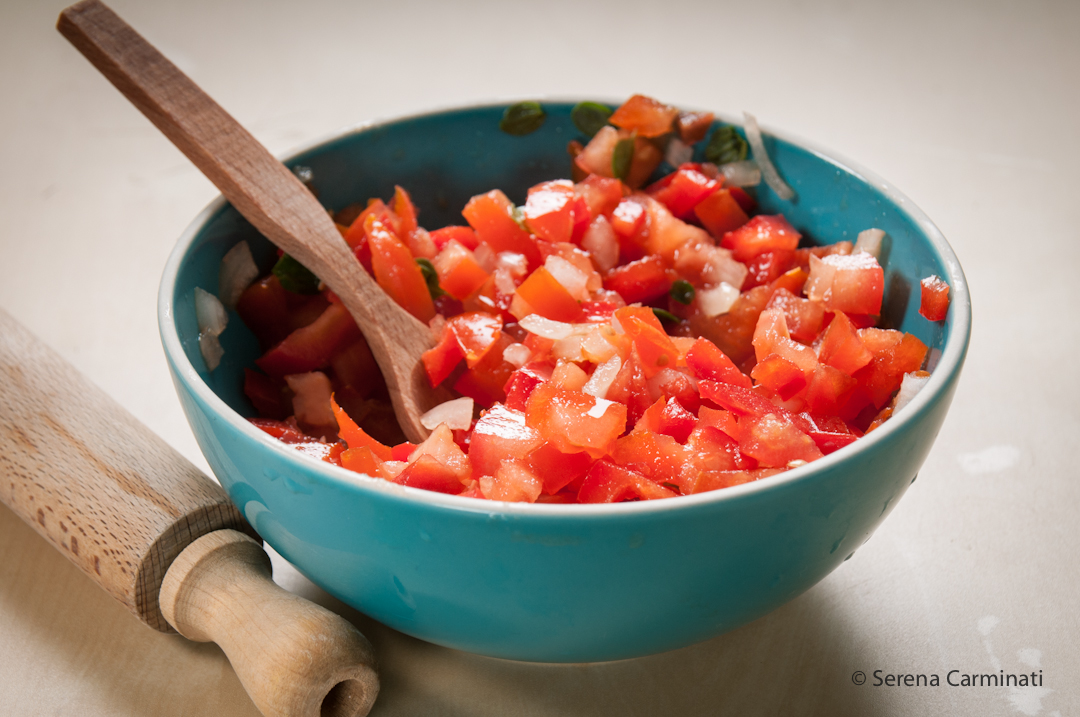
Cut the vegetables, place them in a bowl and drizzle with some olive oil, a pinch of salt and some marjoram.

When the dough is ready roll it out with a rolling pin, pour a little oil evenly over the bottom of a round baking tray and roll out the dough until the baking tray is completely covered.

Place the vegetables on top of the dough and add some mozzarella cheese.

Bake for 20-30 minutes at 180 ° C (356°).

Sprinkle the pizza with some ground pepper and serve it hot.

Una pizza ideale per tutte le occasioni. Un ottimo piatto unico, ricco di sapore ma anche sano, perché contiene fibre e vitamine. Ho elaborato questa ricetta perché personalmente preferisco il sapore e la consistenza delle farine miste, rispetto alla farina bianca, credo sia una questione di abitudine. Con l’esperienza, ho capito che incrementando gradualmente l’uso di farine integrali e verdure nella preparazione di alcuni piatti tipici si può avere una dieta più varia e sana, senza dover necessariamente rinunciare a gusto o tradizione.

Pizza alle tre farine con peperoni e maggiorana.

100 g di farina di integrale

100 g di farina di farro (usate 150 g.di farina di farro se usate il lievito di birra)

100 g di farina di semola di grano duro (tutte possibilmente bio)

1 cucchiaino scarso di sale fino

1 cucchiaio di olio extravergine di oliva

2 pomodori di medie dimensioni

1/2 peperone rosso di medie dimensioni

1/3 di cipolla piccola (facoltativo)

un mazzetto di maggiorana fresca o un cucchiaio di maggiorana secca

pepe macinato a piacere

100 g di lievito madre o 5 g di lievito di birra sciolto in un po’ d’acqua.

(la dose di lievito madre può variare a seconda dell’umidità e della qualità del prodotto, meglio comunque abbondare)

1/2 mozzarella ben strizzata

1/2  bicchiere d’acqua circa per l’impasto

Preparate l’impasto unendo le tre farine, il sale,  l’olio e il lievito. Mescolate tutti gli ingredienti, impastate fino a formare una pasta morbida e omogenea, aggiungendo un po’ di farina se l’impasto è troppo umido e un po’ più d’acqua se il risultato è  troppo asciutto. Lasciate lievitare l’impasto in una terrina con sopra uno straccio umido per sei ore se avete usato il lievito madre o per un’ ora se avete usato il lievito di birra.

Tagliate le verdure, riponetele in una scodella e conditele con un filo d’olio, un pizzico di sale e la maggiorana. Quando l’impasto sarà ben lievitato stendetelo con un mattarello, versate un po’ d’olio uniformemente sul fondo di una teglia rotonda e stendetevi l’impasto fino a coprirlo completamente.

Versate le verdure sopra l’impasto e aggiungete la mozzarella.

Infornate a forno caldo per 20-30 minuti a 180°.

Spolverate la pizza con del pepe macinato e servitela calda.

Buon appetito!