Category Archives: How to

Easy Fresh Egg Spelt Pasta (Step by Step)

This week we are going to prepare home-made spelt (farro) pasta. In Italy there are several kinds of pasta, made with different ingredients, colours and shapes. Each type has its own precise measurements, name and tradition. Today we are going to make pappardelle. This pasta is very similar to tagliatelle, only a little bit easier to cut, with a thin and long rectangular shape (about 1,5- 2 cm wide).

Pappardelle is made by mixing flour (usually 00 or plain) with a few eggs. In the next posts I’ll show you how to prepare different kinds of pasta, some without eggs and some gluten-free recipes as well. First of all, let’s make a list of the things we need.

DSC_4696

 Spelt Flour (Farro) Pappardelle.

Preparation: 30 minutes +1 hour refrigeration

Cooking: 10-15 minutes

Ingredients

3-4 servings

100g (3.5 oz) plain flour (best if you find 00 flour, which is very fine)

200g (7 oz ) wholemeal spelt flour (whole wheat farro flour)

50 g (1.76 oz) of plain flour, for dusting

a pinch of salt

3 eggs

 Tools 

a large knife

a large wooden board (or a large table will do)

a long rolling pin

DSC_4607-2

Method.

1. Mix the flours with salt on a wooden board and make a well in the centre. Put three eggs in it, then mix them slightly using a fork.

DSC_4645

2. Starting from the outside edges, slowly combine the flour with the eggs.

DSC_4648

3. Work the dough until smooth.

DSC_4652

DSC_4656

DSC_4661

4. Fold a kitchen cloth around the dough and place it in an airtight container for about an hour (during this time the dough becomes more elastic).

DSC_4662

DSC_4663

5. After an hour, take the dough (dust with some flour), divide it into two parts and using a rolling pin make two thin sheets of pasta.

DSC_4667

DSC_4669

DSC_4673

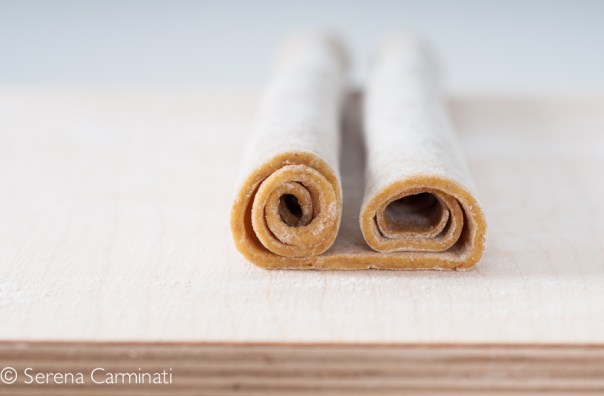
6. Using a rolling pin, roll the pasta from the outside inwards (see the picture).

DSC_4676

DSC_4675

DSC_4677

7. Cut the pasta (each cut should be about 2 cm, 0.70 inches, from the next). Roll and cut both sheets of pasta.

DSC_4678

8. Dust with more flour and separate the pappardelle on the wooden board, then cook and serve.

DSC_4683

DSC_4687

Tip. Boil the pasta in plenty of hot water, with 1/2 a tablespoon of salt (no oil needed) for 10-15 minutes. Then drain and serve with fresh pesto or tomato sauce.

DSC_4704

Pappardelle di farina di farro.

Preparazione: 30 minuti+1 ora in frigorifero

Cottura: 10-15 minuti

ingredienti 

per 3-4 persone

100g di farina 00

200 g di farina di farro (preferibilmente integrale)

50 g di farina 00 (per non fare attaccare la pasta)

un pizzico di sale

3 uova

Utensili

un grosso coltello

una spianatoia in legno (abbastanza grande e con superficie ruvida)

un matterello lungo

1. Mescolate le farine e il sale su una spianatoia. Disponete la farina a fontana con tre uova al centro, poi sbattete leggermente le uova usando una forchetta. Unite gli ingredienti, partendo dal bordo esterno.

2. Lavorate fino ad ottenere un impasto omogeneo. Ricopritelo con un panno e mettetelo in un contenitore ermetico per circa un’ora (in questo modo l’impasto diventerà più elastico).

3. Dopo un’ora, prendete l’impasto (dividetelo in due) infarinate bene tutto e fate due sfoglie sottili con il matterello. Sempre aiutandovi con il matterello, arrotolare la pasta per tagliarla (vedi la foto).

4. Tagliate la pasta (ogni taglio deve essere distante 2 cm circa dal successivo). Infarinate e separate le pappardelle sulla tavola. Cuocete le pappardelle per 10-15 minuti e condite come preferite.

Make the Best Home-made Yogurt!

DSC_0946

Home-made yogurt is cheap, healthy and delicious! There are several ways to make yogurt at home, today I am going to show you the easiest method, using a yogurt maker, some milk and live culture yogurt bacteria.

First, there are a few things that you have to keep in mind when choosing the ingredients…
DSC_4196-2

You’ll need :

1. One litre (33.8 fl oz, 1.75 pt uk ) of good quality milk, possibly organic, to avoid that the antibiotics contained in the milk might compromise the development of the good bacteria in the process. Unless you are on a low-fat diet, choose full-fat milk to make a creamier and smoother yogurt.

2. A live culture yogurt or a yogurt culture packet (here I am going to use a yogurt culture packet).

3. Sterilised glass jars. You can sterilise the jars by putting them (of course, without the lids) in a pre-heated oven at 100° C (212 F°) for about 8-10 minutes. Let cool before using.

DSC_4267

Home-made yogurt (basic recipe)

Ingredients

1 litre (33.8 fl oz, 1.75 pt uk ) of good quality milk

1 live culture yogurt (1 cup) or a yogurt culture packet

Tools

a food thermometer

a yogurt maker (possibly with glass jars)

a stainer, or a cheese cloth

a spoon

a pan

a cup, or a small bowl to strain the yogurt

a measuring cup

DSC_4205-4

The Method.

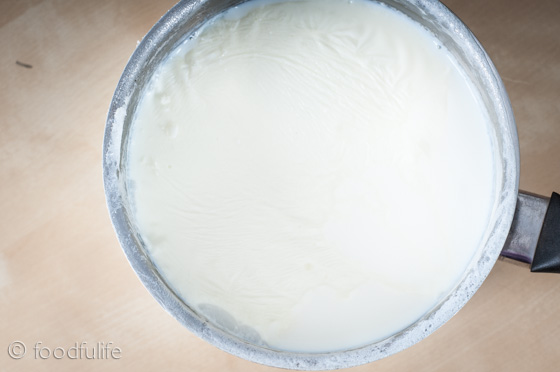
1. Pasteurise your milk. Heat the milk up to 85°C (185°F ), checking the temperature using a food thermometer (avoid boiling the milk, this way you can preserve the nutrients contained in it). This process will take a few minutes.

Variation. If you prefer thick yogurt, you have to boil the milk for at least 5-10 minutes and then remove the skin on the surface.
DSC_4236

DSC_4246

2. Let the milk cool (you have to use the milk at room temperature to make the yogurt).
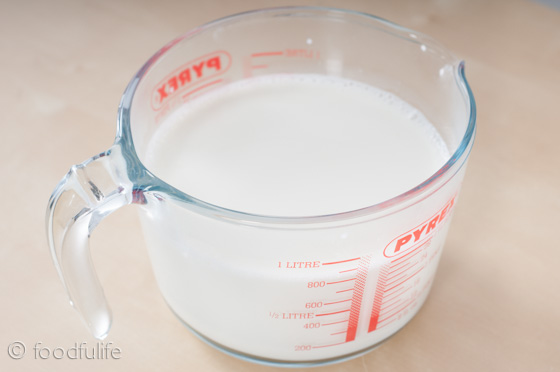
DSC_4256

3. Add the healthy bacteria. You can use a live culture yogurt (unflavoured, unsweetened and to be added at room temperature) or you can buy a yogurt culture packet. If you use a yogurt culture packet, you have to mix the culture with 2 tablespoons of milk first.

DSC_4276

4. Mix the live culture with 1 litre of milk (or less, if you have boiled the milk to make thick yogurt). Mix everything well.
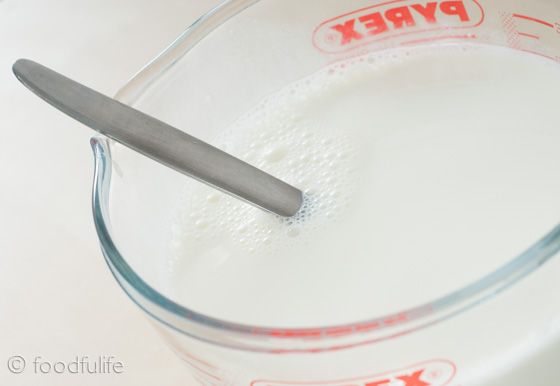
DSC_4299

5. Set the timer (or an alarm) and keep the mixture at 38-40 °C (100-104°F) for 8-12 h. Use a yogurt maker, in this way your temperature will be constant at all times.
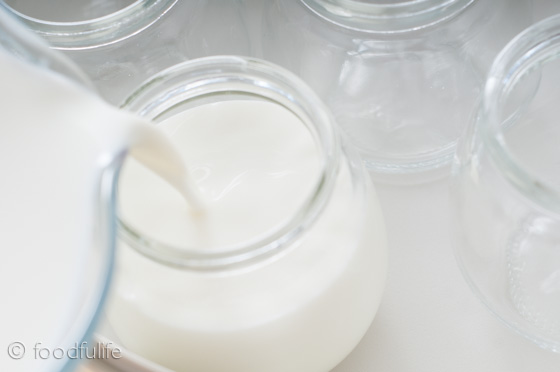
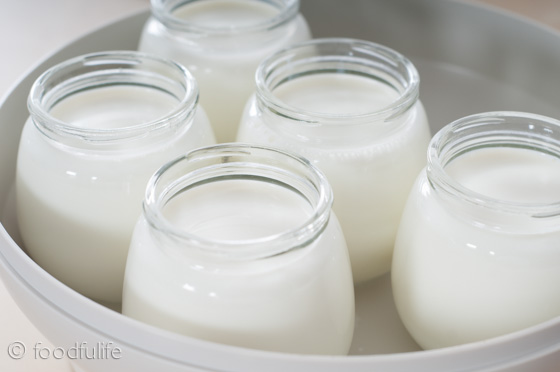
DSC_4313

DSC_4318

6. Strain your yogurt (this is optional). If you desire a thicker yogurt, you can strain the liquid using a cheese cloth (or a tea towel or a strainer). This process might take from a few up to several hours, depending on the device you use and on the thickness of the yogurt you wish to achieve. Leave the yogurt in the fridge while you do this.

DSC_3857

 Notes.

1. Store your yogurt in sterilised jars. Seal the jars with a lid and keep them in the fridge for 5-7 days (your yogurt might last even longer, if properly stored). You can freeze it and it will last up to a month.

2. If you are going to use your home-made yogurt as a starter to make a new batch, you have to do this within 5 days from the day you’ve made it, to make sure that the bacteria is fully active.

Comparing yogurts.
DSC_4331

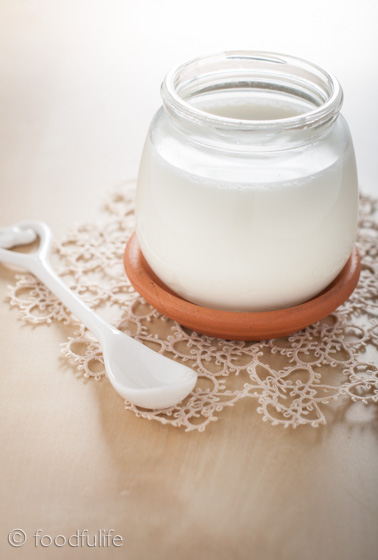
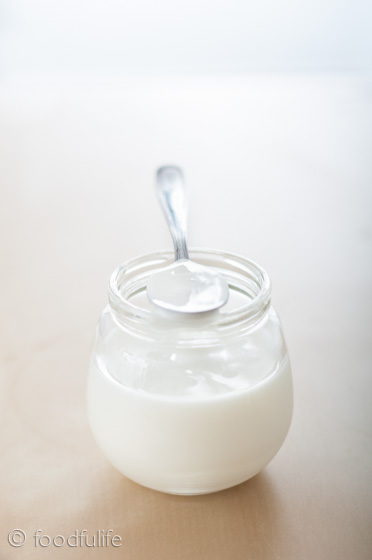
In the picture above the yogurt was made without boiling the milk.

DSC_4214-2

In this picture the yogurt was made boiling the milk during the process.

I hope this post was helpful. Please let me know if you having troubles with the process.

Thank you!

Come fare lo yogurt in casa. 

Lo yogurt fatto in casa è economico, sano e delizioso! Ci sono diversi modi per fare lo yogurt, oggi vi mostrerò il metodo più semplice utilizzando la yogurtiera, del latte bio e dei fermenti lattici.

Prima di tutto, ci sono alcuni accorgimenti da seguire quando scegliete gli ingredienti…

Per avere un ottimo yogurt fatto in casa è necessario: 

1. Acquistare latte di buona qualità (possibilmente biologico), per evitare che gli antibiotici contenuti in esso possano compromettere lo sviluppo dei batteri buoni durante il processo. A meno che non stiate seguendo una dieta povera di grassi, è consigliabile scegliere del latte intero di buona qualità per ottenere yogurt denso e cremoso.

2. Utilizzare uno yogurt con i fermenti lattici vivi, oppure acquistare un pacchetto di fermenti lattici liofilizzati, che potete trovare in farmacia (in questa dimostrazione utilizzerò i fermenti in pacchetto).

3. Sterilizzare i vasetti di vetro. Se volete uno yogurt perfettamente conservato è necessario sterilizzare i contenitori che si utilizzeranno per conservare il prodotto. È possibile farlo mettendo i vasetti (senza il coperchio) in forno preriscaldato a 100 ° C per circa 8-10 minuti, oppure si possono far bollire (eseguite questo passaggio solo se utilizzate dei contenitori di vetro, non fatelo con la plastica!). Lasciate raffreddare prima dell’uso.

Ingredienti

1 litro di latte di buona qualità

1 yogurt con fermenti lattici vivi o un pacchetto di fermenti liofilizzati per fare lo yogurt

Utensili

un termometro per alimenti

una yogurtiera (possibilmente con vasetti di vetro)

un colino molto fitto, o un panno e un colino normale

un cucchiaio

una pentola

una tazza, o una piccola ciotola per scolare lo yogurt

una caraffa graduata per misurare i liquidi

Il Metodo. 

1. Pastorizzate il latte. Scaldare il latte fino a 85 ° C (185 ° F), controllando la temperatura con un termometro per alimenti. E’ bene non portare a bollore il latte per conservarne al meglio le sostanze nutritive. Questo processo richiederà alcuni minuti. Per ottenere invece uno yogurt più denso, fate bollire il latte per 5-10 minuti, poi rimuovete la pellicola che si forma in superficie e proseguite con il procedimento.

2. Lasciate raffreddare il latte. Utilizzare il latte a temperatura ambiente per fare lo yogurt.

3. Aggiungete i fermenti lattici. È possibile utilizzare uno yogurt con i fermenti lattici vivi come base per farne altro, oppure si può acquistare un pacchetto di fermenti lattici liofilizzati. Nel secondo caso, è necessario miscelare i fermenti con 2 cucchiai di latte prima di procedere.

4. Mescolate il latte con i fermenti. Utilizzate 1 litro di latte, o quello che rimane se ne avete già mischiata una parte o avete fatto bollire il latte. Mescolare bene tutto.

5. Impostate il timer (o un allarme) e mantenete la miscela a 38-40 ° C (100-108 ° F) per 8-12 h. Vi consiglio di utilizzare una yogurtiera, in questo modo la temperatura sarà mantenuta costante in ogni momento ed eviterete sorprese.

6. Filtrate il vostro yogurt. Se volete lo yogurt più denso, potete filtrarlo per eliminare il siero con un panno, un canovaccio oppure un colino molto fitto. Lasciate lo yogurt in frigo durante questa operazione. Questo passaggio può richiedere da poche a svariate ore, dipende da ciò che utilizzate e dal risultato che volete ottenere (il filtraggio è facoltativo).

Note. 

Conservate lo yogurt in vasetti sterilizzati. Sigillate i vasetti con un coperchio e riponeteli in frigo per 5-7 giorni (ma il vostro yogurt potrebbe durare anche più a lungo, se correttamente conservato). Potete anche congelarlo e durerà fino a un mese. Se avete intenzione di utilizzare lo yogurt fatto in casa come base per farne di nuovo, dovete farlo entro 5 giorni dalla produzione, per essere sicuri che i batteri siano pienamente attivi.

Nelle ultime due immagini del post, potete vedere chiaramente la differente consistenza di uno yogurt fatto con il latte pastorizzato (non bollito o scaldato) e uno yogurt fatto facendo bollire il latte durante il procedimento (ultima immagine).

How to make a healthier hazelnut-chocolate spread in 5 easy steps!

Today we are going to prepare a healthier version of nutella-like chocolate spread. Of course, this is no low-fat spread, however, this yummy treat contains a lot of vegetable proteins, potassium, iron and calcium, so you might feel a little bit less guilty about it now…It’s very easy to prepare and, I guarantee, it’s much better than the commercial stuff!

Ingredients

for half a glass

Preparation: 20 minutes

100 g (3.52 oz) of hazelnuts

20 g (0.70 oz) dark chocolate (with 70% cocoa )

2 tablespoons of sunflower oil

2 teaspoons honey

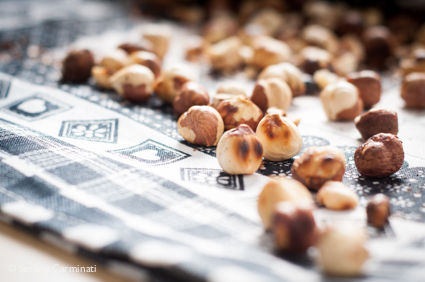
1. Toast the hazelnuts in a frying pan over low heat for 10 minutes.

2. Using a cloth remove the skin from the hazelnuts.

DSC_1496

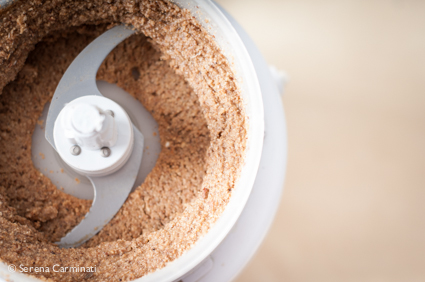
3. Grind the hazelnuts in a food processor, while still warm.

DSC_1502

4. Add the vegetable oil and honey, then stir.

DSC_1508

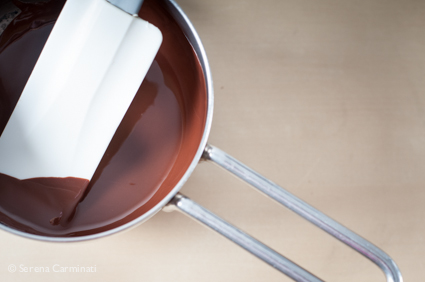
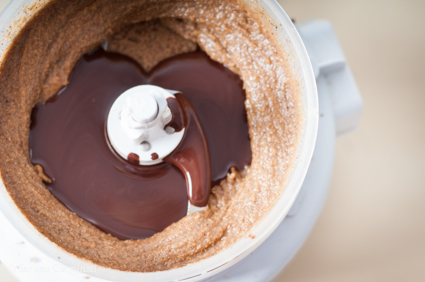
5. Melt the chocolate over a bain-marie and add it to the rest of the ingredients.

DSC_1512

DSC_1523

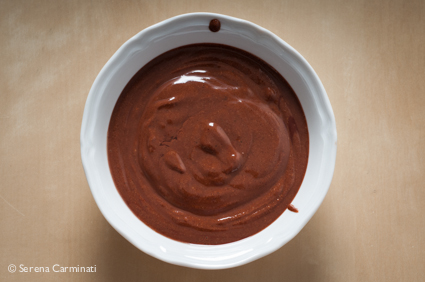
That’s it! Your wonderful chocolate-hazelnut spread is ready!

DSC_1543

 Crema spalmabile alle nocciole e cioccolato.

Ingredienti

per 1/2 bicchiere

100 g di nocciole

20 g di cioccolato fondente al 70%

2 cucchiai di olio di semi di girasole

2 cucchiaini di miele d’acacia

1. Fate tostare le nocciole a fiamma bassa in una padella per 10 minuti.

2. Togliete la buccia delle nocciole con l’aiuto di un panno.

3. Tritate finemente le nocciole (ancora calde) in un mixer.

4. Aggiungete l’olio di semi con il miele e mescolate.

5. Sciogliete il cioccolato a bagnomaria e unitelo al resto degli ingredienti.

La crema di cioccolato e nocciole è pronta da spalmare!

Some tips to keep your sourdough in good shape!

My sourdough is one year old! I keep it strong and healthy in a nice big jar in the fridge. I usually feed it once a week (or refresh it, as we say) , but the refreshment time varies depending on my needs. I’ve never had any problems with my natural yeast, however, at times, it’s possible that the yeast becomes sourer, or less responsive to leavening, therefore less active. These elements depend on many factors. There are some steps you can take to keep your sourdough in the best shape and correct any of problems. Of course, if you want a sour product, in order to let the bacteria produce acidity you have to do the opposite of what is indicated below.

To increase the leavening strength:

⁃ increase the temperature during leavening

⁃ decrease the ratio refreshments / flour

⁃ increase the ratio water / flour

⁃ increase humidity

In case of over-acidity:

⁃ change the type of flour (change microflora)

⁃ decrease the rising time

⁃ decrease ratio refreshments / flour

⁃ decrease the amount of water with the flour (to make a harder dough)

⁃ lower the temperature of the dough

DSC_7787

Some of this information belongs to the teaching material of the Cereal Technology Course at Parma University (Italy), courtesy of Prof. Franco Antoniazzi.

Come mantenere il lievito madre al meglio.

Il mio lievito madre ha un anno di vita! Lo tengo in un vasetto di vetro nel frigorifero e lo rinfresco generalmente una volta a settimana, ma a volte anche più spesso se ne uso in grandi quantità. Non ho mai avuto grossi problemi, ma è possibile che il lievito naturale a volte diventi più acido, oppure sia meno reattivo alla lievitazione, questo dipende da molti fattori. Ci sono comunque degli accorgimenti che si possono adottare per mantenere il lievito madre al meglio e correggere eventuali anomalie.

Interventi sui rinfreschi del lievito naturale.

Per aumentare la forza lievitante:

  • aumentare la temperatura di lievitazione
  • diminuire il rapporto rinfreschi/farina
  • aumentare il rapporto acqua/farina
  • aumentare l’umidità

Interventi in caso di acidità eccessiva:

  • cambiare tipo di farina (microflora diversa)
  • diminuire i tempi di lievitazione
  • diminuire i rapporti rinfreschi/farina
  • diminuire la quantità di acqua rispetto alla farina (impasto più duro)
  • abbassare le temperature degli impasti

Alcune delle informazioni riportate in questo articolo, fanno parte del materiale didattico del corso di Tecnologia dei Cereali dell’Univeristà di Parma, per gentile concessione del Prof. Franco Antoniazzi.

Bread making: choosing the right flour.

DSC_6642
  1. A good dough depends on the quality of the flour used. A good stone ground flour preserves most of the original nutritional values of the cereals.
  2. A few important factors determine the quality of a particular flour: tolerance to fermentation, good ability to absorb water, good consistency, extensibility and resistance.
  3. There are weak (soft) and strong (hard) flours. It’s important to understand the difference between these types of flour in order to use them in the best possible way.
  4. The strength of a flour is determined by the amount of protein (gluten) contained in the product. The higher the amount of protein (gluten), the stronger the flour.
  5. Weak flours have low protein (gluten) content and poor water absorption ability, consequently they are less active when leavening. For these reasons weak flours are mainly used for simple and dry preparations (e.g.to make cookies or bread sticks), while strong flours (e.g. manitoba) are used in more elaborate leavening processes.
  6. A plain strong flour dough is harder to work, therefore less extensible than a weaker one.

DSC_6554

Understanding flour strength.

In Italy, flour strength is indicated by a number followed by W. The W number is usually not indicated on the packaging of the product you buy at the supermarket. it’s possible to understand the strength of a flour by looking at the protein content indicated on the packaging.

DSC_6597

Below you will find some reference data that might help you to understand the relationship between protein, flour strengths (W) and their uses.
 

  • W
  • Protein
  • Use
  • 90/130
  • 9/10,5
  • Cookies (dough with baking powder)
  • 130/200
  • 10/11
  • Breadsticks, Crackers
  • 170/200
  • 10,5/11,5
  • Ciabatta, sandwich, focaccia bread, pizza, plain bread dough (with yeast or baking powder)
  • 220/240
  • 12/12,5
  • Baguettes, ciabatta bread, bread dough ( with yeast or baking powder) and biga (or sourdough) 5/6 h rising time
  • 300/310
  • 13
  • Worked bread, pastry dough with biga (or sourdough) up to 15 h rising time
  • 340/400
  • 13,5/15
  • Puffed bread, Pandoro, Panettone, dough leavened with long fermentation, pastry dough with biga (or sourdough) over 15 h rising time

The data shown here was taken from the teaching material of the Cereal Technology Course at Parma University (Italy), courtesy of Prof. Franco Antoniazzi.

DSC_6644

Guida alle farine.

  1. Un buon impasto dipende dalla qualità della farina utilizzata. Una buona farina ottenuta dalla macinazione in pietra (il metodo tradizionale) preserva al meglio le proprietà e i valori nutrizionali dei cereali macinati.
  2. Le caratteristiche da ricercare in una buona farina per fare il pane sono: tollerabilità alla fermentazione, buon assorbimento dell’acqua, buona consistenza, estensibilità dell’impasto e resistenza alla lavorazione.
  3. Esistono farine deboli e forti. E’ importante capire la differenza tra queste farine per utilizzarne al meglio le caratteristiche.
  4. Il fattore di panificabilità, o forza di panificazione, dipende dal contenuto di proteine (glutine) nella farina. Più alta è la percentuale di proteine contenuta nella farina e maggiore è la forza di panificazione.
  5. Le farine deboli hanno un basso contenuto di glutine, scarsa capacità di assorbimento dell’acqua e di conseguenza reagiscono meno attivamente alla lievitazione. Le farine deboli vengono quindi utilizzate nelle lavorazioni più fini e secche (per fare i biscotti o grissini), mante le farine forti (ad esempio la manitoba) si utilizzano per le lievitazioni più lunghe ed elaborate.
  6. Un impasto semplice, fatto con la farina forte, è più tenace e meno estensibile di un impasto fatto con la farina debole.

DSC_6595
Capire la forza delle farine.

In Italia, la forza della farina si indica con un numero seguito da W. Nella confezione al supermercato non troverete questi parametri riportati sulla confezione. E’ possibile però farsi un’idea sulla forza di panificazione della farina leggendo le percentuali di proteine riportate sulla confezione del prodotto.

In questa tabella troverete alcuni dati di riferimento per capire meglio il rapporto tra le proteine,la  forza di panificazione (W) delle farine e i loro utilizzi.

  • W
  • Proteine
  • Utilizzo
  • 90/130
  • 9/10,5
  • Biscotti ad impasto diretto (con lievito chimico)
  • 130/200
  • 10/11
  • Grissini, Crackers
  • 170/200
  • 10,5/11,5
  • Pane comune, impasto diretto (cioè con lievito chimico o lievito di birra), ciabatte, pancarré, pizze, focacce, fette biscottate
  • 220/240
  • 12/12,5
  • Baguettes, pane comune a impasto diretto (cioè con lievito chimico o lievito di birra), maggiolini, ciabatte a impasto diretto e biga di 5/6 h
  • 300/310
  • 13
  • Pane lavorato, pasticceria lievitata con biga di 15 h e impasto diretto
  • 340/400
  • 13,5/15
  • Pane soffiato, pandoro, panettone, lievitati a lunga fermentazione, pasticceria lievitata con biga oltre le 15 h

I dati riportati nella tabella sono stati presi dal materiale didattico del corso di Tecnologia dei Cereali dell’Univeristà di Parma, per gentile concessione del Prof. Franco Antoniazzi.

DSC_6608

How to make perfect bread.

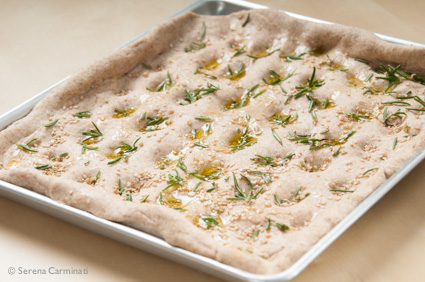
Focaccia bread with rosemary and whole sesame seeds.

DSC_2885

Ingredients

300 g (10.5 oz) wholemeal flour ( organic is better)

200 g (7 oz) plain flour, (organic is better)

167 g (5.8 oz) sourdough (or 16 g yeast)

10 g salt (for the dough) and some more to add over the focaccia bread

A few sprigs of fresh rosemary

10 g sesame seeds (1 tablespoon)

half a teaspoon honey olive oil and water as needed

Bread dough.

To prepare a good homemade bread you need to choose the ingredients carefully.

There are many different flours to choose from, and not all necessarily reflect what labels say. Most wholemeal flour you find in shops, for example, is often nothing more than plain flour with added bran, therefore it’s always best to get informed and buy good quality products, possibly organic, to have good cooking results.

Making a good bread dough is essential, it is very versatile and it can be used in many recipes to add fragrance and flavour to your dishes. I often use good quality wholemeal flour in my dough, as it is rich in fiber, vitamins and minerals and contains fewer calories than plain flour dough.

Starter dough.

DSC_2846

The best way to strengthen and optimize the leavening and fermentation activity in bread dough is to create a starter dough ( or bread starter). We begin by adding the sourdough (167 g) to some flour (1/4 of the dose indicated in the recipe, 125 g, 4.4 oz), just a little bit of honey, and enough water to create a moist and soft dough. Cover and set the dough in a warm place to rise, until it has doubled in volume.This process will make your bread dough rise perfectly, after adding all the ingredients.

It’s also possible to make a starter dough using yeast, but time and dosage differ slightly. Use 16 g of yeast ( following the doses indicated in the recipe above) plus 2 tablespoons flour, very little honey, then cover and let it rise for 1 hour.

How to make sourdough from the start : https://foodfulife.wordpress.com/2013/01/02/how-to-make-na…east-sourdough/

Making the dough.

Mix the two flours in a large bowl. Pour the flour on a working surface (or use a large bowl) and make a well in the centre. Add salt and water to the flour mixture. Mix everything and add the starter dough.

DSC_2851

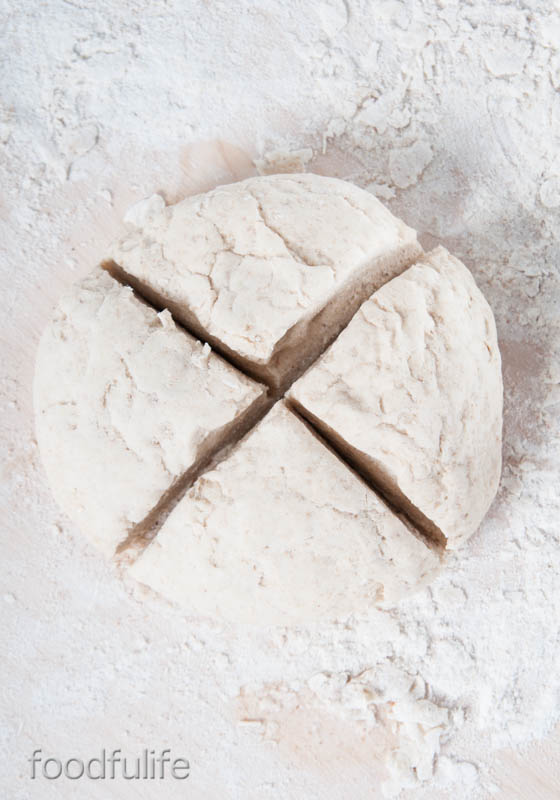
Form a soft dough, adding water or extra flour if needed. The dough should be smooth and elastic. Shape into a round ball and slash the surface in a cross pattern.

DSC_2852

Place the dough to rise in a warm place (rising time may vary depending on the ingredients you use). If you use natural yeast, your dough might take 3-6 hours to rise, or maybe less if you made a starter dough , my advice, however, is to always wait for the dough to double in volume.

DSC_2859

Once risen, you can shape your dough into the desired form, and use it in many recipes.

Focaccia bread with rosemary and whole sesame seeds.

DSC_2868

With the help of a rolling pin, roll out the bread dough until you have a thick layer and place it on a lightly greased rectangular baking tray (mine is a 28cm x 24 cm ).Stretch the dough layer to cover completely the baking tray. With your fingers, press lightly on the surface of the dough to create little wells, taking care not to break it.

DSC_2865

Place in a warm place and let rise for 20 minutes. Brush your bread with olive oil and water,then sprinkle evenly with fresh rosemary leaves, sesame seeds and salt.

DSC_2866

Bake at 180° C (356 °F) for 20 to 30 minutes. Cut and serve.

DSC_2876

Focaccia integrale con rosmarino e semi di sesamo.

Ingredienti

300 g di farina integrale

200 g di farina 00 biologica

167 g di lievito madre (oppure 16 g di lievito di birra)

10 g di sale (per l’impasto) e un po’ in più da aggiungere sopra la focaccia

Qualche rametto di rosmarino fresco

10 g di semi di sesamo (un cucchiaio)

mezzo cucchiaino di miele

olio d’oliva e acqua q b

Pasta da pane: impasto base.

Per preparare un ottimo pane fatto in casa è necessario scegliere gli ingredienti con cura. Esistono svariate farine e non tutte rispecchiano necessariamente ciò che indicano le etichette. La farina integrale che trovate in commercio, per esempio, spesso non è altro che farina bianca con dell’aggiunta di crusca, quindi e’ sempre meglio informarsi e comprare prodotti possibilmente biologici e di buona qualità, per avere buoni risultati in cucina.

Un buon impasto per il pane è importante perché può essere utilizzato in molte ricette, arricchendo i piatti con gusto e fragranza.  L’impasto integrale, in particolare, è ricco di fibra, un po’ meno calorico e contiene più vitamine e minerali di quello fatto con la farina bianca.

Qualche link utile sulla farina integrale:

http://www.corriere.it/salute/nutrizione/10_febbraio_28/pane-integrale-vantaggi_ed0992cc-2422-11df-826d-00144f02aabe.shtml

http://blog.greenme.it/naturomania/alimentazione-naturale-attenti-alla-farina-integrale/

Il lievitino, o panetto di lievito.

Il modo migliore per rinforzare e ottimizzare la lievitazione e la fermentazione nell’impasto, è quello di creare un lievitino, o panetto di lievito. Si procede aggiungendo al lievito madre (in questo caso 167 g) una parte della farina (1/4 della dose indicata nella ricetta) ,pochissimo miele (o zucchero, che useremo per nutrire il lievito), e acqua necessaria per creare un panetto umido e morbido. Coprite e mettete il panetto in un posto caldo finché non sarà raddoppiato di volume. Questa operazione farà lievitare perfettamente il vostro impasto, una volta aggiunti tutti gli ingredienti.

Naturalmente il lievitino si fa anche con il lievito di birra, ma le dosi e i tempi variano leggermente. A 16 g di lievito di birra, sbriciolato e sciolto in un po’ d’acqua (seguendo sempre le dosi indicate sopra), si aggiungono 2 cucchiai di farina, poco miele e si lascia riposare per 1 oretta circa al caldo. A questo link troverete tutto il procedimento per fare il lievito madre: https://foodfulife.wordpress.com/2013/01/02/how-to-make-na…east-sourdough/

Impasto e procedura.

Unite le farine e disponetele a fontana su un piano da lavoro (o in una ciotola grande), aggiungete il sale e l’acqua tiepida necessaria ad amalgamare il tutto, senza bagnarlo troppo. A questo punto aggiungete il panetto di lievito e lavorate energicamente fino a creare un impasto liscio e omogeneo. Formate una palla e incidete una croce sulla superficie. L’impasto ora è pronto per essere coperto e messo in un luogo caldo a lievitare. I tempi di lievitazione variano a seconda degli ingredienti usati. La lievitazione con il lievito madre può variare dalle 3 alle 6 ore, magari meno se usate il lievitino, il mio consiglio, comunque, è di aspettare sempre che l’impasto sia raddoppiato di volume prima di utilizzarlo. Una volta lievitato, potete dare al vostro impasto le forme desiderate o sbizzarrirvi con le vostre ricette.

Preparazione della focaccia integrale con rosmarino e semi di sesamo.

Aiutandovi con il matterello, stendete la pasta da pane fino ad ottenere una sfoglia spessa più o meno un dito e  ponetela in una teglia rettangolare leggermente unta (io ne uso una delle dimensioni di 28cm x 24 cm). Stendetela ulteriormente, in modo da ricoprire perfettamente la superficie della teglia. Con le dita premete leggermente sull’impasto per creare delle rientranze, facendo attenzione però a non romperlo. Lasciate lievitare per 20 minuti. A questo punto, spargete uniformemente le foglie di rosmarino fresco con i semi di sesamo e il sale sulla focaccia. Spennellate con un po’ di olio d’oliva e un po’ d’acqua, e infornate a 180° per 20- 30 minuti. Tagliate e servite.

Home-made butter: easy to prepare and healthier to eat.

Home-made butter.

DSC_2174

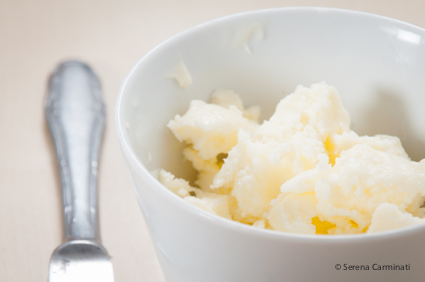
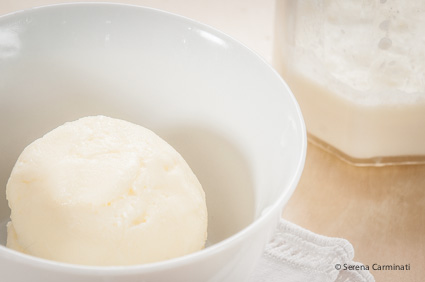
Butter is made by churning cream until the solid fat (butter) is separated from the liquid (buttermilk). Commercial butter is produced using industrial churning techniques and is a byproduct of cheese, rich in saturated fats, harmful to health. Home-made butter, which is obtained by whipping cream with a mixer, contains a much higher percentage of unsaturated fats, vitamins and water, therefore it’s a healthier and lighter product, but it doesn’t last for long.

In this article I will explain, step by step, how to make fresh butter using an electric mixer with a simple method.

Conservation.

Fresh butter will last in the refrigerator for a few days and in the freezer up to a week or more. Salted butter will last for longer ( 2-3 weeks in the fridge) because salt acts as a preservative but salted butter can have a limited use. Keep your butter sealed in a light-proof container, to avoid exposure to direct sunlight or unwanted odours that can ruin this fresh and delicate product.

Doses.

With 500 ml of cream you can obtain 200 g of butter (I use whipping cream but you can also use double cream, which is richer, therefore you might end up with slightly different results).

DSC_2091

The process.

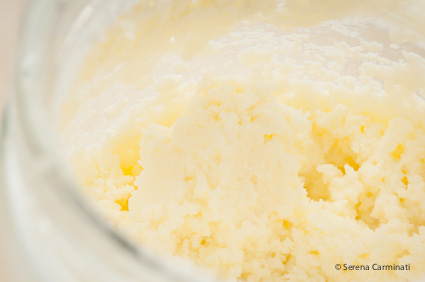
Place a whisk and a bowl or a large glass jar  (all previously sterilized with boiling water or ethanol, at 95 °) to cool in the freezer for 30 minutes. Cool the cream, but careful not to freeze it. When everything is very cold, pour the cream in the bowl (or in the jar) and whip it until the color and texture changes, and the solid fat separates completely from the liquid.

DSC_2101

DSC_2103

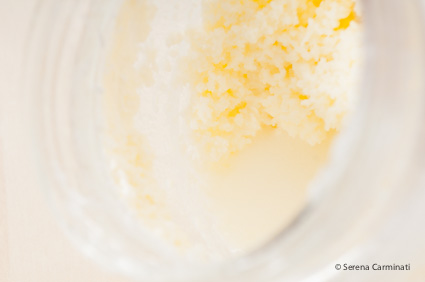
Now separate the buttermilk (the liquid) from the butter (the fat mass) using a strainer.

DSC_2111

Rinse with cold water and squeeze the butter with a spotless cloth to drain. Whip the butter in the sterilized bowl (or in a sterilized jar) for another 30 seconds, to expel the remaining buttermilk (whipping twice is not necessary if the butter is firm). Rinse the butter again and squeeze well with a cloth. Repeat this process until the water in the bowl is completely clear. Remember to handle the butter as little as possible to avoid melting.

DSC_2117

Place the fresh butter in a sealed sterilized container and store in the refrigerator or in the freezer. This product can be easily mixed with different ingredients, like salmon and herbs,  while buttermilk is used to prepare breads, cakes and drinks.

DSC_2134


Fare il burro in casa.

Il burro si ricava, molto semplicemente, montando la panna fino a far separare i grassi solidi da quelli liquidi. Il burro che si trova in commercio generalmente si ottiene con la tecnica ad affioramento ed è un sottoprodotto dei formaggi, ricco di lipidi saturi, nocivi alla salute. Quello fatto in casa con il metodo a centrifuga, contiene una quantità di grassi inferiore con una percentuale maggiore di grassi insaturi, vitamine e acqua, perciò è più leggero e meno dannoso, ma si conserva meno a lungo.

In questo breve articolo vi spiegherò, passo per passo, come ottenere burro fresco usando un frullino elettrico, con un metodo semplice e relativamente veloce.

La durata e la conservazione.

Il burro fresco si può conservare in frigorifero per 2-3 giorni al massimo e nel freezer per una settimana o due. Con l’aggiunta di sale il burro si conserva in frigo fino a 2-3 settimane, ma questo procedimento può limitarne l’utilizzo in alcune ricette, quindi è meglio aggiungerne poco.

Essendo un prodotto molto delicato, è opportuno conservare il panetto in un contenitore ben chiuso e al riparo da odori indesiderati o dalla luce solare, che ne modifica il colore.

Le dosi.

Con 500 ml di panna (da montare) si otterranno 200 g di burro.

Il procedimento.

Fate raffreddare nel freezer per 30 minuti la frusta e la ciotola (o un contenitore di vetro) che userete per montare la panna (tutto deve essere precedentemente sterilizzato con acqua bollente o alcool etilico a 95°). Raffreddate la panna facendo attenzione a non congelarla. Quando tutto sarà molto freddo, mettete la panna nella ciotola (o nel contenitore di vetro) e montatela fino a quando cambierà colore e si formerà una massa solida.

Quindi separate il latticello ( la parte liquida) dal burro (la massa di grassi), aiutandovi con un colino.

Il burro va lavato con acqua fredda e strizzato in un panno pulitissimo. Riponete il burro in una terrina sterilizzata e frustate ancora per 30 secondi o un minuto, per espellere tutto il latticello rimasto (se il risultato è già molto compatto continuate a lavorare il burro solo con il panno, senza usare la frusta elettrica una seconda volta). Quindi, risciacquate ancora il burro e strizzatelo bene usando il panno. Ripetete questo procedimento fino a quando l’acqua rimasta nella ciotola sarà completamente limpida. E’ importante che ci siano meno residui liquidi possibile per una buona conservazione del prodotto, però fate attenzione a maneggiare il burro il meno possibile, per evitare che si sciolga.

Mettete il burro in un contenitore con il coperchio (entrambi precedentemente sterilizzati) e conservate in frigorifero o nel congelatore.

Il burro fatto in casa è ottimo miscelato con altri ingredienti come il salmone e le erbe. Anche il latticello si conserva e può essere utilizzato nella preparazione di pani, dolci o alcune bevande.

How to Make Sourdough (Natural Yeast).

DSC_7382 

What is sourdough?

Sourdough is a natural yeast, obtained by fermenting flour and water. It can have a solid or a liquid consistency, depending on the amount of water used to feed it. Liquid sourdough usually rises better.

I personally recommend the preparation and use of this great ingredient because it’s completely natural, therefore much healthier and more digestible than other yeasts. Sourdough can be used to make a variety of breads, pizzas, pies and cakes with surprising results. Moreover, it makes everything taste better!

Preparing the sourdough starter.

1. First you have to make a starter. Mix 1 cup of organic wholemeal flour (the wholemeal flour is necessary for the first feed) with 1/2 cup of cool water (use non-chlorinated water, you can mix tap water with still drinking water from a bottle).
Put the ingredients in a glass, stainless steel or a plastic container for food.

DSC_7335

2. Stir all the ingredients together, until creamy and smooth, then cover the container with a damp cloth and let it sit for 24 hours.

DSC_7346

DSC_7348

3. After 24 hours remove the top half of the mixture, then feed the starter again with 1 cup of plain flour (you can use manitoba, whole spelt or wholemeal flour, if you prefer) and half a cup of water. Stir well, cover with a damp cloth and let it sit for another 24 hours.

DSC_7355

DSC_7363

DSC_7367

4. Now you can start feeding the starter every two days. Repeat this process for about 10 days, until it doubles in volume.

DSC_7376

5. After 10 days, you can start feeding your sourdough every 4-5 days and you can use it for your recipes.

Store the sourdough. 

1. Store the sourdough in a glass jar and keep it in the fridge (with the lid on).

2. Each time you feed the sourdough let it sit for 1-2 hours at room temperature in a glass jar covered with a damp cloth (with no lid on). Then remove the cloth, close the container and put it back in the refrigerator.

DSC_7385

Doses. 

1. Feed the sourdough the day before you use it (12 hours before).

2. In the recipes, the ratio of flour and sourdough used must be 3 to 1. (e.g. for 900 g of flour use 300 g of sourdough).

3. The rising time of the dough will depend on the age and strength of the yeast, at first it may take 3 to 6 hours  (however, when it doubles in size it is ready for use).

DSC_7378

DSC_6085
DSC_6203
La pasta madre.

La pasta madre è un lievito naturale che si ottiene facendo fermentare farina e acqua. Questo lievito può avere una consistenza più solida o liquida, a seconda della quantità d’acqua utilizzata, normalmente la versione più liquida ha una lievitazione migliore.

Consiglio vivamente la preparazione e l’utilizzo di questo ingrediente, essendo un lievito completamente naturale e quindi molto più digeribile e salutare rispetto ad altri lieviti comunemente utilizzati. Inoltre può essere usato facilmente nella preparazione di svariati tipi di pane, pizze torte salate e dolci con risultati sorprendenti.

Preparazione della pasta madre.

1. Per prima cosa, preparate un piccolo impasto unendo 1 tazza di farina integrale biologica (la farina integrale è necessaria per il primo impasto) a 1/2 tazza d’acqua fredda (utilizzate acqua con poco cloro, potete miscelare l’acqua del rubinetto con acqua minerale naturale).

2. Mettere gli ingredienti in un contenitore (è consigliabile utilizzare un contenitore di vetro oppure acciaio inossidabile, ma anche la plastica per alimenti va bene) e mescolare fino ad ottenere un composto cremoso. Coprire il contenitore con un panno umido e lasciate riposare per 24 ore.

3. Passate 24 ore, levate la parte dura in superficie e rinfrescare quello che resta del lievito, cioè aggiungete al composto 1 tazza di farina (potete utilizzare la 00, manitoba oppure farina integrale, come preferite) e mezzo bicchiere d’ acqua. Mescolare bene, coprire con un panno umido e lasciate riposare per altre 24 ore.

4. Ora potete rinfrescare il lievito ogni 2 giorni, utilizzando sempre una tazza di farina e 1/2 tazza d’acqua. Continuate con questa procedura per circa 10 giorni.

5. Dopo 10 giorni, potete incominciare a rinfrescare la pasta madre ogni 4-5 giorni. Arrivati a questo punto, la vostra pasta madre è pronta per essere utilizzata nelle vostre ricette.

La conservazione.

1. Conservate la pasta madre in un vasetto di vetro, chiuso con il coperchio e tenuto in frigorifero.

2. Dopo ogni rinfresco, lasciate riposare il lievito madre per una o due ore in un vasetto coperto da un panno umido a temperatura ambiente, poi chiudete il contenitore e rimettetelo nel frigorifero.

Le dosi consigliate. 

1. Nutrite la pasta madre il giorno prima di utilizzarla (almeno 12 ore prima).

2. Nelle ricette, il rapporto tra farina e pasta madre deve essere di 3 a 1, cioè su 900 g di farina utilizzeremo 300 g di lievito naturale.

3. Il tempo di lievitazione dipenderà dall’età e dalla forza della pasta madre. I tempi possono variare dalle 3 alle 6 ore, consiglio però di non guardare l’orologio ma di osservare il volume dell’impasto, quando raddoppia è pronto per l’uso.