Category Archives: RESOURCES

Biscotti As You Have Never Seen Them Before!

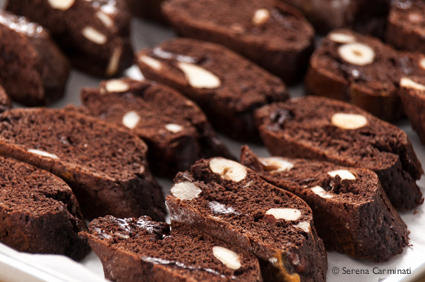
This is a chocolate version of Biscotti, or Cantucci cookies. Usually made with plain flour and almonds, I made these wholemeal cookies adding chocolate, hazelnuts and spelt flour to the traditional recipe. I also tried using less sugar, but they didn’t taste as good.  These cookies go well with coffee and tea, and kept a tin box they last for a long time.

DSC_7780

Chocolate spelt biscotti with hazelnuts and almonds.

Ingredients

for 2 large trays of biscotti

150 g (5.29 oz) plain flour (unbleached all-purpuse flour)

150 g (5.29 oz) whole spelt flour

70 g (2.46 oz) hazelnuts, whole and some crushed

70 g (2.46 oz) almonds, whole and some crushed

3 eggs

170 g (5.99 oz) sugar

2 drops sweet orange essential oil (or some grated orange zest)

3 tablespoons unsweetened cocoa powder

80 g (2.82 oz) dark chocolate (70% cocoa solids) finely chopped

1/2 tablespoon acacia honey

4 g baking soda

marsala wine to taste (or milk )

a pinch of salt

Method.

DSC_7634

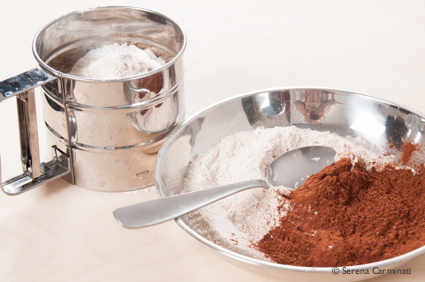
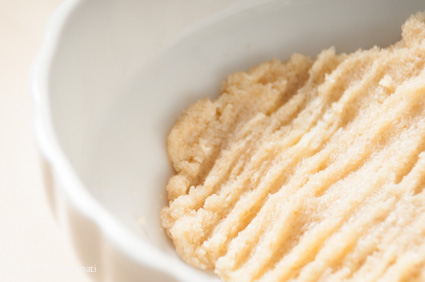
1. Sift the flour with the baking soda and cocoa powder.

DSC_7588

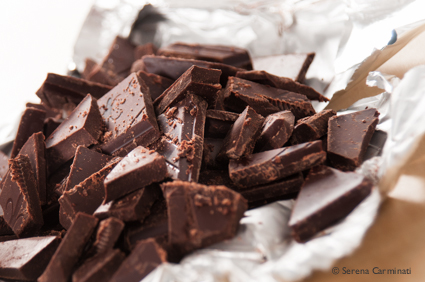
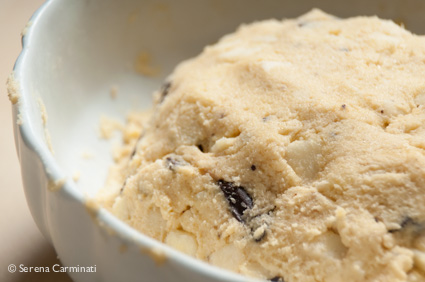
2. Add the chocolate, the hazelnuts, the almonds and a pinch of salt to the flour. Stir well.

DSC_7650

DSC_7642

3. Separately, mix two eggs, with the honey, the orange essential oil and sugar.

DSC_7661

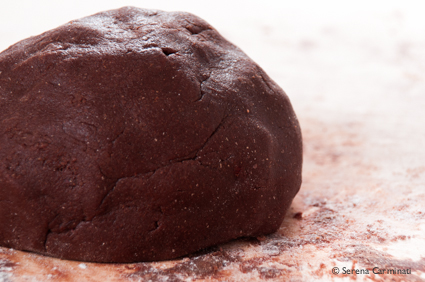
4. Combine all the ingredients together and mix well, adding some marsala wine (or milk) if the mixture is too dry.

DSC_7614

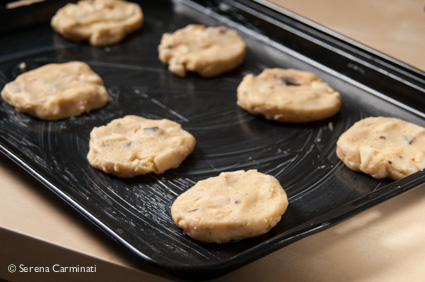
5. Divide the dough into four equal pieces, roll into the shape of four ropes and then brush the dough with an egg.

DSC_7673

6. Bake at 190 ° C (374 °F) for 15-20 minutes. Remove from the oven and cut the cookies at a 45° angle, then bake for 5-10 minutes more at 190 ° C (374 °F).

DSC_7707

DSC_7723

7. Let the cookies completely cool and store in a sealed tin box.

 DSC_7763

Cantucci di farina di farro al cioccolato.

Ingredienti

per 2 teglie di biscotti

150 g di farina 00

150 g di farina integrale di farro

70 g di nocciole, intere e sbriciolate

70 g di mandorle, intere e sbriciolate

3 uova

170 g  di zucchero

2 gocce di olio essenziale di arancio dolce (oppure un po’ di buccia d’arancia)

3 cucchiai di cacao amaro

80 g di cioccolato fondente al 70% tagliato a pezzetti

1/2 cucchiaio di miele d’acacia

4 g di bicarbonato

marsala q. b. (o latte, a scelta)

un pizzico di sale

Preparazione.

1. Setacciate la farina con il bicarbonato e il cacao.

2. Aggiungete alla farina il cioccolato, le nocciole, le mandorle e un pizzico di sale. Mescolate con cura.

3. A parte, amalgamate due uova con il miele, l’olio essenziale d’arancia e lo zucchero.

4. Unite tutti gli ingredienti, aggiungendo un po’ di marsala (o latte) nel caso il composto fosse troppo asciutto.

5. Formate quattro filoni della stessa misura e spennellate la superficie con un uovo. Infornate a 190° C per 15-20 minuti.

6. Sfornate e tagliate i biscotti in obliquo (per dare la forma dei cantucci), quindi infornate nuovamente per 5-10 minuti (sempre a 190° C).

7. Lasciate raffreddare e conservate in un contenitore di latta ben chiuso.

Bread making: choosing the right flour.

DSC_6642
  1. A good dough depends on the quality of the flour used. A good stone ground flour preserves most of the original nutritional values of the cereals.
  2. A few important factors determine the quality of a particular flour: tolerance to fermentation, good ability to absorb water, good consistency, extensibility and resistance.
  3. There are weak (soft) and strong (hard) flours. It’s important to understand the difference between these types of flour in order to use them in the best possible way.
  4. The strength of a flour is determined by the amount of protein (gluten) contained in the product. The higher the amount of protein (gluten), the stronger the flour.
  5. Weak flours have low protein (gluten) content and poor water absorption ability, consequently they are less active when leavening. For these reasons weak flours are mainly used for simple and dry preparations (e.g.to make cookies or bread sticks), while strong flours (e.g. manitoba) are used in more elaborate leavening processes.
  6. A plain strong flour dough is harder to work, therefore less extensible than a weaker one.

DSC_6554

Understanding flour strength.

In Italy, flour strength is indicated by a number followed by W. The W number is usually not indicated on the packaging of the product you buy at the supermarket. it’s possible to understand the strength of a flour by looking at the protein content indicated on the packaging.

DSC_6597

Below you will find some reference data that might help you to understand the relationship between protein, flour strengths (W) and their uses.


  • W
  • Protein
  • Use
  • 90/130
  • 9/10,5
  • Cookies (dough with baking powder)
  • 130/200
  • 10/11
  • Breadsticks, Crackers
  • 170/200
  • 10,5/11,5
  • Ciabatta, sandwich, focaccia bread, pizza, plain bread dough (with yeast or baking powder)
  • 220/240
  • 12/12,5
  • Baguettes, ciabatta bread, bread dough ( with yeast or baking powder) and biga (or sourdough) 5/6 h rising time
  • 300/310
  • 13
  • Worked bread, pastry dough with biga (or sourdough) up to 15 h rising time
  • 340/400
  • 13,5/15
  • Puffed bread, Pandoro, Panettone, dough leavened with long fermentation, pastry dough with biga (or sourdough) over 15 h rising time

The data shown here was taken from the teaching material of the Cereal Technology Course at Parma University (Italy), courtesy of Prof. Franco Antoniazzi.

DSC_6644

Guida alle farine.

  1. Un buon impasto dipende dalla qualità della farina utilizzata. Una buona farina ottenuta dalla macinazione in pietra (il metodo tradizionale) preserva al meglio le proprietà e i valori nutrizionali dei cereali macinati.
  2. Le caratteristiche da ricercare in una buona farina per fare il pane sono: tollerabilità alla fermentazione, buon assorbimento dell’acqua, buona consistenza, estensibilità dell’impasto e resistenza alla lavorazione.
  3. Esistono farine deboli e forti. E’ importante capire la differenza tra queste farine per utilizzarne al meglio le caratteristiche.
  4. Il fattore di panificabilità, o forza di panificazione, dipende dal contenuto di proteine (glutine) nella farina. Più alta è la percentuale di proteine contenuta nella farina e maggiore è la forza di panificazione.
  5. Le farine deboli hanno un basso contenuto di glutine, scarsa capacità di assorbimento dell’acqua e di conseguenza reagiscono meno attivamente alla lievitazione. Le farine deboli vengono quindi utilizzate nelle lavorazioni più fini e secche (per fare i biscotti o grissini), mante le farine forti (ad esempio la manitoba) si utilizzano per le lievitazioni più lunghe ed elaborate.
  6. Un impasto semplice, fatto con la farina forte, è più tenace e meno estensibile di un impasto fatto con la farina debole.

DSC_6595
Capire la forza delle farine.

In Italia, la forza della farina si indica con un numero seguito da W. Nella confezione al supermercato non troverete questi parametri riportati sulla confezione. E’ possibile però farsi un’idea sulla forza di panificazione della farina leggendo le percentuali di proteine riportate sulla confezione del prodotto.

In questa tabella troverete alcuni dati di riferimento per capire meglio il rapporto tra le proteine,la  forza di panificazione (W) delle farine e i loro utilizzi.

  • W
  • Proteine
  • Utilizzo
  • 90/130
  • 9/10,5
  • Biscotti ad impasto diretto (con lievito chimico)
  • 130/200
  • 10/11
  • Grissini, Crackers
  • 170/200
  • 10,5/11,5
  • Pane comune, impasto diretto (cioè con lievito chimico o lievito di birra), ciabatte, pancarré, pizze, focacce, fette biscottate
  • 220/240
  • 12/12,5
  • Baguettes, pane comune a impasto diretto (cioè con lievito chimico o lievito di birra), maggiolini, ciabatte a impasto diretto e biga di 5/6 h
  • 300/310
  • 13
  • Pane lavorato, pasticceria lievitata con biga di 15 h e impasto diretto
  • 340/400
  • 13,5/15
  • Pane soffiato, pandoro, panettone, lievitati a lunga fermentazione, pasticceria lievitata con biga oltre le 15 h

I dati riportati nella tabella sono stati presi dal materiale didattico del corso di Tecnologia dei Cereali dell’Univeristà di Parma, per gentile concessione del Prof. Franco Antoniazzi.

DSC_6608

Posh and perfect! Wholemeal pizza with goat’s cheese, olives and rocket (arugula).

This is a great veggy pizza! The dough, once cooked, is perfectly crunchy on the outside and soft on the inside. I used a mixture of manitoba, semolina and wholemeal flour to give elasticity, crispness and flavour to the pizza. Instead of using sourdough you can use 6 g of yeast to significantly reduce the rising time of the dough. At this link https://foodfulife.wordpress.com/2013/01/02/how-to-make-natural-yeast-sourdough/  you will find a short article that explains how to make sourdough at home.

Wholemeal pizza with goat’s cheese, olives and rocket (arugula).

Ingredients

For 1 thick pizza

50 g (1.76 oz) manitoba flour

50 g (1.76 oz) wholemeal (whole wheat) flour

40 g (1.41 oz)  fine semolina flour

50 g (1.76 oz) sourdough

70 g (2.46 oz) fresh and creamy goat’s cheese

70 g (2.46 oz) sweet and creamy soft cheese (crescienza or stracchino)

3 tablespoons extra virgin olive oil

1 teaspoon salt

A handful of rocket (arugula)

A handful of pitted olives

6-7 ripe cherry tomatoes

salt and pepper as needed (for seasoning the pizza)

100 ml (3.38 fl. oz) water (or more)

1/2 teaspoon honey

Create a starter dough with 50 g (1.76 oz ) wholemeal flour, 50 g manitoda flour and 50 g sourdough. Knead the starter dough with 100 ml (3.38 fl. oz) water and half a teaspoon of honey.

DSC_6289

Cover and set for a couple of hours. After 2 hours, take the starter dough and mix with the semolina flour ( adding some water or flour if needed). Add a teaspoon of salt and a tablespoon of oil and work until smooth.

DSC_6357

Let rise for a few hours, and then the dough will ready when it doubles in volume. Roll out the dough and place in a baking tray, previously evenly greased with a tablespoon of olive oil.

DSC_6371-3

Cut the tomatoes and the olives into thin slices. In a small bowl, mix the goat’s cheese with crescenza until smooth.

DSC_6361-3

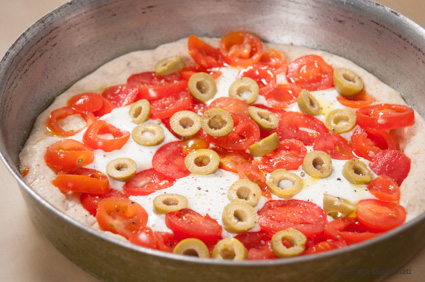
Alternating, place the tomatoes and cheese on top of the dough, then garnish with some slices of olives. Season your pizza with a tablespoon of olive oil, some salt and pepper.

DSC_6378-3

Bake at 200 ° C (392° F) for 25-30 minutes.

DSC_6395-3

Top the pizza with fresh rocket and serve.

DSC_6408-3

DSC_6425-3

Pizza integrale con formaggio di capra, olive e rucola.

Ingredienti

per 1 pizza

50g di farina manitoba

50g di farina integrale

40g di semola (rimacinata)

50g di lievito madre  (oppure 6 g di lievito di birra con aggiunta di acqua)

70 g di formaggio fresco (cremoso) di capra

70 g di crescenza o stracchino

3 cucchiai di olio extravergine d’oliva

Una manciata di olive verdi snocciolate

Una manciata di rucola

1 cucchiaino scarso di sale

6-7 pomodorini ciliegia ben maturi

sale e pepe qb (sulla pizza finita)

100 ml di acqua (o più)

1/2 cucchiaino di miele

Create un lievitino con 50g di farina integrale, 50g di farina manitoda e 50 g di lievito madre. Impastate il lievitino con 100 ml di acqua e mezzo cucchiaino di miele. Coprite e lasciate lievitare per un paio d’ore. Dopo la prima lievitazione, prendete il lievitino e impastate con la semola (aggiungendo un po’ d’acqua o di farina se necessario). Aggiungete un cucchiaino di sale e un cucchiaio d’olio all’impasto. Lasciate lievitare per qualche ora ( tenete presente che l’impasto è pronto quando raddoppia di volume).

Stendete l’impasto su una teglia, uniformemente unta con un cucchiaio di olio extravergine d’oliva. Tagliate i pomodorini e le olive a fettine. In una terrina piccola, unite e mescolate bene la crescenza con il formaggio di capra, fino ad ottenere una crema abbastanza omogenea. Cospargete i pomodorini alternandoli al formaggio sulla base della pizza e finite di decorare con delle fettine di olive. Condite la pizza con un cucchiaio di olio, un po’ di sale e pepe.

Fate cuocere a 200° di per 25-30 minuti. Sfornate la pizza, aggiungete la rucola e servite.

Deliciously soft bavarian cream with chocolate-caramel sauce.

A few nights ago I had a couple of friends round for dinner, it was a special occasion, so I prepared a simple and delicious dessert recipe. I made a soft vanilla bavarian cream which I divided into individual portions and garnished with chocolate-caramel sauce and a few toasted walnuts. This dessert is very easy to prepare, very satisfying and deliciously creamy. A bavarian cream is basically a rich but delicate custard, blended with gelatin to have a light and airy texture. The chocolate sauce served with walnuts adds crunchiness and flavour to the cream.  We spent a wonderful evening and the dessert was fully appreciated…

DSC_5894

Bavarian cream with chocolate-caramel sauce.

Ingredients

Serves 4

250 ml (8.45 fl. oz) whipping cream

150 ml (5 fl. oz) milk

50 g (1.76 oz) sugar

2 gelatin leaves (5 g)

2 egg yolks

2 drops vanilla extract

For the chocolate-caramel sauce

100 g (3.52 oz) brown sugar

1 teaspoon cocoa powder

6 toasted walnuts (toast the unshelled walnuts in the oven on a tray for 5 minutes at 190°C, 374 °F)

1 teaspoon of dark rum

100 ml (3.38 fl.oz) of milk

Preparation method.

1. Soften the gelatin in warm water for 10 minutes.

DSC_5720

2. In a saucepan, work the eggs with the sugar until creamy. Gradually add hot milk and the vanilla extract, stirring on low heat.

DSC_5728

3. Drain the gelatin, melt into the creamy mixture and continue to stir on low heat for about ten minutes (do not boil). Let cool. Stir the whipped cream very gently into the mixture.

DSC_5739

DSC_5769

DSC_5781

4. Pour the dessert into molds and put in the refrigerator to set for at least 3 hours.

DSC_5800

Preparation of the caramel sauce.

DSC_5832

1. Pour the sugar (100 g) with the cocoa powder into the milk (100 ml), add some rum and stir. Melt the sugar at a low heat and cook until the sauce has thickened.

2. Garnish the bavarian cream with a few toasted walnuts and serve with the chocolate-caramel sauce.

DSC_5859

Crema bavarese con salsa di caramello al cacao.

Ingredienti

per 4 porzioni

250 ml di panna da montare

150 ml di latte

50 g di zucchero

2 fogli di colla di pesce (5 g)

2 tuorli d’uovo

due gocce di estratto di vaniglia

Per la crema di caramello al cacao

100 g di zucchero di canna

1 cucchiaino di cacao

1 cucchiaino di rum scuro

100 ml di latte

qualche noce tostata per guarnire

Preparazione della crema.

1. Fate ammorbidire la colla di pesce in acqua tiepida per 10 minuti. In un pentolino, lavorate le uova con lo zucchero fino a creare una crema spumosa.

2. Continuando a mescolare, allungate gradualmente il composto con del latte bollente. Aggiungete l’estratto di vaniglia e fate cuocere per dieci minuti a fiamma molto bassa.

3. Scolate bene la colla di pesce e fatela sciogliere nel latte ( continuando a mescolare). Spegnete il fuoco e lasciate raffreddare.

4. Unite la panna montata al composto, mescolando delicatamente dal basso verso l’alto. Versate la crema negli stampi e mettetela nel frigorifero a solidificare per almeno 3 ore.

Preparazione del caramello.

1. Versate lo zucchero (100 g) con il cacao e un cucchiaino di rum in 100 ml di latte. Fate sciogliere lo zucchero a fiamma bassa e fate ritirare fino ad ottenere una salsa densa. Lasciate raffreddare.

2. Servite la crema bavarese con la salsa di caramello al cacao e guarnite con qualche noce (fatta leggermente tostare prima) sopra.

Gluten-Free Apple And Chocolate Chip Cookies

DSC_5033

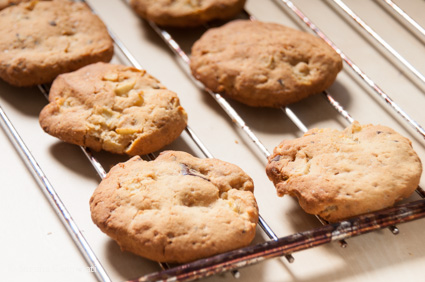
I made this recipe for a celiac friend. I used gluten-free flours, trying to create a smooth and homogeneous dough. The result is excellent! These soft and delicate cookies melt nicely in the mouth, slowly releasing an intense dark chocolate flavour.

If you prepare this recipe for a gluten-intolerant friend , use only flour, potato starch and corn starch specific for celiac people, and make sure that the absence of gluten is clearly indicated on the packaging.

DSC_5063

Apple and chocolate chip cookies (gluten-free).

Ingredients

for about 25 cookies

70 g ( 2.4 oz) corn flour

70 g (2.4 oz) rice flour

70 g (2.4 oz) corn starch

70 g (2.4 oz) potato starch

150 g (5.29 oz) butter

130 g (4.5 oz) brown sugar

150 g (5.29 oz) dark chocolate for cooking

1 teaspoon baking soda

1 whole egg

1 large golden sweet apple

2 tablespoons yogurt

2 drops vanilla essence

a pinch of salt

Method.

1. In a bowl, sift the flour with the corn and potato starch.

DSC_4961

2. Separately, mix the butter with sugar.

DSC_4963

DSC_4973

3. Add an egg with two drops of vanilla essence to the butter. Mix well, then add two tablespoons of yogurt and a teaspoon of baking soda to the mixture. Knead the dough.

DSC_4975

4. Peel and cut the apple into very small cubes, break the chocolate into pieces and add them with a pinch of salt to the mixture.

DSC_4981

DSC_4991

5. Put the dough to cool in the refrigerator for 30 minutes. Grease two or three baking sheets (depending on the size), shape the dough into small balls (4.5 cm each) and place them on the baking sheets, quite far apart from one another.

DSC_4999

6. Slightly flatten the dough balls to make the cookies.

DSC_5003

7. Bake at 170 ° C (338°F) for 15-18 minutes. Place the cookies to cool on a rack.

DSC_5072

Biscotti morbidi con cioccolato e mele (senza glutine).

Ingredienti

per 25 biscotti circa

70 g di farina di mais

70 g di farina di riso

70 g di amido di mais

70 g di fecola di patate

150 g di burro

130 g zucchero di canna

150 g di cioccolato fondente per cucinare

1 cucchiaino di bicarbonato

1 uovo intero

1 mela grossa golden

2 cucchiai di yogurt

2 gocce di essenza di vaniglia

un pizzico di sale

Preparazione.

1. In una terrina, setacciate le farine con l’amido di mais e la fecola di patate. A parte, lavorate il burro con lo zucchero.

2. Aggiungete l’uovo con le gocce di essenza di vaniglia al burro lavorato.

3. Amalgamate bene e unite alla farina, aggiungendo due cucchiai di yogurt e un cucchiaino di bicarbonato. Impastate tutto.

4. Sbucciate e tagliate la mela a cubetti molto piccoli, rompete il cioccolato in pezzi ed aggiungeteli, con un pizzico di sale, all’impasto.

5. Mettete l’impasto a riposare per 30 minuti nel frigorifero. Imburrate due o tre teglie (dipende dalla grandezza), formate delle palline di circa 4,5 cm e mettetele sulle teglie, abbastanza distanti l’una dall’altra.

6. Schiacciate l’impasto per dare la forma ai biscotti.

7. Infornate a 170 ° per 15-18 minuti, poi lasciate raffreddare i biscotti su una griglia.

Special Chocolate Chip Cookies For Grown-Ups!

Perfect served with a cup of coffee or tea, with just a little sugar and an intense dark chocolate flavour, these cookies are definitely for grown-ups! You can prepare this recipe for the kids, but I would recommend using a less bitter chocolate and adding a few extra teaspoons of sugar to dough. High in fiber and nutrients, with chocolate and hazelnuts these biscuits are delicious moments that melt in your mouth!

DSC_4378

Spelt chocolate chip cookies 

Ingredients
for 12-13 cookies

115 g (4 oz) butter

170 g (5.9 oz) wholemeal (wholewheat) spelt flour)

30 g (1 oz) corn starch

80g (2.8 oz) dark chocolate (with 70% cocoa solids), chopped

30 g (1 oz) hazelnuts toasted and ground (some grossly)

2 tablespoons honey

2 teaspoons brown sugar

1 teaspoon baking powder vanilla

2 tablespoons yogurt

a pinch of salt

Method.

1. Toast the hazelnuts in the oven at 170° C (338°F) for 10 minutes. Remove the skin by rubbing with a cloth, let cool and then grind the hazelnuts using a food processor. In a bowl mix the butter with honey and sugar.

DSC_4308

2. Aside, sift the flour with corn starch and baking powder. Combine the two mixtures and add the chocolate, the ground hazelnuts, a pinch of salt and yogurt.

DSC_4320

DSC_4327

DSC_4335

3. Work the mixture well until you have a compact dough.

DSC_4342

4. Put the dough in the refrigerator for 1 hour. Grease two large baking trays, shape the dough into little balls (4-5 cm ) and place them quite far apart from one another.

DSC_4349

5. Squeeze the dough gently with your fingers, in order to shape the cookies.

DSC_4357

6. Bake at 170 ° C (338° F) for 12-15 minutes. Place the cookies to cool on a rack.

DSC_4448

Cookies di farina di farro con cioccolato e nocciole.

Ingredienti

per 12-13 biscotti

115 g di burro

170 g di farina di farro integrale

30 g di amido di mais

80 g di cioccolato fondente al 70% tagliato a pezzettini

30 g di nocciole tostate e tritate (alcune anche grossolanamente)

2 cucchiai di miele

2 cucchiaini di zucchero di canna

1 cucchiaino di lievito per dolci vanigliato

2 cucchiai di yogurt

un pizzico di sale

Preparazione.

1. Tostate le nocciole in forno a 170° per 10 minuti, poi strofinate le nocciole (ancora calde) con un panno per togliere la pellicina. Lasciate raffreddare e tritate finemente con il tritatutto.

2. In una terrina mescolate il burro con il miele e lo zucchero.

3. A parte, setacciate e mescolate la farina con l’amido di mais e il lievito per dolci. Unite la farina al composto di burro, poi aggiungete anche il cioccolato a pezzetti, le nocciole tritate, lo yogurt e un pizzico di sale.

4. Lavorate bene, poi fate riposare in frigorifero per 1 ora.

5. Formate delle palline uguali con l’impasto (4-5 cm di diametro per pallina) e mettetele su due teglie unte, lasciando un po’ di spazio.

6. Schiacciate leggermente la pasta con le dita per dare la forma ai biscotti.

7. Infornate a 170° per 12-15 minuti, quindi i biscotti a raffreddare su una griglia.

My Favourite Oven-Baked Falafels.

Oven-baked broad bean falafel (front view 1 with yellow cloth)

Falafel is delicious middle eastern food, usually prepared with dried chickpeas or dried broad beans (fava beans). Broad bean falafel is a traditional egyptian recipe. Being rich in vegetable protein, this food is an excellent alternative to meatballs in vegetarian diet. In this recipe, I changed a few steps in order to get a little lighter dish. Falafels can be served with a yogurt and cucumber sauce, or with fresh tomato salad.

Oven-cooked broad bean falafel (raw on a plate, front view) 

Oven-cooked broad bean falafels.

Ingredients

Serves 2-4  (16 falafel)

preparation: 20 minutes + 12 hours to soak the beans in water + 30 minutes (minimum) refrigeration

cooking time: 30 minutes

150 g (5.2 oz) dried broad beans

1 large onion

1 clove of garlic

2 tablespoons chopped fresh parsley

1 teaspoon cumin seeds (ground)

1 teaspoon coriander seeds (ground)

1 tablespoon sesame seeds (ground)

1 tablespoon wholemeal flour (or plain flour)

1 teaspoon baking powder or baking soda

3 tablespoon extra virgin olive oil

1 teaspoon salt (maybe a little less)

pepper to taste

Method.

1. Let the beans soak in a bowl overnight (12 hours, at least).. Lay a kitchen towel on a table and rub the broad beans to dry them up.

Step 1. Soak the beans, then dry them with a towel.

2. Put the beans in a food processor and chop finely with the onion, garlic and parsley. Add the seeds (already finely ground), flour , salt , pepper and baking powder. Mix well.

Step 2. Chop the beans with garlic, the onions and all the other ingredients.

Step 2. Chop the beans with garlic, the onions and all the other ingredients.

3. Place the mixture to cool for 30 minutes in the refrigerator (sometimes I leave it in the fridge for hours, I think my falafels taste even better afterwards). Form small balls with the mixture.

Step 3. Place in the fridge for 30 minutes, then shape small balls.

4. In a frying pan, heat 3 tablespoons of olive oil, then fry the balls until they are golden on all sides. Place all the falafels in a greased baking tray and cook in the oven at 170 ° C (338° F) for about 20 minutes. Serve while still warm.

Step 4. fry the falafel until golden, then bake for 20 minutes.

Falafel di fave cotti al forno.

Ingredienti

2-4 persone (16 falafel)

Preparazione: 20 minuti + 12 ore per fare ammorbidire le fave in acqua + 30 minuti (minimo) per far riposare l’impasto nel frigo.

Cottura: 30 minuti

150 g di fave secche

1 cipolla grande

1 spicchio d’aglio

2 cucchiai di prezzemolo fresco tritato

1 cucchiaino di semi di cumino tritati

1 cucchiaino di semi di coriandolo tritati

1 cucchiaio di semi di sesamo tritati

1 cucchiaio di farina integrale (o farina normale)

3 cucchiai di olio extravergine d’oliva

1 cucchiaino di lievito in polvere o bicarbonato per uso alimentare

1  cucchiaino scarso di sale e pepe q. b.

Preparazione.

1. Lasciate le fave a bagno in una ciotola per tutta la notte. Stendete un panno sul tavolo e asciugate le fave strofinandole bene. 

2. Mettete i legumi in un tritatutto e tritateli molto finemente con la cipolla, l’aglio e il prezzemolo. Aggiungete i semi ( già finemente tritati), la farina, il sale , il pepe e il lievito in polvere (o bicarbonato). Mescolate bene tutto.

3. Lasciate riposare l’impasto per almeno 30 minuti nel frigorifero ( lasciandolo riposare più a lungo, ho dei risultati anche migliori). Con l’impasto ottenuto, formate tante polpette di piccole dimensioni.

4. In una padella scaldate 3 cucchiai di olio extravergine d’oliva, poi fate soffriggere le polpette facendole dorare su tutti i lati. Quando le polpette saranno completamente dorate, mettetele in una teglia leggermente unta e fatele cuocere a 170° per 20 minuti. Servite i falafel quando sono ancora caldi.

How to make perfect bread.

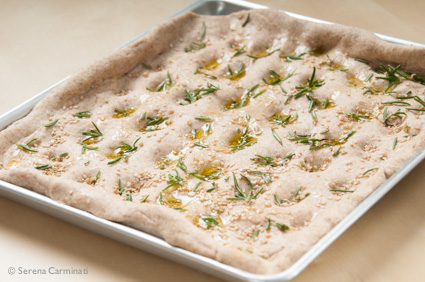
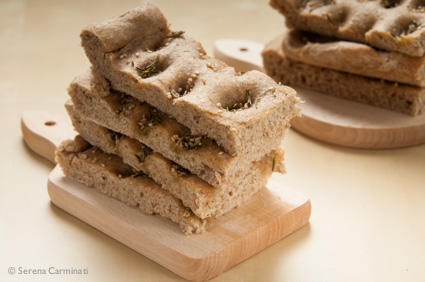
Focaccia bread with rosemary and whole sesame seeds.
DSC_2885

Ingredients

300 g (10.5 oz) wholemeal flour ( organic is better)

200 g (7 oz) plain flour, (organic is better)

167 g (5.8 oz) sourdough (or 16 g yeast)

10 g salt (for the dough) and some more to add over the focaccia bread

A few sprigs of fresh rosemary

10 g sesame seeds (1 tablespoon)

half a teaspoon honey olive oil and water as needed

Bread dough.

To prepare a good homemade bread you need to choose the ingredients carefully.

There are many different flours to choose from, and not all necessarily reflect what labels say. Most wholemeal flour you find in shops, for example, is often nothing more than plain flour with added bran, therefore it’s always best to get informed and buy good quality products, possibly organic, to have good cooking results.

Making a good bread dough is essential, it is very versatile and it can be used in many recipes to add fragrance and flavour to your dishes. I often use good quality wholemeal flour in my dough, as it is rich in fiber, vitamins and minerals and contains fewer calories than plain flour dough.

Starter dough.
DSC_2846

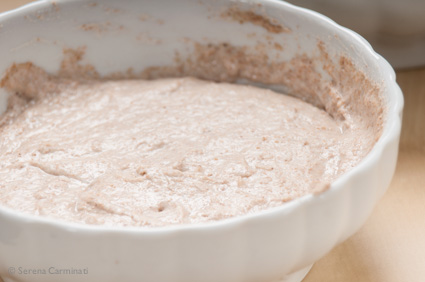
The best way to strengthen and optimize the leavening and fermentation activity in bread dough is to create a starter dough ( or bread starter). We begin by adding the sourdough (167 g) to some flour (1/4 of the dose indicated in the recipe, 125 g, 4.4 oz), just a little bit of honey, and enough water to create a moist and soft dough. Cover and set the dough in a warm place to rise, until it has doubled in volume.This process will make your bread dough rise perfectly, after adding all the ingredients.

It’s also possible to make a starter dough using yeast, but time and dosage differ slightly. Use 16 g of yeast ( following the doses indicated in the recipe above) plus 2 tablespoons flour, very little honey, then cover and let it rise for 1 hour.

How to make sourdough from the start : https://foodfulife.wordpress.com/2013/01/02/how-to-make-na…east-sourdough/

Making the dough.

Mix the two flours in a large bowl. Pour the flour on a working surface (or use a large bowl) and make a well in the centre. Add salt and water to the flour mixture. Mix everything and add the starter dough.

DSC_2851

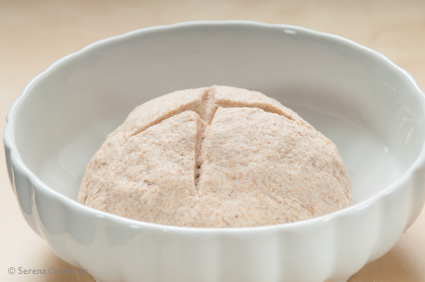
Form a soft dough, adding water or extra flour if needed. The dough should be smooth and elastic. Shape into a round ball and slash the surface in a cross pattern.

DSC_2852

Place the dough to rise in a warm place (rising time may vary depending on the ingredients you use). If you use natural yeast, your dough might take 3-6 hours to rise, or maybe less if you made a starter dough , my advice, however, is to always wait for the dough to double in volume.

DSC_2859

Once risen, you can shape your dough into the desired form, and use it in many recipes.

Focaccia bread with rosemary and whole sesame seeds.

DSC_2868

With the help of a rolling pin, roll out the bread dough until you have a thick layer and place it on a lightly greased rectangular baking tray (mine is a 28cm x 24 cm ).Stretch the dough layer to cover completely the baking tray. With your fingers, press lightly on the surface of the dough to create little wells, taking care not to break it.

DSC_2865

Place in a warm place and let rise for 20 minutes. Brush your bread with olive oil and water,then sprinkle evenly with fresh rosemary leaves, sesame seeds and salt.

DSC_2866

Bake at 180° C (356 °F) for 20 to 30 minutes. Cut and serve.

DSC_2876

Focaccia integrale con rosmarino e semi di sesamo.

Ingredienti

300 g di farina integrale

200 g di farina 00 biologica

167 g di lievito madre (oppure 16 g di lievito di birra)

10 g di sale (per l’impasto) e un po’ in più da aggiungere sopra la focaccia

Qualche rametto di rosmarino fresco

10 g di semi di sesamo (un cucchiaio)

mezzo cucchiaino di miele

olio d’oliva e acqua q b

Pasta da pane: impasto base.

Per preparare un ottimo pane fatto in casa è necessario scegliere gli ingredienti con cura. Esistono svariate farine e non tutte rispecchiano necessariamente ciò che indicano le etichette. La farina integrale che trovate in commercio, per esempio, spesso non è altro che farina bianca con dell’aggiunta di crusca, quindi e’ sempre meglio informarsi e comprare prodotti possibilmente biologici e di buona qualità, per avere buoni risultati in cucina.

Un buon impasto per il pane è importante perché può essere utilizzato in molte ricette, arricchendo i piatti con gusto e fragranza.  L’impasto integrale, in particolare, è ricco di fibra, un po’ meno calorico e contiene più vitamine e minerali di quello fatto con la farina bianca.

Qualche link utile sulla farina integrale:

http://www.corriere.it/salute/nutrizione/10_febbraio_28/pane-integrale-vantaggi_ed0992cc-2422-11df-826d-00144f02aabe.shtml

http://blog.greenme.it/naturomania/alimentazione-naturale-attenti-alla-farina-integrale/

Il lievitino, o panetto di lievito.

Il modo migliore per rinforzare e ottimizzare la lievitazione e la fermentazione nell’impasto, è quello di creare un lievitino, o panetto di lievito. Si procede aggiungendo al lievito madre (in questo caso 167 g) una parte della farina (1/4 della dose indicata nella ricetta) ,pochissimo miele (o zucchero, che useremo per nutrire il lievito), e acqua necessaria per creare un panetto umido e morbido. Coprite e mettete il panetto in un posto caldo finché non sarà raddoppiato di volume. Questa operazione farà lievitare perfettamente il vostro impasto, una volta aggiunti tutti gli ingredienti.

Naturalmente il lievitino si fa anche con il lievito di birra, ma le dosi e i tempi variano leggermente. A 16 g di lievito di birra, sbriciolato e sciolto in un po’ d’acqua (seguendo sempre le dosi indicate sopra), si aggiungono 2 cucchiai di farina, poco miele e si lascia riposare per 1 oretta circa al caldo. A questo link troverete tutto il procedimento per fare il lievito madre: https://foodfulife.wordpress.com/2013/01/02/how-to-make-na…east-sourdough/

Impasto e procedura.

Unite le farine e disponetele a fontana su un piano da lavoro (o in una ciotola grande), aggiungete il sale e l’acqua tiepida necessaria ad amalgamare il tutto, senza bagnarlo troppo. A questo punto aggiungete il panetto di lievito e lavorate energicamente fino a creare un impasto liscio e omogeneo. Formate una palla e incidete una croce sulla superficie. L’impasto ora è pronto per essere coperto e messo in un luogo caldo a lievitare. I tempi di lievitazione variano a seconda degli ingredienti usati. La lievitazione con il lievito madre può variare dalle 3 alle 6 ore, magari meno se usate il lievitino, il mio consiglio, comunque, è di aspettare sempre che l’impasto sia raddoppiato di volume prima di utilizzarlo. Una volta lievitato, potete dare al vostro impasto le forme desiderate o sbizzarrirvi con le vostre ricette.

Preparazione della focaccia integrale con rosmarino e semi di sesamo.

Aiutandovi con il matterello, stendete la pasta da pane fino ad ottenere una sfoglia spessa più o meno un dito e  ponetela in una teglia rettangolare leggermente unta (io ne uso una delle dimensioni di 28cm x 24 cm). Stendetela ulteriormente, in modo da ricoprire perfettamente la superficie della teglia. Con le dita premete leggermente sull’impasto per creare delle rientranze, facendo attenzione però a non romperlo. Lasciate lievitare per 20 minuti. A questo punto, spargete uniformemente le foglie di rosmarino fresco con i semi di sesamo e il sale sulla focaccia. Spennellate con un po’ di olio d’oliva e un po’ d’acqua, e infornate a 180° per 20- 30 minuti. Tagliate e servite.

Homemade Baci di Dama, simply delicious!

DSC_2285

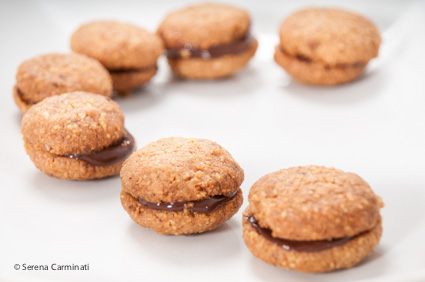
Baci di Dama cookies.

Baci di Dama are delightful Piedmontese cookies, traditionally prepared with plain flour, hazelnuts, almonds and dark chocolate. These wonderful cookies are among my favorites, as a child I just couldn’t get enough! I’m going to prepare my Baci di Dama with brown sugar and wholemeal flour, using the fresh butter I made in the previous recipe. These ingredients have a rich nutty flavour, which blends perfectly with hazelnuts and honey. You can enjoy these mouth-watering Baci di Dama at any time to make your day a little special.

Wholemeal Baci di Dama cookies

For approximately 40 cookies

150 g (5.2 oz) toasted and skinned hazelnuts

65 g (2.2 oz) wholemeal flour

65 g (2.2 oz) rice flour

100 g (3.5 oz) softened butter

60 g (2.1 oz) brown sugar

2 tablespoons honey (I used acacia honey, but normal honey is fine)

a pinch of salt

50 g (1.7 oz) dark chocolate (70 % cocoa)

Method.

1. Toast the hazelnuts in the oven at 160 ° C (325 °F) for about 7 minutes. When the hazelnuts have cooled, gently rub the skins off with a cloth.

DSC_2178

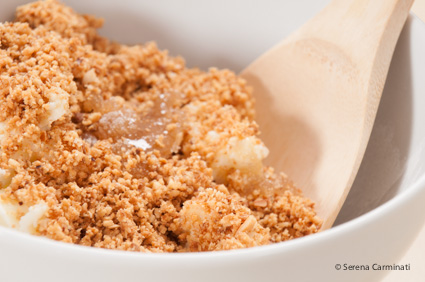
2. Grind the hazelnuts with a food processor. Then, mix the hazelnuts with the flour, sugar, honey and butter.

DSC_2192

DSC_2204

3. Work the mixture until you get a soft and smooth dough. Place the dough in a sealed container and let it cool in the refrigerator for 30 minutes.

DSC_2216

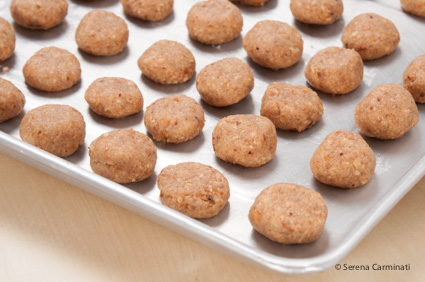
4. Take the dough out of the fridge and shape into small balls (approximately 2-3 cm). Place the balls on a greased baking tray and press them slightly with your fingers in order to obtain an half sphere shape.

DSC_2240

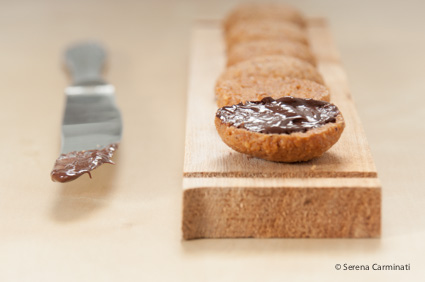
5. Bake in the oven at 150 ° (300 ° F) for 10-15 minutes. Meanwhile, melt the chocolate in a double boiler. When the cookies are ready and have slightly cooled, sandwich them together by putting some chocolate on the flat side. Serve the Baci di Dama with a nice cup of tea and enjoy!

DSC_2256

DSC_2260

DSC_2262

Baci di Dama con farina integrale.

per approssimativamente 40 pasticcini

150 g di nocciole tostate e pulite

65 g di farina integrale

65 g di farina di riso

100 g di burro morbido

60 g di zucchero di canna

2 cucchiai di miele (ho usato il miele d’acacia, ma vanno bene anche altri tipi)

un pizzico di sale

50 g di buon cioccolato fondente

Preparazione.

1. Fate tostare le nocciole in forno a 160° per 7 minuti. Strofinate con un canovaccio le nocciole per togliere la buccia.

2. Tritate finemente con il tritatutto. Unite le nocciole alla farina, allo zucchero, al miele e al burro, mescolando bene fino ad ottenere un impasto morbido e omogeneo.

3. Mettete l’impasto in un contenitore e riponetelo nel frigorifero a rassodare per circa 30 minuti.

4. Togliete l’impasto dal frigo e  formate delle palline di approssimativamente 2-3 cm di diametro. Mettete le palline su una teglia imburrata e pressatele leggermente con le dita per creare delle mezze sfere.

5. Infornate a 150° per 10-15 minuti. Fate fondere il cioccolato a bagnomaria, poi prendete i biscotti (dopo averli fatti raffreddare) e uniteli a due a due, spalmando un po’ di cioccolato sulla parte piatta. Servite con una buona tazza di tè.

Home-made butter: easy to prepare and healthier to eat.

Home-made butter.

DSC_2174

Butter is made by churning cream until the solid fat (butter) is separated from the liquid (buttermilk). Commercial butter is produced using industrial churning techniques and is a byproduct of cheese, rich in saturated fats, harmful to health. Home-made butter, which is obtained by whipping cream with a mixer, contains a much higher percentage of unsaturated fats, vitamins and water, therefore it’s a healthier and lighter product, but it doesn’t last for long.

In this article I will explain, step by step, how to make fresh butter using an electric mixer with a simple method.

Conservation.

Fresh butter will last in the refrigerator for a few days and in the freezer up to a week or more. Salted butter will last for longer ( 2-3 weeks in the fridge) because salt acts as a preservative but salted butter can have a limited use. Keep your butter sealed in a light-proof container, to avoid exposure to direct sunlight or unwanted odours that can ruin this fresh and delicate product.

Doses.

With 500 ml of cream you can obtain 200 g of butter (I use whipping cream but you can also use double cream, which is richer, therefore you might end up with slightly different results).

DSC_2091

The process.

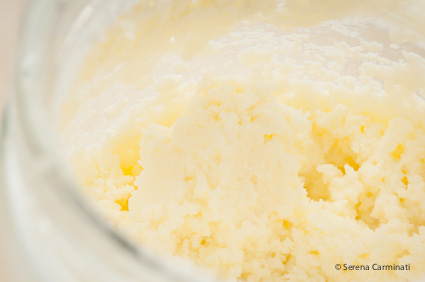
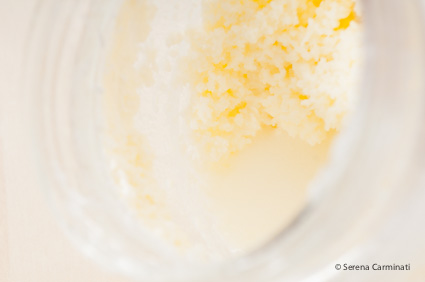
Place a whisk and a bowl or a large glass jar  (all previously sterilized with boiling water or ethanol, at 95 °) to cool in the freezer for 30 minutes. Cool the cream, but careful not to freeze it. When everything is very cold, pour the cream in the bowl (or in the jar) and whip it until the color and texture changes, and the solid fat separates completely from the liquid.

DSC_2101

DSC_2103

Now separate the buttermilk (the liquid) from the butter (the fat mass) using a strainer.

DSC_2111

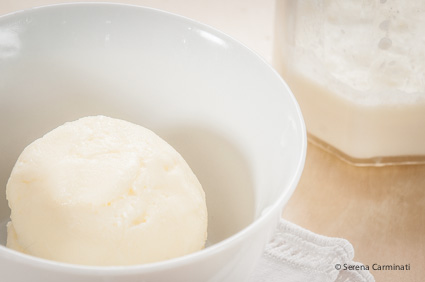
Rinse with cold water and squeeze the butter with a spotless cloth to drain. Whip the butter in the sterilized bowl (or in a sterilized jar) for another 30 seconds, to expel the remaining buttermilk (whipping twice is not necessary if the butter is firm). Rinse the butter again and squeeze well with a cloth. Repeat this process until the water in the bowl is completely clear. Remember to handle the butter as little as possible to avoid melting.

DSC_2117

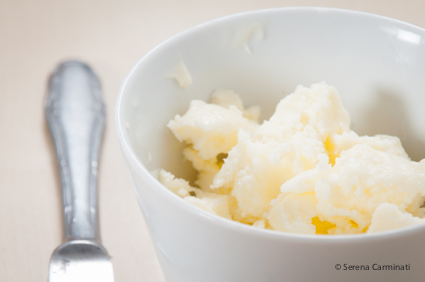
Place the fresh butter in a sealed sterilized container and store in the refrigerator or in the freezer. This product can be easily mixed with different ingredients, like salmon and herbs,  while buttermilk is used to prepare breads, cakes and drinks.

DSC_2134


Fare il burro in casa.

Il burro si ricava, molto semplicemente, montando la panna fino a far separare i grassi solidi da quelli liquidi. Il burro che si trova in commercio generalmente si ottiene con la tecnica ad affioramento ed è un sottoprodotto dei formaggi, ricco di lipidi saturi, nocivi alla salute. Quello fatto in casa con il metodo a centrifuga, contiene una quantità di grassi inferiore con una percentuale maggiore di grassi insaturi, vitamine e acqua, perciò è più leggero e meno dannoso, ma si conserva meno a lungo.

In questo breve articolo vi spiegherò, passo per passo, come ottenere burro fresco usando un frullino elettrico, con un metodo semplice e relativamente veloce.

La durata e la conservazione.

Il burro fresco si può conservare in frigorifero per 2-3 giorni al massimo e nel freezer per una settimana o due. Con l’aggiunta di sale il burro si conserva in frigo fino a 2-3 settimane, ma questo procedimento può limitarne l’utilizzo in alcune ricette, quindi è meglio aggiungerne poco.

Essendo un prodotto molto delicato, è opportuno conservare il panetto in un contenitore ben chiuso e al riparo da odori indesiderati o dalla luce solare, che ne modifica il colore.

Le dosi.

Con 500 ml di panna (da montare) si otterranno 200 g di burro.

Il procedimento.

Fate raffreddare nel freezer per 30 minuti la frusta e la ciotola (o un contenitore di vetro) che userete per montare la panna (tutto deve essere precedentemente sterilizzato con acqua bollente o alcool etilico a 95°). Raffreddate la panna facendo attenzione a non congelarla. Quando tutto sarà molto freddo, mettete la panna nella ciotola (o nel contenitore di vetro) e montatela fino a quando cambierà colore e si formerà una massa solida.

Quindi separate il latticello ( la parte liquida) dal burro (la massa di grassi), aiutandovi con un colino.

Il burro va lavato con acqua fredda e strizzato in un panno pulitissimo. Riponete il burro in una terrina sterilizzata e frustate ancora per 30 secondi o un minuto, per espellere tutto il latticello rimasto (se il risultato è già molto compatto continuate a lavorare il burro solo con il panno, senza usare la frusta elettrica una seconda volta). Quindi, risciacquate ancora il burro e strizzatelo bene usando il panno. Ripetete questo procedimento fino a quando l’acqua rimasta nella ciotola sarà completamente limpida. E’ importante che ci siano meno residui liquidi possibile per una buona conservazione del prodotto, però fate attenzione a maneggiare il burro il meno possibile, per evitare che si sciolga.

Mettete il burro in un contenitore con il coperchio (entrambi precedentemente sterilizzati) e conservate in frigorifero o nel congelatore.

Il burro fatto in casa è ottimo miscelato con altri ingredienti come il salmone e le erbe. Anche il latticello si conserva e può essere utilizzato nella preparazione di pani, dolci o alcune bevande.